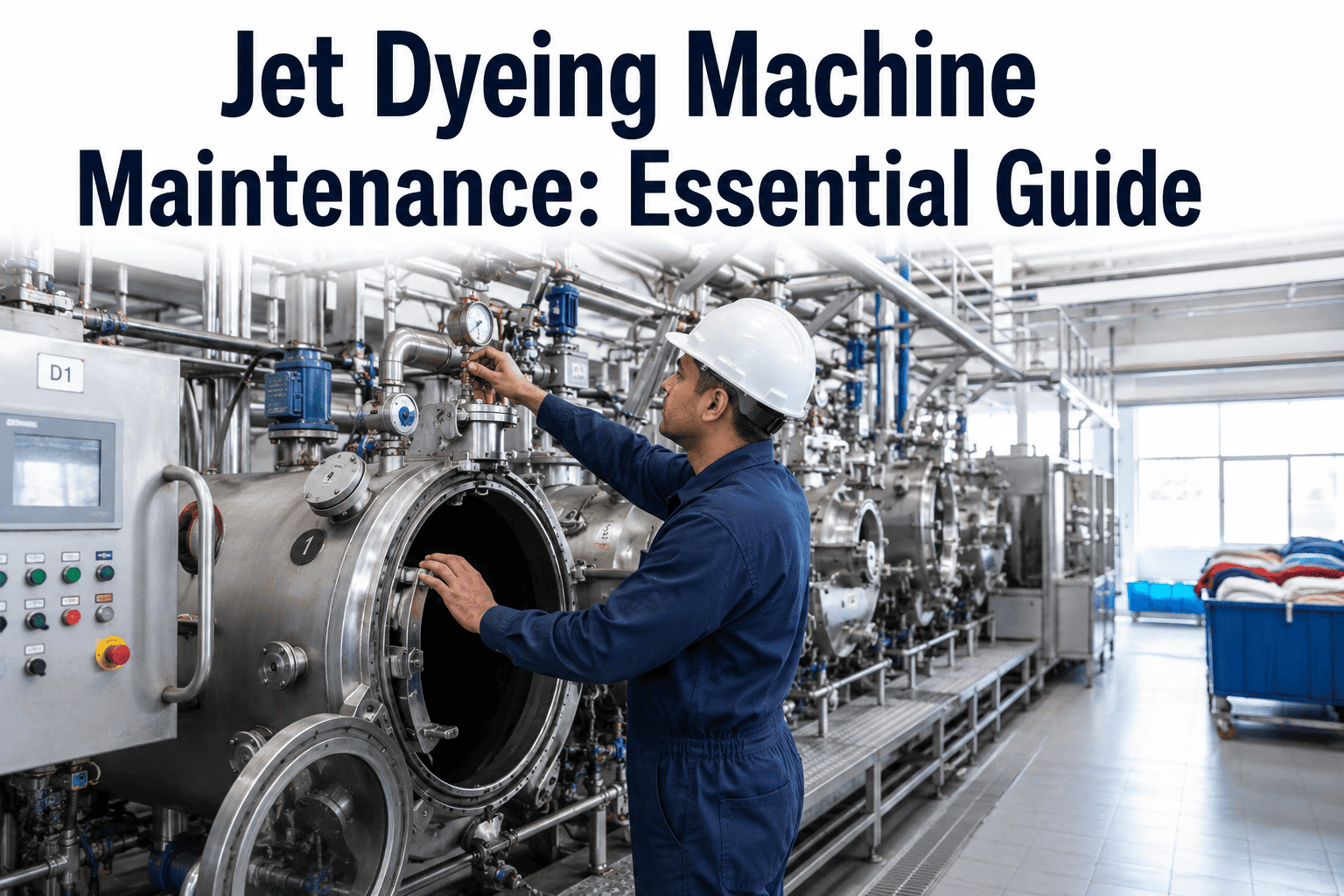
A stenter frame holds fabric at precise width while heat sets the finish, and every part of that job depends on three mechanical systems working in exact coordination — the chain that carries the fabric, the clips or pins that grip its edge, and the bearings that keep the chain moving smoothly through heat zones running well above 180°C. When any one of these drifts out of condition, the fabric knows before the maintenance log does — width variation, selvage damage, uneven finish, or a chain that jumps track mid-shift. Textile plant maintenance teams managing stenter reliability are working against a punishing combination: continuous high-temperature operation, constant mechanical cycling, and a fabric quality outcome that has zero tolerance for drift. Structured stenter maintenance built around chain tension, clip condition, bearing lubrication, and heat zone calibration is what keeps that outcome consistent shift after shift. You can book a demo to see how continuous monitoring supports this maintenance program on a live stenter line.
Why Stenter Reliability Is Different From Ordinary Machine Maintenance
A stenter frame combines three demanding conditions that few other textile machines face simultaneously — sustained high heat, continuous mechanical cycling of the clip or pin chain, and a fabric quality outcome that depends on maintaining precise, consistent width across the entire run length. Unlike a machine where a bearing failure simply means downtime, a stenter bearing running slightly warm or a chain with accumulated wear can produce fabric that looks acceptable on visual inspection but fails width tolerance or shows uneven heat-set finish only once it's already been cut and shipped.
This distinction matters enormously for how a maintenance program should be designed. A machine where failure means downtime can often be maintained reactively, provided spare parts and repair capacity are available quickly enough to limit the cost of the outage. A stenter, by contrast, can continue running for weeks or months in a degraded state — producing fabric that passes casual inspection but carries a quality defect that only becomes obvious downstream, in a customer's cutting room or on a finished garment. That delayed feedback loop is precisely why proactive, measurement-based maintenance matters more here than on equipment where problems announce themselves immediately.
This is why stenter maintenance programs need to be structured around the specific failure modes of chain, clip, bearing, and heat zone systems — not treated as a generic PM checklist borrowed from other finishing equipment. Each of these systems degrades differently, at different intervals, and produces different fabric-quality symptoms long before a catastrophic mechanical failure actually occurs, which means the maintenance discipline that catches early degradation is also the discipline that protects fabric quality output.
Inside the Stenter — The Four Systems That Determine Output Quality
A stenter frame's mechanical reliability rests on four interdependent systems. Understanding how each one contributes to fabric quality — and how each one fails — is the foundation of an effective maintenance program. None of these systems can be evaluated fully in isolation, since a problem in one often masks or mimics a problem in another, which is exactly why a maintenance technician diagnosing a fabric quality issue benefits from understanding all four systems together rather than jumping straight to the most familiar one.
The interdependence between these systems is worth emphasizing, because it's the most common source of misdiagnosis on a stenter line. A chain running slightly slower than intended due to bearing friction changes fabric dwell time in each heat zone, which can produce a finish quality symptom that looks like a heat zone calibration problem even though the actual root cause sits entirely within the mechanical drive system. Maintenance teams who understand these interactions diagnose issues faster and avoid the costly cycle of adjusting the wrong system first.
Chain Tension and Wear — What to Track and Why
Chain wear on a stenter is progressive and largely invisible during normal operation until it accumulates enough to produce a visible fabric defect. Understanding the wear mechanism is what allows a maintenance program to catch it early through measurement rather than waiting for a quality complaint. The challenge with chain wear specifically is that it develops gradually across thousands of operating hours, which means day-to-day comparisons rarely reveal anything — the meaningful signal only emerges when current measurements are tracked against a trend line established over weeks or months of consistent data collection. Book a demo to see how continuous chain condition monitoring applies to your specific stenter configuration.
Recommended Inspection and Maintenance Intervals
Stenter maintenance intervals should reflect the actual duty cycle and heat exposure of each system rather than a single blanket schedule applied uniformly across the machine. The following intervals reflect general industry practice and should be adjusted based on your specific fabric types, run speeds, and heat zone temperatures. A facility running heavier fabrics at higher tension, or operating heat zones at the upper end of typical temperature ranges, should generally lean toward the more frequent end of any interval range shown here, since both factors accelerate wear on chain, clip, and bearing components simultaneously.
| Component | Inspection Task | Typical Interval |
|---|---|---|
| Chain Tension | Measure and adjust tension along full chain length | Weekly |
| Clip/Pin Condition | Visual inspection for wear, bending, contamination | Daily to weekly |
| Bearing Lubrication | Relubrication per heat zone exposure schedule | Per manufacturer heat-rated interval |
| Bearing Temperature Check | Thermal reading against baseline for early wear detection | Daily |
| Heat Zone Calibration | Zone-to-zone temperature uniformity verification | Monthly, or per fabric quality trend |
| Sprocket and Track Wear | Full inspection during scheduled downtime | Quarterly |
| Full Chain Overhaul | Comprehensive wear assessment and replacement planning | Annually or per elongation threshold |
Building these intervals into a documented preventive maintenance calendar is only half the value — the other half comes from tracking actual measurements against these schedules over time rather than treating each inspection as a standalone pass-or-fail check. A chain tension reading that's within tolerance but trending steadily toward the limit tells a very different maintenance story than one that's stable at the same level month over month, and that trend visibility is what separates a maintenance program that catches problems early from one that simply confirms compliance at each checkpoint.
Fabric Symptoms and What They Usually Point To
Fabric quality defects are often the first visible signal of a stenter mechanical issue, appearing well before the underlying wear would trigger a scheduled inspection finding. Learning to read these symptoms correctly shortens the path from defect to root cause considerably. Experienced maintenance technicians develop this pattern recognition over years of troubleshooting, but a structured symptom reference helps newer team members reach the same diagnostic speed without needing to accumulate that same volume of trial-and-error experience first.
It's worth noting that these symptom-to-cause mappings represent the most common associations, not guarantees — a width variation problem can occasionally stem from a heat zone issue affecting fabric shrinkage rather than a mechanical tracking fault, and selvage damage can sometimes originate from a fabric handling issue upstream of the stenter rather than the clips themselves. Treating this symptom guide as a starting hypothesis for investigation, rather than a definitive diagnosis, keeps troubleshooting efficient without leading a maintenance team down the wrong path on an unusual case.
Why Continuous Monitoring Changes the Maintenance Equation
Traditional stenter maintenance relies heavily on scheduled inspections and operator observation — both valuable, but both inherently periodic. A chain tension check performed weekly can miss a developing problem for up to six days, and an operator focused on running production may not notice a subtle bearing temperature rise until it becomes audible or visible. This isn't a criticism of the maintenance team's diligence — it's simply the natural limitation of any inspection regime built around fixed intervals rather than continuous measurement, and it's a limitation that affects every plant running this equipment, regardless of how experienced or attentive the maintenance staff happen to be.
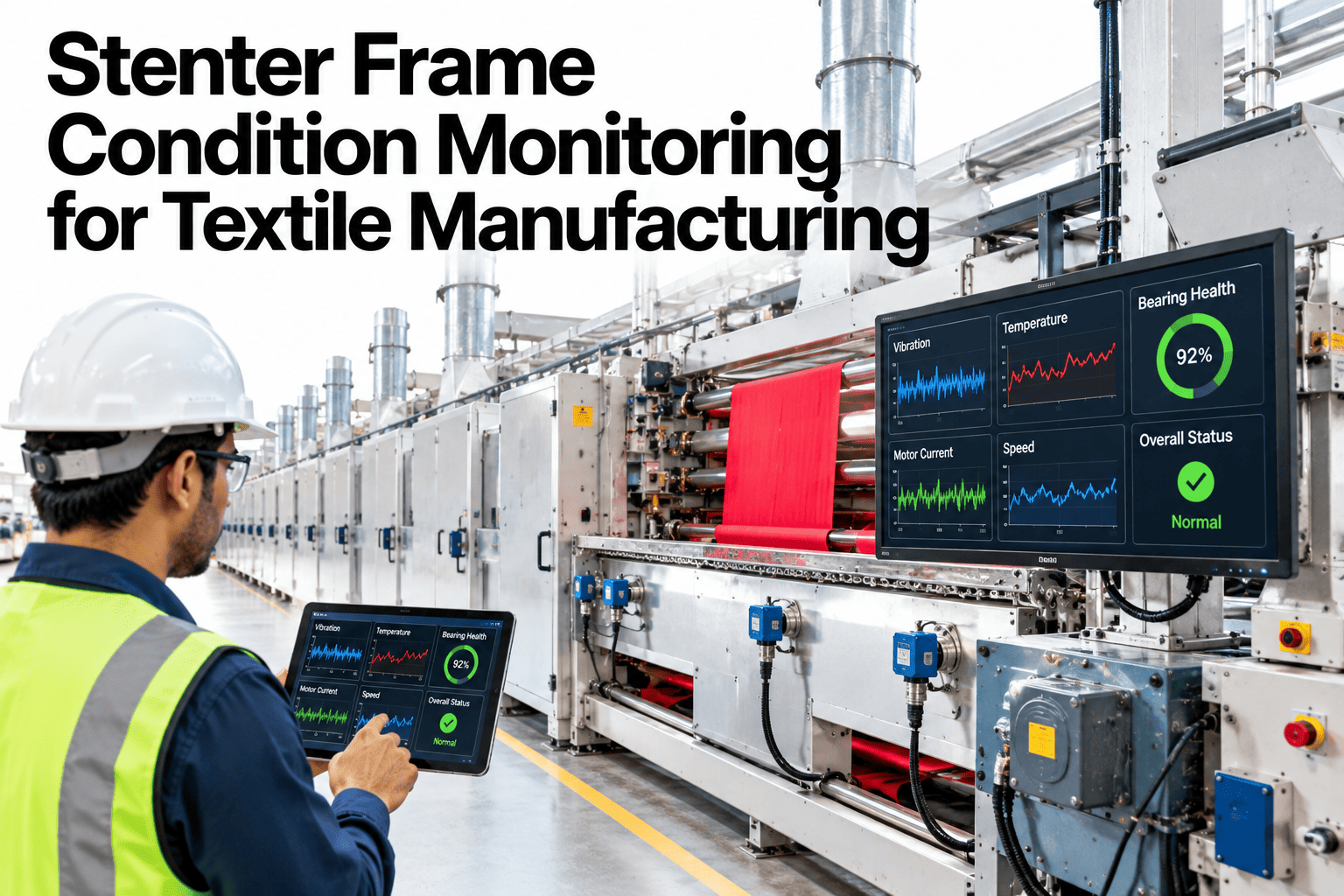
Continuous monitoring of chain tension, bearing temperature, and heat zone uniformity closes that gap by comparing live sensor data against established baselines in real time, flagging drift while it's still a maintenance item rather than a quality incident or unplanned downtime event. This doesn't replace the scheduled inspection program — it strengthens it by giving maintenance teams earlier, more precise signals about exactly which system is drifting and by how much, rather than waiting for the next scheduled check or a fabric quality complaint to reveal the problem. Book a demo to see how this fits into your existing stenter maintenance program.