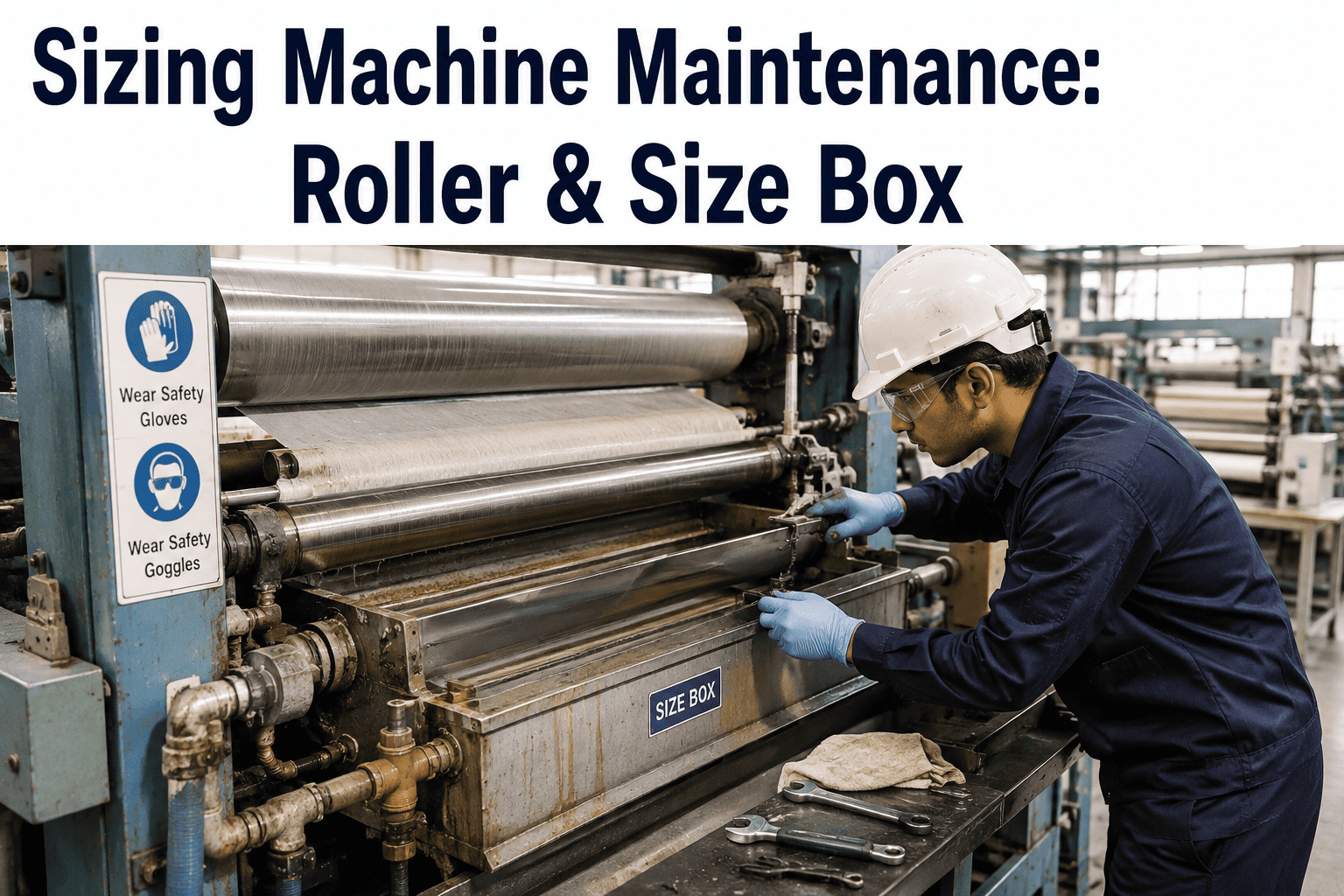
Weak size add-on on a warp beam doesn't announce itself at the sizing machine — it shows up two departments later as excessive warp breakage on the weaving floor, where operators and supervisors usually blame the yarn, the loom setting, or the weather before anyone thinks to check a sizing parameter from days earlier. The squeeze roller, the size box, and the drying cylinders are the three components most responsible for consistent size pickup, and all three degrade quietly enough that a mill can run weeks below optimal performance without anyone noticing until weaving efficiency drops. iFactory tracks sizing machine condition and size add-on consistency directly, connecting sizing performance back to downstream weaving efficiency — see how through iFactory support.
Weaving Efficiency Problems Often Start at the Sizing Machine, Days Before Anyone Looks There
iFactory monitors squeeze roller condition, size box consistency, and drying cylinder performance in real time, connecting sizing parameters directly to downstream warp breakage and weaving efficiency data.
Where Size Add-On Consistency Actually Gets Decided
How a Small Sizing Deviation Becomes a Weaving Floor Problem
A 2–3% deviation in size add-on rarely trips any alarm at the sizing machine itself, since it's well within what a visual check or a basic pickup percentage reading would flag as normal. But that same small deviation, carried across an entire warp beam and multiplied by the abrasion a warp sheet experiences through heald frames and reed during weaving, is often enough to noticeably increase warp breakage rates. By the time the weaving floor is dealing with elevated stoppages, the sizing parameters that actually caused it were set days earlier, on a different shift, by a different team, with no obvious link connecting the two events.
Closing that gap requires treating sizing and weaving as connected data, not two separate departments reporting separately up the chain — which is precisely the correlation most mills are missing today.
iFactory links size add-on consistency data directly to weaving floor breakage rates, so root cause investigation doesn't stop at the department boundary.
A Realistic Preventive Maintenance Schedule for Sizing Machines
| Component | Task | Frequency | Consequence If Skipped |
|---|---|---|---|
| Squeeze Roller | Covering wear inspection, pressure uniformity check across width | Weekly | Uneven size add-on across beam width |
| Size Box | Paste temperature and concentration verification | Every shift | Recipe drift, inconsistent stiffness |
| Drying Cylinders | Surface temperature mapping, steam trap function check | Weekly | Under-dried or over-dried yarn zones |
| Beam Building Mechanism | Tension consistency and alignment check | Monthly | Beam-to-beam tension variation |
| Size Paste Circulation | Filter and pump inspection | Bi-weekly | Paste contamination, viscosity drift |
Tracing a Persistent Weaving Efficiency Drop Back to a Single Worn Squeeze Roller Zone
A denim weaving operation had been dealing with elevated warp breakage on roughly a third of its looms for several weeks, with the weaving team focused on loom timing and reed condition as the likely causes, without lasting improvement. When sizing and weaving data were connected through iFactory, the affected looms correlated almost precisely with warp beams produced during a specific window each week — beams built using one particular sizing machine's output. Closer inspection of that machine's squeeze roller revealed uneven covering wear concentrated on one side, producing size add-on roughly 15% lower on that side of the beam width than the other. Reconditioning the roller covering brought add-on consistency back within specification, and warp breakage on the affected looms dropped substantially within the following week's production.
What Mills See After Connecting Sizing and Weaving Performance Data
Sizing Machine Maintenance — Common Questions
Stop Chasing Warp Breakage on the Weaving Floor When the Real Cause Is Sitting at the Sizing Machine.
Connect sizing performance directly to downstream weaving efficiency and catch drift before it reaches the loom.