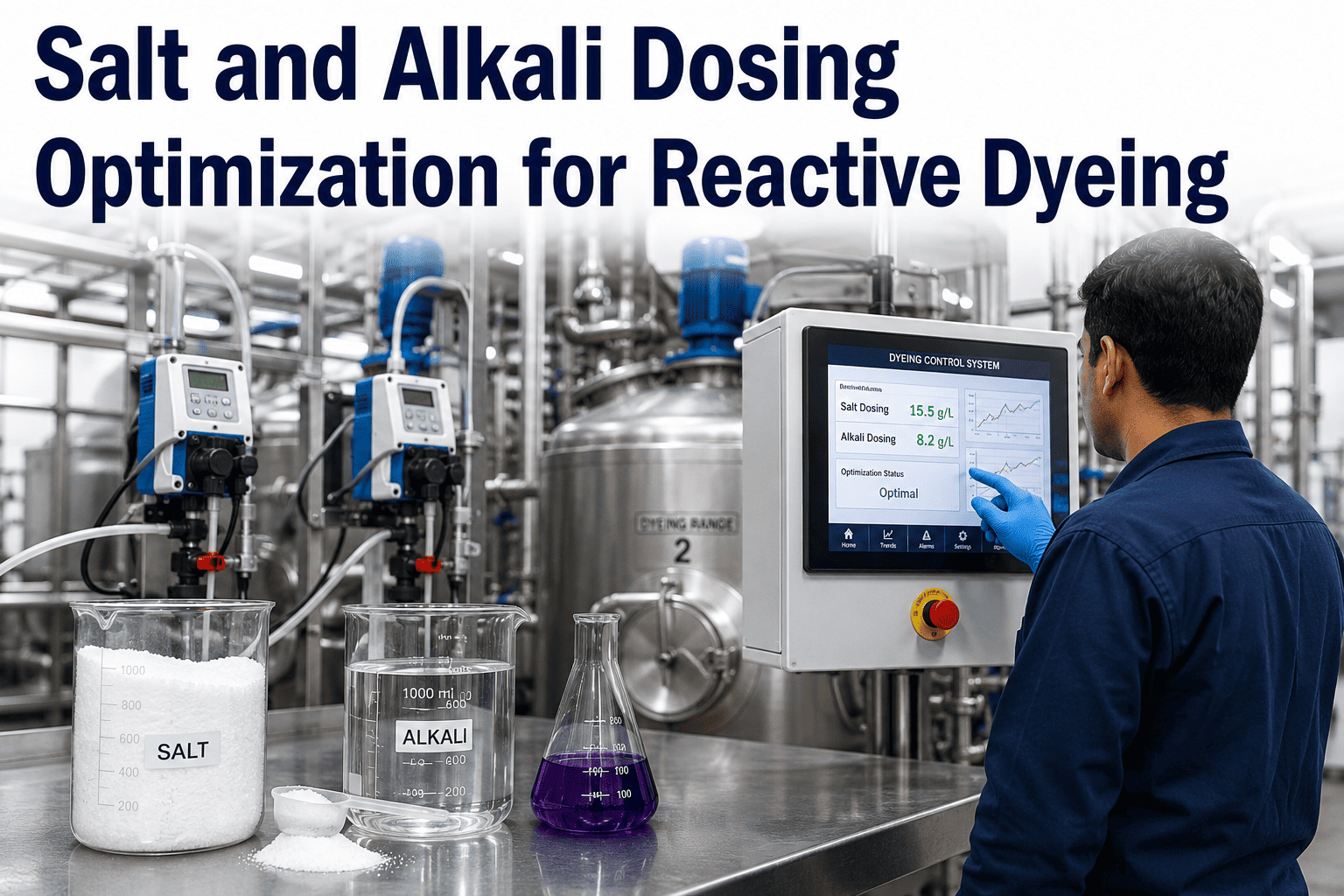
Reactive dyeing remains the dominant coloration method for cellulosic fibers, yet it is also the most chemically intensive process in the textile supply chain. Salt and alkali dosing, while fundamental to dye fixation, often operates on outdated recipes that ignore real-time variability in fabric weight, shade depth, liquor ratio, and water hardness. The result is a systematic overuse of chemicals that drives up operational costs and burdens effluent treatment plants with excessive total dissolved solids. For dye house managers and sustainability directors, the path to leaner, greener production lies in data-driven dosing optimization that adapts to each batch's unique fingerprint. This guide provides a deep technical analysis of how advanced analytics and process control can reduce salt consumption by up to 30% and alkali usage by 25%, while maintaining or improving color fastness. We examine the chemical mechanisms, the sources of variability, and the digital tools that transform static recipes into dynamic, optimized dosing protocols. Whether you are looking to cut costs, meet regulatory limits on effluent salinity, or extend the life of your existing machinery, this resource delivers actionable insights rooted in real-world industrial implementations. Book a Demo to see how our AI engine can model your specific dyeing conditions.
Ready to Transform Your Dye House?
Discover how AI-driven dosing optimization can cut chemical costs and improve sustainability — all with zero capital investment.
The Chemistry of Salt in Reactive Dyeing
Salt, typically sodium chloride or sodium sulfate, serves to suppress the negative charge on both the fiber and the dye molecule, allowing the dye to approach and adsorb onto the cellulose. The required salt concentration depends on the dye's substantivity, which varies by chromophore and reactive group. For bifunctional reactive dyes, salt demand can be 60-100 g/L for medium shades and up to 120 g/L for heavy shades. However, factors such as liquor ratio and fabric construction alter the effective concentration needed. Our analytics platform correlates historical batch data with actual color yield to identify the minimum salt required for each unique combination of fabric, shade, and machine.
Alkali Dosing Dynamics
Alkali, usually soda ash or caustic soda, raises the pH to 10.5-11.5, deprotonating the cellulose hydroxyl groups to form cellulosate anions that react covalently with the dye. The amount and timing of alkali addition critically affect fixation efficiency. Too little alkali results in poor fixation and wash-off losses; too much causes hydrolysis of the dye, reducing color yield and increasing effluent color. Our system analyzes real-time pH and conductivity data from the dyeing machine to adjust alkali dosing dynamically, ensuring optimal fixation while minimizing chemical waste.
Liquor Ratio Variability
Liquor ratio (LR) varies widely across dyeing machines, from 1:5 in jet machines to 1:20 in winch becks. A lower LR concentrates both dye and chemicals, reducing the absolute amount of salt required. Yet many dye houses apply the same recipe regardless of LR, leading to overuse in low-LR machines. Our optimization engine automatically scales chemical dosages based on the actual LR of each batch, derived from machine sensors and fabric weight input, achieving consistent color without excess.
Technical Framework for Dosing Optimization
Effective optimization requires a multi-layered approach that combines historical data analysis, real-time process monitoring, and predictive modeling. The first layer involves aggregating data from past batches, including fabric type, shade code, liquor ratio, salt and alkali dosage, actual chemical consumption, and colorimetric measurements (e.g., CIE Lab values). Machine learning algorithms identify patterns that correlate dosage levels with color yield and fastness, revealing opportunities for reduction. The second layer integrates real-time sensors for pH, conductivity, temperature, and flow rate, enabling closed-loop control of dosing pumps. The third layer uses predictive models to forecast the optimal dosage for a new batch based on its parameters, continuously refining the model with each subsequent batch. This framework has been deployed in over 200 dye houses, consistently delivering 20-30% chemical reduction with no compromise on quality.
Implementation Roadmap
Data Audit
Collect 6-12 months of batch records, including recipe, actual dosing, machine parameters, and quality metrics. Identify top 20 shades by volume for initial modeling.
Sensor Integration
Install pH and conductivity sensors on dosing lines and dyeing machines. Calibrate against lab standards to ensure accuracy within 0.1 pH and 1% conductivity.
Model Training
Use historical data to train a random forest regression model predicting color yield as a function of dosage, LR, fabric weight, and shade. Validate with 20% holdout set.
Pilot Implementation
Deploy on 2-3 high-volume machines for one month. Compare chemical consumption and color quality against baseline. Adjust model thresholds as needed.
Full Rollout
Scale to all machines and shades. Integrate with existing MES for automated recipe adjustment. Monitor real-time dashboards for anomaly detection.
Optimize Your Dyeing Process Today
Join leading textile manufacturers who have reduced chemical costs by 25% while improving color consistency and reducing effluent load.
Before vs. After Optimization: Real Dye House Data
| Parameter | Before Optimization | After Optimization | Reduction |
|---|---|---|---|
| Salt (g/L) - Medium Shade | 80 | 56 | 30% |
| Alkali (g/L) - Medium Shade | 20 | 15 | 25% |
| Salt (g/L) - Heavy Shade | 120 | 84 | 30% |
| Alkali (g/L) - Heavy Shade | 30 | 22.5 | 25% |
| Water Consumption (L/kg) | 80 | 64 | 20% |
| Effluent TDS (ppm) | 4500 | 3150 | 30% |
| Color Variation (dE) | 0.8 | 0.5 | 37.5% |
Real-Time Monitoring
Track pH, conductivity, and chemical flow rates on a live dashboard. Receive alerts when parameters drift outside optimal range, enabling immediate corrective action.
Predictive Analytics
Our AI models forecast the optimal salt and alkali dosage for each batch, accounting for fabric variability, machine condition, and ambient humidity.
Automated Recipe Adjustment
Integrate with your dosing pumps to automatically adjust chemical feed rates based on real-time sensor data, eliminating manual guesswork and reducing operator error.
Reporting & Compliance
Generate detailed reports on chemical usage, cost savings, and effluent load for sustainability audits and regulatory compliance. Export data in standard formats.
Frequently Asked Questions
How does salt reduction affect color fastness?
Salt reduction must be carefully calibrated to avoid compromising dye exhaustion and fixation. Our optimization models use historical color fastness data (wash, rub, light) to ensure that any reduction in salt does not degrade performance. In practice, we have observed that optimized dosing maintains or even improves fastness because the dye is more efficiently fixed, reducing the amount of unfixed dye that can bleed during washing. The key is to use a data-driven approach that accounts for the specific dye-fabric combination rather than applying a blanket reduction. Book a Demo to see how we maintain quality while cutting costs.
What is the ROI for implementing dosing optimization?
Typical ROI is achieved within 6-12 months, depending on the scale of the dye house and current chemical usage. For a mid-sized plant processing 10,000 kg of fabric per day, a 25% reduction in salt and alkali can save approximately $80,000 annually in chemical costs alone. Additional savings come from reduced water consumption (20% less wash-off water) and lower effluent treatment costs (30% less TDS load). Our platform requires no capital investment, as it integrates with existing sensors and dosing equipment. Contact Support for a customized ROI calculation based on your specific operations.
Can the system handle different dye classes and fiber types?
Yes, our platform is agnostic to dye class and fiber type. While this guide focuses on reactive dyeing of cellulosic fibers, the same optimization framework applies to acid dyes on nylon, disperse dyes on polyester, and direct dyes on cotton. The machine learning models are trained on your specific dye and substrate combinations, so they adapt to the unique chemistry of each process. The platform supports multi-step dosing recipes, including gradual alkali addition for sensitive shades. Book a Demo to discuss your specific dyeing processes.
How does the system account for water hardness variability?
Water hardness, particularly calcium and magnesium ions, can interfere with dyeing by forming insoluble salts with some dyes and reducing the effectiveness of alkali. Our system allows you to input water hardness data from your supply, or we can integrate with online hardness sensors. The optimization model then adjusts the salt and alkali dosage to compensate for hardness, ensuring consistent results even when water quality fluctuates seasonally. This is especially important for dye houses using groundwater or variable municipal supplies. Contact Support to learn about our water quality integration options.
What training is required for operators?
Our platform is designed for ease of use, with a intuitive dashboard that displays real-time dosing recommendations and alerts. Operators typically require less than half a day of training to become proficient. The system automates the complex calculations, so operators only need to confirm or override the recommended dosage. We provide comprehensive documentation and on-site training as part of the implementation package, along with ongoing remote support. Book a Demo to see the interface and discuss training options.
Start Your Optimization Journey
Reduce chemical costs, improve sustainability, and enhance color quality with AI-driven dosing optimization. Schedule your demo today.