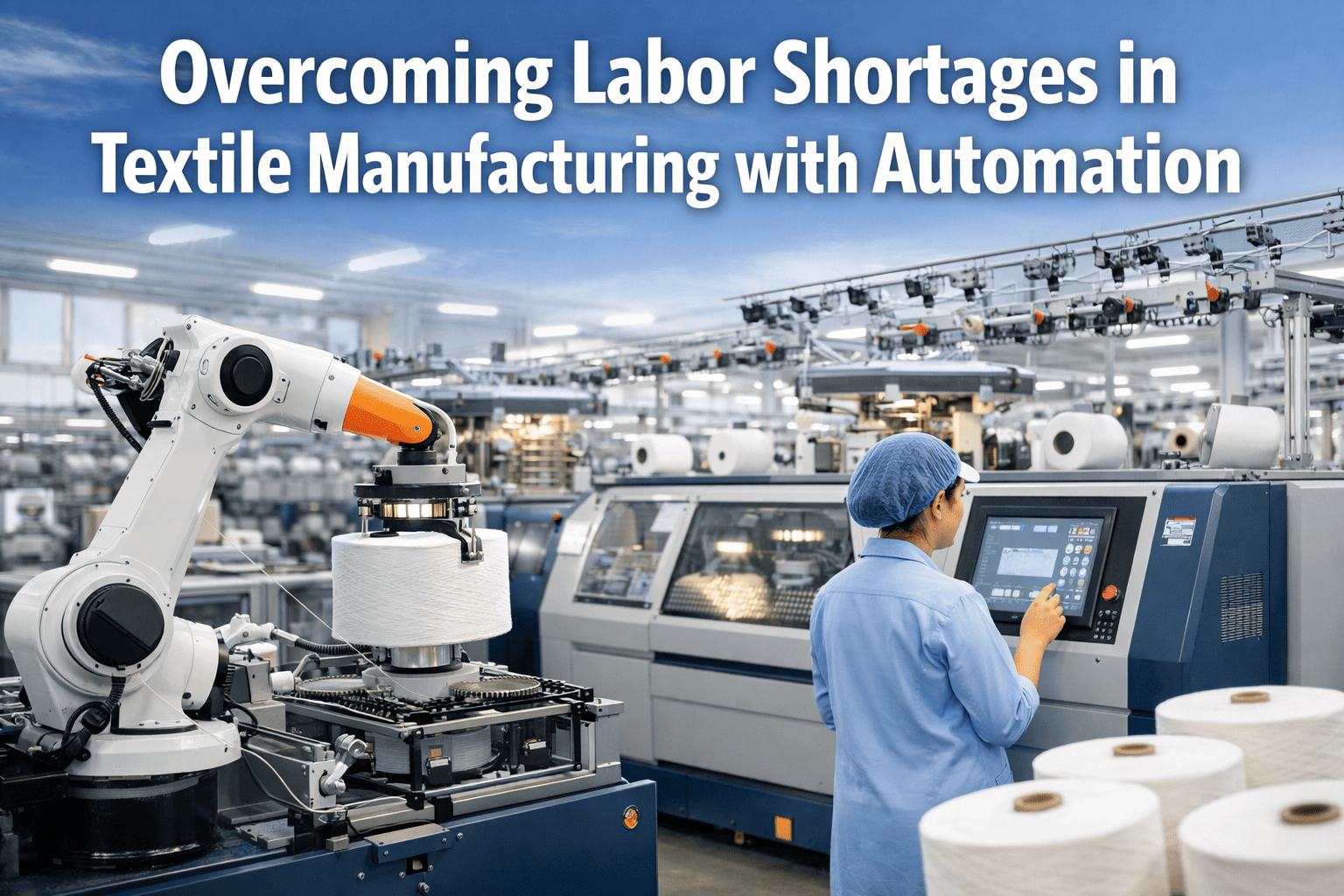
The textile industry is facing a crisis that no hiring drive can fix: millions of skilled workers are retiring, recruitment pipelines are drying up, and production targets keep rising. Book a free demo with iFactory to see how leading mills are using automation to produce more — with fewer people, zero compromises on quality, and total operational control.
The Labor Gap Is Real. Automation Is the Answer.
By 2030, the textile industry could face 2.1 million unfilled jobs globally. Smart factories aren't waiting — they're already running.
See iFactory in Action →Why the Workforce Crisis Is Getting Worse
It's not just about finding workers — it's about a structural collapse of the skilled workforce that took decades to build.
Aging Workforce
10,000 experienced workers retire daily across manufacturing sectors. Their skills and machine knowledge leave with them — and there's no replacement pipeline.
Rising Wage Pressure
Wages in major textile hubs have surged 20–35% over five years. Competing on labor costs alone is no longer viable — especially against automated competitors.
Skills Gap Widening
Germany alone had 63,000 vacant apprenticeships in a single year. Modern machines need trained operators — and training takes time most factories don't have.
Competitive Pressure
Fully automated facilities in China run 24/7 with near-zero labor overhead. Manual-heavy factories are losing contracts, margins, and market share — fast.
Where Automation Makes the Biggest Impact
Not every process needs a robot — but the right automation in the right places transforms your entire operation. Here's where smart textile factories are deploying it first.
AI-Powered Quality Inspection
Computer vision systems scan fabric at machine speed, catching defects human eyes miss. Accuracy exceeds 95% — consistently, shift after shift.
Automated Cutting Systems
AI-optimized cutting layouts minimize fabric waste and run multi-layer cuts in minutes. No downtime between shifts, no fatigue-related errors.
Smart Production Monitoring
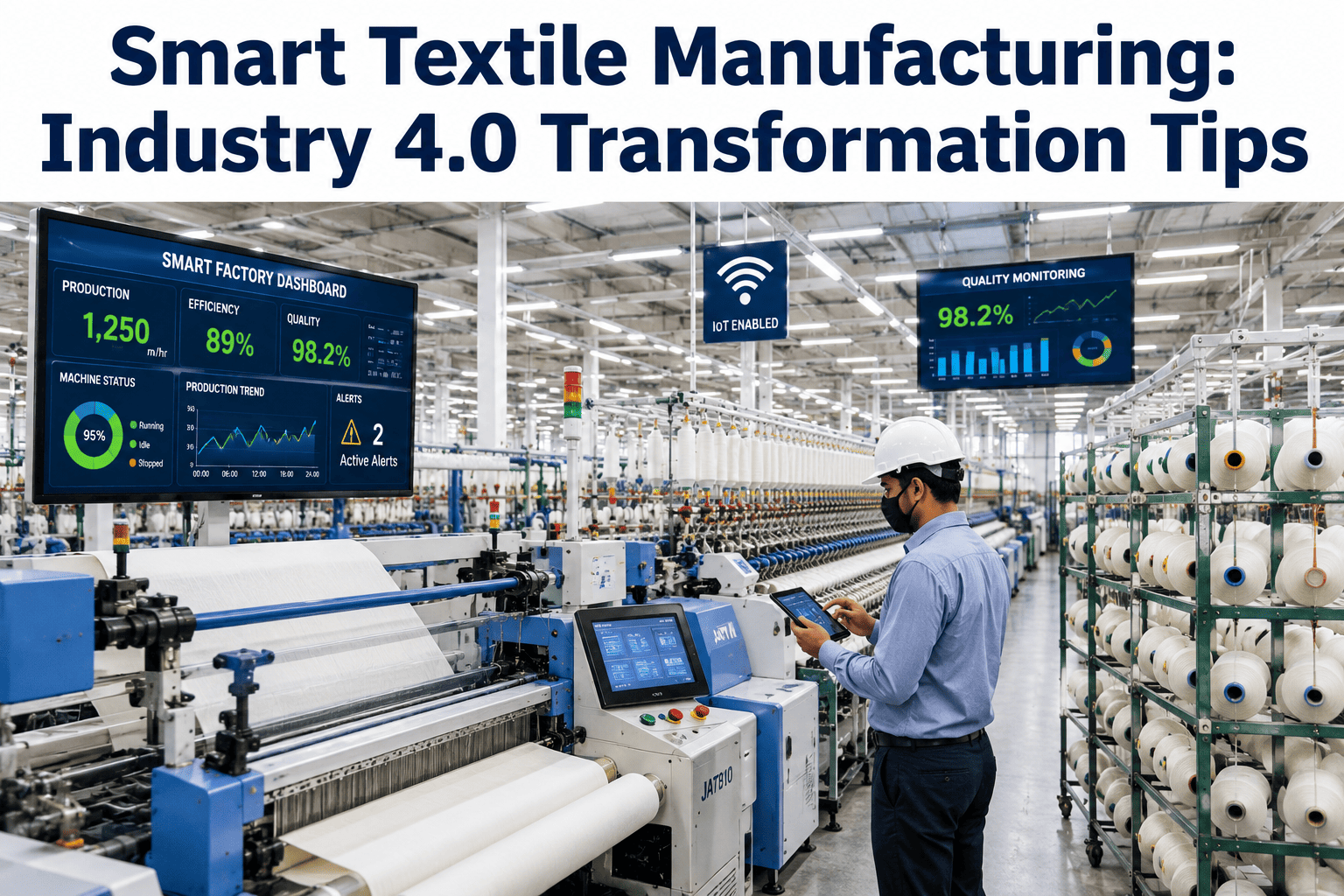
IoT sensors feed real-time data to a central AI dashboard. Supervisors manage entire production floors from a single screen — no floor-walking required.
Automated Spinning & Weaving Control
Modern spinning frames and looms operate under automated parameter control — adjusting tension, speed, and consistency without manual intervention.
Predictive Maintenance
AI detects early failure patterns 2–6 weeks ahead. Maintenance gets scheduled — not scrambled. Less downtime, fewer emergency repairs, no midnight callouts.
Warehouse & Inventory Automation
AGVs and automated storage systems handle picking, packing, and stock replenishment. One worker manages what previously required six.
Manual Operation vs. Smart Factory: The Real Difference
Manual-Heavy Factory
- ✗ Dependent on skilled worker availability
- ✗ Productivity drops on absenteeism
- ✗ Inconsistent quality across shifts
- ✗ Reactive response to machine failures
- ✗ High overtime costs during peak demand
- ✗ Slow ramp-up for new orders
- ✗ Training takes weeks, not hours
iFactory Smart Operation
- ✓ Runs 24/7 with minimal staffing
- ✓ Output stays consistent regardless
- ✓ AI guarantees uniform quality
- ✓ Failures predicted weeks in advance
- ✓ Labor costs scale intelligently
- ✓ New orders handled with agility
- ✓ Teams trained in hours via mobile app
Automation Doesn't Replace People — It Elevates Them
The best-performing textile factories don't eliminate their workforce — they redeploy it. Automation handles the repetitive, physically demanding tasks so your people can focus on higher-value work.
How iFactory Bridges the Labor Gap
iFactory is built specifically for textile manufacturers. Every feature is designed around the real challenges your factory faces — from aging equipment to high turnover to production unpredictability.
Textile-Specific AI
Pre-trained on spinning, weaving, dyeing, and finishing data. Faster deployment, fewer false alerts, more accurate predictions from day one.
Works on Legacy Machines
Retrofit IoT sensors onto any existing equipment — old or new. No need to replace working machinery or overhaul your floor layout.
Mobile-First for Teams
Technicians get alerts on their phones, manage work orders in the field, and update status in real-time. Training takes hours, not weeks.
Live Production Dashboard
One screen shows your entire factory — machine status, output rates, alerts, and team assignments. Management clarity without micromanagement.
From Manual to Automated: Your 90-Day Roadmap
Factory Assessment
iFactory specialists audit your critical machines, identify highest-impact automation opportunities, and define a clear ROI baseline.
Pilot Deployment
Sensors installed on 5–10 priority machines. Platform connected and team onboarded. Alerts configured and dashboards live.
AI Learns & Validates
Models learn your specific machine patterns. Early predictions validated. Alert thresholds fine-tuned. First measurable ROI documented.
Scale Across the Factory
Full rollout to all equipment. Auto parts ordering integrated. Mobile app deployed to all technicians. Continuous improvement mode activated.
Frequently Asked Questions
Build a Factory That Runs on Intelligence, Not Headcount
Join textile manufacturers using iFactory to automate smarter, produce more consistently, and compete on capability — not just labor cost.