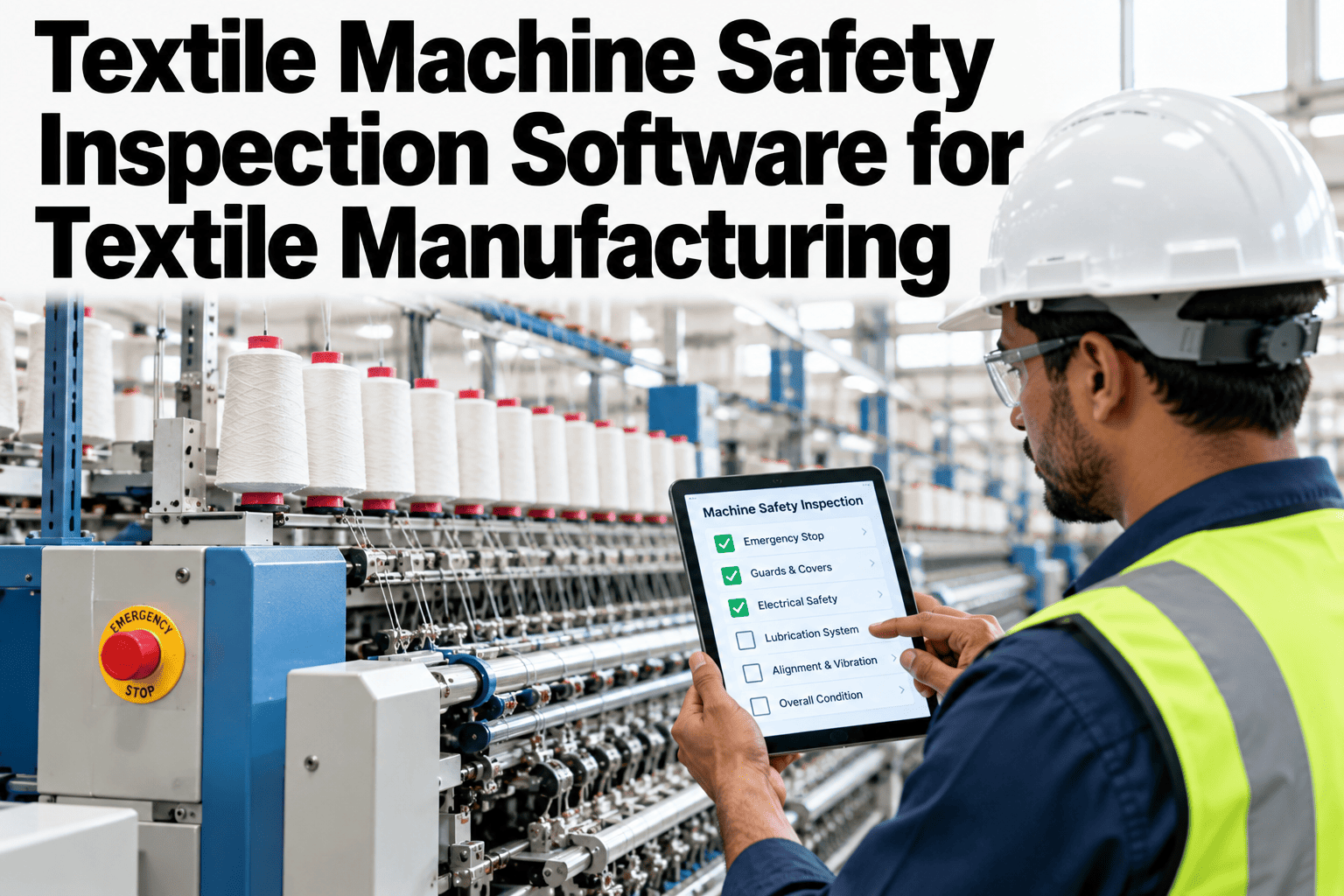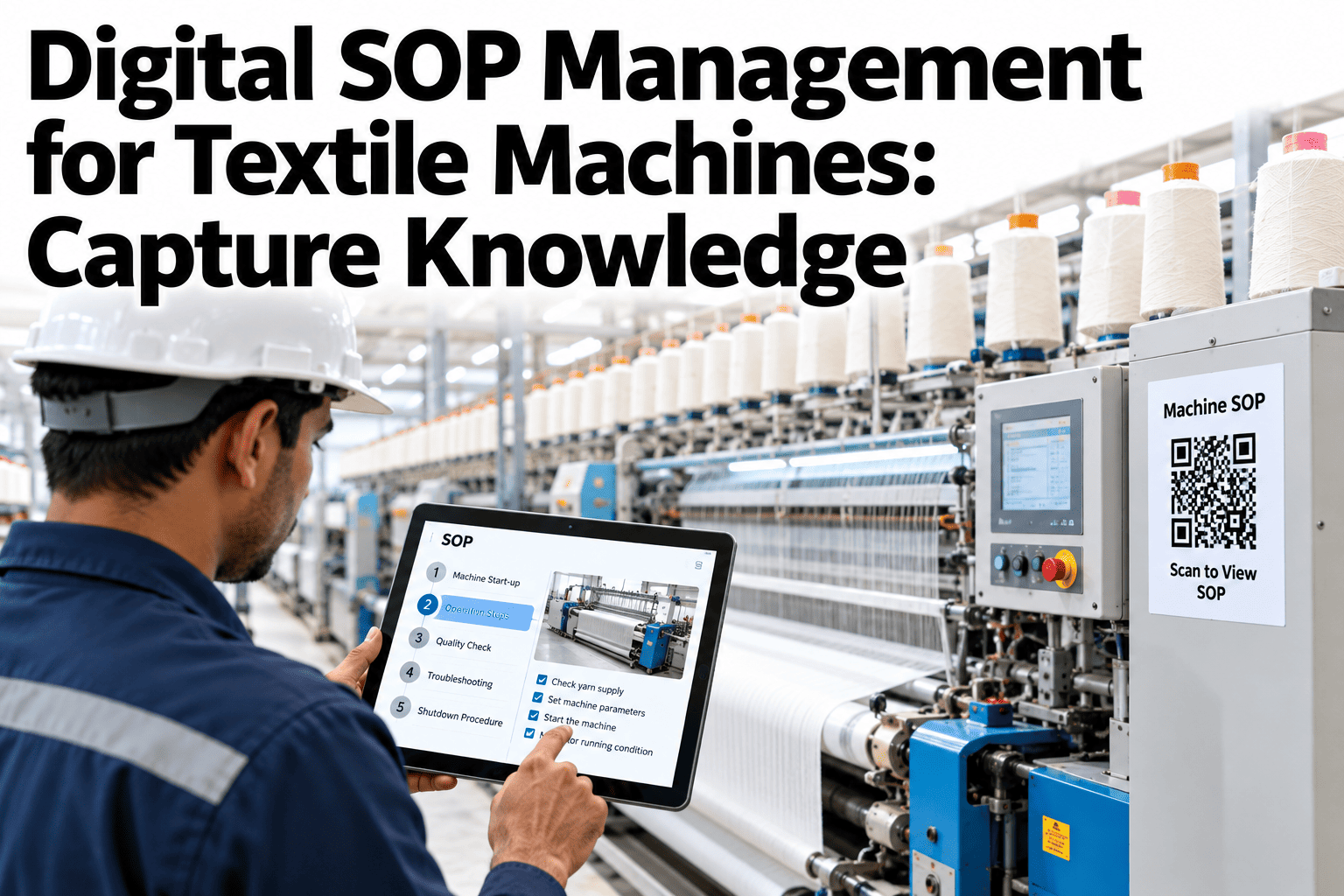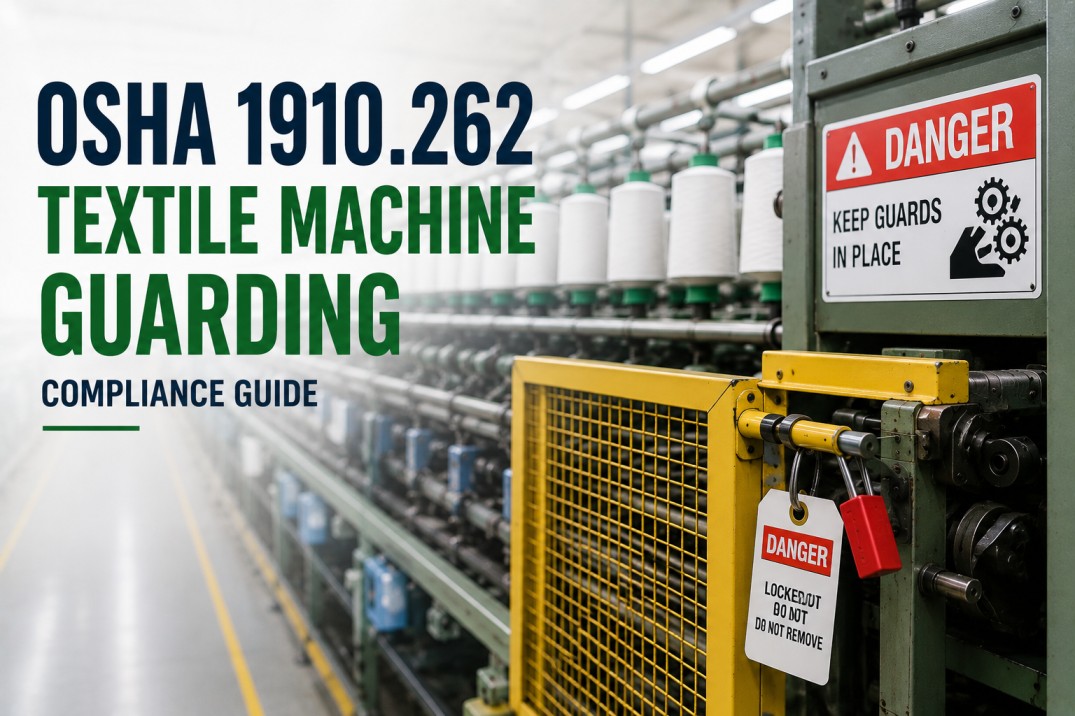
OSHA 1910.262 is the specific standard that governs machine guarding and worker safety in textile mills. It covers shuttle guards on looms, nip point protection on rollers and calendars, belt and pulley guarding, J-box and opening security on carding and drawing frames, and lockout/tagout procedures for all textile machinery. Non-compliance carries fines ranging from $16,131 per serious violation to $161,323 for willful or repeat offenses. This page breaks down the seven guarding zones that OSHA 1910.262 mandates for textile equipment, maps the five most-cited violations across spinning and weaving mills, presents a six-step digital LOTO workflow that reduces lockout time by 35–50%, and provides a 16-week audit preparation timeline that helps mills achieve full compliance before their next OSHA inspection. Mills using iFactory's digital safety management platform average 94% compliance on unannounced audits, compared to the industry average of 67%.
What OSHA 1910.262 Requires for Textile Machine Guarding
OSHA 1910.262 (Textiles) is a subset of the general machine guarding standard 1910.212, written specifically for the unique hazards present in textile manufacturing. The standard addresses the machinery and processes that have historically caused the most injuries in textile mills: shuttle projections from looms, caught-between incidents at nip points, belt and pulley entanglement, opening falls on carding machines, and electrical hazards during maintenance. Each requirement specifies the type of guard, the maximum allowable opening, the material specification, and the inspection frequency. Understanding these requirements is the foundation of any textile mill safety program and the first thing OSHA compliance officers verify during an inspection.
Is Your Mill OSHA 1910.262 Compliant?
iFactory's digital safety management platform covers all OSHA 1910.262 guarding requirements with automated checklists, digital LOTO workflows, and audit-ready documentation. Schedule a demo to see your compliance score in real time.
Seven Guarding Zones OSHA 1910.262 Mandates for Textile Machinery
OSHA 1910.262 identifies specific guarding requirements for seven distinct hazard zones found on textile machinery. Each zone has a required guard type, maximum allowable gap or opening dimension, and inspection frequency. The table below summarizes the requirements for each zone as they apply to typical spinning, weaving, and finishing equipment.
Five Most-Cited OSHA 1910.262 Violations in Textile Mills
OSHA's textile industry inspection data reveals a clear pattern of recurring violations. The five citations below account for 78% of all 1910.262-related fines issued to textile mills over the past three fiscal years. Each entry includes the median fine for a first-time serious violation and the most common root cause found during inspections.
Fix Your Top OSHA Violations Before the Next Inspection
iFactory's safety platform identifies gaps in your guarding and LOTO programs and generates corrective action plans. Schedule a demo to run a virtual OSHA readiness assessment on your mill.
Six-Step Digital Lockout/Tagout Procedure for Textile Machinery
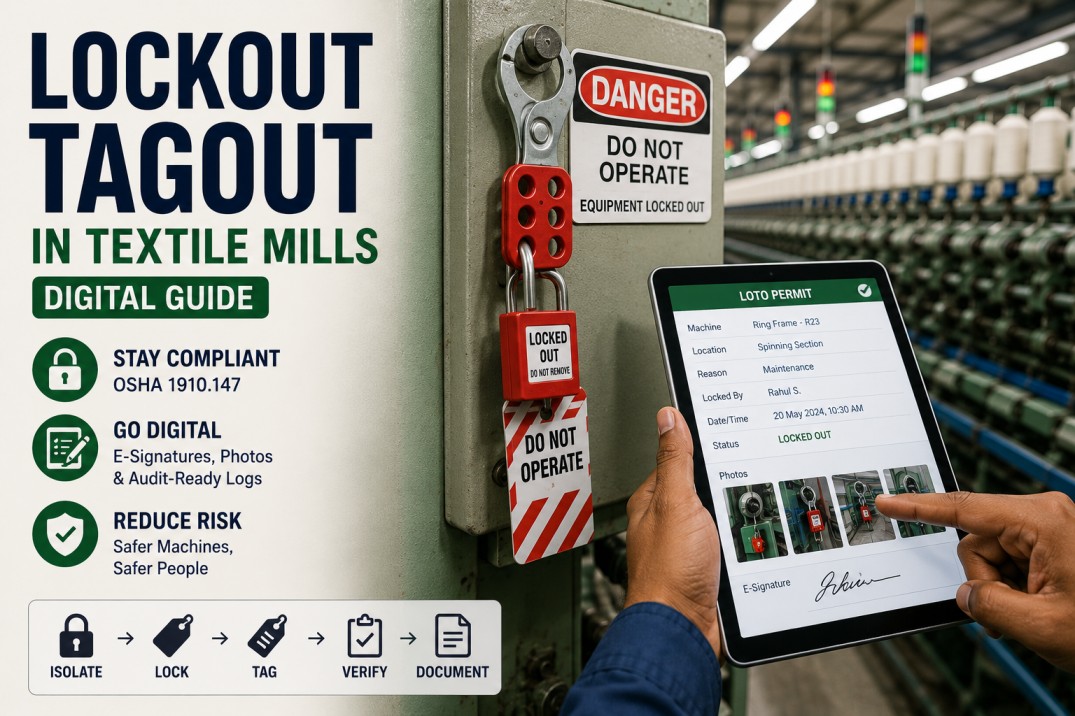
OSHA 1910.262 requires that textile machinery be completely isolated from all energy sources before any maintenance or cleaning activity. A digital LOTO system automates the documentation, verification, and audit trail that paper-based programs struggle to maintain. The six-step procedure below follows OSHA's established energy control hierarchy and applies to all textile equipment from open-end spinning frames to finishing stenter lines.
16-Week OSHA Audit Preparation Timeline for Textile Mills
OSHA inspections of textile mills are often triggered by complaints, referrals, or severe injury reports. Mills that maintain continuous compliance have a significant advantage when an inspection occurs. For mills that need to close compliance gaps, a structured 16-week program can address the most common 1910.262 violations and establish sustainable safety practices.
Frequently Asked Questions About OSHA 1910.262 Textile Compliance
Does OSHA 1910.262 apply to all textile machines or only specific types?
OSHA 1910.262 applies specifically to textile machinery as defined in the standard: opening, blending, carding, combing, drawing, roving, spinning, twisting, winding, weaving, braiding, and finishing equipment. Each machine type has specific guarding requirements detailed in the standard's sub-sections. If a machine is not listed in 1910.262, it falls under the general machine guarding requirements of 1910.212, which has similar but not identical requirements. Mills with mixed operations — for example, a weaving mill with compressed air systems or material handling equipment — must comply with both 1910.262 for textile-specific machines and other applicable OSHA standards for non-textile equipment.
What are the penalties for a serious OSHA 1910.262 violation?
As of 2026, OSHA serious violation penalties are $16,131 per instance. A willful or repeat violation carries a maximum penalty of $161,323 per instance. For textile mills, the most expensive citations typically involve missing shuttle guards combined with inadequate lockout/tagout programs, which can result in multiple serious violations across dozens of machines. A 100-loom weaving shed with missing shuttle guards and no LOTO program could face penalties exceeding $500,000. OSHA also publishes textile industry-specific inspection data and frequently updates its National Emphasis Program for amputation hazards, which directly targets machine guarding violations in textile and apparel manufacturing.
Can a digital LOTO system replace paper-based lockout procedures?
Yes, OSHA accepts digital LOTO systems as long as they meet all requirements of 1910.147 — including energy isolation verification, personal lock application, group lockout procedures, and shift handoff protocols. Digital systems often provide better compliance than paper because they enforce procedural steps in sequence, prevent bypassing critical steps, maintain an unalterable audit trail, and automatically notify supervisors when a lockout exceeds a defined duration. OSHA has issued Letters of Interpretation confirming that electronic lockout/tagout systems are permissible when they provide equivalent or greater protection than traditional padlock and tag methods. iFactory's digital LOTO system has passed OSHA record reviews during actual textile mill inspections.
How often should textile machine guards be inspected?
OSHA 1910.262 does not specify a universal inspection interval, but industry best practice and OSHA's general duty clause require inspections at intervals that ensure guards remain functional and effective. Most textile mills with strong safety programs conduct daily visual inspections by operators at shift start, weekly detailed inspections by maintenance personnel, and monthly documented inspections by safety supervisors. Guards that are subject to heavy wear — shuttle guards on high-speed looms, nip point guards on calendar rolls — require more frequent inspection. iFactory's digital safety platform schedules guard inspections by machine type and usage intensity, generates corrective work orders when guards fail inspection, and maintains a complete inspection history for OSHA review.
What documentation must a textile mill maintain for OSHA 1910.262 compliance?
OSHA requires textile mills to maintain written documentation of their machine guarding program, including a machine-by-machine inventory of all guards and their specifications, documented inspection records with dates and findings, training records for all employees who work near guarded machinery, lockout/tagout procedures specific to each machine type and energy source, and records of any guarding-related injuries or near-misses. OSHA compliance officers during an inspection will ask to see these documents first, before walking the floor. Mills using iFactory's digital safety platform maintain all of this documentation in a single dashboard with automated retention schedules, photo attachments with timestamps, and one-click report generation for OSHA review.
Get Your Mill OSHA 1910.262 Compliant Before the Next Inspection
iFactory's safety management platform covers machine guarding checklists, digital LOTO workflows, training records, and audit documentation for textile mills of all sizes. Schedule a demo to see your mill's compliance dashboard and run a virtual readiness assessment.