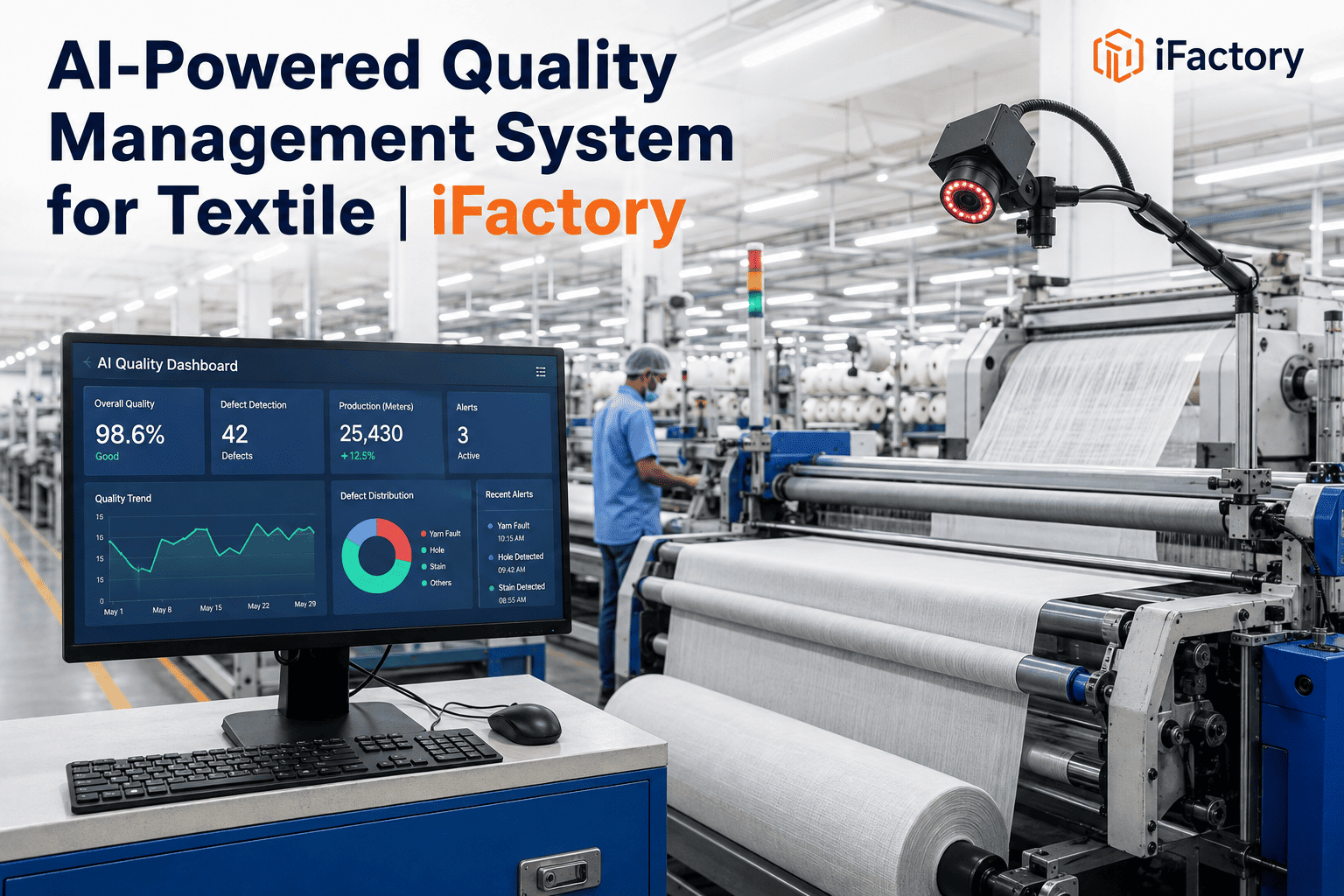
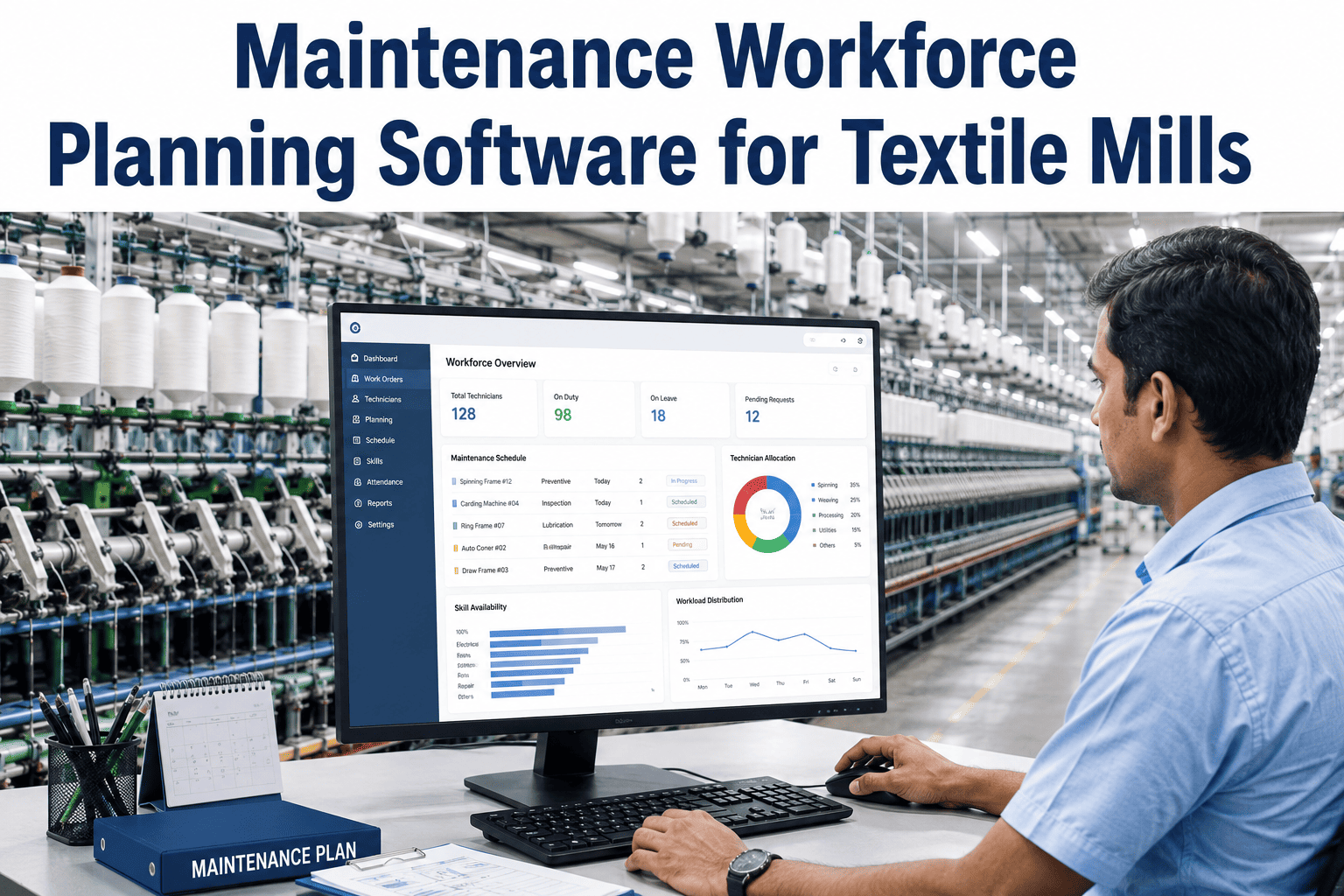
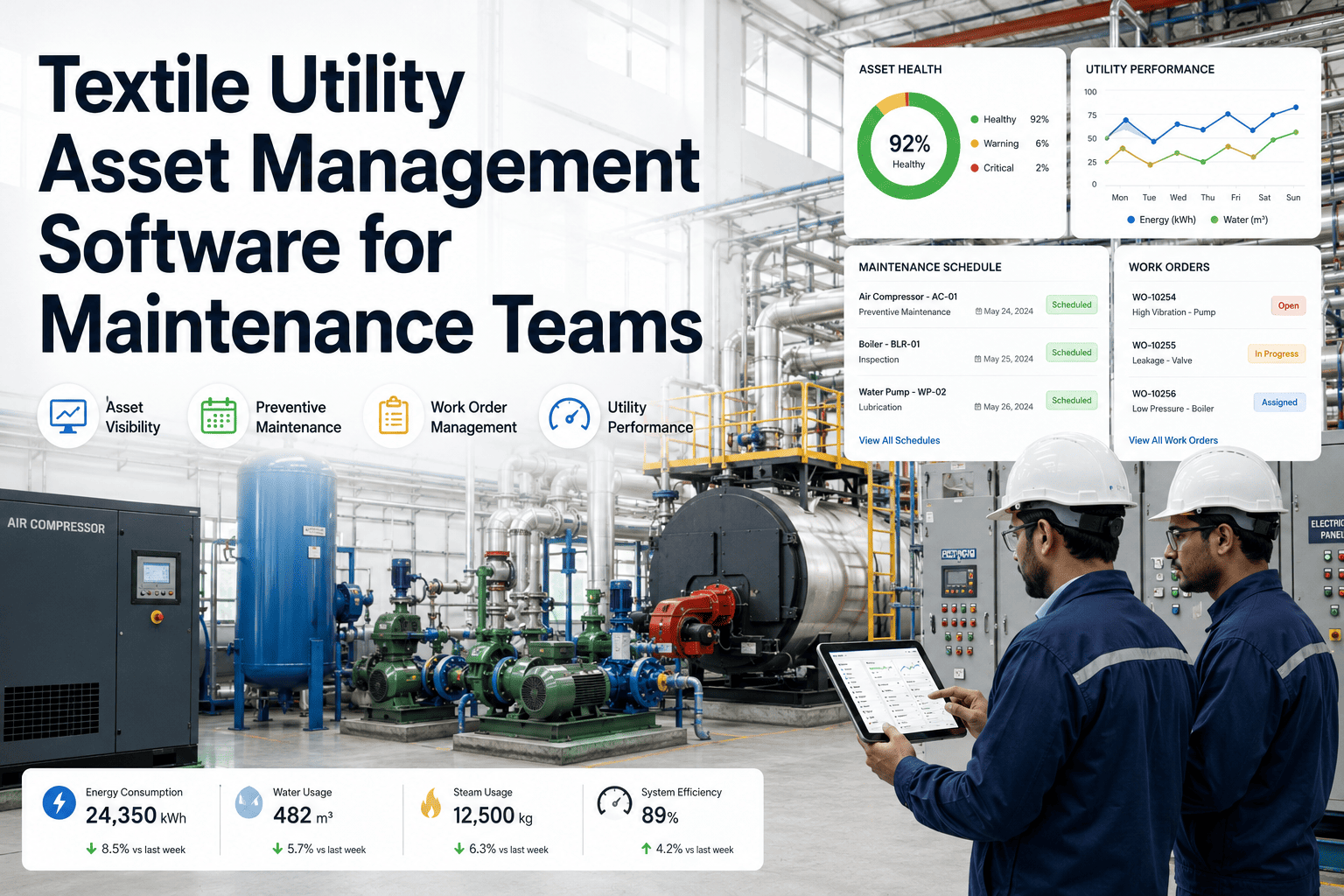
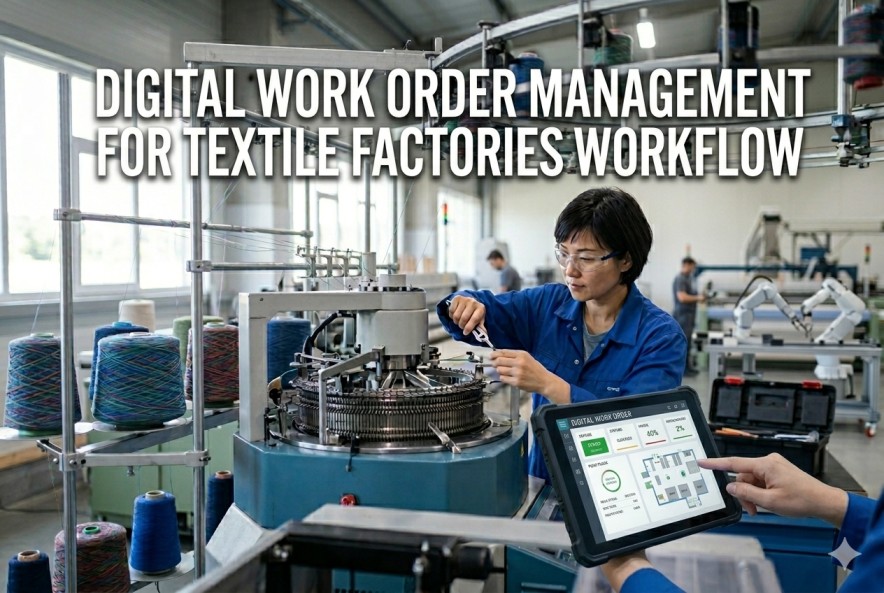
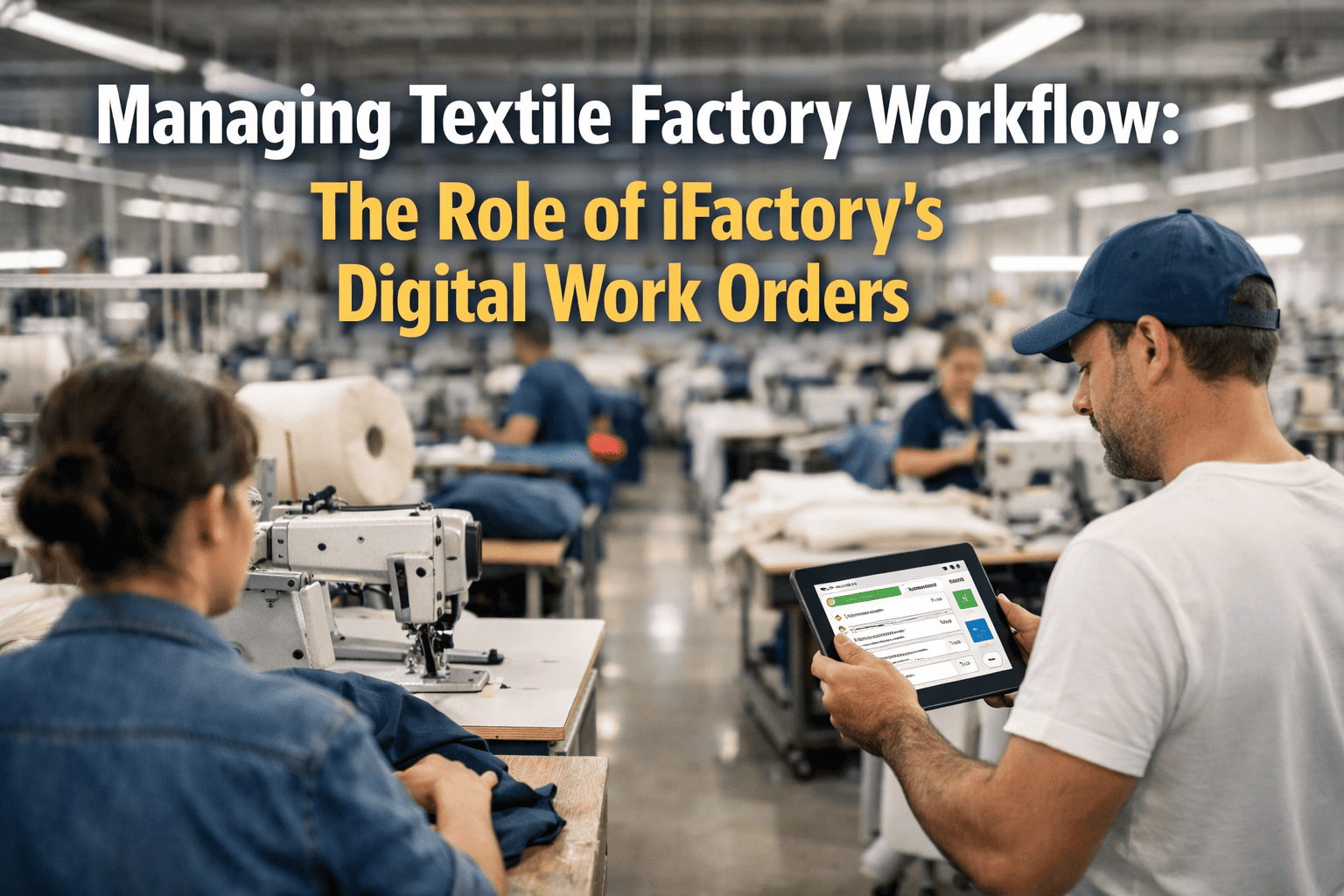
Textile factories run on machines — and machines break. But the difference between a factory that loses hundreds of thousands to unplanned stoppages every year and one that keeps lines running smoothly almost always comes down to one thing: how well their maintenance is managed. A Computerized Maintenance Management System (CMMS) is no longer a luxury for large mills — it's the operational backbone of any textile factory that wants to compete on reliability, cost, and output quality. If you want to see what a purpose-built CMMS looks like in action, book a demo with the iFactory team today.
Maintenance Software · Textile Industry
CMMS in Textile Factories: From Paper Logs to Predictive Intelligence
Spinning frames, looms, dyeing units, knitting machines — a textile factory can have hundreds of assets all demanding maintenance attention. CMMS brings all of it into one system, turning reactive chaos into structured, data-driven upkeep.
Book a Demo
82%
of typical asset failures can be prevented with predictive maintenance via CMMS
$2.41B
projected CMMS market size by 2030, growing at 11.1% CAGR
66%
of maintenance teams now use a CMMS to track their maintenance programmes
30%
reduction in overall maintenance costs achievable with CMMS adoption
The Core Problem
What Happens When Textile Maintenance Has No System
Most textile factories don't fail because of bad machines. They fail because maintenance is managed through memory, paper logs, and WhatsApp messages. Without a centralized system, every breakdown becomes a firefight — and every firefight costs more than it should.
01
No Visibility Into Machine Condition
Maintenance managers have no reliable picture of which machines are overdue for service, which have recurring faults, or which are approaching failure. Decisions are reactive and based on gut feel.
02
Lost Maintenance History
When a senior technician leaves, their knowledge leaves with them. Paper logs are incomplete, misplaced, or unreadable. There is no traceability of what was done to which machine and when.
03
Spare Parts Crisis
Stockouts on critical parts mean emergency courier orders at premium prices. Overstocking ties up working capital. Without inventory visibility, parts management is constant guesswork.
04
Manual Scheduling Gaps
Preventive maintenance gets skipped during busy production runs. There is no automated reminder, no escalation, and no record of the missed service — until the machine breaks down at the worst possible moment.
Most textile manufacturers still operate on a reactive maintenance model — fixing machines only after failure. This approach costs 3–5x more per repair than planned maintenance interventions.
3–5xhigher repair cost reactive vs. planned
What CMMS Does
The 5 Core Functions of a CMMS in a Textile Factory
A CMMS is not just a digital work order system. In a textile context, it operates as a complete maintenance intelligence platform — connecting asset data, technician workflows, spare parts inventory, and compliance records into a single source of truth.
Work Order Management
Every maintenance task — planned or reactive — is captured as a digital work order with machine ID, fault description, assigned technician, priority level, and completion timestamp. No task gets lost. No repair goes undocumented.
Textile relevance: looms, spinning frames, dyeing units, finishing lines — all tracked in one queue
Preventive Maintenance Scheduling
PM tasks are scheduled based on machine runtime hours, production cycles, or calendar intervals — whichever comes first. The system sends automated reminders before the service is due, ensuring maintenance happens on condition rather than crisis.
Result: 20–40% reduction in unplanned stoppages within the first 6 months of deployment
Asset Register & Equipment History
Every machine in the factory gets a digital profile: specifications, installation date, service history, fault log, and associated spare parts. A textile factory running 200+ machines can track each one's complete lifecycle in a searchable, auditable record.
Impact: identify repeat failures, justify machine replacement, support warranty claims
Spare Parts & Inventory Control
Parts consumption is tracked against work orders. Minimum stock levels trigger reorder alerts before stockouts occur. Usage patterns drive smarter purchasing decisions — reducing both emergency orders and surplus stock sitting idle on shelves.
Outcome: parts always available when needed · 15–25% reduction in inventory carrying cost
Reporting, KPIs & Maintenance Analytics
Mean Time Between Failures (MTBF), Mean Time To Repair (MTTR), technician productivity, PM compliance rate, and cost-per-machine are calculated automatically from operational data. Managers stop guessing and start making decisions backed by evidence.
Visibility: real-time dashboards · exportable reports · trend analysis by machine, department, or site
Not sure how to set up your asset register or structure your PM schedules for a textile environment? The iFactory support team works with factories during onboarding to map your machine park, configure alert thresholds, and build PM templates that match how your production lines actually run.
Before vs. After
Life in a Textile Factory: Before and After CMMS
Breakdowns discovered only when production stops
Maintenance history in paper books or technician memory
Work orders communicated by phone or verbal instruction
Spare parts stockouts cause delays in every repair
No data on which machines fail most or cost most to maintain
PM schedules skipped during busy production periods
Compliance audits require manual reconstruction of records
Sensor alerts and PM triggers catch faults before stoppage
Full digital history per machine — searchable, timestamped
Auto-generated work orders dispatched to mobile in seconds
Min-stock alerts trigger reorders before parts run out
MTBF, MTTR, and cost-per-machine calculated automatically
PM schedules enforced with automated reminders and escalations
Audit-ready reports generated automatically from system data
By the Numbers
What Textile Factories Measure After CMMS Deployment
25%
Increase in Overall Equipment Effectiveness (OEE)
Measured across availability, performance, and quality rate improvement
40%
Reduction in Unplanned Downtime
Typical result within 12 months of full PM schedule compliance
30%
Lower Total Maintenance Cost
From fewer emergency repairs and better parts procurement planning
20%
Longer Average Machine Lifespan
Condition-based maintenance extends asset life vs. run-to-failure approach
82%
Asset Failures Preventable
With predictive maintenance enabled through CMMS and IoT sensor integration
6 mo
Average Payback Period
From downtime savings and maintenance cost reduction in textile deployments
CMMS Across the Floor
How CMMS Applies to Each Department in a Textile Factory
A textile factory is not a single production environment — it's a chain of interdependent departments, each with its own machines, failure modes, and maintenance demands. CMMS handles them all.
Spinning
Spinning Frames & Ring Machines
High-speed rotating components require frequent bearing checks and lubrication cycles. CMMS tracks runtime hours per machine and triggers bearing inspection work orders before vibration anomalies develop into stoppages.
Weaving
Looms & Rapier Machines
Loom timing and reed alignment drift over production cycles. CMMS schedules calibration checks at defined interval milestones, keeping fabric quality consistent and preventing the cascading defects caused by misaligned weft insertion.
Dyeing
Dyeing & Finishing Equipment
Temperature control, pump seals, and valve integrity are critical in dyeing. CMMS links IoT sensor alerts to work orders, ensuring thermal anomalies and seal wear are addressed before they cause batch failures or equipment damage.
Knitting
Circular & Flat Knitting Machines
Needle and cam wear directly affects fabric quality. CMMS tracks production cycle counts per machine and schedules needle inspection and cam lubrication before quality degradation shows up in finished goods — not after.
Utilities
Compressors, Boilers & HVAC
Factory utilities are the backbone of every production department. CMMS manages pressure vessel compliance, boiler inspection schedules, and filter replacement cycles — keeping regulatory requirements met and utility failures off the production floor.
Quality
Quality Check & Testing Equipment
Calibration records for tensile testers, colour matching cabinets, and GSM cutters are maintained in CMMS. Calibration due dates trigger automated reminders, keeping quality equipment compliant with testing standards and audit requirements.
Give Your Maintenance Team the System They Actually Need
iFactory CMMS is built for manufacturing environments like yours — with fast deployment, mobile work orders, asset tracking, PM scheduling, and real-time dashboards designed for factory floor realities. Most textile teams are fully operational within 14 days.
Book a Demo
Common Questions
Frequently Asked Questions