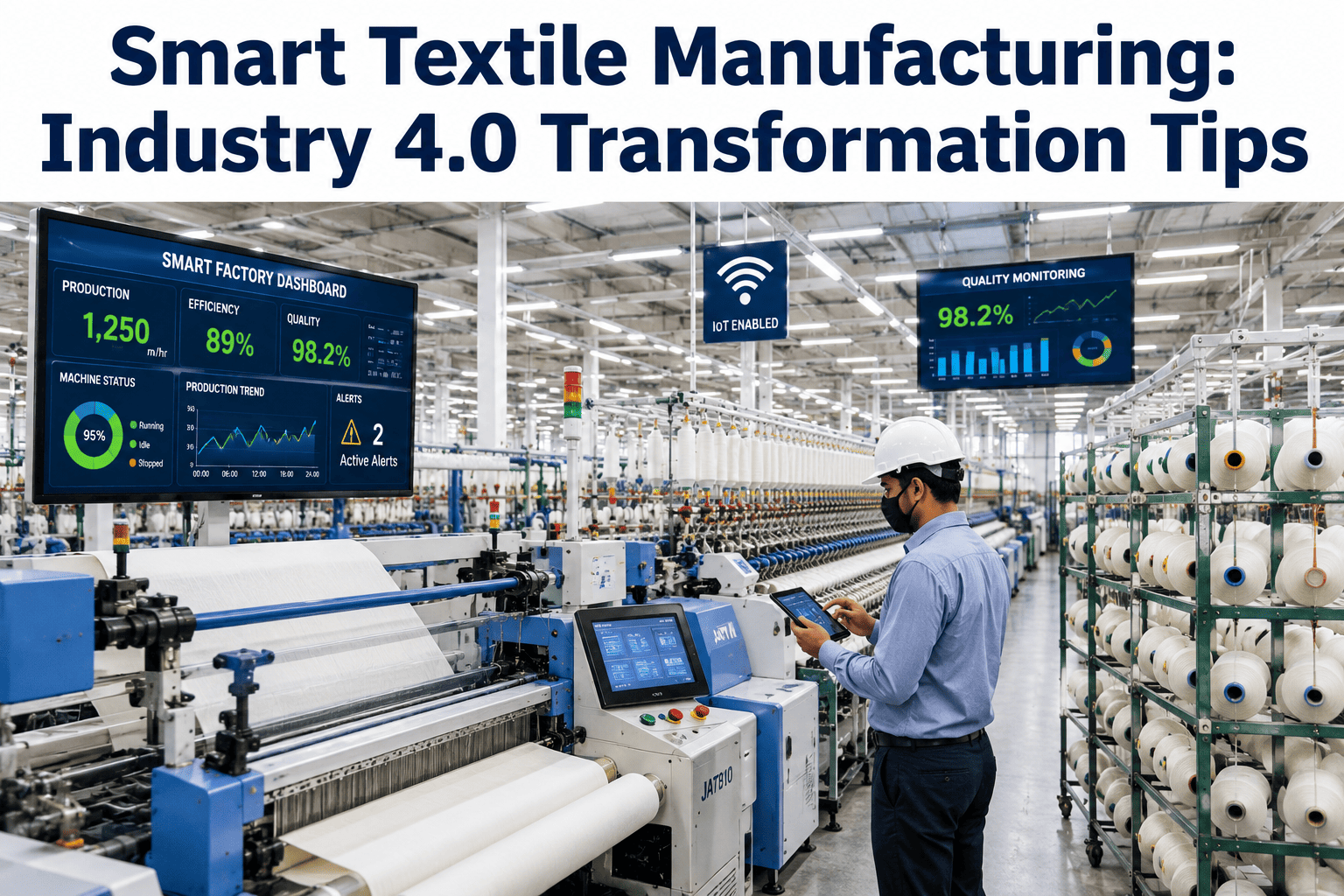
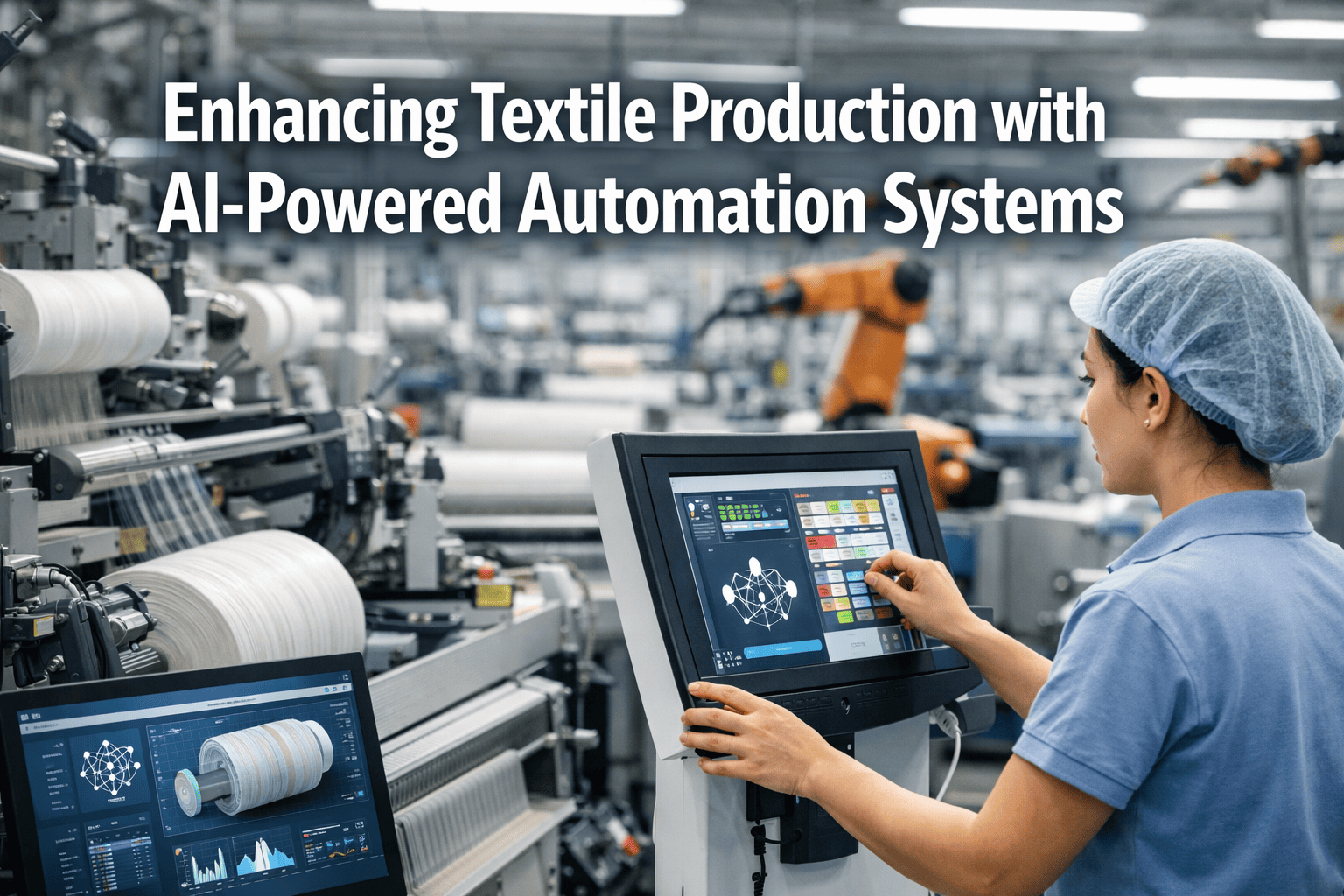
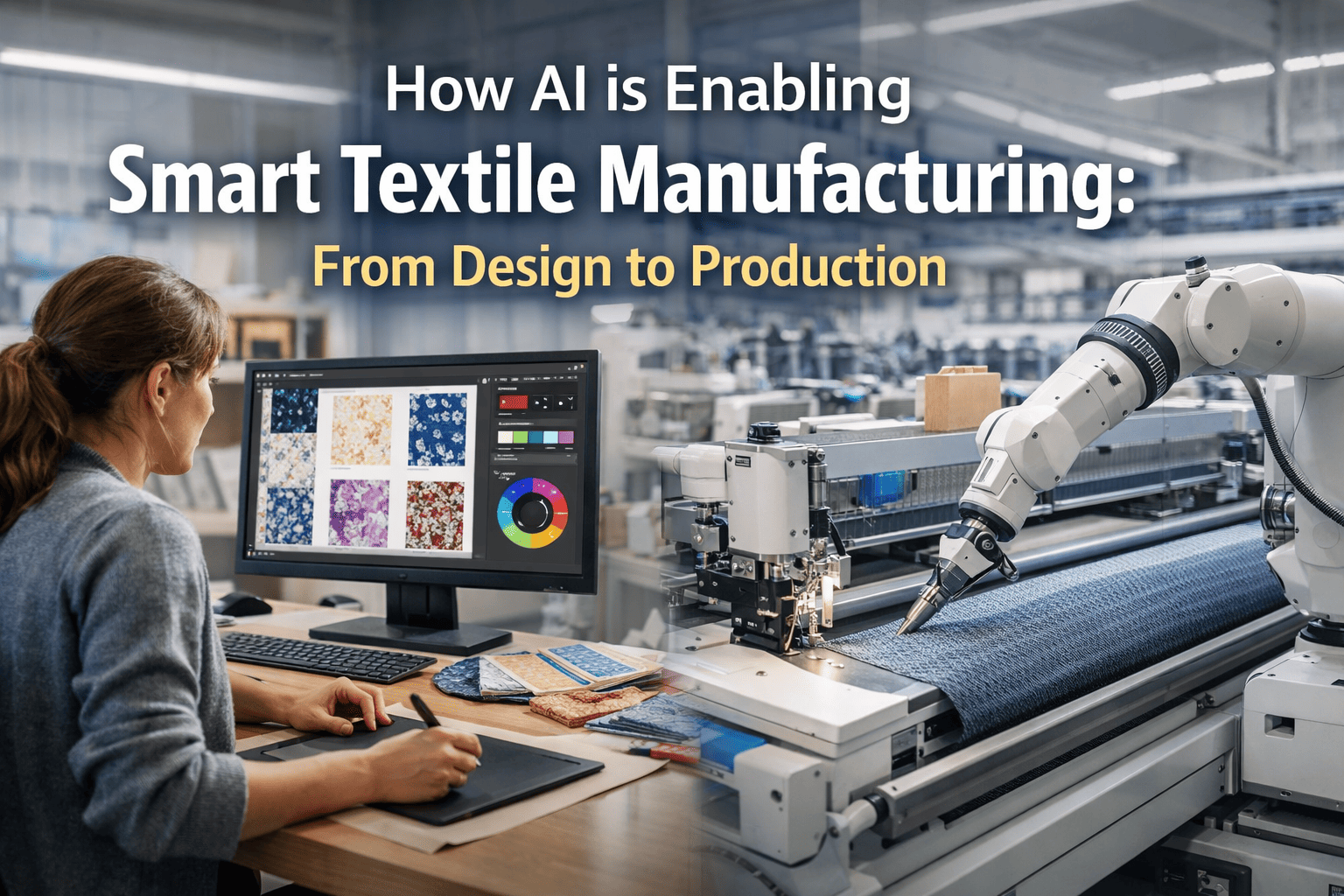
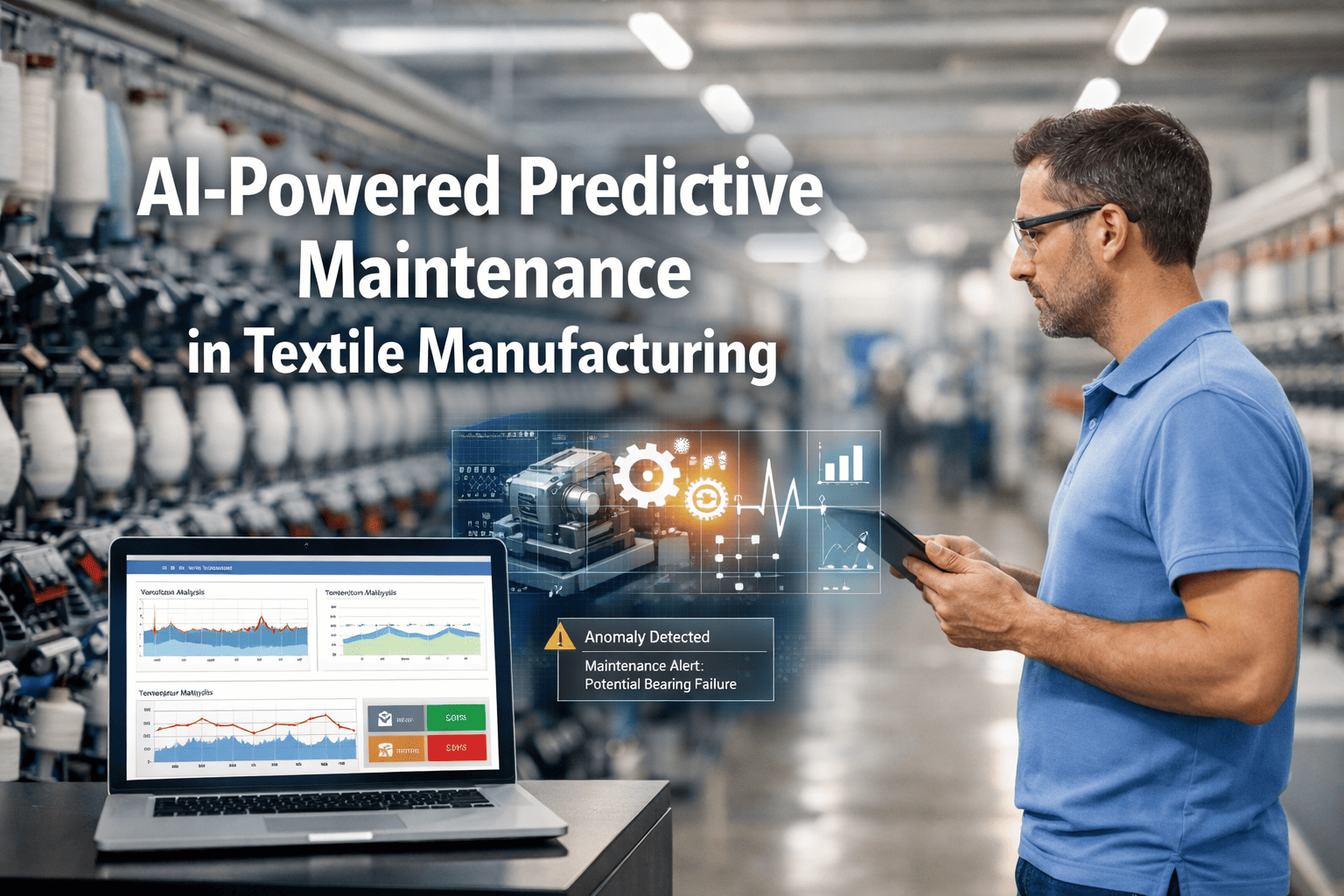
The textile industry is undergoing its most significant transformation in a century — and it is not being driven by a new fiber or a new machine. It is being driven by data. Across spinning floors, weaving halls, and dyeing facilities worldwide, AI is detecting faults before they become failures, catching defects the human eye misses, and turning years of production guesswork into precise, real-time decisions. Mills that have already deployed AI are reporting 45% less unplanned downtime, 30% lower maintenance costs, and quality defect rates cut nearly in half. The ones still running on manual inspection and reactive maintenance are paying the price — in emergency repair bills, wasted material, and lost contracts. If your facility is ready to close that gap, book a demo with iFactory and see what your machines are already telling you.
The Role of AI in Revolutionizing Textile Manufacturing
From predictive maintenance on spinning frames to real-time defect detection on weaving lines — AI is rewriting how textile mills operate, compete, and grow. Here is what is changing, why it matters, and how forward-looking facilities are already pulling ahead.
Book a Free DemoWhy the Textile Industry Cannot Ignore AI Any Longer
For decades, textile manufacturing competed on cost of labor and speed of machinery. That era is ending. The new competitive edge is intelligence — the ability to make faster, more accurate decisions using the data your machines already produce.
The AI-in-textile market grew from $2.64 billion in 2024 and is forecast to reach $43.77 billion by 2034 — a 32% CAGR driven by predictive maintenance, quality automation, and smart production adoption.
Repetitive inspection, manual scheduling, and reactive maintenance roles are being replaced by AI systems that work 24/7, never fatigue, and catch what human eyes routinely miss across high-speed production lines.
ML algorithms dominate AI adoption in textiles — analyzing sensor data from spindles, looms, and dyeing equipment to build baseline performance models and flag deviations before they reach critical failure thresholds.
Where AI Is Making the Biggest Impact in Textile Production
AI continuously monitors vibration, temperature, current draw, and pressure across spinning frames, looms, and dyeing equipment. When sensor readings drift from the established baseline — even by 3–5% — the system generates a fault alert weeks before mechanical breakdown. The result: planned interventions that cost a fraction of emergency repairs.
Computer vision systems scan fabric at production speed — detecting misweaves, color inconsistencies, tension defects, and stains that pass through manual inspection undetected. AI-based defect detection reaches 90–99% accuracy, compared to 70–80% for trained human inspectors operating under shift fatigue and lighting constraints.
AI models ingest historical sales data, seasonal trends, social signals, and supply chain variables to generate production forecasts that match real demand. Mills using AI-driven forecasting reduce overproduction and end-of-season unsold inventory by 20–30% — directly cutting storage costs, material waste, and markdown exposure.
AI analyzes real-time data from across the production line — yarn tension, loom speed, dyebath chemistry, and finishing temperatures — and makes micro-adjustments that human operators would never detect in time. Dyeing processes optimized by AI reduce water and chemical inputs while maintaining consistent color output, batch after batch.
Degrading motors and pumps draw 15–25% excess power before they fail. AI catches that efficiency loss at the 3–5% deviation mark — recovering energy spend before it compounds. Across spinning and weaving operations, AI-optimized energy management delivers measurable reductions in per-unit electricity cost and carbon output.
The Textile AI Adoption Curve — Where Is Your Facility?
Most mills fall into one of four stages. Each stage represents a measurable gap in operational performance, cost control, and competitive positioning.
Fix it when it breaks. No condition monitoring, no data capture. Emergency repair costs 3–4x more than planned intervention for the same fault.
Scheduled maintenance by time intervals, not machine condition. 30% of tasks performed either too early or too late — wasting parts and missing real faults.
Sensors installed, data collected. But without AI analysis, the signal-to-noise problem makes actionable insights slow and human-dependent.
Machine learning detects faults 2–5 weeks ahead, auto-generates work orders, and optimizes maintenance scheduling around production windows.
Before AI vs. After AI — By the Numbers
Our support team runs a free equipment risk assessment — mapping your current maintenance maturity against industry benchmarks and flagging the gaps that are costing you the most.
AI Adoption Across the Textile Value Chain
AI is not a single tool — it is a layer of intelligence applied differently at each stage of the production process. Here is where the highest-impact deployments are happening.
AI monitors spindle bearing wear via vibration amplitude, tracks traveler wear through current anomaly patterns, and flags drafting roller temperature deviations before they cause yarn breakage and quality variance. Spindle faults detected weeks early — not mid-shift.
Cam and crank mechanism vibration drift, warp beam tension irregularities, and shed formation timing deviations are tracked continuously. AI identifies the early signatures of warp breakage and rapier head motor failure — providing intervention windows that manual inspection cannot.
Pump impeller wear is tracked via pressure differential trends. Heating element resistance drift predicts bath temperature failures. Agitator bearing wear is flagged through vibration analysis. AI also detects valve actuator torque anomalies that compromise chemical dosing accuracy.
Computer vision systems scan finished fabric at full production speed — detecting misweaves, color shifts, tension inconsistencies, and surface defects invisible to periodic human inspection. Defect data feeds back into process optimization, reducing root causes batch over batch.
Three AI Trends Reshaping Textile Manufacturing Through 2030
Generative AI tools are compressing design cycles from weeks to hours. Pattern libraries built from consumer trend data and social signals allow brands to generate new colorways and fabric concepts instantly — then simulate drape and physical behavior in 3D before a single physical sample is produced. Time-to-market for new designs is shrinking by up to 30%.
Regulators and brands alike now demand provable sustainability metrics. AI systems that track water consumption per batch, chemical dosing accuracy, and energy usage per meter of output are transitioning from competitive advantages to compliance necessities. Mills without AI monitoring infrastructure will face growing audit and certification challenges.
The next generation of AI deployment does not just alert — it acts. Edge AI processors installed at loom drives and spinning frames make real-time adjustments to speed, tension, and temperature without waiting for cloud processing. Closed-loop AI control turns passive monitoring into active process optimization running at machine speed.
Your Machines Are Generating Failure Data Right Now. Is Anyone Reading It?
iFactory deploys AI-powered predictive monitoring across spinning, weaving, knitting, and dyeing equipment in 7–14 days — with no production shutdown, no new hires, and pre-built machine templates for every major asset type. The mills adopting AI today are not just reducing failures. They are building an operational advantage that compounds over every production season.