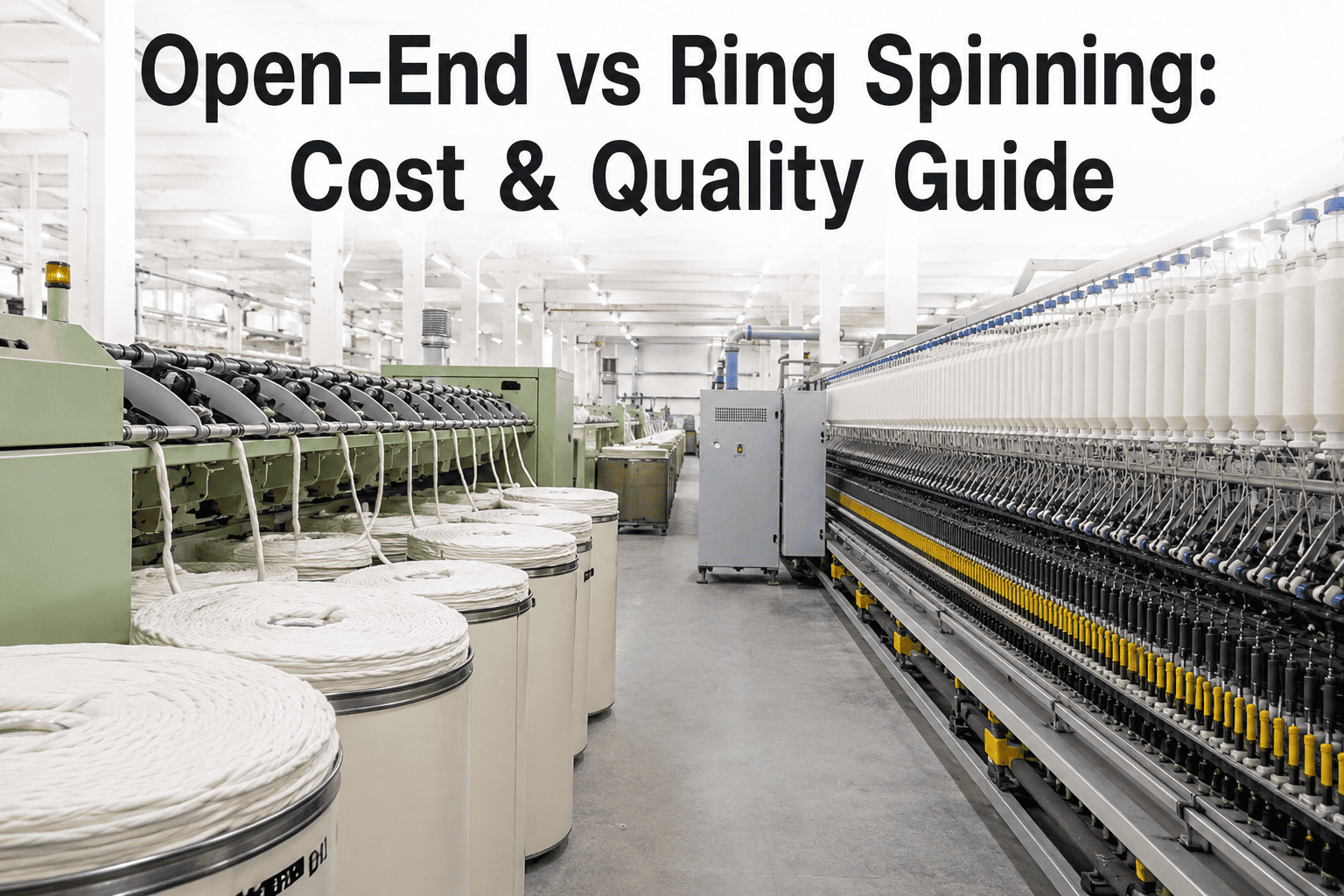
An open-end rotor spinning machine operating Ne 10 to Ne 36 carded cotton at 60,000 to 120,000 rpm depends on three high-wear components: the rotor, the combing roller, and the navel. Each has a defined service life measured in operating hours, and each produces a distinct yarn defect signature when it begins to degrade. A rotor with groove wear generates periodic thick-thin variation at twist multiplication frequency. A dull combing roller produces neps and unopened fiber clusters. A worn navel creates surface striations and uneven twist. Systematic maintenance scheduling based on accumulated running hours and defect trend analysis is the difference between consistent yarn quality and progressive drift that ends in customer complaints. Book a demo to see how iFactory tracks OE spinning component health and schedules maintenance based on actual wear data.
Keep Rotors, Combing Rollers, and Navels in Spec — Every Running Hour
Track component age, detect wear patterns before they cause yarn defects, and schedule maintenance based on actual operating data rather than calendar intervals. No more guessing which rotor is due for replacement.
Three Components That Determine OE Yarn Quality
Every rotor spinning position has three wear-critical interfaces. Each degrades at a different rate, produces different defect signatures, and requires a different maintenance cadence. Knowing the difference between a worn-rotor defect and a dull-combing-roller defect is the foundation of effective troubleshooting.
Rotor
The rotor collects individual fibers in its groove and twists them into yarn. Groove surface condition directly determines yarn evenness. Contamination buildup, groove wear, and imbalance are the three failure modes that affect yarn quality.
Combing Roller
The combing roller opens fiber sliver into individual fibers. Wire condition, tooth angle, and rotational speed determine opening efficiency. Dull or damaged wire produces neps, unopened fiber clumps, and strength variability.
Navel
The navel applies false twist and guides yarn out of the rotor. Surface friction, groove geometry, and concentricity determine twist insertion consistency and yarn surface appearance. Wear causes irregular twist and stripiness.
Track Every Component's Age and Predict Replacement Windows
iFactory tracks cumulative running hours per component, correlates defect data with component age, and alerts your maintenance team when rotors, combing rollers, or navels approach end-of-life thresholds. No more calendar-based schedules that waste useful life or miss failing parts.
Common OE Yarn Defects and Their Root Causes
The table below maps the most frequent defects in rotor-spun yarns to their likely mechanical root causes. Use it as a first-pass diagnostic tool before deciding whether the issue is a cleaning problem, a worn component, or a process parameter that needs adjustment.
| Defect | Visual Signature | Likely Root Cause | Affected Component | Recommended Action |
|---|---|---|---|---|
| Neps | Tiny knots visible against yarn surface | Dull combing roller wire, high roller speed | Combing roller | Replace wire, reduce roller speed |
| Unopened fiber clumps | White or dark specks in fabric | Insufficient opening, silver feed too high | Combing roller, feed roll | Check roller condition, reduce feed rate |
| Periodic thick-thin | Regular diameter cycles at even intervals | Rotor groove wear, groove contamination | Rotor | Clean or replace rotor |
| Stripiness | Longitudinal streaks in knitted fabric | Worn navel, uneven false twist | Navel | Replace navel |
| Irregular twist | Torque variation along yarn length | Navel wear, rotor speed fluctuation | Navel, rotor drive | Check navel, inspect drive belt |
| High CV% | Overall mass variation above Uster 50% level | Multiple worn components, high trash | All three | Full maintenance audit |
| Yarn breaks | End-down events per 100 rotor hours | Rotor contamination, trash buildup, high tension | Rotor, trash removal | Clean rotor, check trash extraction |
OE Spinning Preventive Maintenance Schedule
A structured maintenance program for open-end rotor spinning machines balances cleaning frequency against production interruption. The intervals below reflect industry standards for machines running medium-count carded cotton at 70,000 to 90,000 rpm. Adjust based on trash content, rotor speed, and ambient conditions.
Automate Your OE Spinning Maintenance Schedule
Stop relying on clipboards and shift reports. iFactory tracks component running hours per rotor position, correlates defect data with wear levels, and generates maintenance work orders automatically. Your floor team gets clear instructions on which rotor needs cleaning and which combing roller is due for replacement.
Operating Speed vs Yarn Quality and Energy Consumption
Rotor speed directly affects production rate, yarn quality, and power consumption. The optimal speed depends on yarn count, fiber quality, and machine condition. Operating too fast degrades quality and increases wear. Operating too slow wastes capacity. The chart below shows typical relationships for medium-count cotton yarns.
Best balance of production rate, yarn evenness, and component life. Recommended for Ne 20 to Ne 36 carded cotton. Expected break rate below 2 per 100 rotor hours.
Higher output at the cost of increased wear and quality variability. Requires cleaner raw material and shorter cleaning intervals. Break rate 2 to 5 per 100 rotor hours.
Rapid component wear. Only suitable for coarse counts with premium fiber and intensive maintenance. Break rate exceeds 5 per 100 rotor hours. Power consumption increases 15-20%.
From Defect Signature to Root Cause in Four Steps
AI-powered diagnostic models compare real-time yarn quality data against historical defect-component correlations. When a defect pattern emerges, the system identifies the most probable worn component and recommends the specific maintenance action required.
Detect Defect Event
Yarn clearers and lab testers flag defect events in real time. Each event is classified by type (nep, thick place, thin place, periodic fault) and severity.
Correlate With Component Age
AI matches defect signature against known wear profiles for rotors, combing rollers, and navels. A periodic thick-thin maps to rotor groove wear. A nep spike maps to combing roller condition.
Pinpoint Position
The model identifies the specific rotor position or small group of positions exhibiting the defect pattern. No manual searching — the system tells the team exactly where to look.
Generate Work Order
Maintenance task created with position number, component to replace or clean, required tools, and estimated time. Pushed to team dashboard and mobile devices automatically.
Frequently Asked Questions
What is the typical service life of a rotor in OE spinning?
Rotor service life typically ranges from 6,000 to 8,000 operating hours for standard steel rotors spinning medium-count carded cotton at 70,000 to 80,000 rpm. Rotors running at higher speeds (above 90,000 rpm) or processing dirty cotton with high trash content may wear to end-of-life at 4,000 to 5,000 hours. The groove profile and surface finish determine when a rotor is no longer producing acceptable yarn. Ceramic-coated rotors can extend service life by 40 to 60 percent.
How frequently should combing rollers be replaced?
Combing roller wire typically wears to replacement level after 3,000 to 5,000 operating hours. The primary wear indicators are a rising nep count in the yarn (above the mill's baseline), visible wire damage during inspection, and an increase in CV%. Mills spinning synthetic fibers or blends may see faster wear due to higher friction. The combing roller bearing should be inspected every 500 hours and replaced at every second wire change.
What causes sudden yarn break spikes in rotor spinning?
Sudden break rate increases usually trace to one of four causes: rotor groove contamination from trash buildup, a change in sliver quality (higher short fiber content or moisture variation), degraded combing roller wire causing fiber wrap, or an issue with the trash removal system. The fastest diagnostic approach is to check the trash extraction duct pressure, inspect rotor grooves on the affected positions, and verify combing roller condition. Most break spikes resolve with rotor cleaning and trash system adjustment.
Can the same components be used for different yarn counts?
Rotor diameter and groove profile are count-specific. Coarse counts (Ne 3 to Ne 12) typically use larger rotors (54 to 66 mm diameter) with wider grooves. Medium counts (Ne 12 to Ne 30) use 43 to 54 mm rotors. Fine counts (Ne 30 to Ne 40) require smaller rotors (33 to 43 mm) with narrower grooves. Using the wrong rotor diameter for a given count range compromises fiber collection efficiency and twist insertion, leading to higher break rates and reduced yarn strength. Combing roller wire specifications also change with count.
How does iFactory help optimize OE spinning maintenance?
iFactory tracks cumulative running hours per component per rotor position, correlates yarn defect trends with component age profiles, and generates predictive maintenance alerts before defects reach customer-specified limits. The platform integrates with the machine's control system for automatic running-hour capture and with the lab's Uster Tester or Classimat for defect data ingestion. Maintenance teams receive prioritized work orders with position numbers, predicted root cause, required parts, and estimated labor — eliminating guesswork from the OE spinning maintenance process.
Replace Based on Wear, Not on the Calendar
Every rotor, combing roller, and navel in your OE spinning department has a measurable service life. iFactory tracks actual running hours, correlates defect data with component age, and tells your team exactly when and what to replace — so every maintenance action delivers maximum quality impact per hour invested.