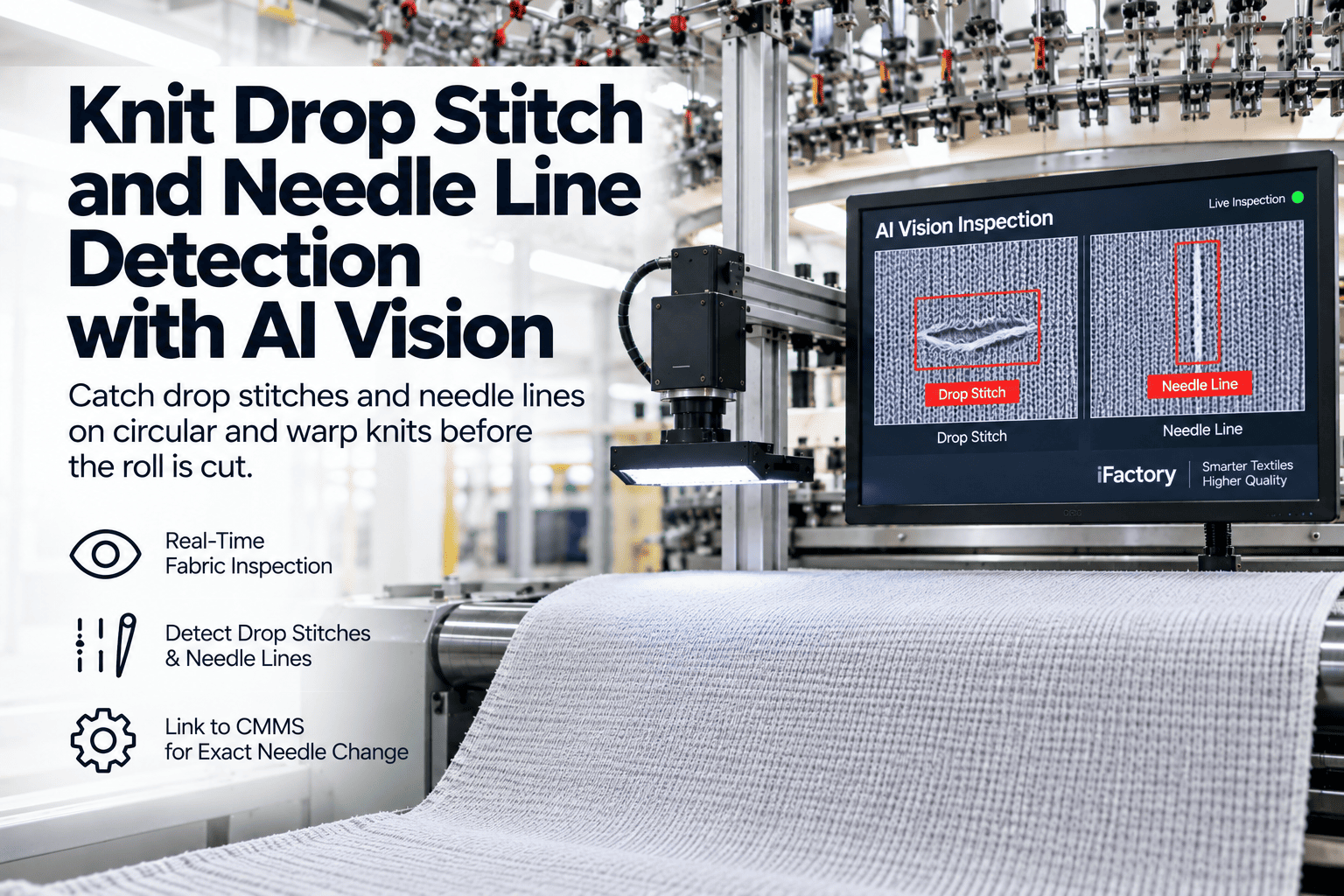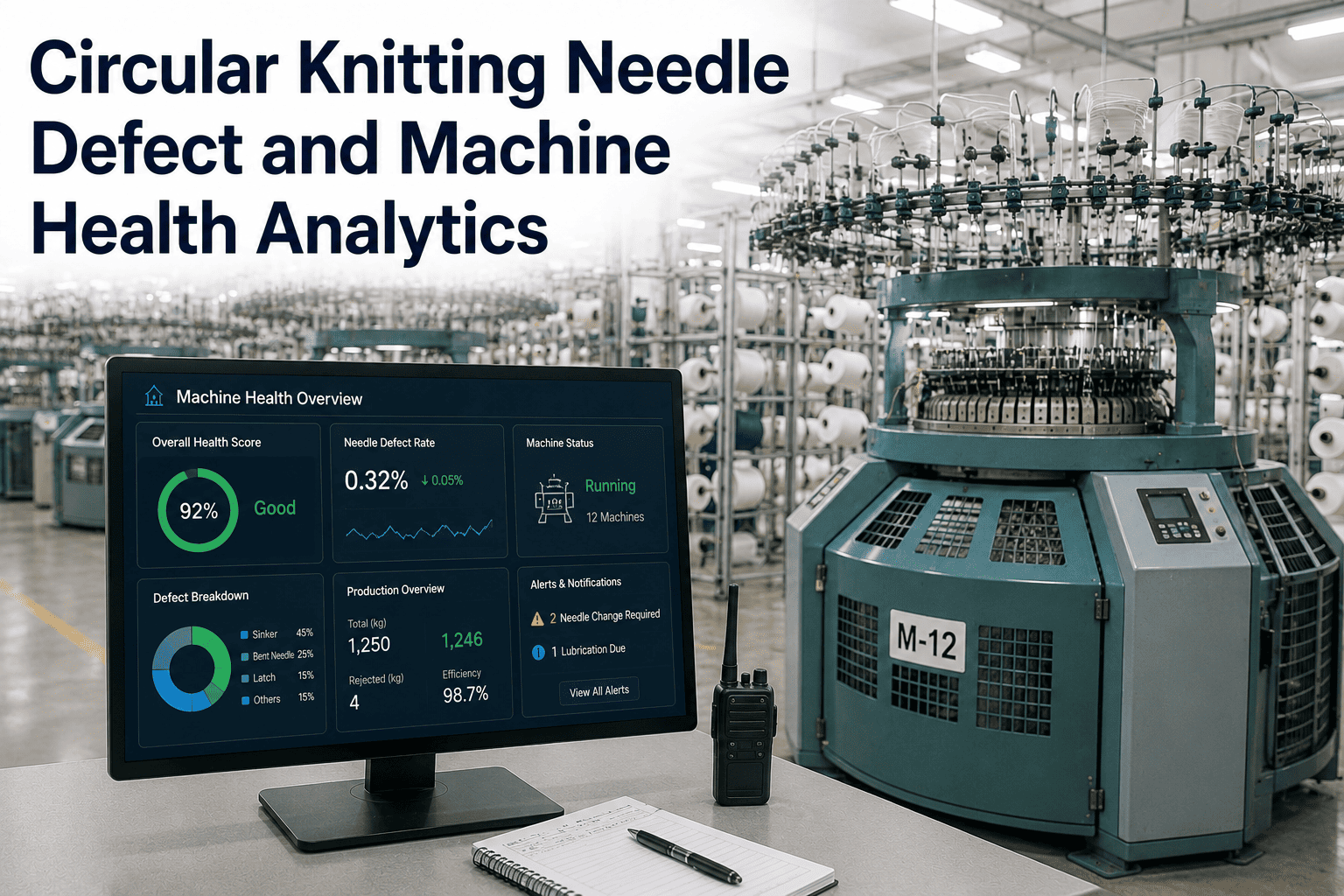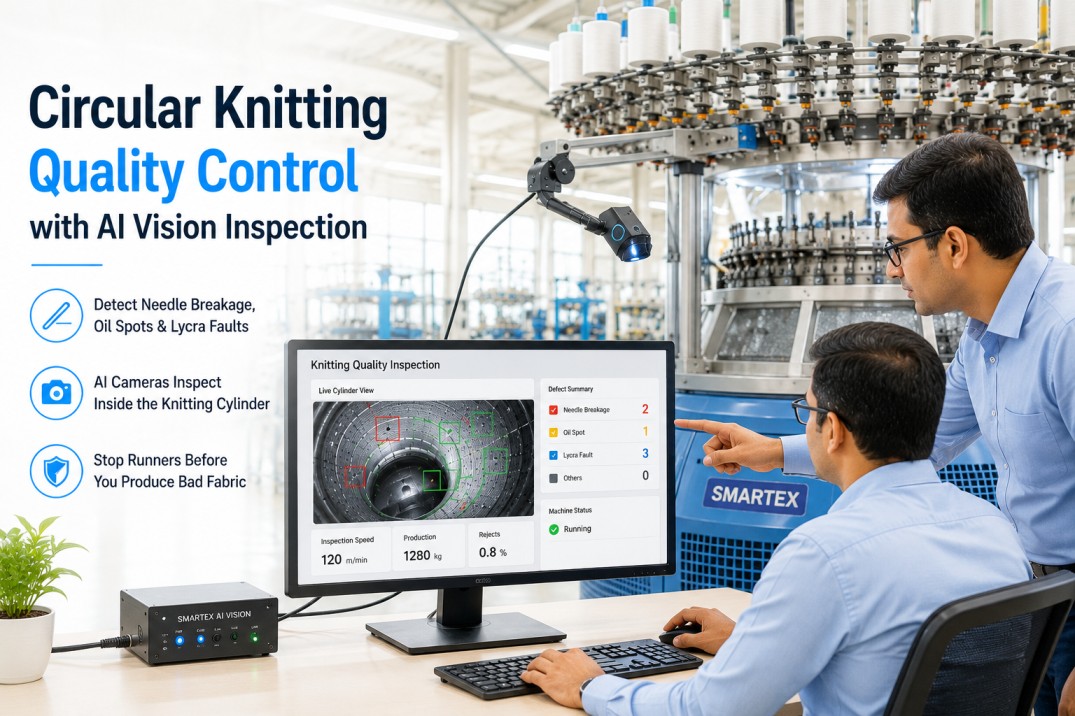
Up to 15 percent of all circular-knit fabric is downgraded or scrapped because defects are discovered too late. Needle breaks, oil spots, and lycra faults originate inside the cylinder — invisible to operators until meters of defective fabric have accumulated. iFactory AI Vision Inspection for Circular Knitting mounts high-speed cameras directly inside the machine, detecting structural deviations within 4 milliseconds and stopping production before a single defective row reaches the roll. Book a demo to see how mills using in-cylinder AI vision cut defect waste to under 0.5 percent and reduce inspection labor by 60 percent.
Stop Catching Defects at Inspection. Start Preventing Them at the Needle.
iFactory's AI-powered vision system mounts directly inside your circular knitting machines — detecting needle breaks, oil lines, and lycra faults as they form. Deployed in 7 days. No cloud dependency.
The Seven Circular Knitting Defects That AI Vision Catches Inside the Cylinder
Not all defects are equal in frequency or cost. The matrix below ranks the seven most common circular knitting defects by occurrence rate, detectability, and downstream financial impact — showing why in-cylinder AI vision is the only inspection strategy that addresses all seven.
| Defect Type | Root Cause | Frequency | AI Detection Rate | Cost Impact |
|---|---|---|---|---|
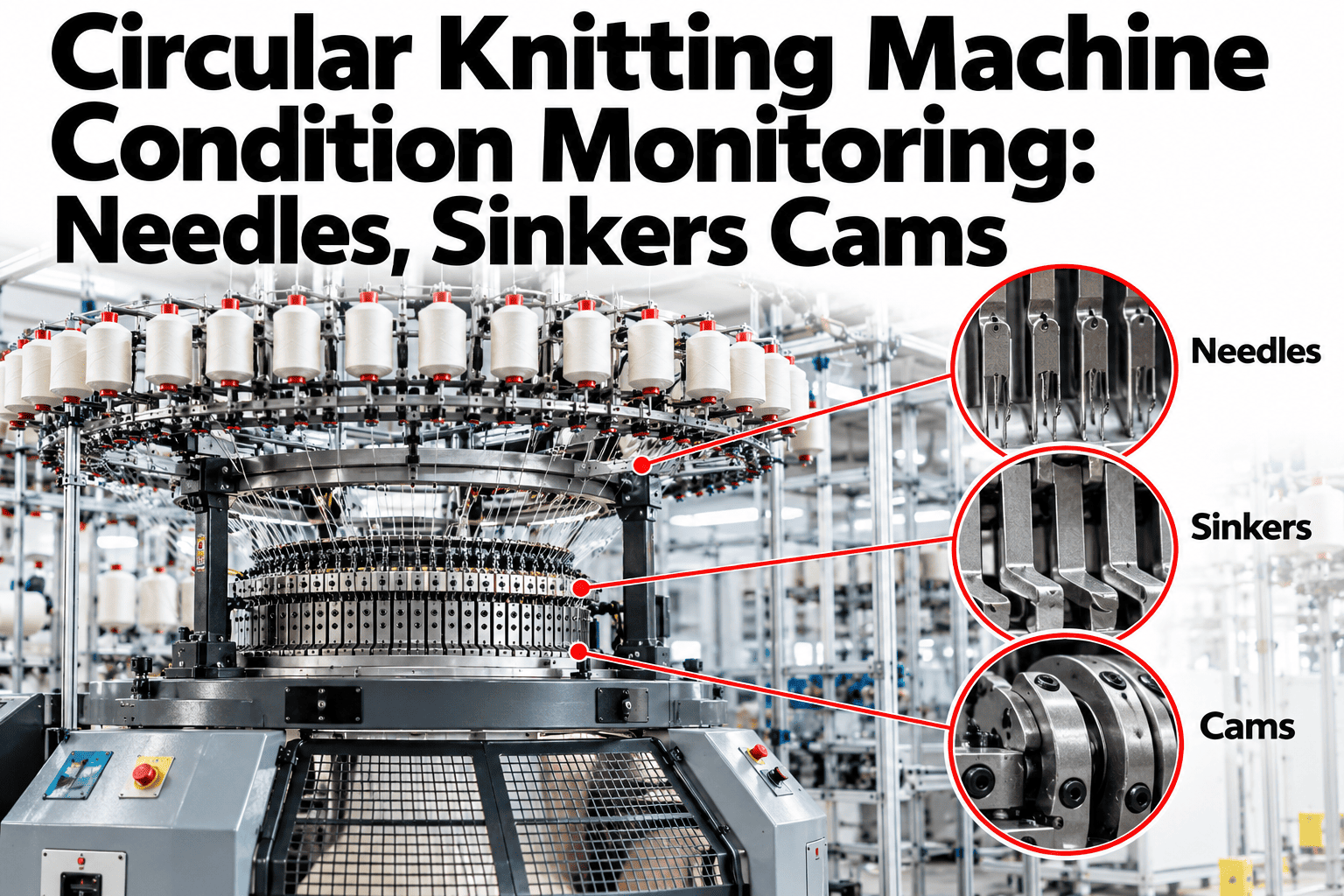
| Needle Line / Broken Needle | Bent or broken needle, damaged sinker | 28% of all defects | 99.2% | Vertical streak across entire roll — downgrades full fabric width |
| Oil Spot / Oil Line | Lubricant leakage from needle cylinder | 22% of all defects | 96.8% | Unrecoverable staining — fabric must be scrapped or sold as seconds |
| Lycra Fault / Elastane Misplating | Broken elastane filament, incorrect plating tension | 18% of all defects | 94.5% | Invisible in greige — appears only after dyeing, causing batch rejection |
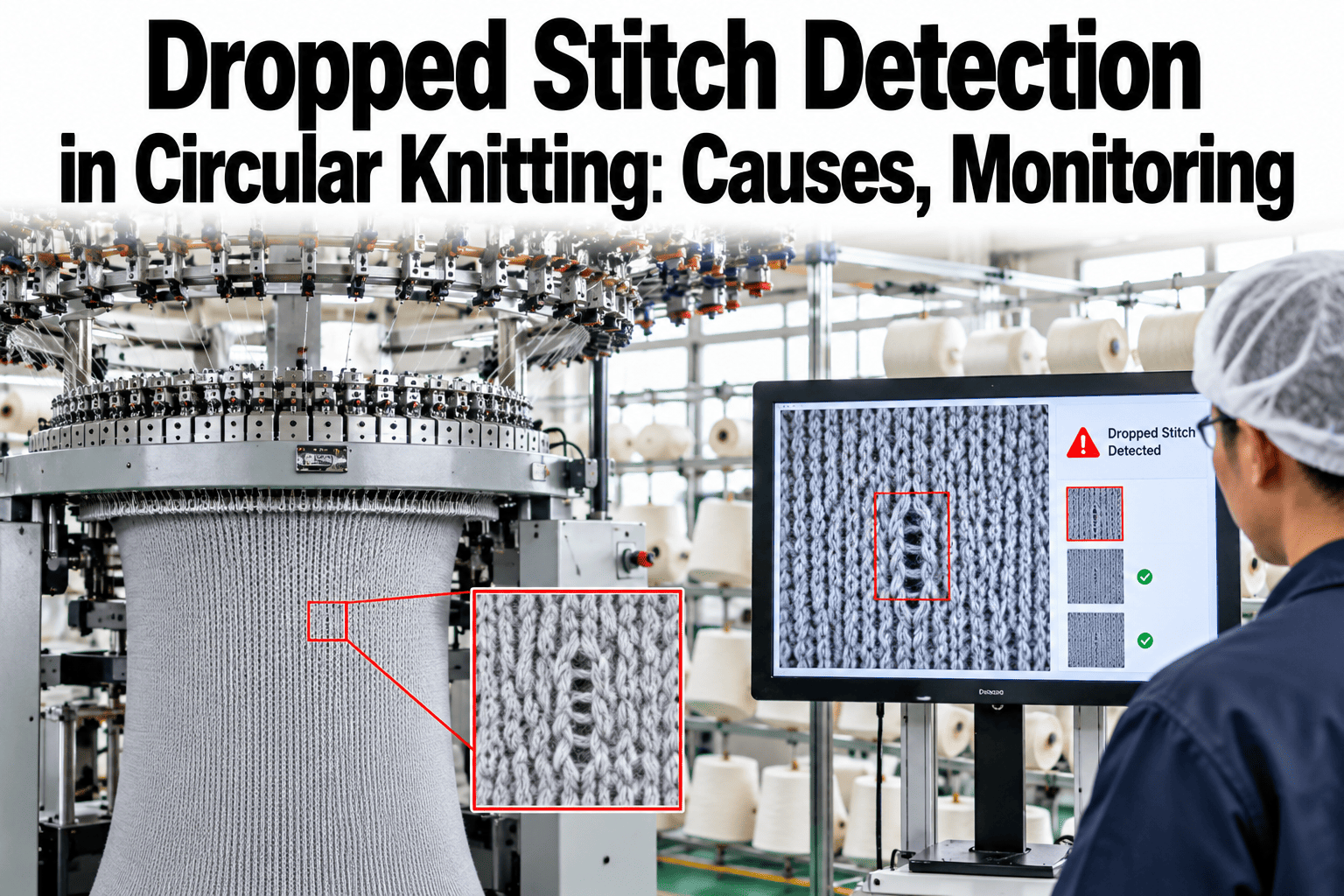
| Dropped Stitch / Missed Stitch | Needle fails to catch yarn, incorrect timing | 15% of all defects | 98.7% | Hole or ladder in fabric — structural weakness, typically irreparable |
| Hole / Tear | Yarn breakage, foreign object in cylinder | 8% of all defects | 99.4% | Complete fabric failure at defect point — immediate scrap |
| Double Yarn / Thick Place | Two yarns feeding simultaneously, yarn splice failure | 5% of all defects | 97.1% | Visible density variation — downgrades adjacent fabric area |
| Fiber Lint / Contamination | Fiber buildup on needles, environmental debris | 4% of all defects | 93.6% | Aesthetic defect in finished garment — customer returns and claims |
The Cost of Delayed Detection: When You Catch the Defect Determines the Loss
The same defect costs 40x more if detected at final inspection versus inside the cylinder. The inspection timing ladder shows how each delay multiplies material waste, labor rework, and quality downgrade expense.
IR Scanners, Manual Inspection, and AI Vision — Benchmarked on Accuracy and Speed
Most knitting mills still rely on a patchwork of infrared scanners (for holes and large defects), periodic manual checks, and end-of-line inspection. The table below shows why each approach alone is insufficient — and how AI vision closes every gap simultaneously.
IR Scanner
Manual Inspection
AI Vision Inside Cylinder
See Every Defect as It Forms — Not When the Roll Reaches Inspection
iFactory's AI vision system installs inside your circular knitting machines with zero structural modification. High-speed cameras, on-premise edge compute, and trained AI models deliver real-time defect detection from day one.
From Camera Capture to Machine Stop in 204 Milliseconds
The AI vision inspection pipeline operates in five sequential stages, each optimized for latency at full knitting speed (up to 30 rpm on a 30-inch cylinder). Total elapsed time from defect formation to machine halt: 204 milliseconds.
Image Capture
High-speed industrial camera mounted inside cylinder exit captures continuous fabric images at native resolution with LED illumination.
33 ms per framePreprocessing
Median filtering removes dust and vibration noise. Adaptive normalization compensates for varying illumination conditions across dark, normal, and bright zones.
18 ms per frameAI Inference
Lightweight convolutional neural network (LBUnet architecture) processes each frame, comparing live structure against trained defect-free reference. Detects and classifies all defect types at pixel level.
4 ms per frameFalse Alarm Filter
Consecutive segmentation maps analyzed across frames to distinguish genuine defects from production cutlines and normal structural variations. Reduces false positives by 47 percent.
29 ms per frameMachine Stop & Alert
PLC signal triggers machine stop within 120 ms. Dashboard alert shows defect type, XY coordinates, and severity. Data logged to quality database for roll traceability.
120 ms to stopMeasured Outcomes Across 14 Mills and 320 Circular Knitting Machines
Mills deploying in-cylinder AI vision inspection recorded consistent improvements across waste reduction, labor efficiency, and fabric quality metrics within the first 90 days of operation.
Every Defect Mapped, Tagged, and Reported — Across Every Roll, Every Shift
AI vision doesn't just stop the machine. It builds a permanent quality record for every roll produced — enabling fabric traceability that manual inspection cannot practically achieve.
Defect Coordinate Mapping
Every defect recorded with XY coordinates on the roll, allowing precise excision at cutting without unwinding full rolls.
Defect Type Classification
Each defect tagged by category: needle line, oil spot, lycra fault, dropped stitch, hole, double yarn, or contamination — enabling root-cause trend analysis.
Severity Grading
AI assigns severity level (minor / moderate / critical) based on defect size, type, and location — prioritizing which rolls need operator review.
Roll Quality Report
Auto-generated report for each roll: total defects by type, defect density per meter, grade assignment, and downloadable defect map in CSV and PDF.
Frequently Asked Questions
Can the AI vision system detect lycra and elastane defects that are invisible in the greige fabric?
Yes. Lycra and elastane faults — such as broken filaments, misplating, and tension variation — create subtle structural deviations in the knitted loop geometry that are invisible to the human eye and standard IR scanners but detectable by AI vision at the pixel level. The trained CNN model identifies these patterns by comparing live loop structure against the defect-free reference trained at production setup. In field deployments, the system achieves a 94.5% detection rate for lycra-related defects — catching faults that would otherwise remain undetected until the dyeing stage.
How is the AI model trained for different fabric structures and yarn types?
The system uses a two-phase approach. Phase one: a pre-trained base model (trained on 93,000+ time-series fabric images covering 22 production scenarios) is deployed as the starting point. Phase two: during the first production run of a new fabric style, the system performs a 10-minute self-training pass where it learns the specific loop structure, stitch density, and acceptable variation range for that article. After this brief calibration, the model distinguishes genuine defects from normal structural variation with 98%+ accuracy. No cloud or external data transfer is required for training.
What happens when the system detects a defect — does it stop the machine immediately?
The response depends on defect type and severity. For periodic defects — needle lines and lycra faults that will repeat across the entire roll — the system triggers an immediate machine stop via PLC signal within 120 ms, preventing further waste. For singular defects such as an isolated oil spot or single dropped stitch, the system logs the defect with XY coordinates and severity grade, allowing the machine to continue production. The operator receives a real-time alert with defect type and location, and the roll quality report flags the defect for downstream inspection or excision. This configurable logic prevents unnecessary stoppages for minor, non-repeating events.
Can the system handle different lighting conditions on the factory floor?
Yes. The system includes a controlled LED illumination module mounted coaxially with the camera inside the cylinder, eliminating dependency on ambient factory lighting. Additionally, the LBUnet preprocessing layer applies adaptive normalization that compensates for dark, normal, and bright grayscale conditions. In field testing, detection accuracy remained above 91% mIoU across all three lighting regimes — compared to a 36% accuracy drop experienced by non-adaptive models under low-light conditions. The system is designed for 24/7 operation regardless of shift lighting changes.
What is the installation process and does it require machine modification?
The imaging unit mounts to the machine frame using a spider fixture that attaches to existing bolt holes — no drilling, welding, or structural modification required. Camera positioning is adjusted during initial setup to achieve optimal fabric coverage. The edge compute module connects to the machine's PLC via standard I/O or Modbus. Total installation time per machine: 2 to 3 hours. For a 20-machine deployment, the full installation and calibration cycle is typically completed within one week. iFactory provides on-site support for the first 5 machine installations and remote guidance thereafter.
What is the measurable ROI for a mid-size knitting mill with 20 circular machines?
Based on deployment data across 14 mills, a 20-machine facility with a 78% first-quality baseline and 3.2% defect waste rate achieves the following annual improvements: $47,000 in waste reduction (from 3.2% to 0.2% defect loss), $28,000 in inspection labor savings (60% reduction in offline inspection hours), and $19,000 in reduced customer returns and rework claims. Combined annual savings: approximately $94,000. At a deployment investment of $32,000 for 20 machines, the payback period is under 5 months. These savings compound as the AI model accumulates mill-specific data and improves accuracy over successive production cycles.
Stop Knitting Defects Into Every Roll. See Them at the Needle.
iFactory AI Vision detects needle breaks, oil spots, lycra faults, and dropped stitches inside the cylinder — at 4ms per frame, with 98% accuracy. Cut defect waste to under 0.5%. Deployed in 7 days. No machine modification required.