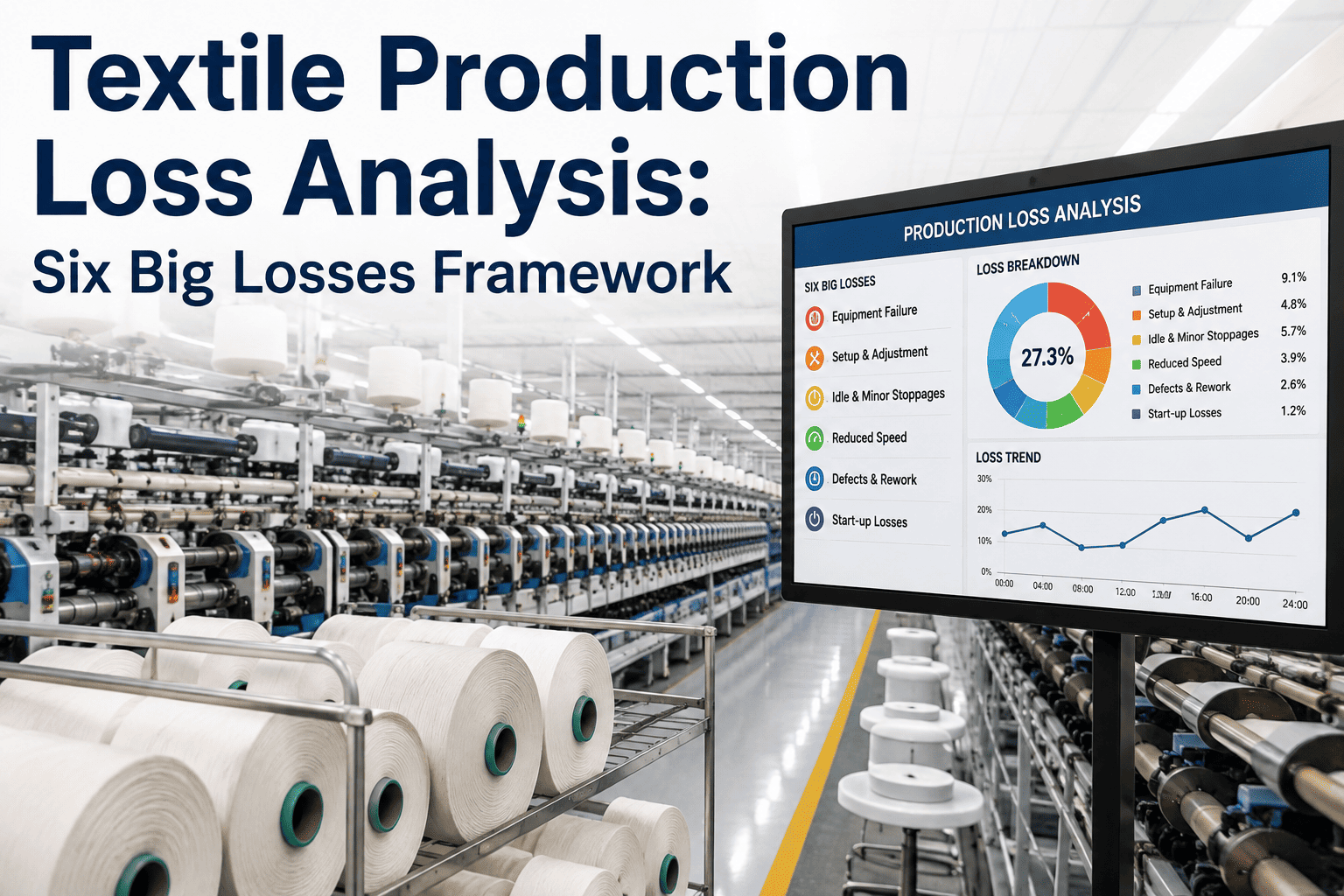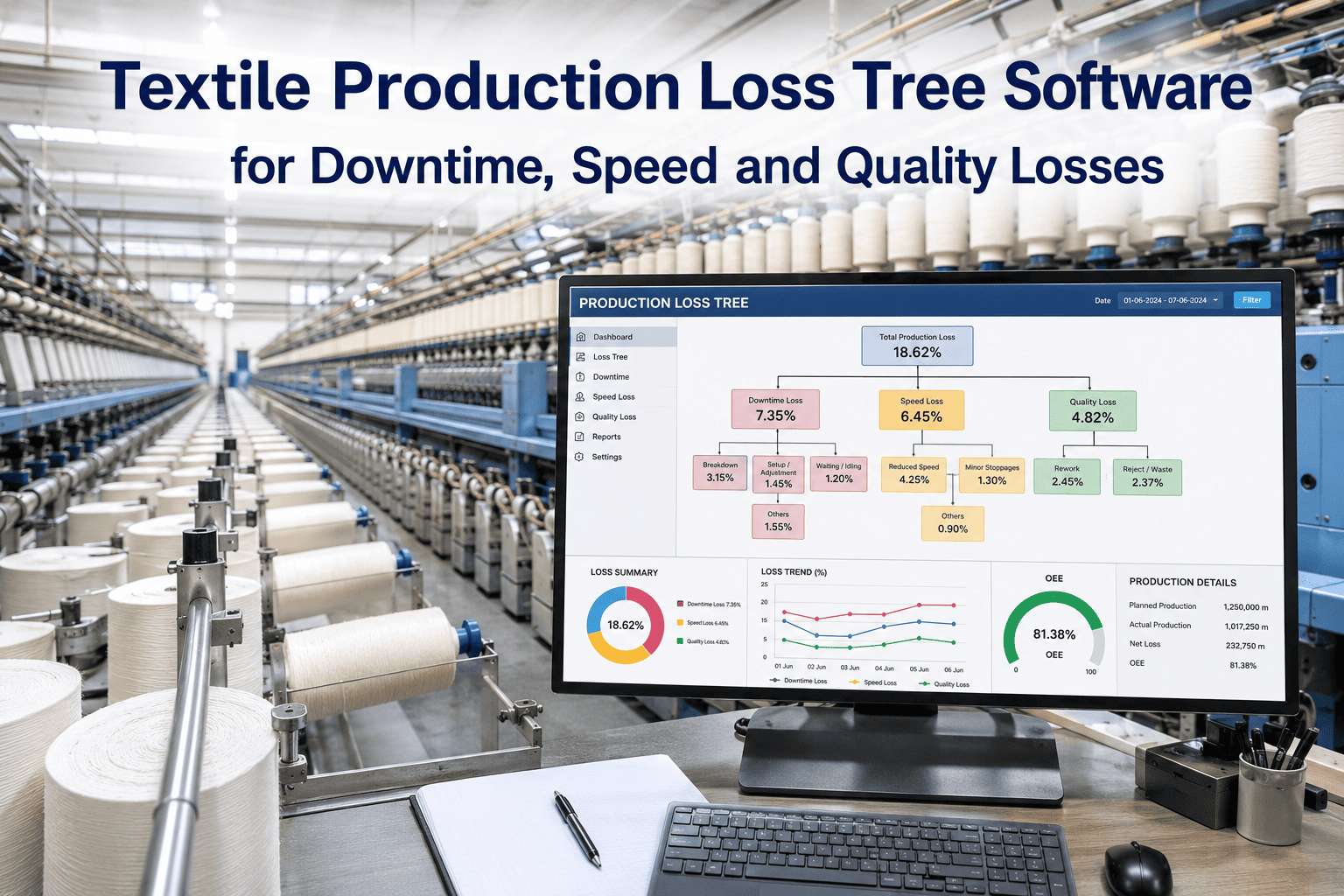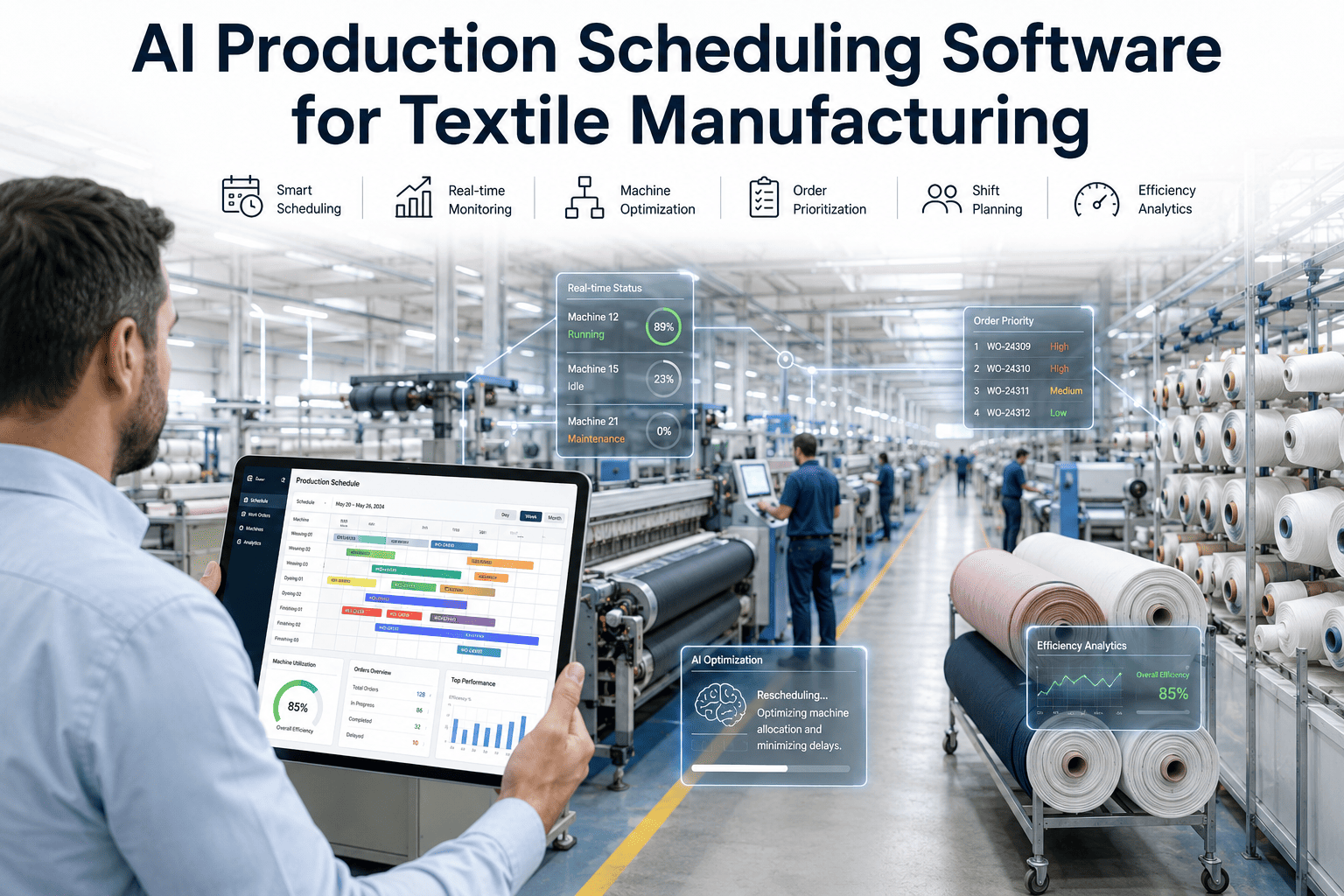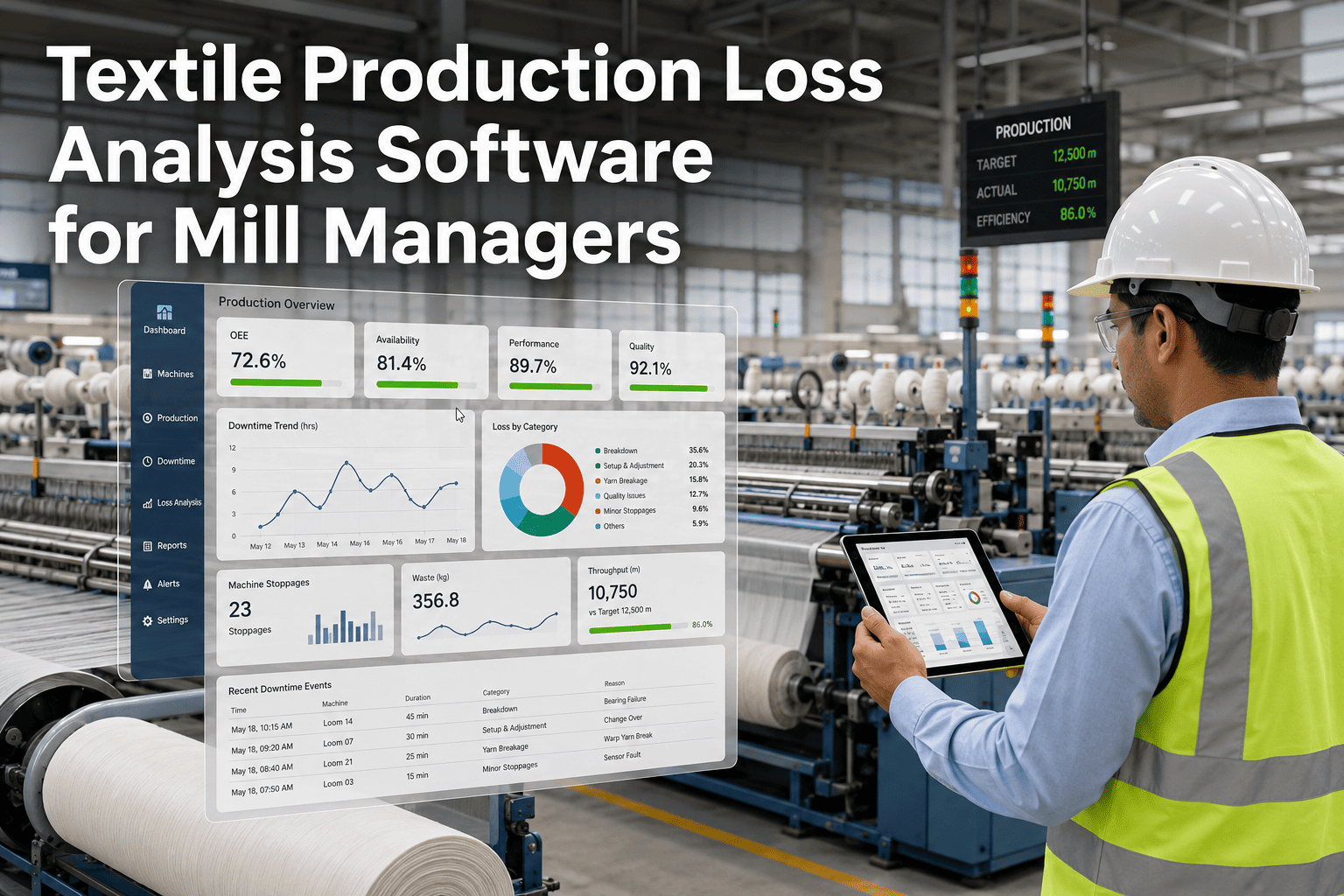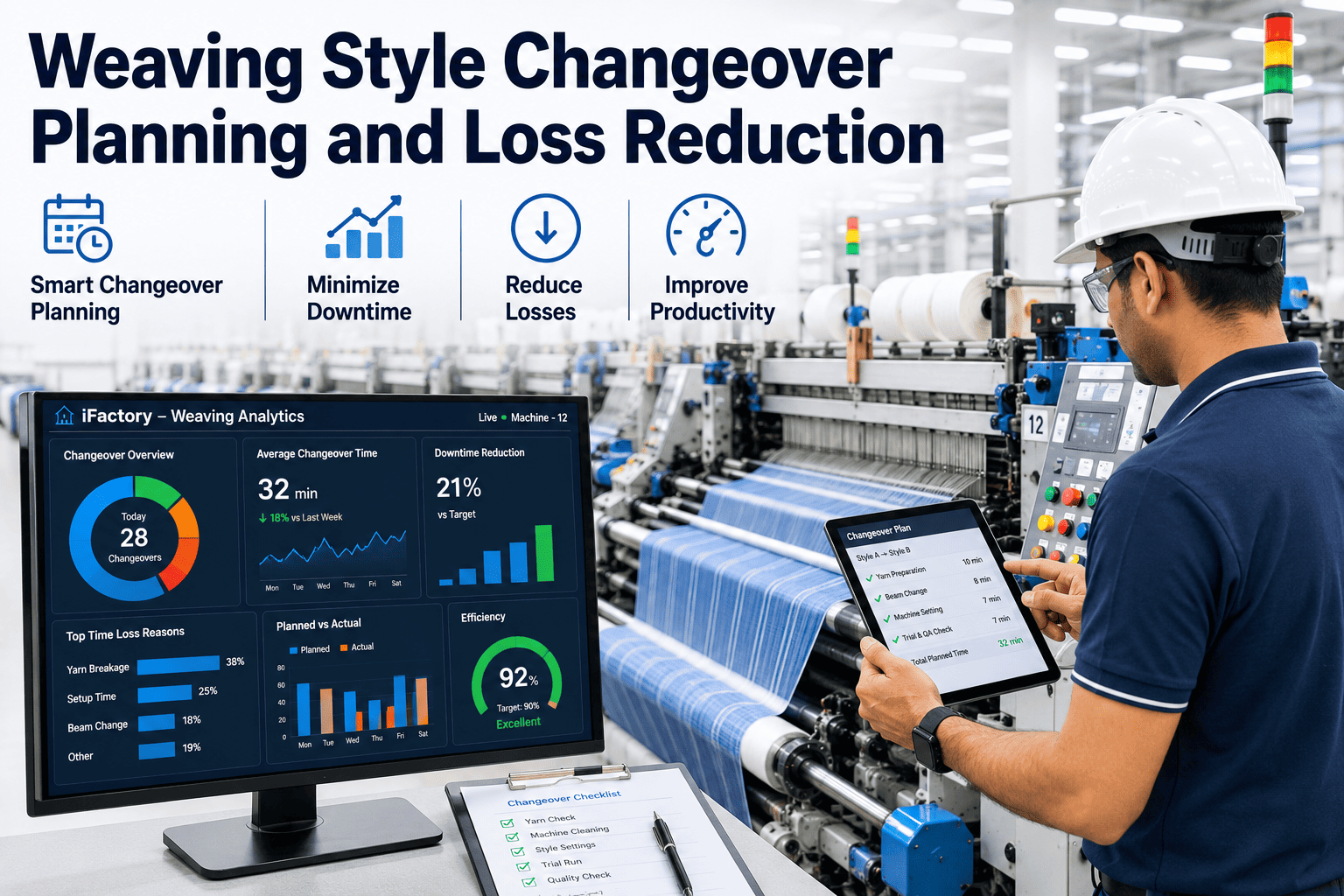
In modern textile manufacturing, weaving style changeovers represent a critical intersection of operational agility and productivity loss. Each transition—whether for a new article, beam, or style—demands meticulous planning to minimize downtime, preserve first-quality output, and optimize labor allocation. Industry benchmarks indicate that unplanned changeovers can consume up to 15% of total weaving capacity, directly impacting throughput and profitability. iFactory's AI-driven production scheduling transforms this challenge into a strategic advantage by providing real-time visibility into setup times, restart performance, and loss analytics. This comprehensive guide delves into the technical nuances of weaving changeover planning, offering actionable strategies for loss reduction and efficiency gains. Book a Demo to see how predictive scheduling can revolutionize your weaving operations.
Transform Your Changeover Management
Leverage AI-driven insights to reduce setup losses by up to 40% and boost first-quality output. Schedule your personalized demo today.
Understanding Weaving Changeover Complexity
Weaving changeovers are inherently multi-dimensional, involving beam replacement, style parameter adjustments, and machine reconfiguration. Each step introduces variability: beam alignment tolerances, yarn tension recalibration, and reed/sley setup. Without systematic planning, these variables cascade into extended downtime, increased waste, and inconsistent fabric quality. Advanced textile MES platforms like iFactory capture real-time data from looms to model changeover durations based on historical patterns, machine condition, and operator skill levels. This enables precise scheduling that aligns changeovers with shift changes or planned maintenance windows, minimizing production interruptions. Furthermore, analytics dashboards provide granular visibility into setup loss components—mechanical adjustments, material handling, and quality verification—allowing continuous improvement teams to target root causes. By integrating changeover planning with overall production scheduling, mills can achieve a seamless flow of styles while maintaining high equipment effectiveness.
Beam Change Planning
Automated scheduling of beam preparation and delivery to looms, reducing idle time between warp-outs. Integration with warehouse management ensures just-in-time beam availability.
Style Parameter Optimization
AI-driven recommendations for reed, denting, and tension settings based on fabric specifications, minimizing trial-and-error during setup. Historical data validates optimal configurations.
Restart Quality Assurance
Real-time monitoring of first-quality output after changeover, with automated alerts for defects. Root cause analysis links restart failures to specific setup steps for corrective action.
Labor Allocation Intelligence
Dynamic assignment of skilled technicians to high-complexity changeovers based on competency matrices and availability, reducing setup time variance and improving consistency.
Step-by-Step Changeover Workflow
Pre-Changeover Planning
System generates changeover sequence based on production priorities, beam availability, and machine compatibility. Operators receive digital work instructions on mobile devices.
Material Preparation
Automated retrieval of beams, yarns, and spare parts from inventory. Barcode scanning confirms correct materials at the loom, reducing errors and delays.
Execution & Monitoring
Real-time tracking of setup activities via loom sensors and operator inputs. System compares actual vs. planned duration, triggering alerts for deviations.
Quality Verification
Automated inspection of first meters of fabric after restart. Defect detection algorithms classify issues and link them to setup parameters for immediate adjustment.
Post-Changeover Analytics
System generates loss report detailing setup time, waste, and first-quality yield. Trends are visualized for continuous improvement initiatives.
Changeover Loss Components & Reduction Strategies
| Loss Component | Typical Impact | Reduction Strategy |
|---|---|---|
| Beam Alignment | 10-20 min per change | Pre-alignment fixtures & automated guided vehicles |
| Style Parameter Setup | 15-30 min per change | AI-recommended settings from historical data |
| Quality Ramp-Up | 5-15 min per change | Real-time defect detection & closed-loop adjustment |
| Material Handling | 5-10 min per change | Just-in-time delivery & barcode verification |
| Operator Wait Time | 5-15 min per change | Dynamic labor scheduling & skill-based assignment |
Advanced Analytics for Setup Loss Reduction
Beyond basic tracking, iFactory's platform employs machine learning to predict changeover durations with high accuracy, factoring in variables like loom age, operator experience, and style complexity. These predictions feed into a dynamic scheduling engine that optimizes changeover sequences to minimize overall downtime. For instance, grouping similar styles reduces setup time by eliminating redundant parameter changes. Additionally, the system identifies recurring loss patterns—such as frequent reed alignment issues on specific looms—and triggers preventive maintenance or operator training. Benchmarking across shifts and plants reveals best practices that can be standardized globally. The result is a data-driven culture of continuous improvement where every changeover becomes an opportunity to refine processes and reduce waste. Textile manufacturers using such analytics report up to 40% reduction in setup losses and 25% improvement in first-quality yield.
Predictive Duration Modeling
ML models trained on historical changeover data forecast setup times with 95% accuracy, enabling precise scheduling and resource allocation.
Root Cause Correlation
Automated analysis links extended setup times to specific machines, operators, or material batches, facilitating targeted corrective actions.
Real-Time Dashboarding
Visual displays show live changeover status, loss metrics, and comparison to targets, empowering floor supervisors to intervene proactively.
Continuous Improvement Loop
System generates weekly loss reports with actionable insights, tracking progress against KPIs and highlighting areas for further optimization.
Optimize Your Changeover Planning Today
Unlock the full potential of your weaving operations with AI-driven loss reduction. Schedule a demo to see real results.
Integrating Changeover Planning with Overall Production Scheduling
Effective changeover management cannot exist in isolation; it must be woven into the broader production scheduling framework. iFactory's AI scheduler considers changeover times, machine availability, order due dates, and material constraints to generate an optimal loom assignment plan. This holistic approach prevents bottlenecks where multiple looms require changeovers simultaneously, leading to operator overload and extended downtime. The system also dynamically adjusts schedules in response to real-time events—such as a delayed beam delivery or an unexpected machine breakdown—by rescheduling changeovers to minimize impact on overall throughput. Furthermore, integration with ERP systems ensures that changeover plans align with order priorities and inventory targets. The result is a synchronized production flow where style transitions are seamless, losses are minimized, and customer delivery commitments are consistently met. Advanced textile manufacturers adopting this integrated approach report OEE improvements of 15-20% within the first quarter.
Implementation Roadmap for Changeover Optimization
Data Collection & Baseline
Deploy sensors and MES to capture changeover start/end times, waste, and quality metrics. Establish baseline KPIs for setup loss and first-quality yield.
Model Training & Validation
Train AI models on historical data to predict changeover durations and identify loss patterns. Validate predictions against real-world observations.
Process Standardization
Define standard operating procedures for each changeover type based on best practices derived from analytics. Embed procedures in digital work instructions.
Real-Time Monitoring & Alerts
Implement dashboards and alerting for changeover deviations. Enable supervisors to intervene in real time based on system recommendations.
Continuous Improvement
Conduct weekly reviews of changeover loss reports. Update models and procedures based on new data to drive ongoing gains.
Key Performance Indicators for Changeover Management
| KPI | Definition | Target |
|---|---|---|
| Setup Time per Changeover | Total time from last good piece of previous style to first good piece of new style | < 30 minutes |
| First-Quality Yield at Restart | Percentage of fabric meeting quality specs within first 10 meters | > 95% |
| Changeover Loss Ratio | Total changeover time divided by total available production time | < 10% |
| Labor Efficiency Variance | Actual vs. planned labor hours for changeovers | < 5% |
| Schedule Adherence | Percentage of changeovers completed within planned time window | > 90% |
Case Study: Impact of AI-Driven Changeover Planning
A leading denim manufacturer implemented iFactory's AI scheduling to optimize style changeovers across 200 looms. Prior to implementation, average setup time was 45 minutes with a first-quality yield of 80% at restart. Within three months, the system reduced average setup time to 28 minutes and improved restart yield to 93%. The key drivers were predictive duration modeling that allowed precise labor allocation, and real-time defect detection that enabled immediate parameter adjustments. Additionally, the system identified that 20% of changeovers were delayed due to beam unavailability, prompting a redesign of material handling workflows. Overall, the plant achieved a 35% reduction in changeover losses and a 12% increase in OEE. The payback period for the investment was less than six months, driven by increased throughput and reduced waste. This case exemplifies how data-driven changeover planning can deliver tangible, rapid returns in textile manufacturing.
Reduced Setup Time
From 45 to 28 minutes average, enabling more style changes per shift and increased flexibility to meet customer demand.
Improved Restart Quality
First-quality yield at restart jumped from 80% to 93%, reducing waste and rework costs significantly.
Enhanced Labor Productivity
Skill-based assignment and real-time alerts reduced labor variance by 18%, optimizing workforce utilization.
Faster ROI
Payback achieved in under six months through increased throughput, reduced waste, and lower labor costs.
Frequently Asked Questions
What is weaving style changeover planning?
Weaving style changeover planning is the systematic process of scheduling and executing transitions between different fabric styles, articles, or beam sets on looms. It involves coordinating material preparation, machine setup, quality verification, and labor allocation to minimize downtime and waste. Advanced systems like iFactory use AI to predict setup times, optimize sequences, and provide real-time monitoring, enabling manufacturers to achieve faster, more consistent changeovers. Book a Demo to see how AI-driven planning can streamline your changeovers.
How does AI reduce setup losses in weaving?
AI reduces setup losses by analyzing historical changeover data to identify patterns and predict optimal setup parameters. Machine learning models forecast changeover durations with high accuracy, allowing precise scheduling that minimizes idle time. Real-time monitoring detects deviations and triggers corrective actions, while root cause analysis links losses to specific machines, operators, or materials. This data-driven approach enables continuous improvement, reducing setup losses by up to 40% and improving first-quality yield. Learn more about our AI capabilities.
What KPIs should be tracked for changeover performance?
Key KPIs include setup time per changeover, first-quality yield at restart, changeover loss ratio (time loss vs. total production time), labor efficiency variance, and schedule adherence. Tracking these metrics provides visibility into changeover effectiveness and highlights areas for improvement. iFactory's dashboards automatically compute these KPIs from real-time data, enabling managers to monitor performance at a glance and drive data-informed decisions. Book a Demo to see our analytics in action.
How does changeover planning integrate with overall production scheduling?
Changeover planning is a critical component of overall production scheduling. iFactory's AI scheduler considers changeover times, machine availability, order due dates, and material constraints to generate an optimal loom assignment plan. This integration prevents bottlenecks where multiple changeovers occur simultaneously, and dynamically adjusts schedules in response to real-time events like machine breakdowns or material delays. The result is a synchronized production flow that minimizes downtime and maximizes throughput. Get support for implementation.
What is the typical ROI for implementing AI-driven changeover planning?
Manufacturers typically see a payback period of 6-12 months, driven by reduced setup losses, improved first-quality yield, and increased OEE. For example, a denim manufacturer using iFactory achieved a 35% reduction in changeover losses and a 12% OEE improvement within three months, with payback in under six months. The exact ROI depends on factors like current changeover performance, number of looms, and implementation scope. Book a Demo to calculate your potential savings.
Ready to Revolutionize Your Weaving Changeovers?
Join industry leaders who have reduced setup losses by 40% and boosted OEE. Schedule your demo now and unlock the power of AI-driven planning.