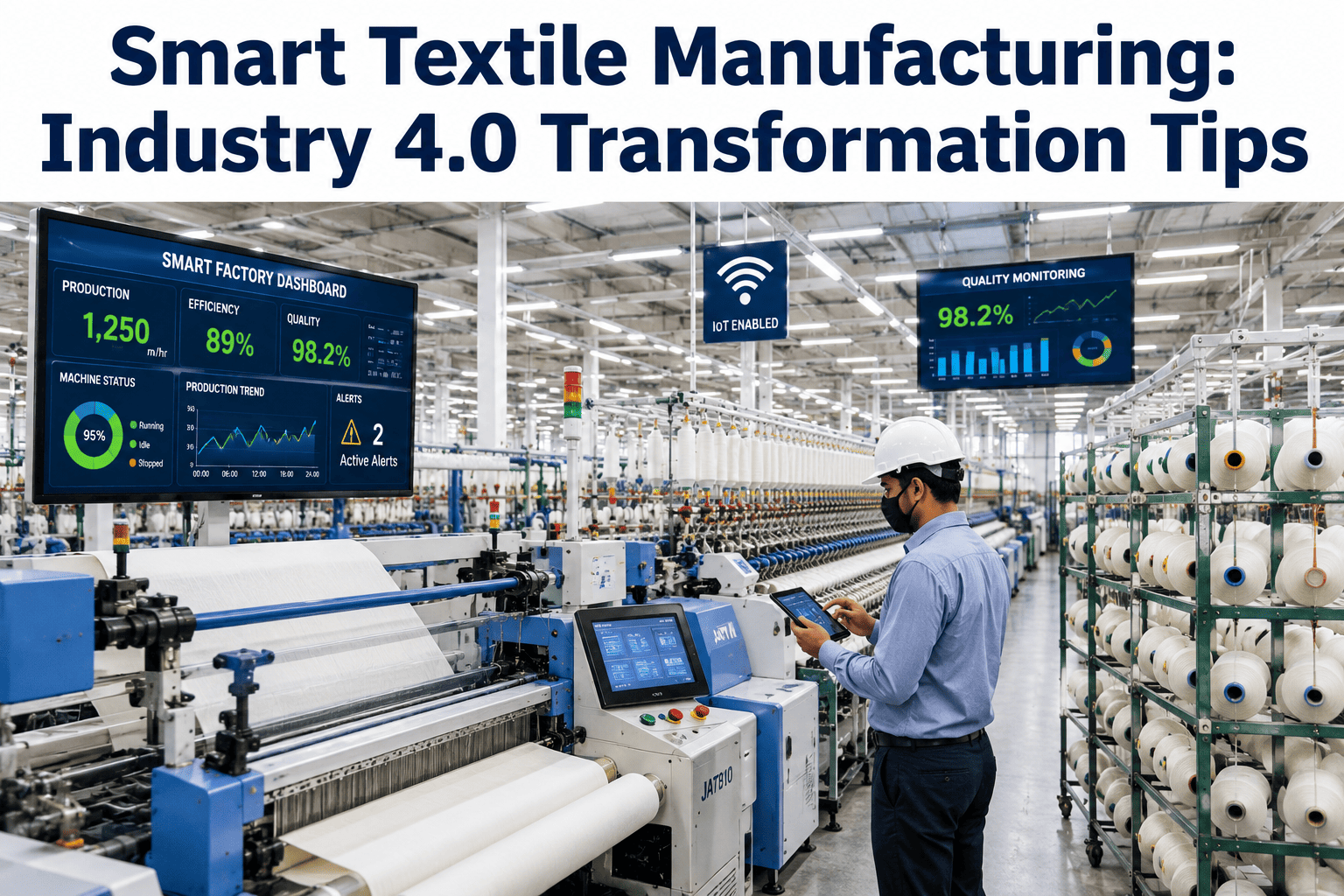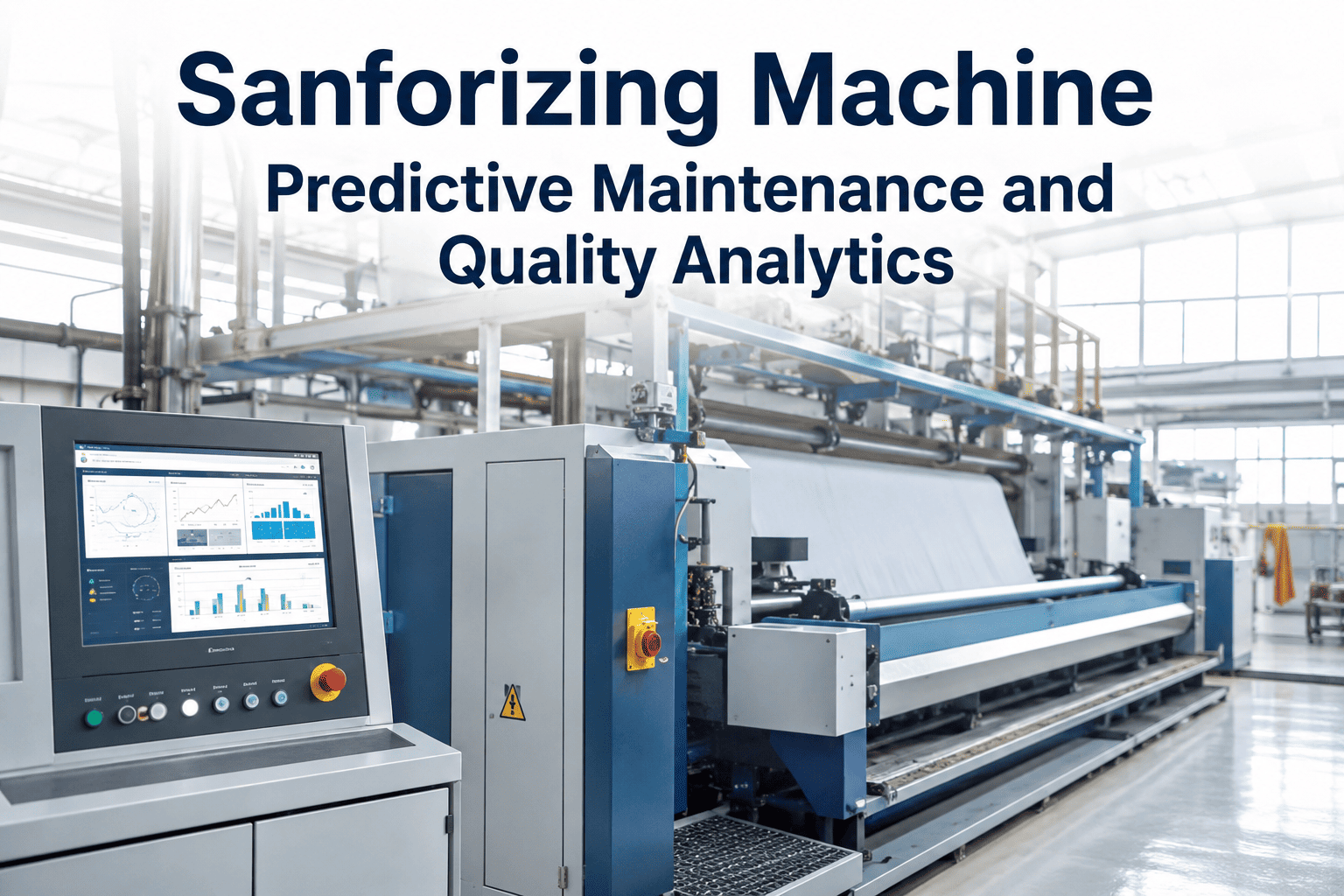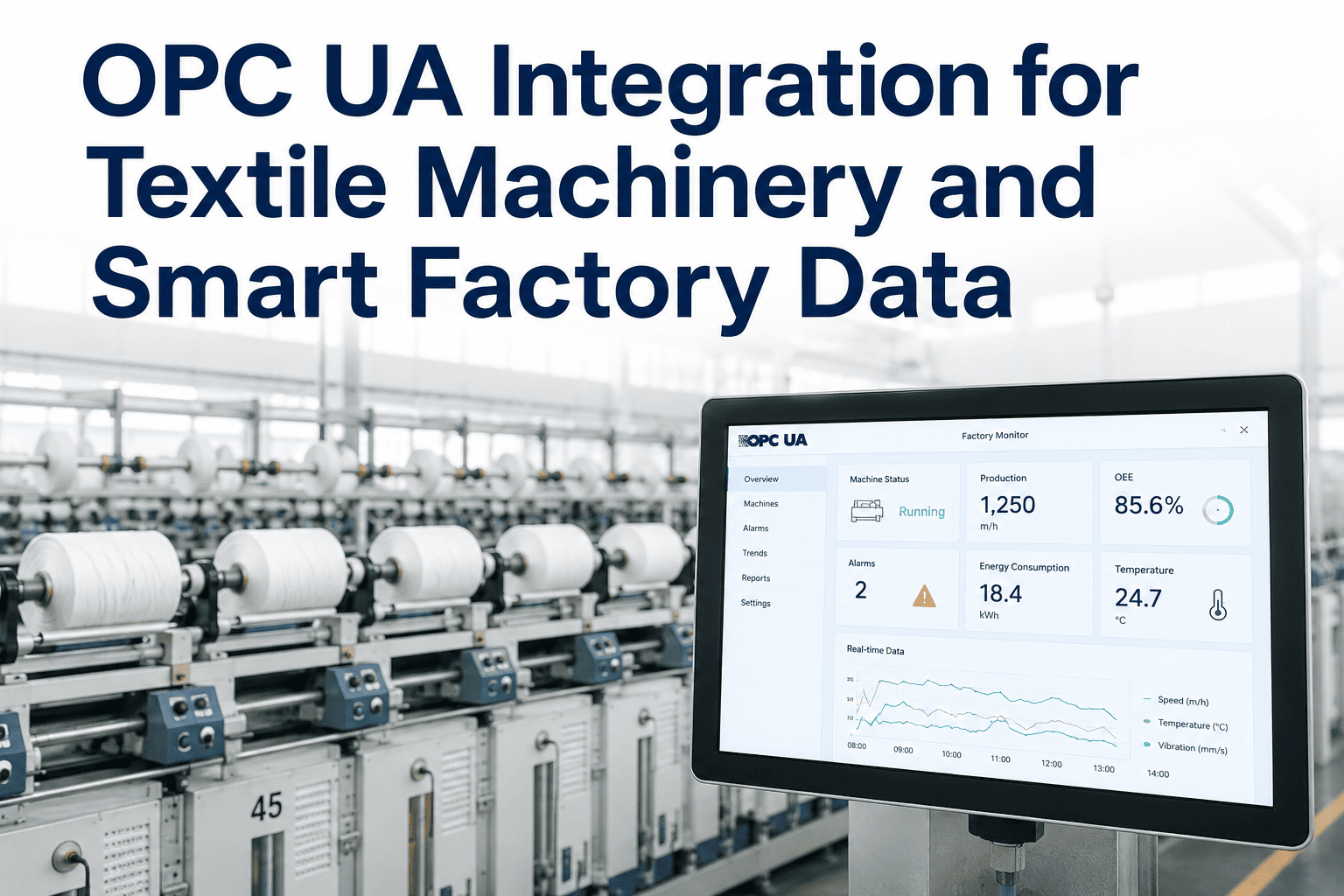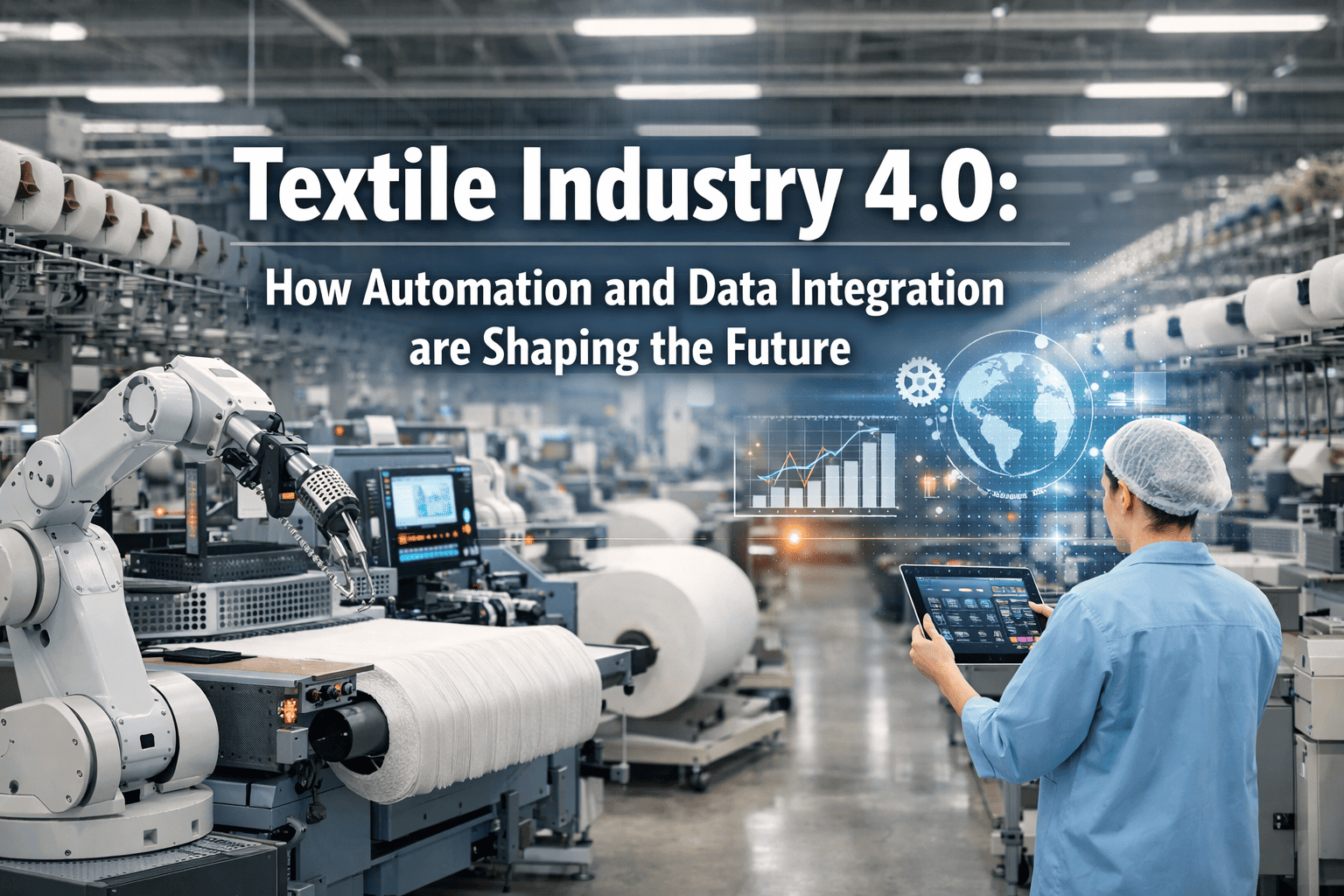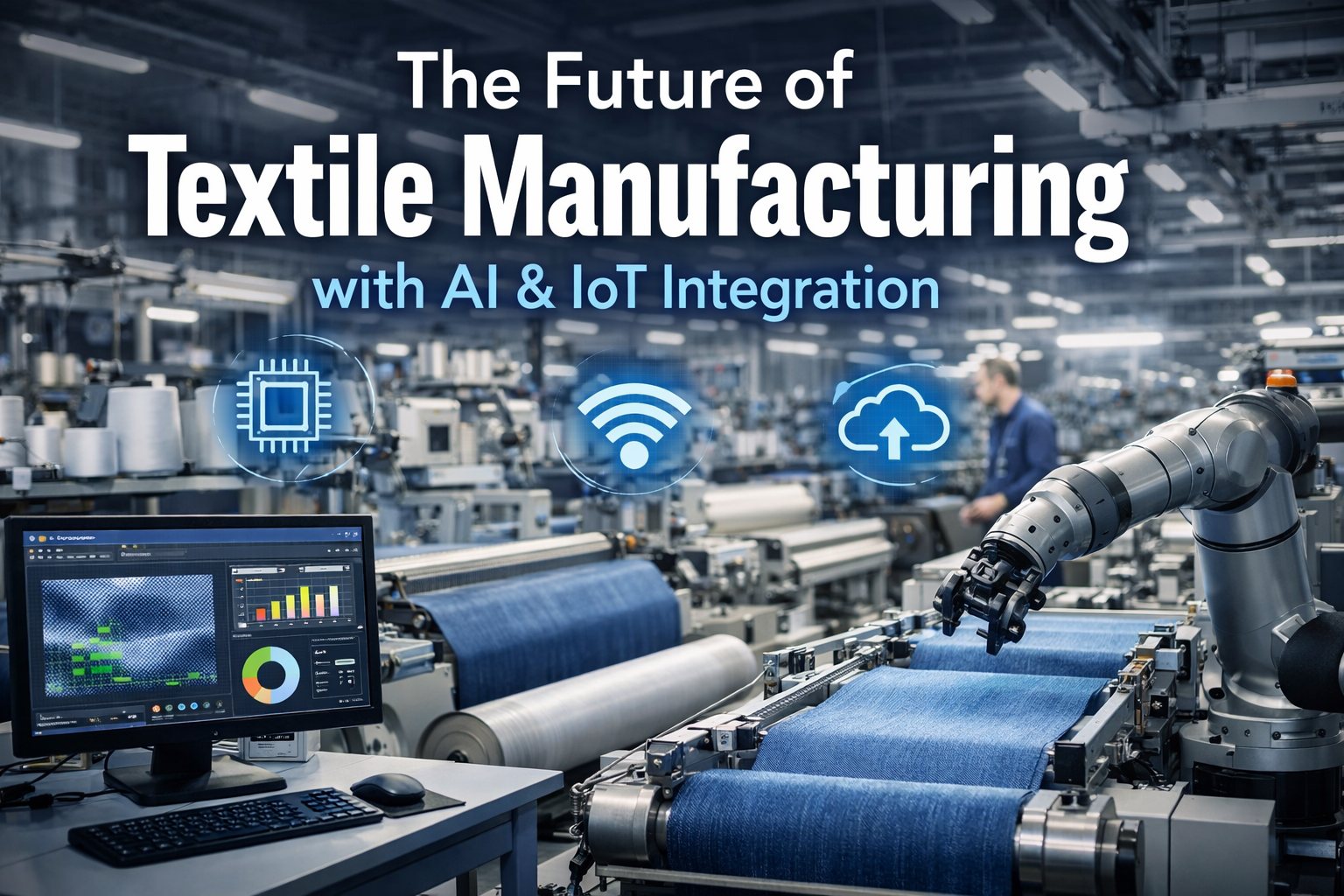
The textile industry is undergoing a digital revolution. AI and IoT technologies are transforming traditional mills into smart factorieswhere spinning machines predict their own maintenance needs, weaving looms automatically adjust for fabric defects, and real-time monitoring dashboards provide complete visibility across production floors. In 2026, textile manufacturers implementing AI-IoT integration report 50% reduction in unplanned downtime, 35% improvement in quality consistency, and 25% lower energy consumption. This guide explores how forward-thinking textile companies are deploying these technologies across spinning, weaving, dyeing, and finishing operations.
Why Textile Manufacturing Needs AI & IoT Now
Textile manufacturing faces unique challenges that make AI and IoT adoption essential for survival in 2026. Thin margins, fast fashion demands, sustainability pressures, and global competition are forcing mills to optimize every aspect of their operations. Traditional approaches—manual inspections, reactive maintenance, and experience-based quality control—can no longer keep pace.
Machine Downtime Costs
A single spinning frame stoppage costs $500-2,000/hour in lost production. Unplanned failures cascade across the entire production chain.
Quality Defect Rates
Manual inspection catches only 60-70% of fabric defects. Missed defects result in customer returns, brand damage, and waste.
Energy Intensity
Textile mills consume 5-10% of total manufacturing energy. Dyeing and finishing alone account for 50% of water and energy use.
Labor Shortages
Skilled textile technicians are retiring faster than replacements enter the industry. Knowledge transfer is critical.
Ready to transform your textile operations? Book a demo of iFactory's AI-powered textile manufacturing solutions.
The AI-IoT Architecture for Textile Mills
A modern smart textile factory integrates sensors, edge computing, and cloud AI into a unified system. Here's how the technology stack works together to deliver results.
IoT Sensor Layer
- Vibration sensors on spindles & motors
- Temperature & humidity monitors
- Yarn tension & break detectors
- Power consumption meters
- Vision cameras for defect detection
Edge Computing Layer
- Real-time data processing at machine
- Immediate anomaly detection
- Local control loop decisions
- Data filtering & aggregation
Cloud AI Platform
- Predictive maintenance models
- Quality pattern recognition
- Production optimization AI
- Cross-plant analytics & benchmarking
5 Key Applications Across Textile Operations
AI and IoT technologies are being deployed across every stage of textile production. These five applications deliver the highest impact and fastest ROI.
Spinning Mill Predictive Maintenance
IoT sensors monitor ring spinning frames, rotor units, and draw frames continuously. AI analyzes vibration patterns, motor currents, and spindle temperatures to predict bearing failures, belt wear, and spindle defects 2-4 weeks in advance—enabling scheduled maintenance during planned downtime.
AI-Powered Fabric Inspection
High-speed cameras and AI vision systems inspect fabric at production speed—detecting holes, stains, weaving defects, and color variations invisible to human inspectors. Defects are automatically classified, mapped, and flagged for cutting optimization or rework decisions.
Dyeing Process Optimization
AI optimizes dye recipes, water usage, and energy consumption in real-time. IoT sensors monitor bath temperature, pH levels, and color consistency—adjusting parameters automatically to achieve target shades with minimum chemical usage and right-first-time production.
Weaving Loom Monitoring
Real-time monitoring of warp tension, weft insertion, and loom efficiency across all machines. AI detects pattern anomalies and predicts warp breaks before they occur. Automated work orders are generated for stop-time optimization and preventive interventions.
Production Analytics & OEE
Comprehensive dashboards provide real-time visibility into OEE (Overall Equipment Effectiveness) across all production lines. AI identifies bottlenecks, benchmarks machine performance, and recommends scheduling optimizations to maximize throughput and minimize changeover losses.
Want to identify which applications deliver the highest ROI for your mill? Talk to our textile industry experts for a personalized assessment.
IoT Sensors for Textile Machinery
Different textile processes require different sensor configurations. Here's a guide to IoT sensor deployment across key textile operations.
Spinning Frames
Ring & Rotor- Vibration: Spindle bearings, motor mounts
- Temperature: Motor windings, drafting rollers
- Current: Drive motor load monitoring
- Break detection: Yarn presence sensors
- Speed: Spindle RPM counters
Weaving Looms
Air-jet & Rapier- Tension: Warp beam load cells
- Weft insertion: Arrival time sensors
- Stop motion: Warp break detectors
- Picks per minute: Production counters
- Vibration: Shedding mechanism
Dyeing Machines
Jet & Jigger- Temperature: Bath and fabric surface
- pH: Chemical bath monitoring
- Flow: Liquor circulation rate
- Level: Dye bath volume
- Color: Spectrophotometer integration
Finishing Lines
Stenter & Calender- Temperature: Chamber zone monitoring
- Width: Fabric edge detection
- Speed: Line speed tracking
- Moisture: Pre and post treatment
- Tension: Roll load monitoring
Connect Your Textile Machinery to the Cloud
iFactory's IoT integration connects spinning, weaving, dyeing, and finishing equipment—delivering real-time monitoring and predictive maintenance across your entire operation.
ROI Breakdown: The Numbers Behind Smart Textile Manufacturing
Implementing AI and IoT in textile manufacturing requires investment but delivers measurable returns. Here's what the data shows from textile mills that have completed their digital transformation.
Predictive maintenance eliminates most unplanned stops. Spinning frames, looms, and dyeing machines stay running when scheduled.
AI vision catches defects human inspectors miss. Right-first-time production in dyeing increases. Customer returns decrease significantly.
Optimized dyeing cycles, reduced compressed air usage in air-jet looms, and smart HVAC in spinning mills cut energy consumption.
Higher machine efficiency, reduced changeover times, and optimized production scheduling increase overall output without adding capacity.
Want to calculate potential ROI for your textile operation? Get a custom efficiency analysis from our team.
Implementation Roadmap: From Traditional Mill to Smart Factory
Successful AI-IoT implementation in textile manufacturing follows a structured approach that delivers quick wins while building toward full digital transformation.
Assessment & Foundation
- Audit existing machinery and connectivity readiness
- Identify high-impact pilot areas (spinning/weaving/dyeing)
- Define KPIs and baseline measurements
- Design IoT architecture and sensor placement
Pilot Deployment
- Install IoT sensors on pilot machines
- Connect to CMMS for automated work orders
- Deploy real-time monitoring dashboards
- Train operators and maintenance teams
AI Model Training & Validation
- Collect baseline data for AI model training
- Deploy predictive maintenance algorithms
- Integrate AI quality inspection systems
- Validate predictions against actual outcomes
Scale Across Operations
- Expand to all production lines and processes
- Integrate supply chain and inventory systems
- Deploy advanced analytics and benchmarking
- Continuous improvement and optimization
Ready to start your smart textile journey? Schedule a roadmap planning session with our implementation team.
Expert Perspective
"Textile manufacturing in 2026 is at a crossroads. Mills that embrace AI and IoT are achieving efficiency levels their competitors simply cannot match—50% less downtime, 35% better quality, and 25% energy savings. The technology has matured beyond early-adopter risk. The question isn't whether to digitize, but how quickly you can scale these technologies across your operations before you're left behind."
Sustainability Benefits: Beyond Efficiency
AI and IoT don't just improve efficiency—they're essential tools for meeting the textile industry's sustainability mandates. Here's how smart manufacturing supports environmental goals.
40% Water Reduction
AI-optimized dyeing cycles reduce water consumption through precise recipe management and automated reuse systems.
25% Energy Savings
Optimized process parameters, reduced reprocessing, and smart HVAC control cut energy consumption across operations.
30% Waste Reduction
Better quality control means less defective fabric. Optimized cutting based on defect maps minimizes material waste.
Full Traceability
Complete digital records from fiber to finished fabric support sustainability reporting and supply chain transparency.
Conclusion
The future of textile manufacturing is being written today by mills that embrace AI and IoT integration. The results speak for themselves: 50% reduction in unplanned downtime, 35% improvement in quality consistency, and 25% lower energy consumption. From spinning frame predictive maintenance to AI-powered fabric inspection and optimized dyeing processes, these technologies are transforming every stage of textile production. The implementation roadmap is proven, the ROI is documented, and the sustainability benefits align with industry mandates. For textile manufacturers, the competitive imperative is clear—those who digitize now will lead the industry; those who wait will struggle to catch up.
Schedule your iFactory demo to see AI-IoT integration for textile manufacturing in action, or connect with our specialists to discuss your specific challenges.
Build Your Smart Textile Factory
Join leading textile manufacturers using iFactory to optimize operations with predictive maintenance, automated work orders, and real-time analytics.