The textile manufacturing industry is undergoing a massive transformation as global demand for faster production, higher quality, and sustainable practices continues to rise. Traditional factories often struggle with fragmented data, unplanned downtime, and inefficient resource utilization. An Industrial IoT platform bridges this gap by connecting every machine, sensor, and utility on the shop floor into a unified digital ecosystem. Real-time monitoring of spinning, weaving, dyeing, and finishing processes becomes possible, enabling operators to detect anomalies instantly and optimize workflows dynamically. With edge computing and cloud analytics working in tandem, textile manufacturers gain unprecedented visibility into overall equipment effectiveness (OEE), energy consumption, and maintenance needs. This article explores how a purpose-built IIoT platform transforms textile operations, from sensor integration to AI-driven decision-making, ultimately driving profitability and operational excellence. Book a Demo to see how iFactory can modernize your textile factory.
Industrial IoT Platform for Textile Manufacturing Operations
Connect every machine, sensor, and utility in real time for smarter, faster, and more sustainable textile production.
Machine Connectivity
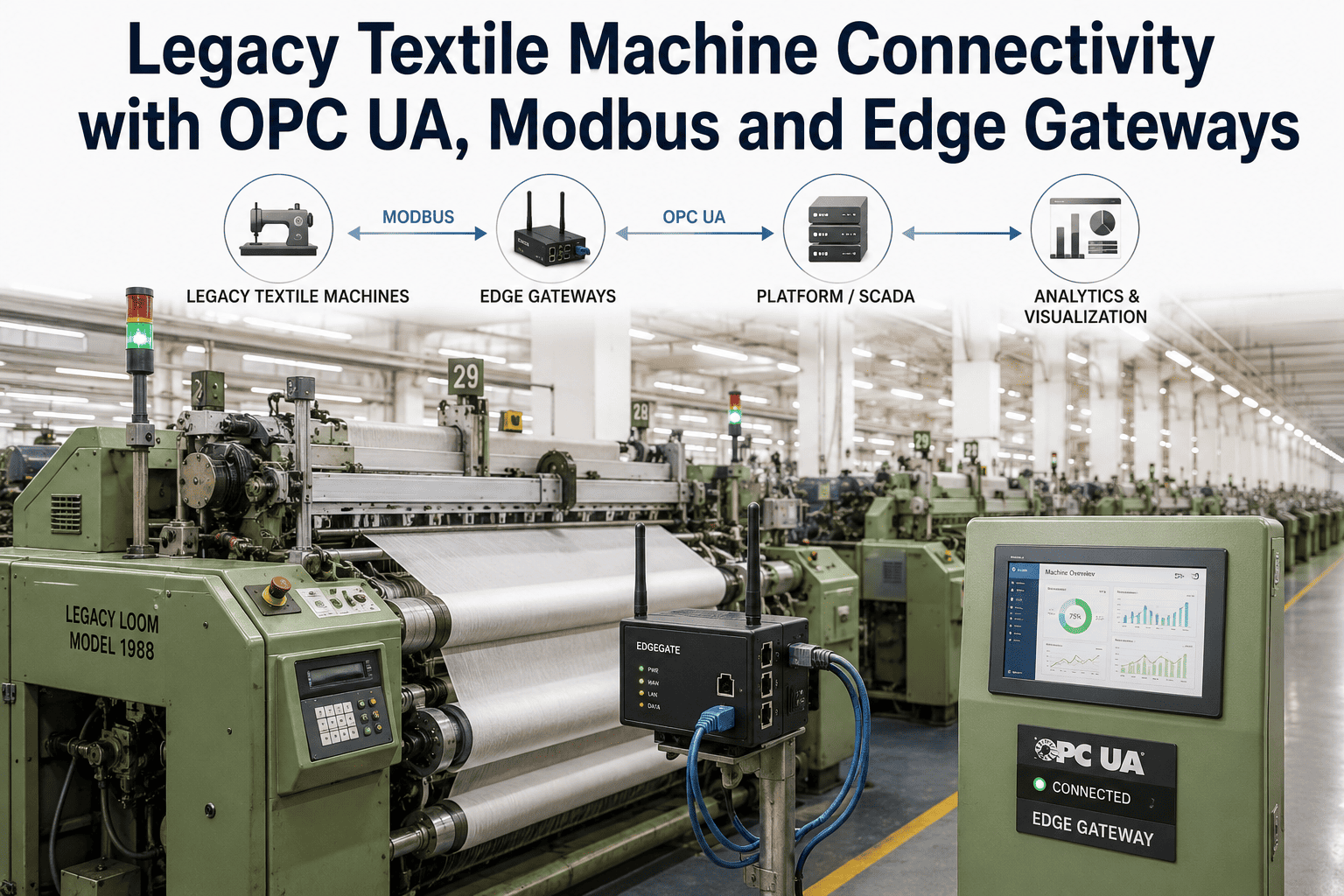
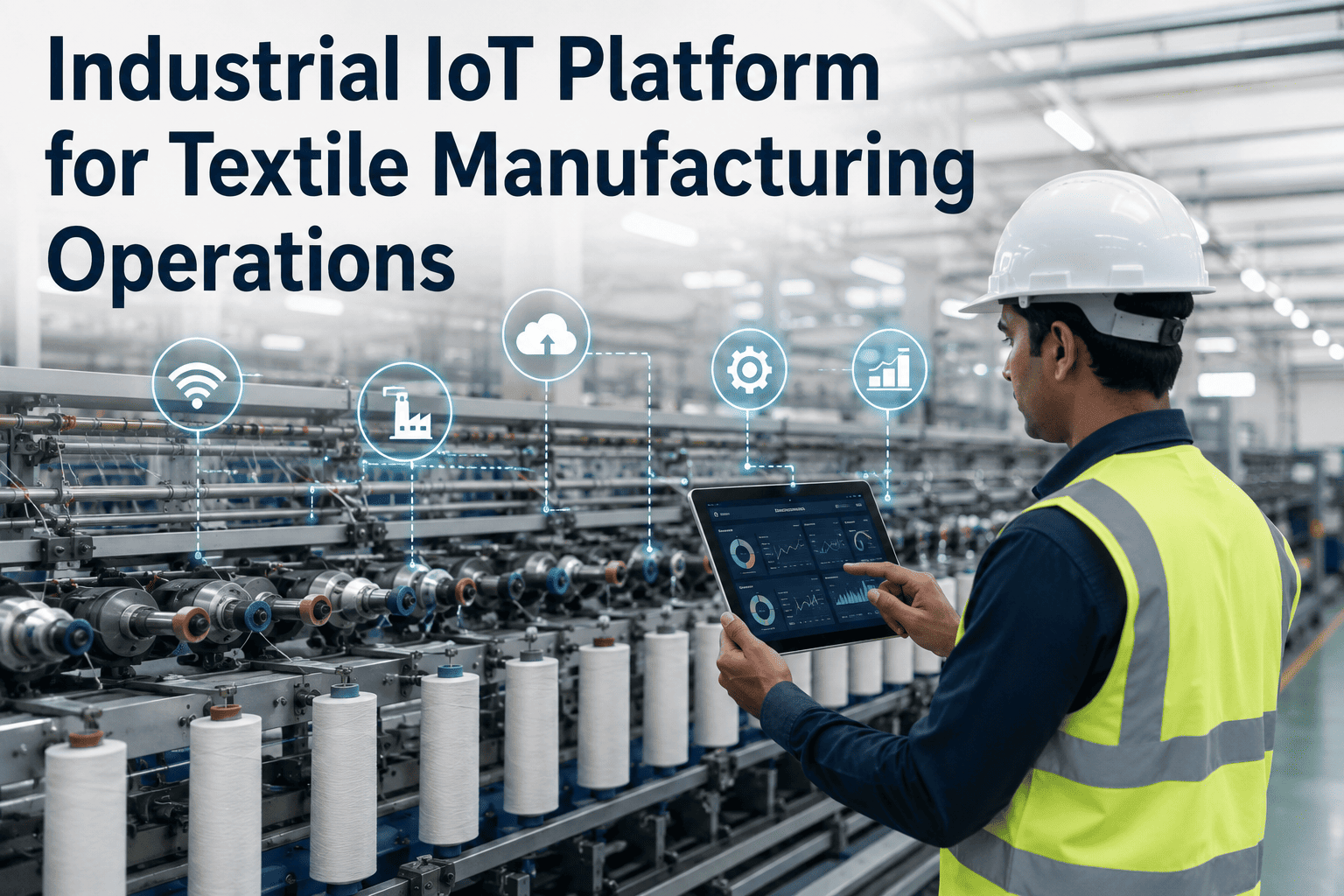
Seamlessly connect looms, spinning frames, dyeing machines, and finishing equipment via OPC-UA, Modbus, or MQTT. Our platform auto-discovers devices and maps data points, eliminating manual configuration. Real-time dashboards show machine status, production counts, and alarm conditions. Edge gateways process data locally for sub-second response, ensuring no critical event is missed. This foundational layer turns any legacy machine into a smart asset.
Sensor Integration
Integrate temperature, humidity, vibration, and pressure sensors across the production floor. Wireless sensor networks feed data directly into the IoT platform, enabling micro-climate control in weaving sheds and dyeing units. Predictive models use sensor trends to forecast machine wear, preventing breakdowns. Calibration alerts and drift detection ensure sensor accuracy over time. The result is a hyper-aware factory that self-optimizes.
Real-Time Production Dashboard
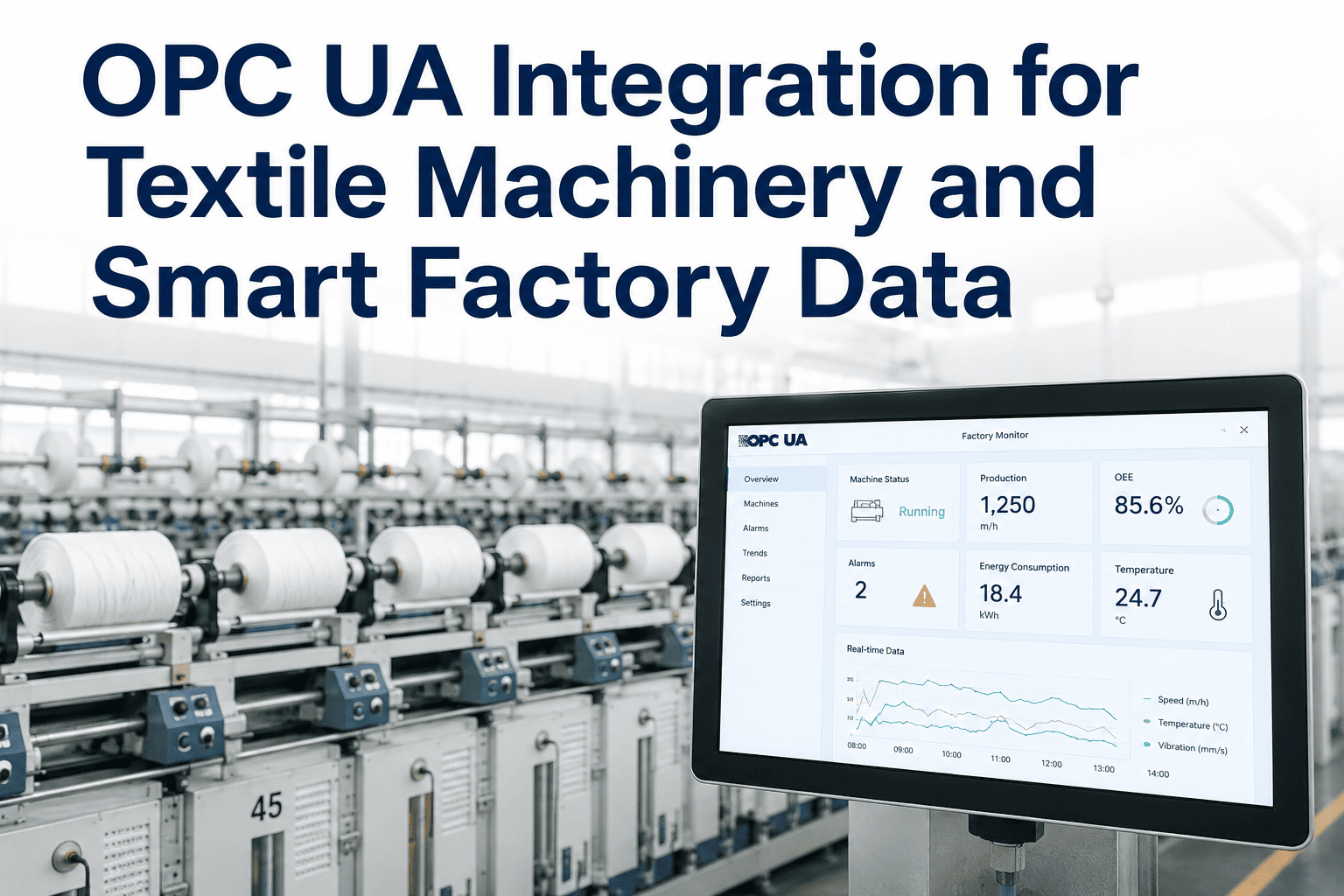
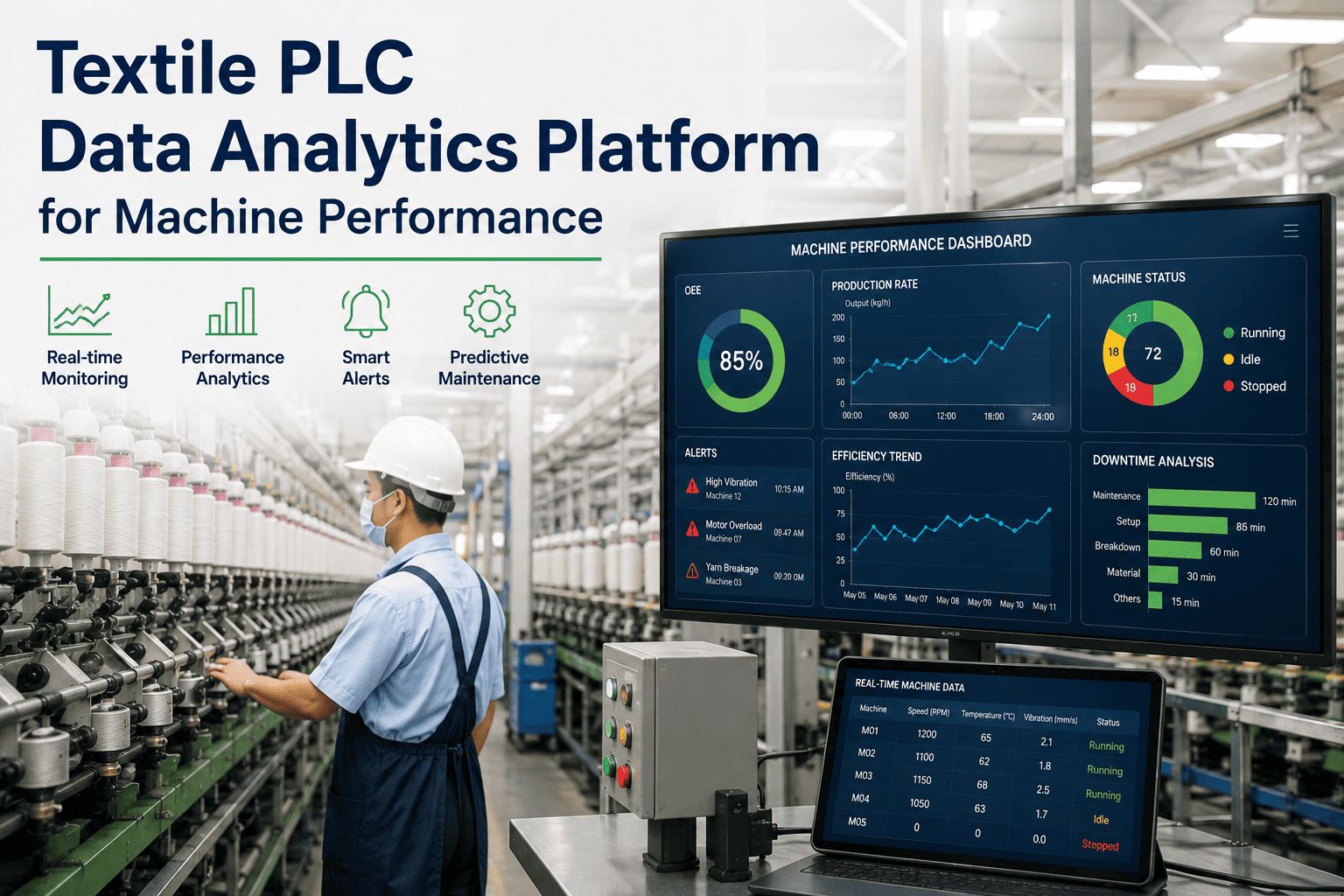
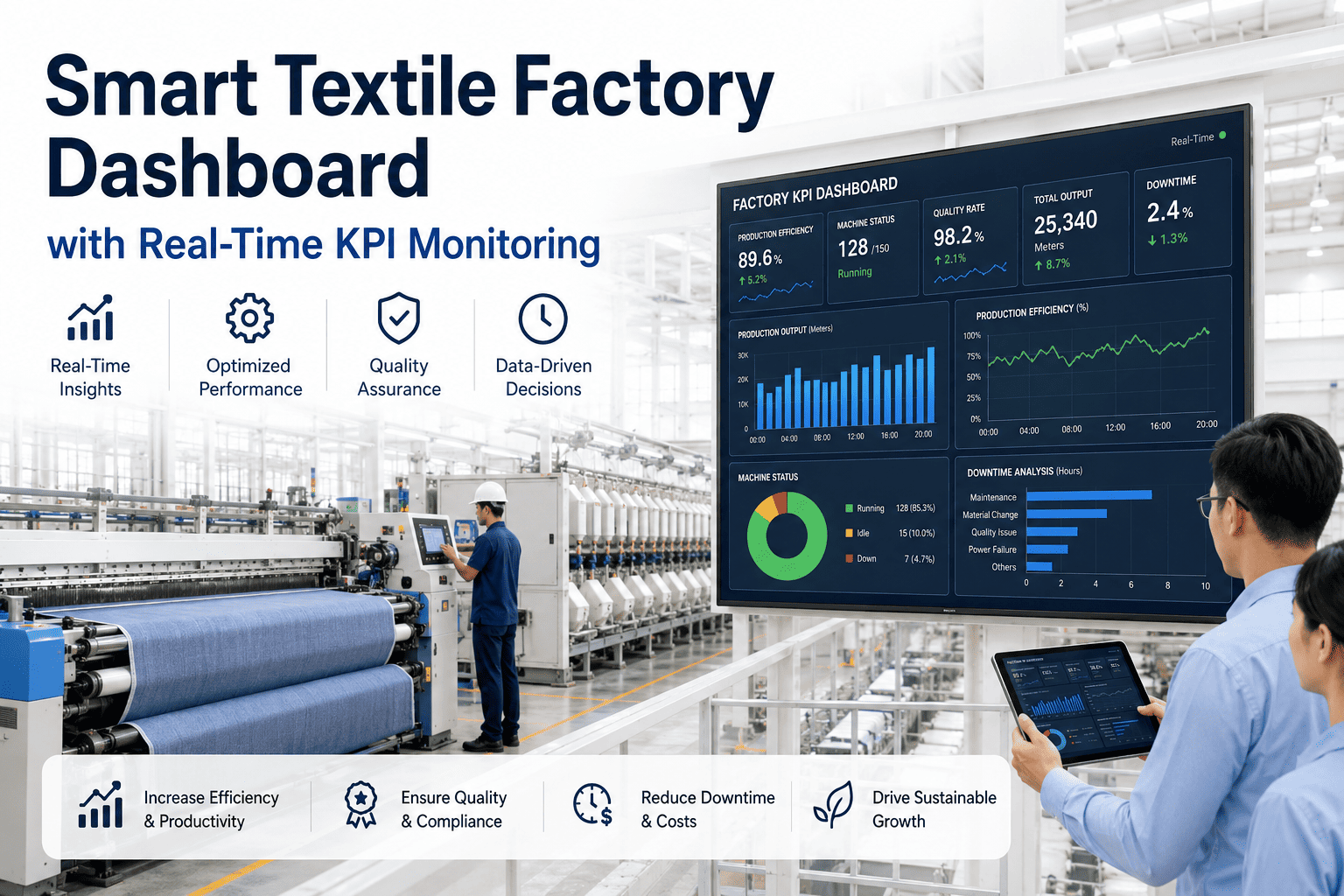
Visualize OEE, throughput, quality metrics, and energy consumption on customizable dashboards. Role-based views give operators, supervisors, and executives the exact data they need. Drill-down capabilities allow users to trace a defect back to the exact machine and operator shift. Alerts are triggered via SMS, email, or on-screen notifications when KPIs deviate from targets. Data is updated every second, enabling agile decision-making.
Predictive Maintenance
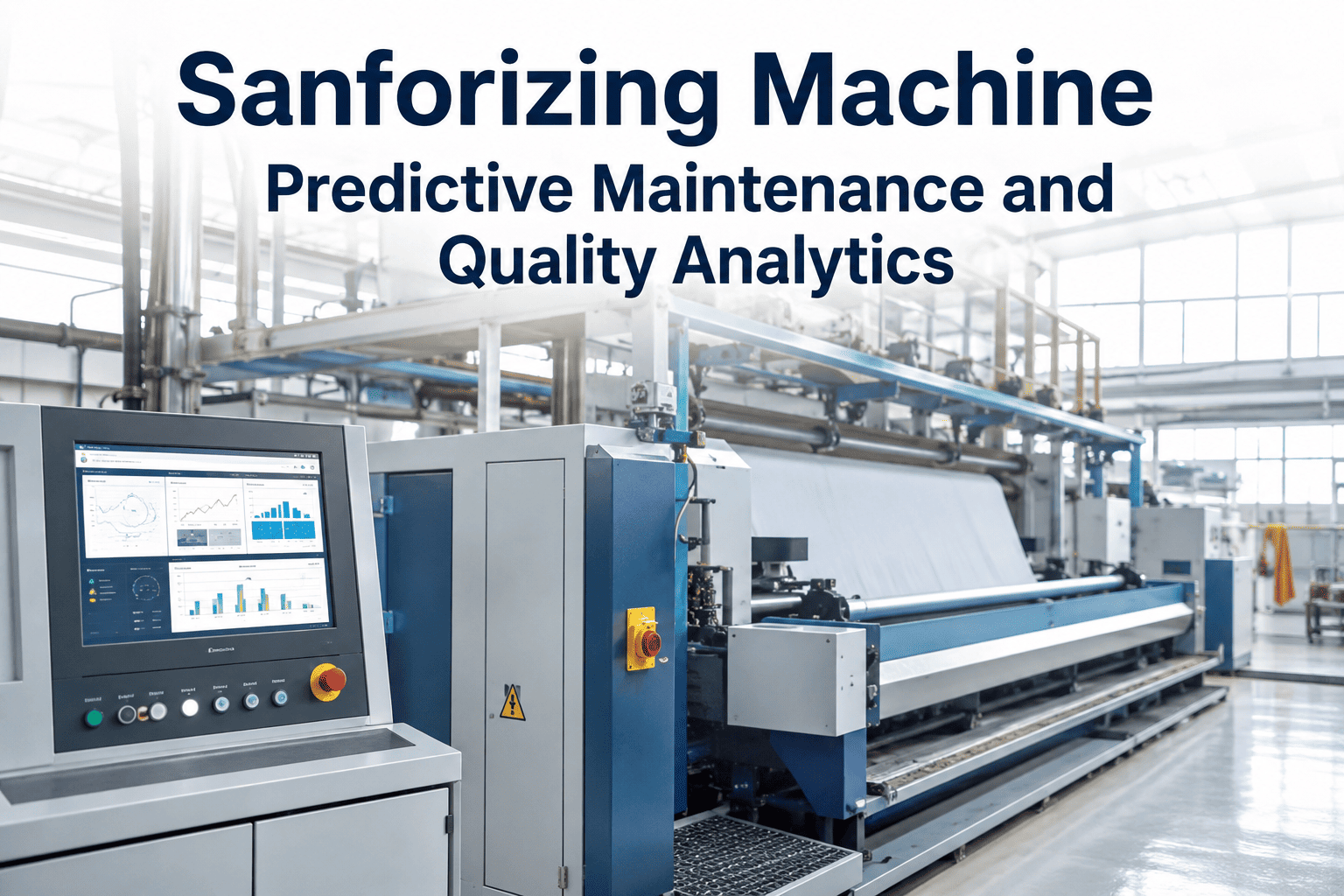
Machine learning models analyze historical and real-time data to predict failures before they occur. Vibration patterns, temperature spikes, and power draw anomalies are correlated with past breakdown events. The platform generates maintenance work orders automatically, scheduling them during planned downtime. This reduces emergency repairs by up to 40% and extends asset life. Spare parts inventory is optimized based on predicted failure probabilities.
Energy & Utility Monitoring
Track electricity, water, steam, and compressed air consumption per machine or line. Energy dashboards highlight waste hotspots, such as idle machines consuming power or leaky compressed air lines. Automated controls can shut down non-critical equipment during breaks. Benchmarking against historical data helps set reduction targets. Sustainability reports are generated automatically for compliance and green certifications.
AI-Driven Quality Control
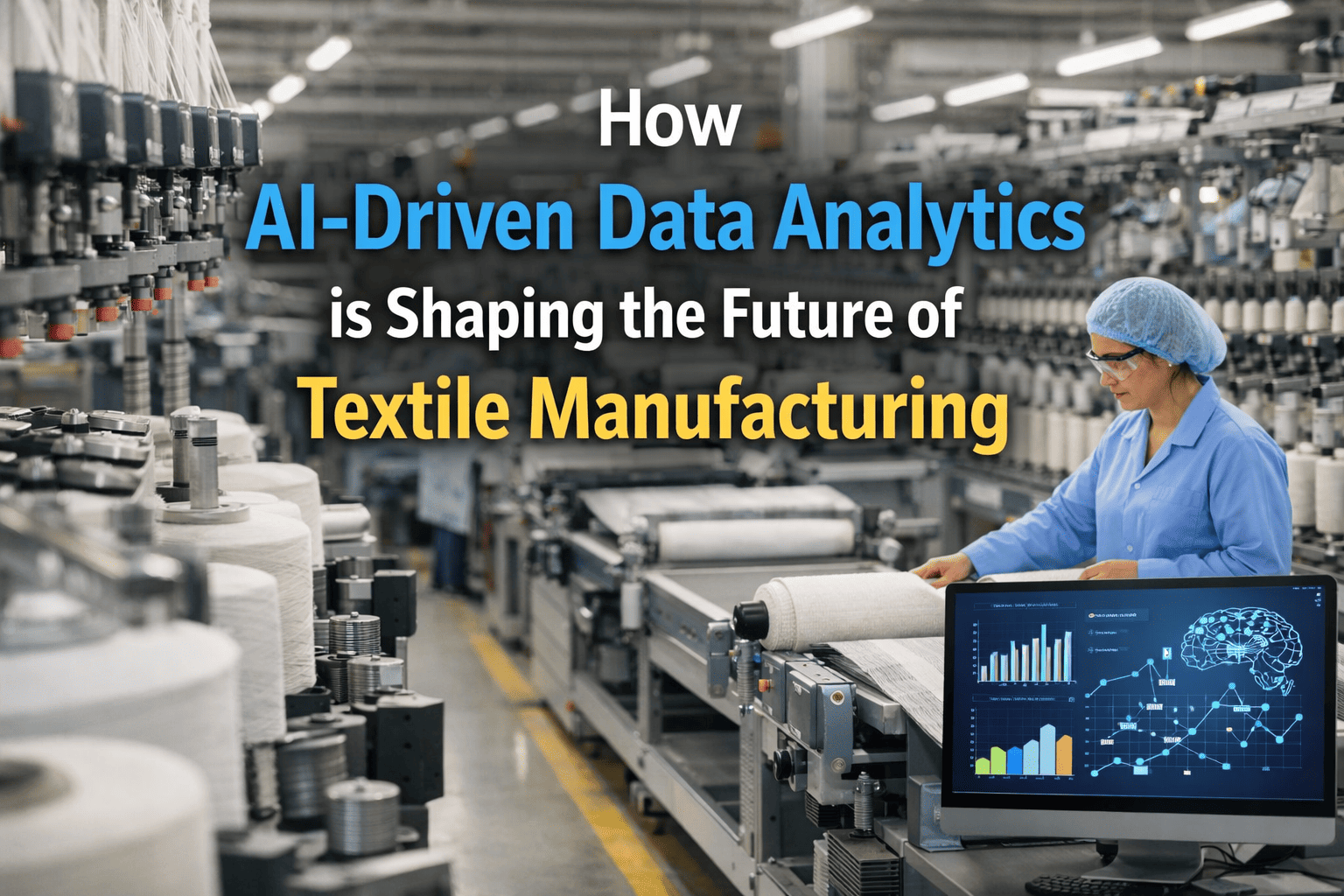
Computer vision and sensor fusion detect fabric defects, color variations, and tension irregularities in real time. AI models classify defects by type and severity, triggering immediate corrective actions. Historical data trains models to predict quality issues before they occur, adjusting machine parameters dynamically. This reduces rework and waste, ensuring first-pass yield exceeds 95%. Traceability links every meter of fabric to its production conditions.
Ready to Connect Your Textile Factory?
Transform your operations with real-time visibility, predictive insights, and AI-driven automation. Our Industrial IoT platform is built for textile manufacturing excellence.
Implementation Journey
Site Assessment & Sensor Plan
Our engineers conduct a thorough audit of your current machines, network infrastructure, and data needs. We identify priority machines and critical sensors, then design a connectivity architecture that minimizes disruption. A detailed roadmap is created with milestones and ROI projections.
Edge Gateway Deployment
We install industrial-grade edge gateways that support multiple protocols (OPC-UA, Modbus, Profinet). Gateways pre-process data locally, reducing cloud bandwidth costs and enabling millisecond response times. Configuration is done remotely via our platform, with zero downtime for production.
Platform Configuration & Dashboard Creation
Your data flows into the iFactory cloud platform, where we build custom dashboards, alerts, and reports. Role-based access ensures the right people see the right information. Machine learning models are trained on your historical data for predictive maintenance and quality control.
Go-Live & Continuous Optimization
After thorough testing and user training, the system goes live. Our team provides 24/7 support and continuous model retraining. We analyze performance data to suggest further optimizations, such as new sensor placements or automation rules. The platform evolves with your factory.
Technical Specifications
| Component | Specification | Compliance |
|---|---|---|
| Edge Gateway | Dual-core ARM Cortex-A72, 4GB RAM, 64GB storage | IEC 62443, CE, FCC |
| Supported Protocols | OPC-UA, Modbus TCP/RTU, MQTT, Profinet, Ethernet/IP | ODVA, OPC Foundation |
| Sensor Connectivity | Wireless (LoRaWAN, Zigbee) and wired (4-20mA, 0-10V) | IP67, ATEX Zone 2 |
| Cloud Platform | AWS IoT Core, Azure IoT Hub, or on-premise option | ISO 27001, SOC 2 Type II |
| Data Processing | Real-time streaming with Apache Kafka, 100ms latency | GDPR, CCPA compliant |
| Analytics Engine | Built-in ML models for anomaly detection, predictive maintenance | ONNX, TensorFlow compatible |
Real-World Use Cases
High-Speed Weaving Mill
A weaving mill with 500 looms faced frequent warp breakages causing 15% downtime. By connecting each loom with vibration and tension sensors, the platform detected patterns leading to breaks. Predictive models alerted operators 10 minutes before breakage, allowing preventive adjustments. Downtime dropped to 5%, and fabric quality improved by 8%.
Dyeing & Finishing Plant
A dyeing plant struggled with inconsistent shade matching due to temperature and pH variations. IoT sensors monitored dye bath conditions in real time, and an AI model adjusted dosing automatically. Shade rejection rate fell from 12% to 2%, saving $500k annually in rework costs. Energy consumption reduced by 18% through optimized heating cycles.
Spinning Unit
A spinning unit experienced frequent ring frame failures due to bearing wear. Vibration sensors on every spindle transmitted data to the platform. A machine learning model predicted bearing failure 48 hours in advance, enabling planned replacements during shift changes. Unplanned downtime decreased by 60%, and spare parts inventory was reduced by 30%.
Frequently Asked Questions
How long does it take to deploy your Industrial IoT platform in a textile factory?
Deployment time varies based on factory size and existing infrastructure. A typical pilot with 10-20 machines can be completed in 2-4 weeks, including sensor installation, gateway configuration, and dashboard setup. Full factory rollout for 100+ machines usually takes 8-12 weeks. Our team works closely with your IT and production teams to minimize disruption. We also offer a phased approach, starting with critical machines and expanding gradually. Book a Demo to discuss your specific timeline and get a detailed project plan.
Can your platform integrate with existing ERP or MES systems?
Yes, our platform provides REST APIs, OPC-UA, and MQTT connectors to seamlessly integrate with leading ERP (SAP, Oracle) and MES (Wonderware, Siemens) systems. Real-time production data, quality metrics, and maintenance events can be pushed to your existing systems for unified reporting. We also support custom integration via webhooks and database connectors. Our integration team will map your data schemas to ensure smooth bi-directional flow. Book a Demo to see how we connect with your current stack.
What security measures are in place to protect our production data?
We implement end-to-end encryption (TLS 1.3) for data in transit and AES-256 for data at rest. Edge gateways are hardened with secure boot, tamper detection, and role-based access. The cloud platform is ISO 27001 and SOC 2 Type II certified, with regular penetration testing. Data residency options are available (US, EU, APAC). We also support on-premise deployment for factories with strict data sovereignty requirements. Contact Support for a detailed security whitepaper.
Do you provide training for factory operators and engineers?
Absolutely. We offer comprehensive training programs tailored to different roles: operators learn dashboard navigation and alert response; engineers get in-depth configuration and analytics training; managers receive strategic reporting and KPI interpretation. Training is delivered on-site, remotely, or through our e-learning portal. We also provide 24/7 support via chat, email, and phone. Our goal is to make your team self-sufficient within the first month. Book a Demo to include training in your implementation plan.
What is the ROI timeline for implementing your Industrial IoT platform?
Most textile factories see a positive ROI within 6-9 months. Key drivers include: 20-30% reduction in unplanned downtime, 15-25% increase in OEE, 10-20% energy savings, and 50% faster quality issue resolution. We provide a detailed ROI calculator during the assessment phase, factoring in your specific machine types, production volumes, and current inefficiencies. Many clients recoup their investment within the first year through cost savings alone. Book a Demo to get your personalized ROI estimate.
Transform Your Textile Factory Today
Connect with our experts to design a custom Industrial IoT solution that drives measurable results. Real-time visibility, predictive maintenance, and AI-driven quality control await.