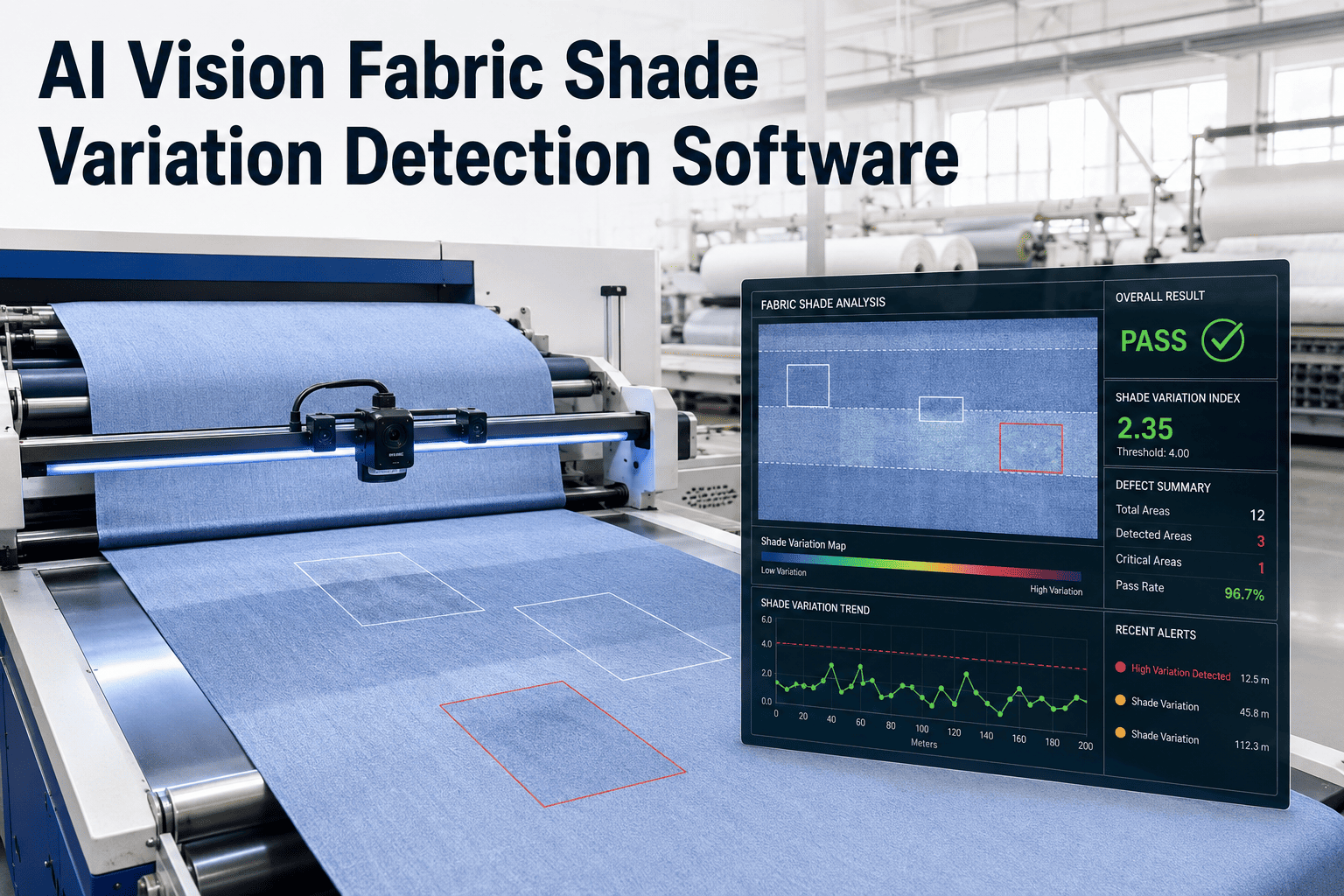
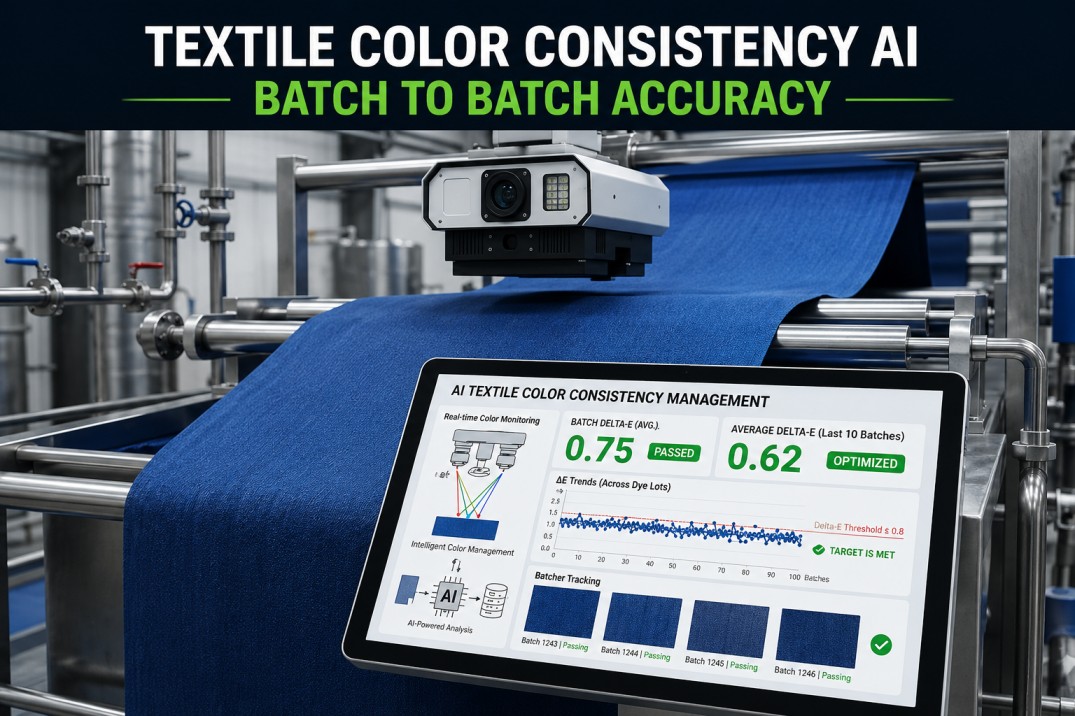
A single shade-mismatched dye lot can cost more than the fabric itself once you count the redye, the missed delivery window, and the customer who now double-checks every future shipment. Dye houses that still rely on visual assessment under inconsistent lighting typically run a right-first-time rate near 70%, while automated monitoring and computer color matching can push that past 95%. For a mid-sized dye house processing 500,000 kg a month, that gap is worth roughly $1.2 million a year in rework alone. Book a demo to see where your own batches are drifting.
AI Vision · Dye House Monitoring
Catch the Shade Drift Before the Batch Is Ruined
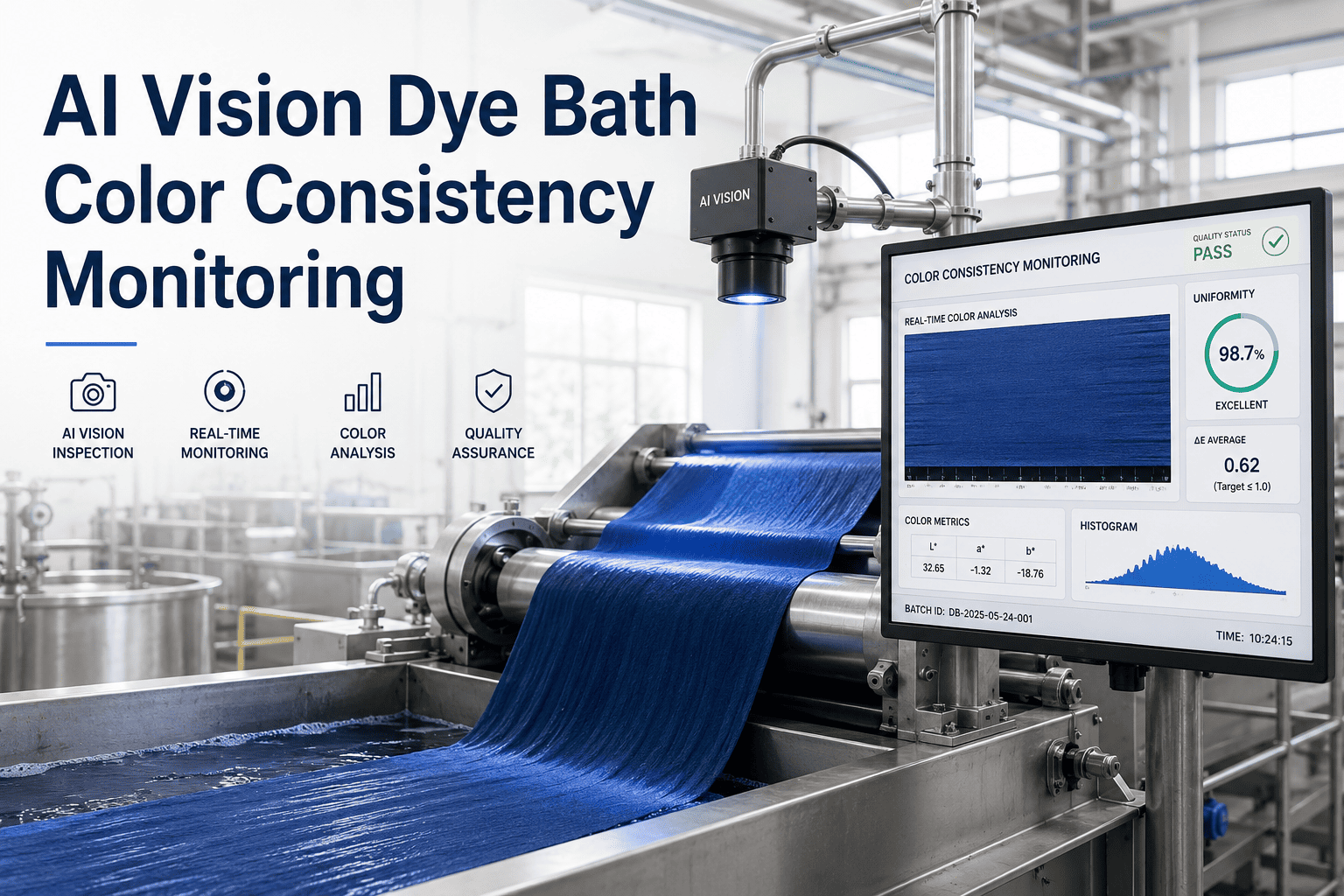
AI vision watches color development inside every dye bath in real time, flagging drift within seconds instead of discovering the mismatch after the fabric comes off the machine.
Five Moments Where a Dye Lot Goes Wrong
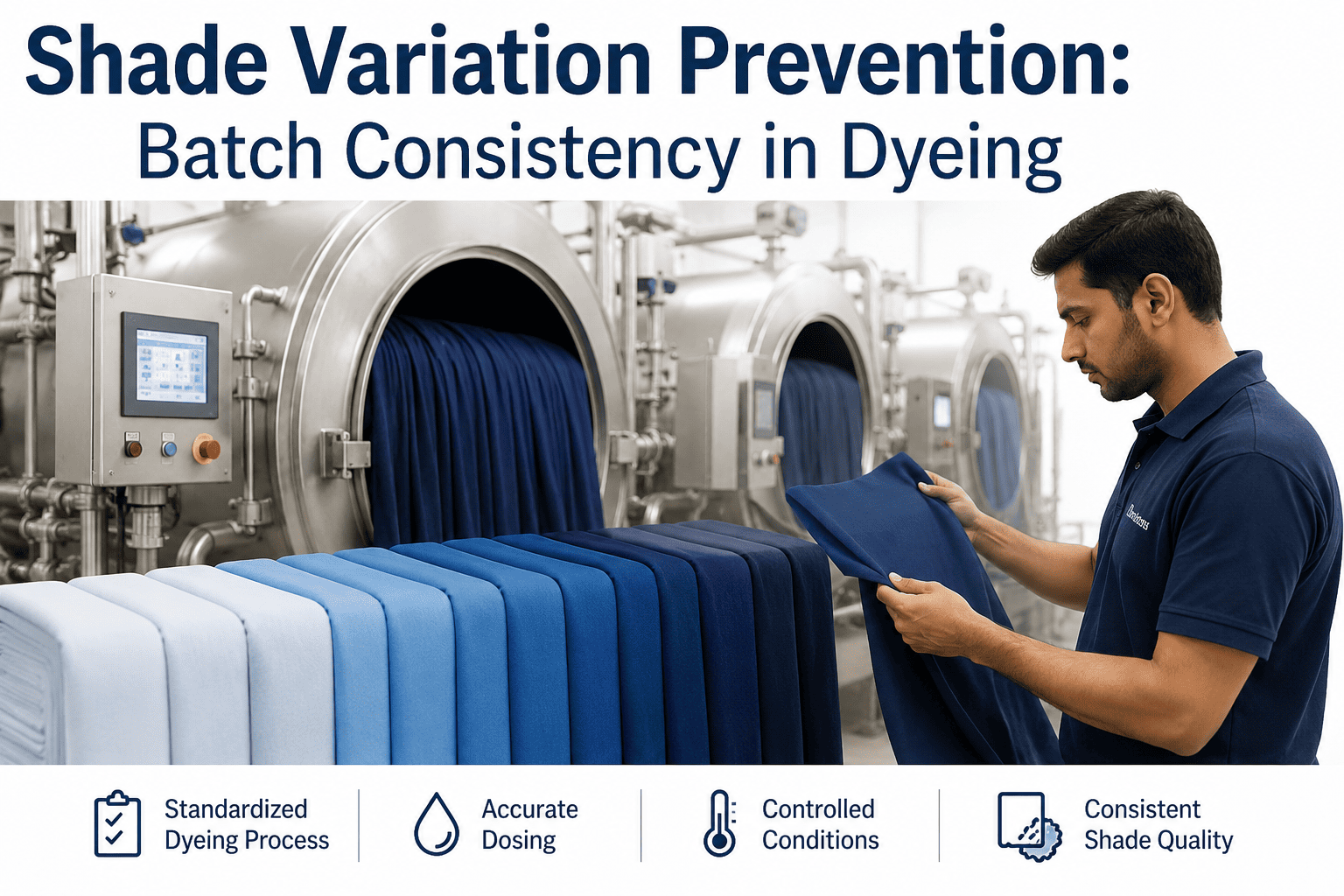
Color problems rarely start at the sampling stage where they're usually caught. By then, the batch is often already lost. Real-time vision monitoring watches every stage of the cycle, not just the end.
1
Fabric Preparation
Uneven absorbency, residual pH, or moisture variation across the substrate sets up shade problems before a single drop of dye enters the bath.
2
Dye & Chemical Dosing
Manual weighing errors are responsible for roughly 40% of shade mismatches, most of them small enough to go unnoticed until the fabric is dry.
3
Bath Heating & Exhaustion
Temperature and pH drift during the exhaustion cycle changes how evenly dye strikes the fiber, especially on longer or high-add-on recipes.
4
Mid-Cycle Color Development
This is the stage traditional dye houses skip entirely, since a visual check mid-cook is rarely practical without automated cameras watching continuously.
5
Final Shade Assessment
The traditional first checkpoint — by now a correction means a full redye cycle, adding days and burning water, energy, and chemicals.
The Right-First-Time Gap Is Bigger Than Most Dye Houses Think
Right-first-time (RFT) dyeing is the single best predictor of dye house profitability. Most plants underestimate how far they are from world-class performance until they measure it properly.
Typical Manual Dye House
70%
With Real-Time AI Vision Monitoring
95%
Lab-to-bulk match rates follow the same pattern: below 60% without process controls, above 90% once production conditions are validated against lab conditions.
Every redye cycle burns water, energy, chemicals, and three to seven days of schedule. Catching drift mid-cycle is the difference between a correction and a full restart.
Visual Inspection vs. AI Vision Color Monitoring
The core difference is timing — catching a problem while it's still correctable versus discovering it once the batch is finished.
| Factor |
Manual Visual Check |
AI Vision Monitoring |
Outcome |
| Detection point |
After the batch is unloaded |
Continuously during the dye cycle |
Correction instead of redye |
| Lighting consistency |
Varies by station and shift |
Standardized spectral capture |
Fewer false accepts and rejects |
| Recipe feedback |
Logged manually after the fact |
Fed back into recipe libraries automatically |
Fewer repeat mismatches over time |
| Operator dependency |
Relies on individual color judgment |
Consistent standard applied every batch |
Less variation across shifts |
| Documentation |
Paper logs or spreadsheets |
Automatic digital batch history |
Faster customer approvals |
Field Insight
Dye houses treat the final shade check as quality control, but by that point it's really just a diagnosis of a batch that's already finished. The real quality control window is the twenty minutes in the middle of the cycle where drift is still correctable with a small addition instead of a full redye. Vision systems are valuable precisely because they watch that window continuously, something no operator can do across dozens of machines at once.
Dye House Process Consultant, Textile Wet Processing
Frequently Asked Questions
How does AI vision actually measure color inside a running dye bath?
Cameras positioned at fixed points on the machine capture spectral and visual data on the fabric as it passes through the bath, comparing it continuously against the target shade curve for that recipe. Because the capture conditions are standardized, the system isn't fooled by the lighting inconsistencies that make manual mid-cycle checks unreliable. When the measured color trajectory starts to diverge from the expected curve, an alert is raised while there's still time to correct the recipe.
Book a demo to see live shade-curve tracking on a sample recipe.
Does this replace our lab's color matching software?
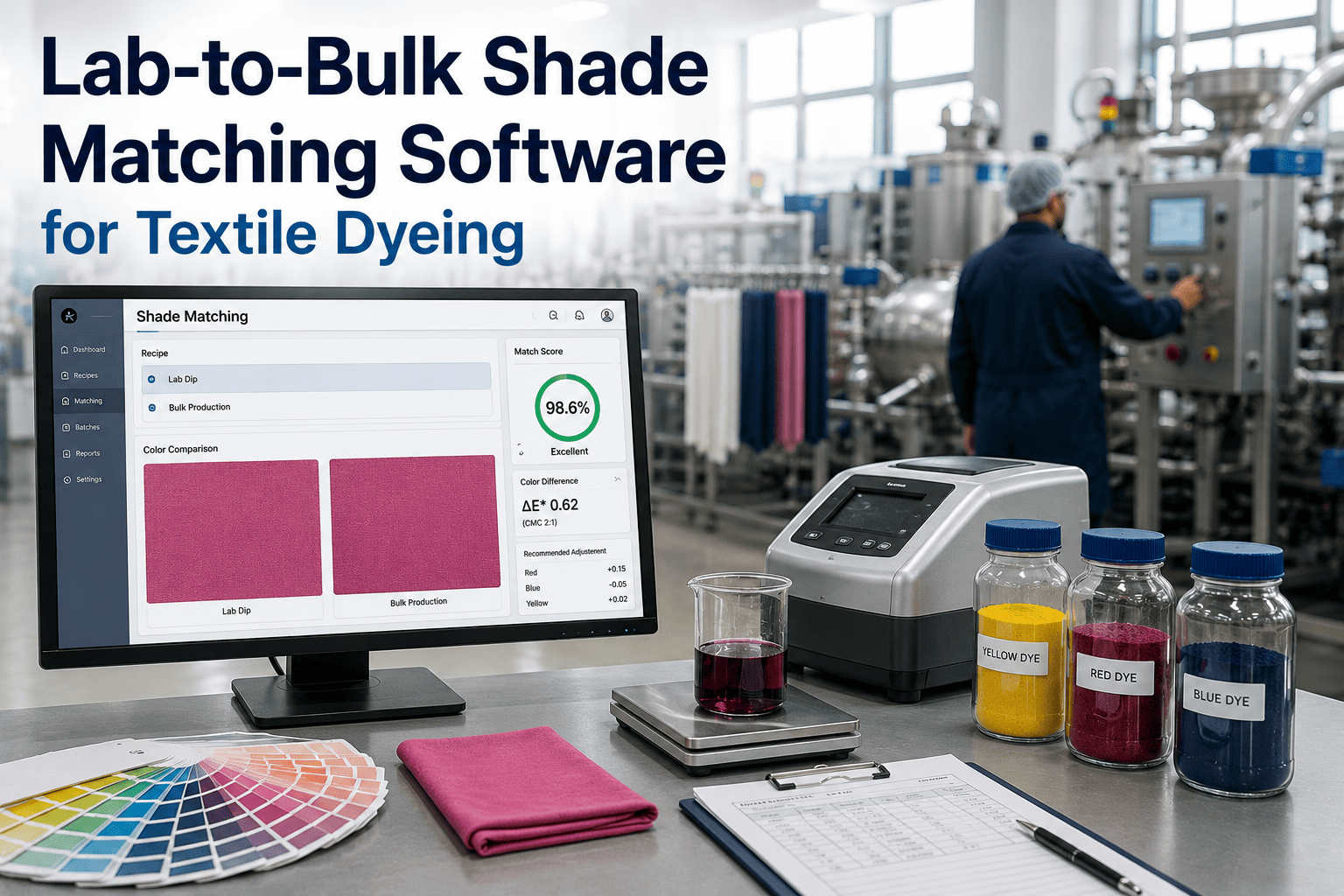
No — it complements it. Your lab's color matching software formulates the recipe before production; AI vision monitoring verifies that the bulk dye bath is actually tracking that recipe as the batch runs. The two work together: a strong lab match with poor process control still produces mismatches, and tight process control without a good lab match just reproduces the wrong color consistently.
Contact support to discuss how this fits alongside your existing color lab workflow.
What causes most shade mismatches if the recipe itself is correct?
Manual weighing and dosing errors account for a large share of mismatches even when the underlying recipe is sound, since small inaccuracies compound over a full dye cycle. Fabric preparation inconsistencies, such as uneven absorbency or residual pH from a prior process, are another common and frequently overlooked cause. Bath temperature and pH drift during exhaustion is the third major factor, particularly on longer or high-add-on dark shades.
Book a demo to get a cause breakdown specific to your dye house's recipe mix.
How quickly can we expect to see fewer redyes after installation?
Most dye houses see their first clear pattern of recurring mismatch causes within two to three weeks of installation, since continuous monitoring surfaces issues that monthly quality reviews miss entirely. Meaningful reductions in redye volume typically follow within four to eight weeks as recipes and process parameters are adjusted based on the flagged drift patterns. Full right-first-time improvement toward the 90%-plus range is generally a multi-month program built on sustained process discipline.
Contact support for a realistic improvement timeline for your batch volume.
Can this help with customer color approvals and dispute resolution?
Yes. Every batch generates a digital color history showing the shade trajectory throughout the cycle, which gives you defensible evidence when a customer disputes a shipment's color match. This also speeds up new shade approvals, since buyers can see consistent, documented performance across multiple production runs rather than relying on a single physical lab dip.
Book a demo to see a sample batch color report.
Stop Discovering Shade Problems After the Batch Is Done
Real-time color monitoring that catches drift while it's still a correction, not a redye.