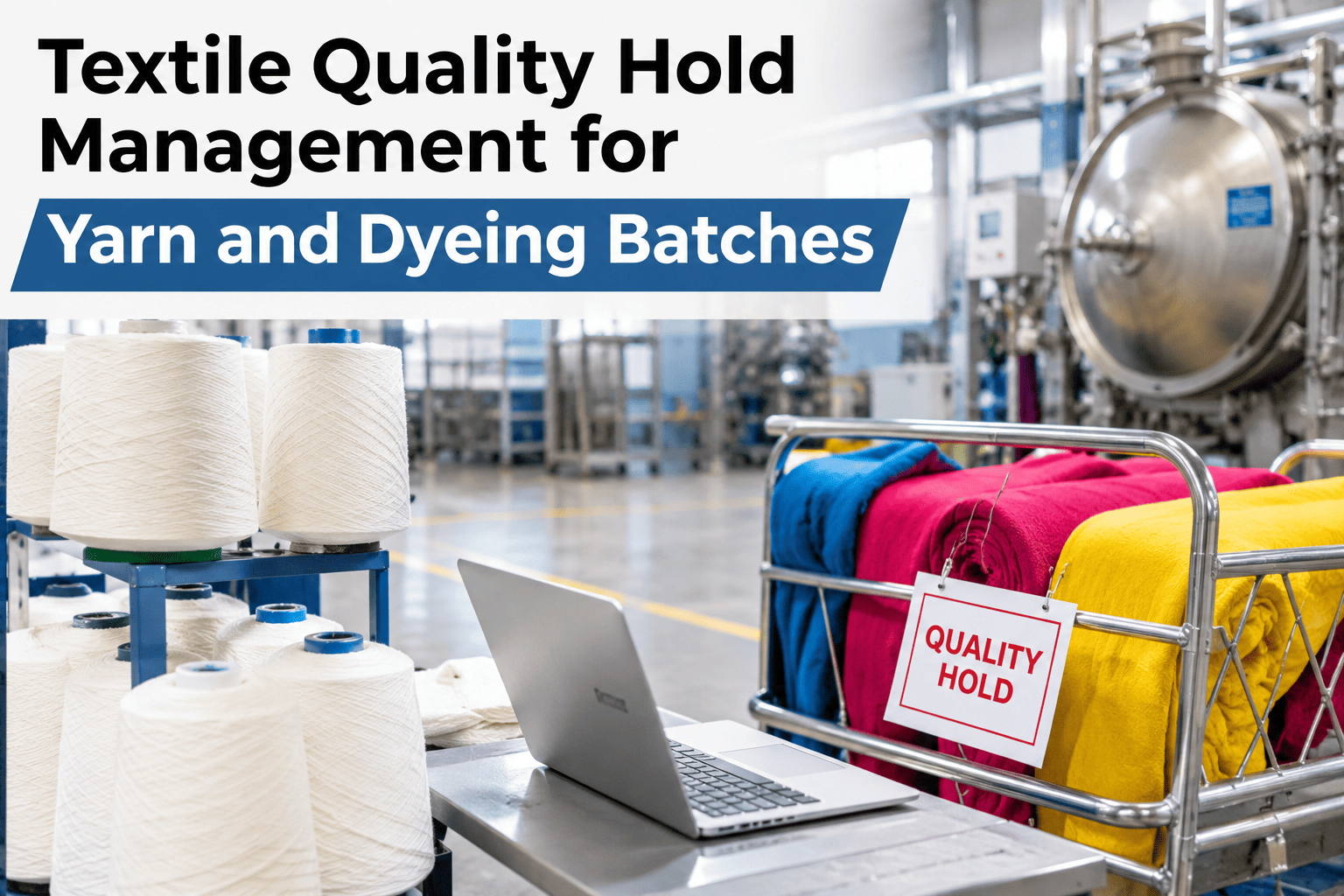
A yarn or dyeing batch placed on hold should never sit in limbo without a clear owner, a documented reason, and a defined path to either release or reject — yet in many mills a hold is just a verbal instruction and a batch pushed to the side of the floor, with no record of who decided what or why. A structured hold workflow fixes that by tying every hold to a defect reason, test result, named owner and disposition decision before release. Textile quality teams who want their own hold process checked against this structure can review a hold management workflow with iFactory AI.
A Batch on Hold Should Never Be a Batch Without an Owner
iFactory AI ties every quality hold to a defect reason, test result, named owner and disposition decision, so no batch sits in limbo waiting on a verbal instruction.
The Five Elements Every Quality Hold Needs
A hold without these five pieces is really just a batch sitting unused on the floor, with no clear path forward and no record anyone can review later.
The Hold-to-Release Workflow
Check Whether Your Current Holds Actually Have an Owner
Walk through a recent batch hold against this checklist to see which pieces are missing in your current process.
Disposition Options and What Each One Actually Means
| Disposition | When it applies | What happens next |
|---|---|---|
| Release | Investigation shows the batch meets spec after all | Batch resumes its normal production path |
| Rework | A correctable issue, such as a dye shade adjustment | Batch is reprocessed, then re-tested before release |
| Downgrade | Batch is usable but does not meet original spec | Batch is reclassified and sold or used accordingly |
| Reject | Batch cannot be corrected or downgraded usefully | Batch is scrapped, with cost tracked against the cause |
A Composite Scenario: The Hold That Sat for Three Weeks
A dyeing batch flagged for a shade variance was pulled off the floor and verbally marked as "on hold," but with no named owner responsible for deciding what happened next. It sat untouched for nearly three weeks, tying up floor space and inventory, before someone finally followed up and found the shade variance was within an acceptable tolerance for a different customer order. Assigning a named owner and a disposition deadline at the moment any hold is placed, rather than leaving it open-ended, is what prevents this kind of delay — a structure iFactory AI's team can help build into your own hold workflow.
Why This Strengthens Traceability, Not Just Hold Management
A properly documented hold-to-release record becomes part of that batch's full traceability chain, so a future investigation into a related issue can see not just the batch's production history but every quality decision made along the way, including holds that were ultimately released as acceptable.
Frequently Asked Questions
Make Sure Every Hold Has an Owner and a Deadline
iFactory AI structures every quality hold with a defect reason, owner, disposition and release approval. Book a walkthrough with your own process.