A laminated SOP taped to a stenter frame feels permanent, right up until the heat zone setting changes and nobody remembers to print a new copy. Digital SOP management keeps every procedure for energy monitoring, spindle checks, humidity control, stenter operation, boiler checks and dyeing quality under version control, so the copy an operator actually follows is always the current one, not whatever survived the last reprint. iFactory AI, an on-premise AI platform for manufacturing, builds that controlled SOP library around a mill's existing procedures, and quality leaders can see their own energy and quality SOPs brought under version control with our team.
The SOP on the Floor Is Always the Current One
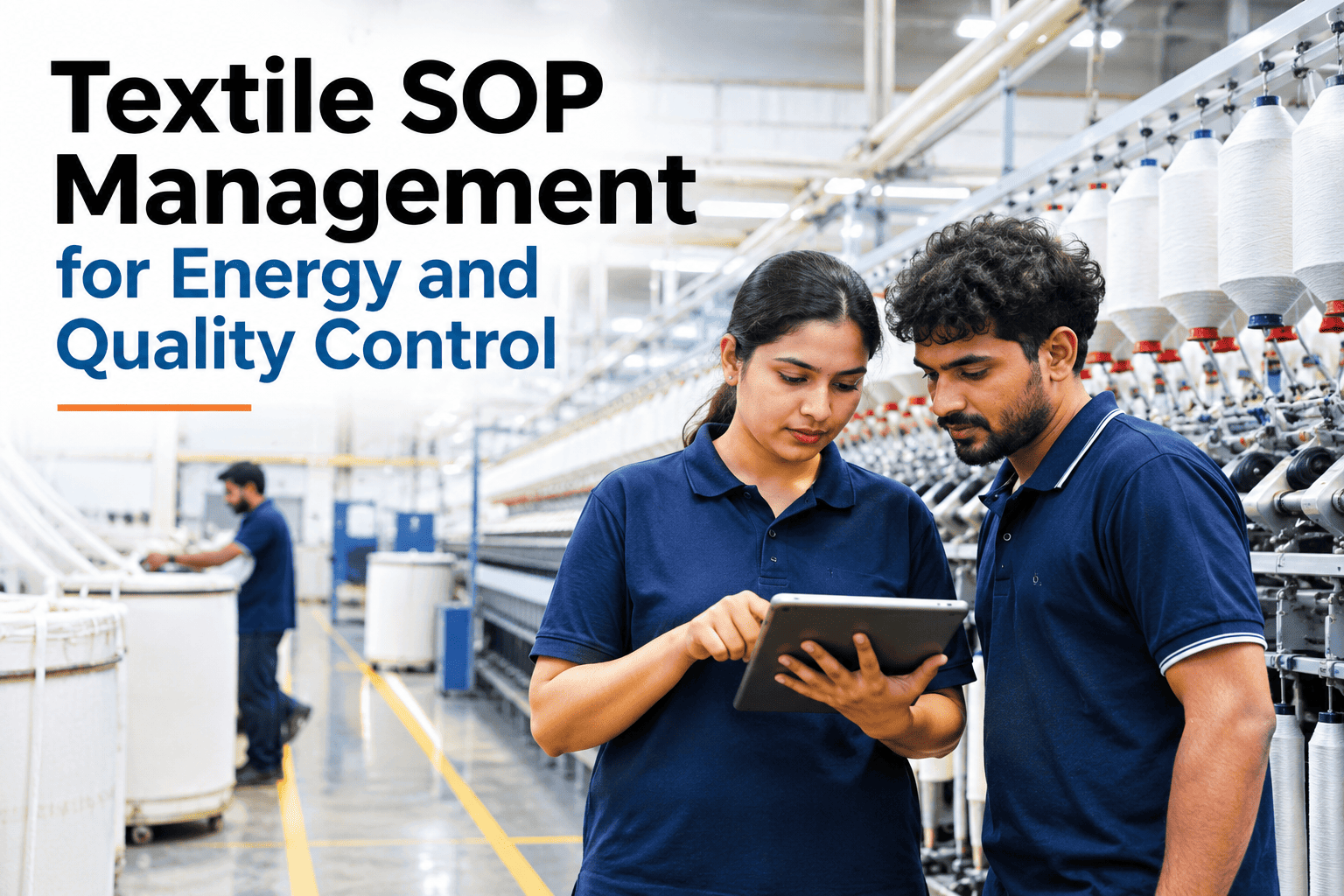
Textile SOP management for energy and quality control keeps spindle checks, humidity, stenter operation, boiler checks and dyeing quality procedures under revision control, with training tracked against the latest version.
Why a Printed SOP Quietly Goes Stale
A laminated procedure taped near a machine is easy to read and easy to ignore updating, because reprinting and relaminating takes real effort compared to simply continuing to follow what's already posted. The result is a plant where the "official" procedure on paper and the actual current best practice drift apart over months, and nobody notices until an audit or an incident traces back to a step that was already outdated.
Six Procedure Areas Under One Controlled Library
A Stenter Setting Changed Six Weeks Before Anyone Followed It
Picture a mill that adjusted its stenter heat zone procedure after a fabric quality review found the old setting was running slightly hotter than necessary for a particular blend. The engineering team updated the master document on a shared drive and assumed the change would propagate, but the laminated sheet at the actual machine kept showing the old numbers for six weeks, because nobody on that shift had the task of walking out and swapping it. The fabric kept running at the old, less efficient setting the whole time, with the only record of the "correct" procedure sitting in a file nobody at the machine ever opened.
A controlled digital SOP removes that gap entirely, because there is only one version for an operator to see, and it is already the current one the moment it is approved, with no separate physical step required to make it so.
How a Procedure Changes Without Confusion on the Floor
See Your Procedures Brought Under One Library
Share your current SOPs for energy, spinning and wet processing, and iFactory AI will show how they would move into a version-controlled structure.
What Changes Once Revisions Are Tracked
Why Energy SOPs Belong in the Same Library as Quality SOPs
It is tempting to treat energy procedures as a separate, lower-stakes category from quality procedures, but on a textile line the two are often the same decision seen from two angles. A stenter heat zone setting is simultaneously an energy parameter and a fabric quality parameter, and a boiler pressure procedure affects both utility cost and dyeing consistency downstream. Keeping both categories in one library, rather than splitting them across separate systems owned by different departments, keeps that overlap visible instead of hidden behind an organizational line.
The Same Controlled Library, Read by Three Roles
What a Mill Needs Before the First SOP Goes Under Control
Most mills already have the content of their SOPs somewhere, in a shared drive, a binder or a laminated sheet, so the first real task is gathering the current version of each procedure and confirming which one is genuinely the latest before anything is digitized. Starting with the procedures most frequently updated, often energy and dyeing quality, gives the version control system the clearest early value, since those are exactly the SOPs most likely to have drifted out of sync on paper.
What a Controlled SOP Library Makes Possible Later
Once SOPs are version-controlled, a mill can start asking a question that paper never supports well: whether a particular procedure revision actually improved the outcome it targeted. A stenter heat zone change made to save energy can be checked against actual kWh per kg data from the weeks before and after it went live, and a dyeing quality control revision can be checked against the defect rate it was meant to reduce.
That link between a specific procedure version and its measured effect turns SOP management from a documentation exercise into a feedback loop, where the next revision is informed by evidence rather than only by opinion about what should work better.
Mistakes That Weaken an SOP Management Rollout
What a Quality Manager Would Check First
What Mills Ask About SOP Management
Stop Chasing Down the Latest Laminated Sheet
Book a session with iFactory AI to bring your mill's energy and quality SOPs under one version-controlled library.