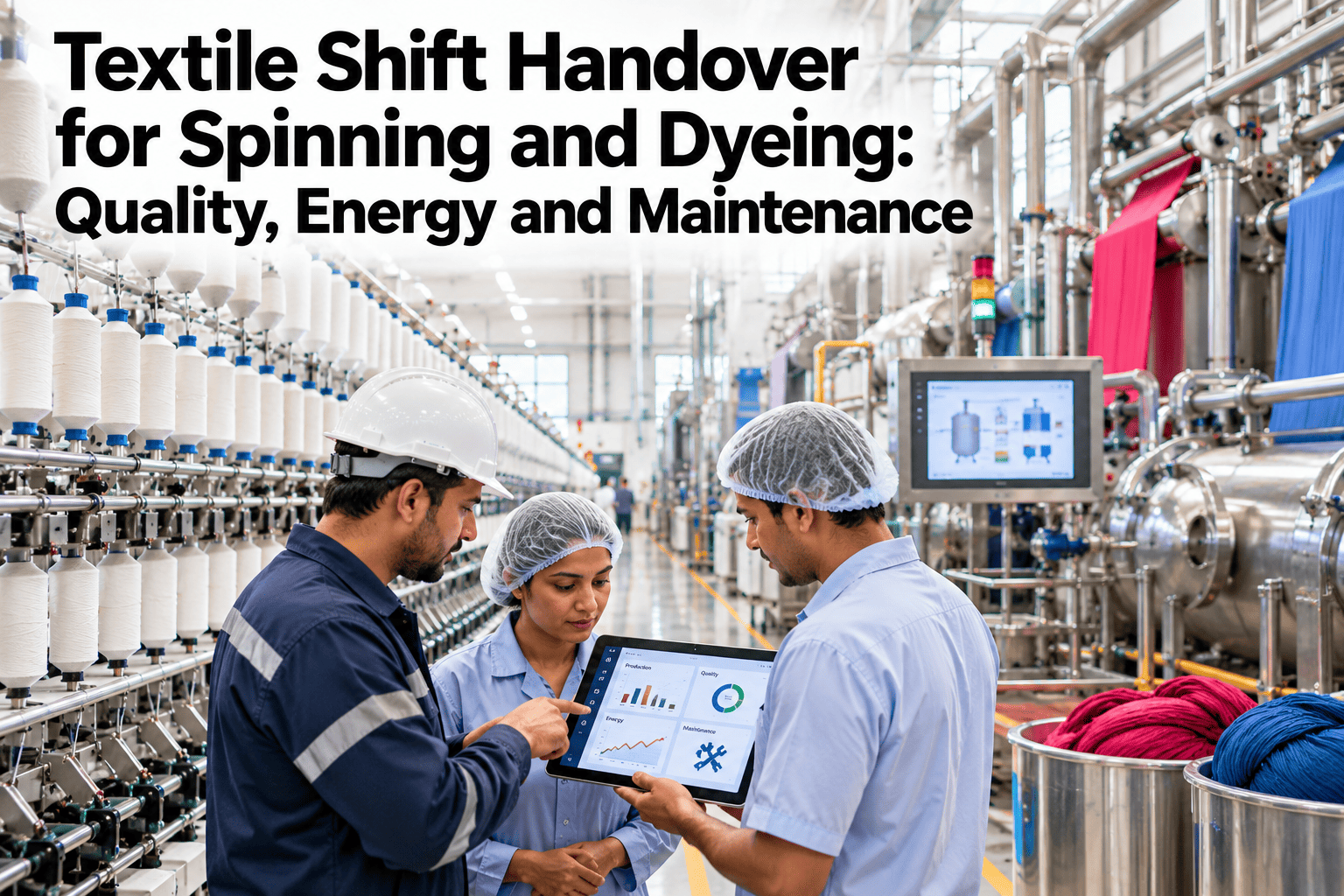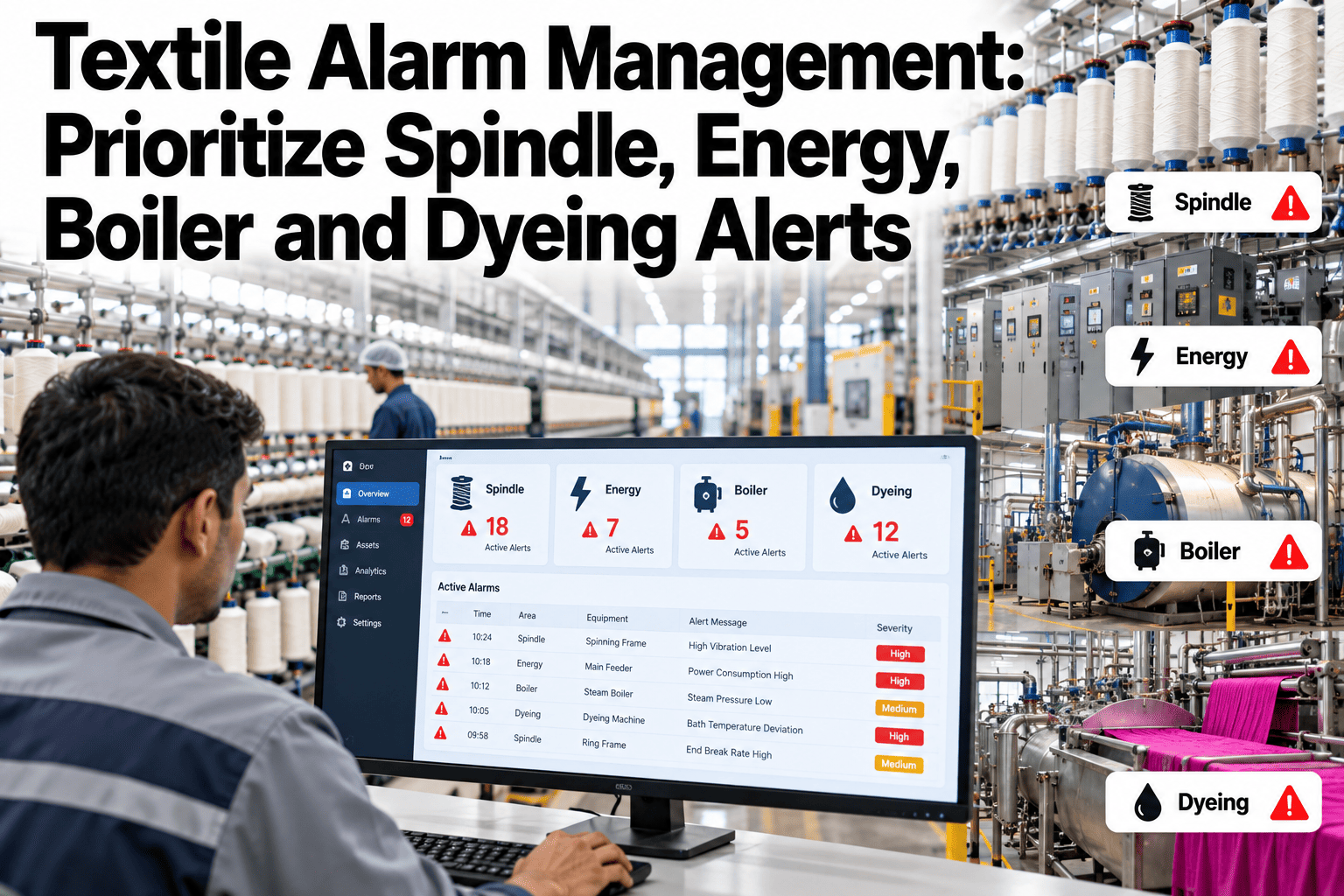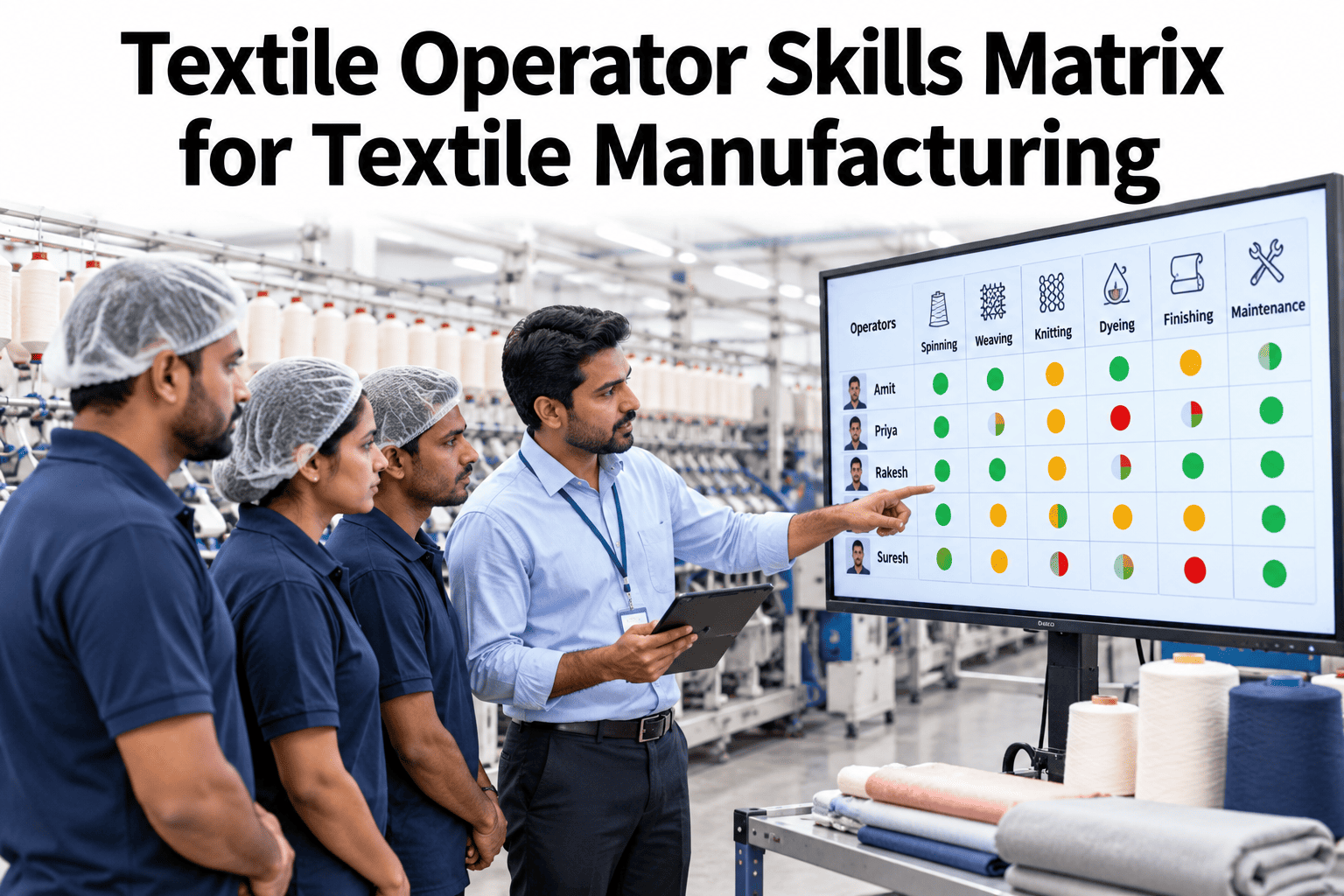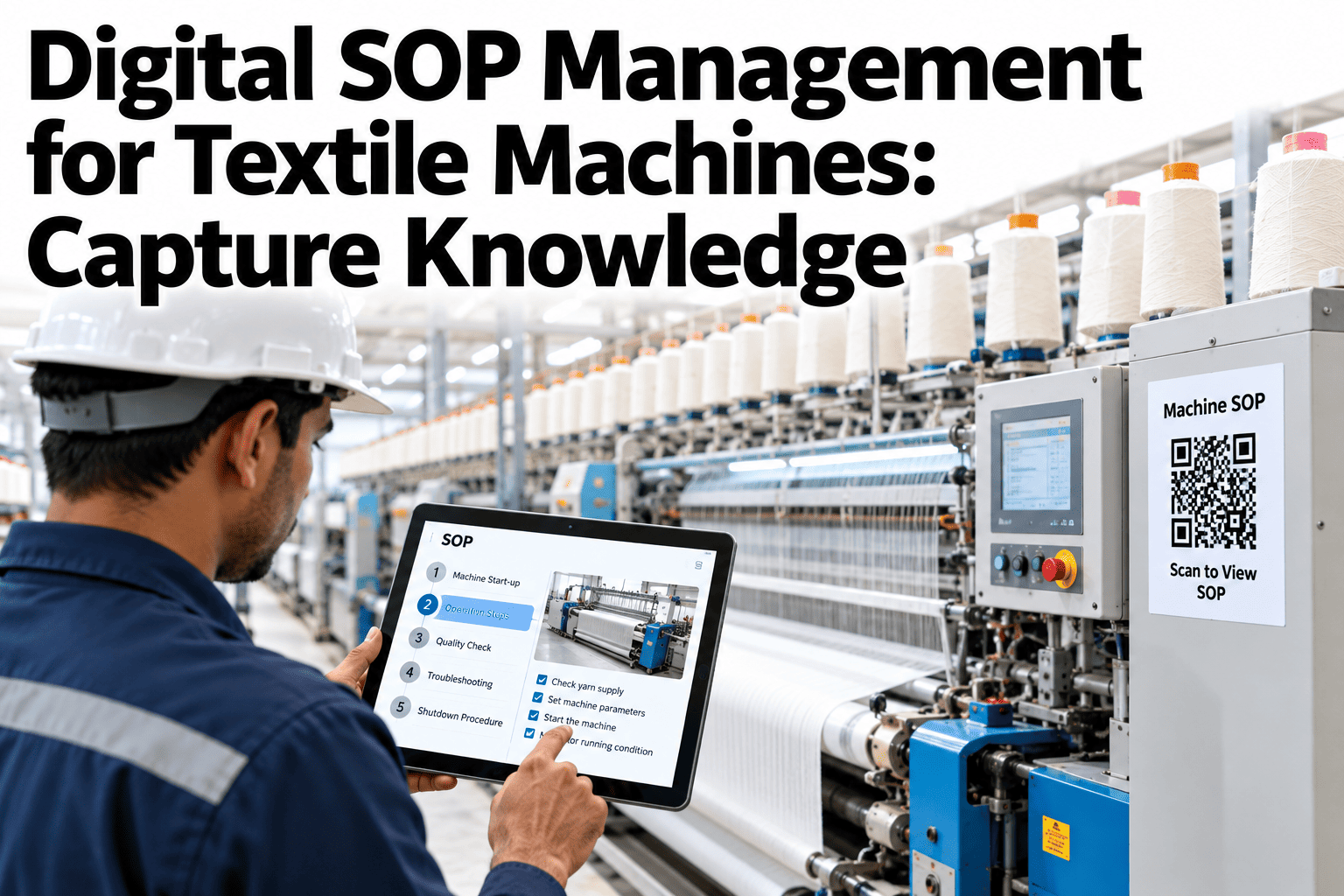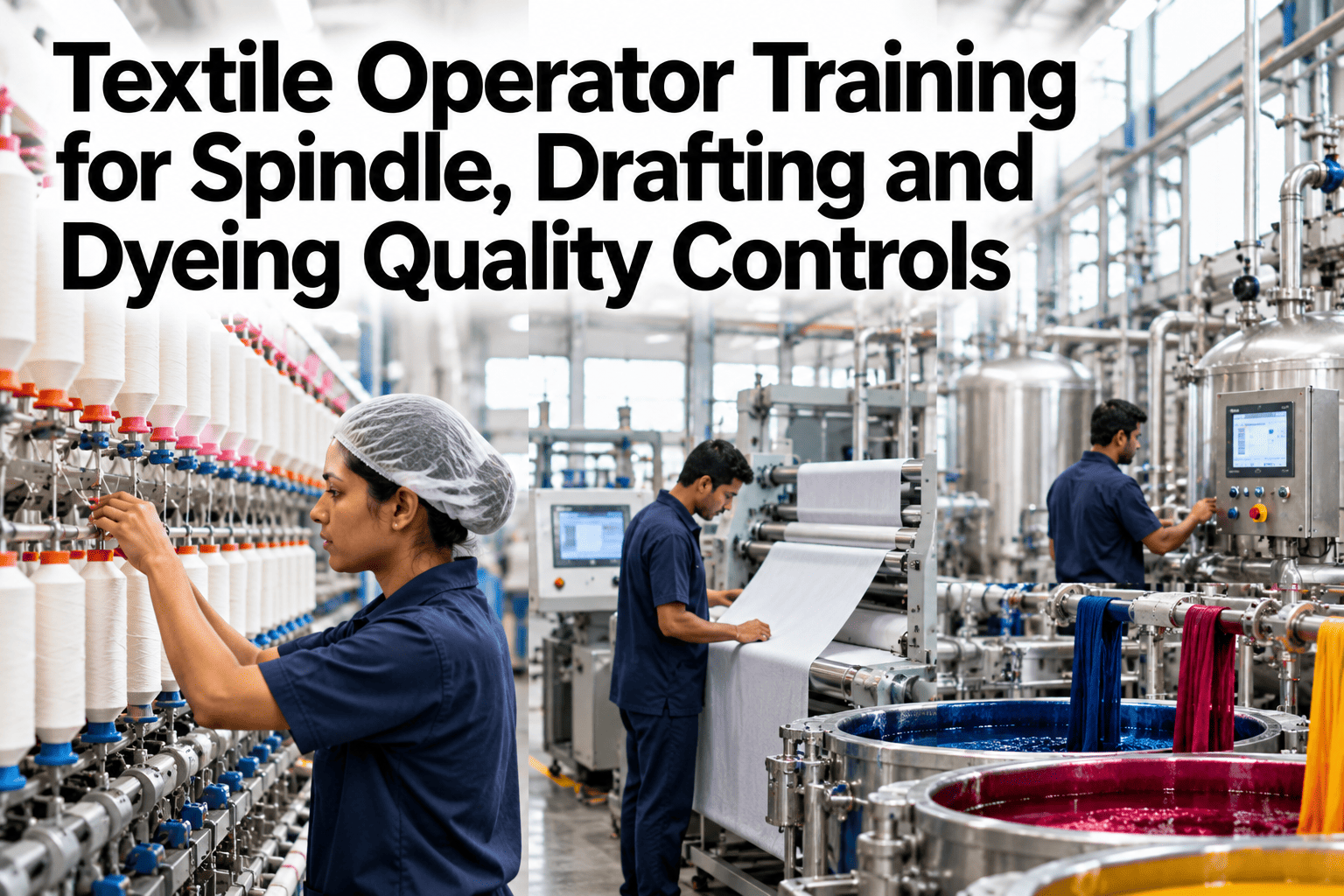
A new spinning operator can sit through a general orientation on mill safety and still have no idea what a specific irregularity in the drafting zone actually looks like until a supervisor happens to catch it on the floor and explain it in the moment, which means the training that actually transfers skill is often informal, inconsistent, and tied to whichever supervisor happens to be available that week. Generic onboarding covers policy. It doesn't cover what a slightly worn spindle sounds like, what a drafting fault looks like before it becomes a full defect, or how a dyeing operator should respond when a batch starts drifting off recipe. Building training around the actual machine-specific judgment calls operators make every shift is what structured, machine-specific operator training looks like for spinning and dyeing roles.
Generic Onboarding Doesn't Teach What a Drafting Fault Looks Like
iFactory AI structures digital training around spindle inspection, drafting checks, humidity control, and dyeing process response, built from the specific judgment calls operators make.
Why Generic Training Doesn't Transfer to the Floor
A general orientation and a machine-specific judgment call require completely different kinds of training, and most mills only formally build the first one.
Judgment Calls Aren't Written Down
The specific signs an experienced operator uses to catch a developing fault often exist only as unwritten knowledge, passed on inconsistently if at all.
Training Quality Depends on Who's Available
A new operator's actual skill development depends heavily on which supervisor happened to train them and how much time that supervisor had to spare.
No Way to Verify Skill Transfer
Without a structured check, there's no reliable way to confirm a new operator actually absorbed the specific skill, only that they completed a training session.
What Each Training Module Needs to Cover
Each area has its own specific skill focus and its own way of verifying that the skill actually transferred, not just that training was completed.
| Area | Skill Focus | Verification Method |
|---|---|---|
| Spindle Inspection | Recognizing early wear and irregular running before failure | Guided inspection against known reference examples |
| Drafting Checks | Catching a drafting fault before it produces a defect | Visual identification exercise against sample images |
| Humidity Control | Understanding how conditioning affects fiber behavior | Scenario-based response to a humidity deviation |
| Dyeing Process Control | Responding correctly when a batch drifts off recipe | Walkthrough of a recorded deviation and correct response |
Verification matters as much as the training content itself, since a module that's completed but never checked for actual understanding provides little more assurance than the informal handoff it's meant to replace.
Build a Training Module From Your Own Floor
Bring examples of a real spindle, drafting, or dyeing judgment call to a 30-minute session and see how it becomes a structured training module.
From Experienced Operator Knowledge to Structured Training
The most valuable training content usually already exists in an experienced operator's head, it just hasn't been captured in a form a new hire can learn from.
Tracking Competency Over Time
A single training completion doesn't guarantee lasting competency, which is why ongoing tracking matters as much as the initial training itself.
An Illustrative Comparison: Time to Full Competency
The figures below are a labeled illustrative composite, not a reported customer result, showing how long new operators typically take to reach full competency under informal versus structured training.
The most useful training content we see mills build isn't a generic procedure manual, it's a direct capture of the specific moments an experienced operator makes a judgment call, documented with real examples from that mill's own machines. That specificity is what makes the difference between training a new hire can actually apply on the floor and training that reads correctly but doesn't transfer the pattern recognition the job actually requires.
Frequently Asked Questions
How do we capture knowledge from an experienced operator who isn't used to documenting their process?
Observing and interviewing the operator during actual floor work, focused on specific decision points rather than asking them to write a procedure from memory, tends to surface far more useful detail than asking an experienced operator to document their own process cold. Discuss a knowledge capture approach for your floor in a short session.
How is competency actually verified, not just training completion?
Verification should involve the operator identifying or responding to a real or realistic scenario, such as spotting a specific drafting fault in sample imagery or walking through the correct response to a recorded dyeing deviation, rather than a simple quiz on procedure text. Ask the iFactory AI team how verification is structured.
How often should refresher training happen?
The right interval depends on how frequently a specific skill is exercised on the floor, since a judgment call made daily needs less reinforcement than one that comes up only occasionally, so refresher scheduling should vary by module rather than following one fixed calendar for everything. Set a refresher schedule by skill area in a demo.
Can this connect to our existing workforce management or CMMS system?
A skills matrix and training records are built to integrate with the workforce management or CMMS system you already use, so competency data sits alongside the maintenance and production data it's actually relevant to. Discuss integration with your current systems with the support team.
How do we handle training for new machine types as equipment changes?
New equipment should trigger a new or updated training module built the same way as the originals, capturing the specific judgment calls relevant to that machine, rather than assuming general training covers it adequately. Plan training for upcoming equipment changes on a call.
Train on the Judgment Calls, Not Just the Policy
iFactory AI structures operator training around real spindle, drafting, and dyeing decision points from your own floor. Book a walkthrough to see it built.