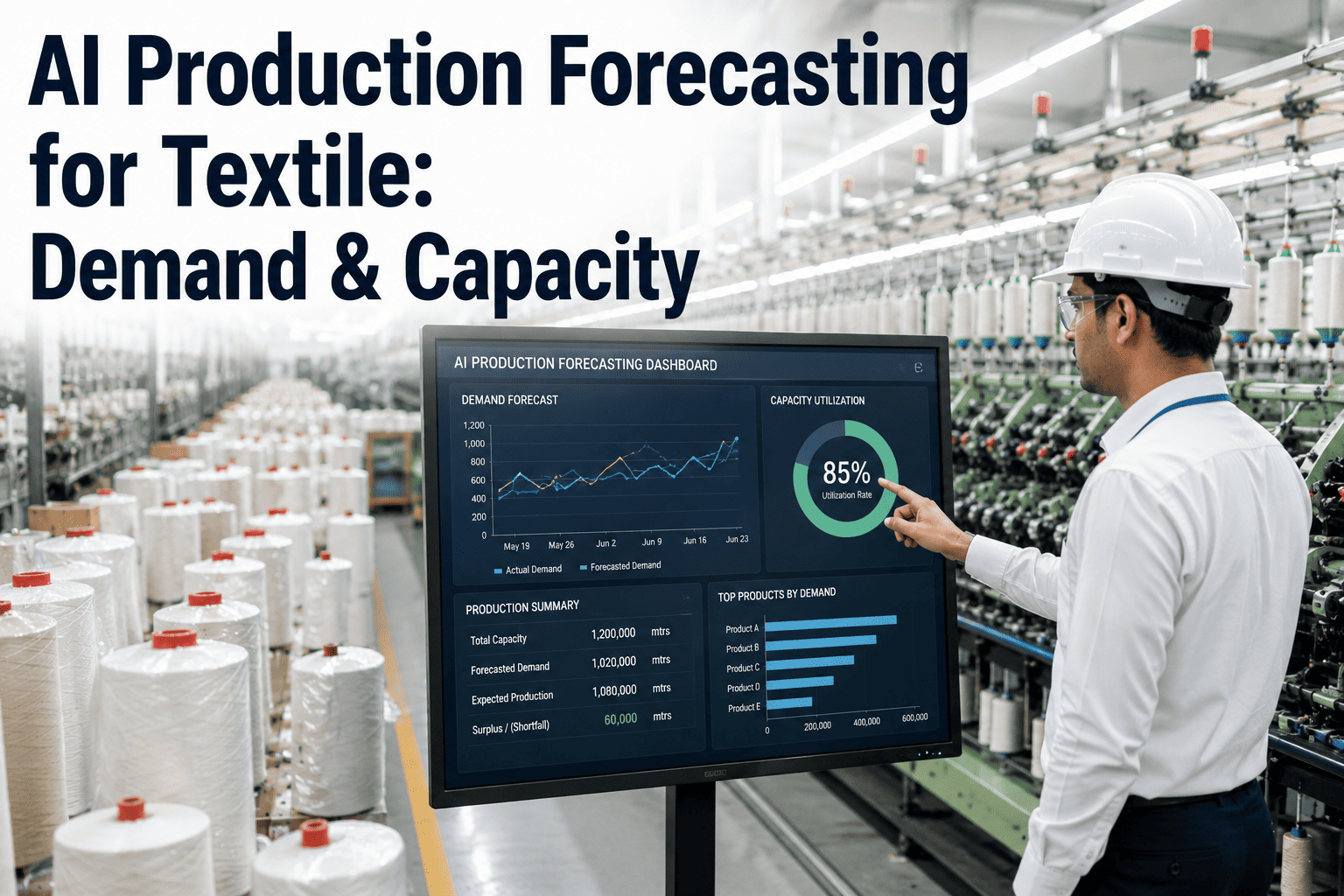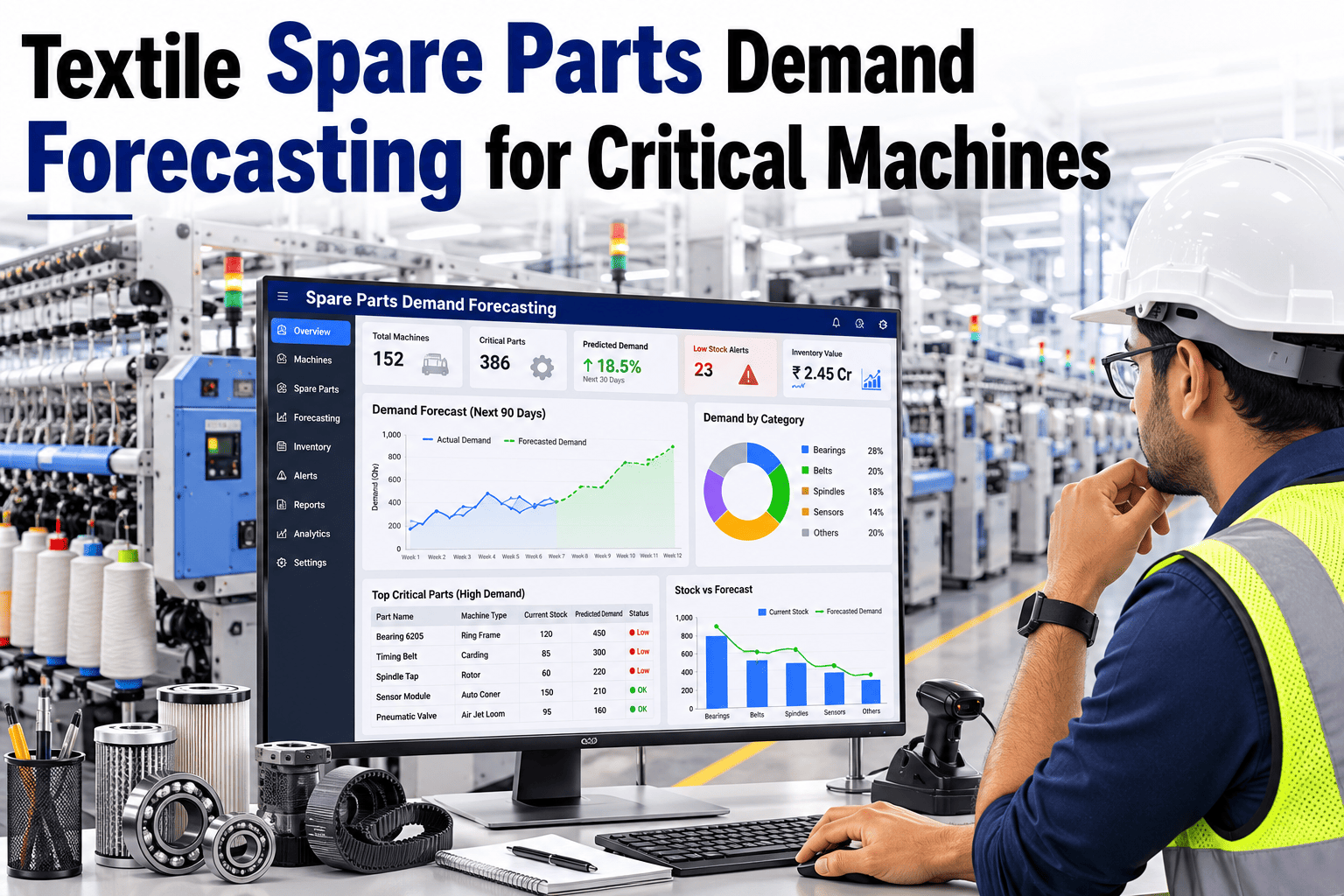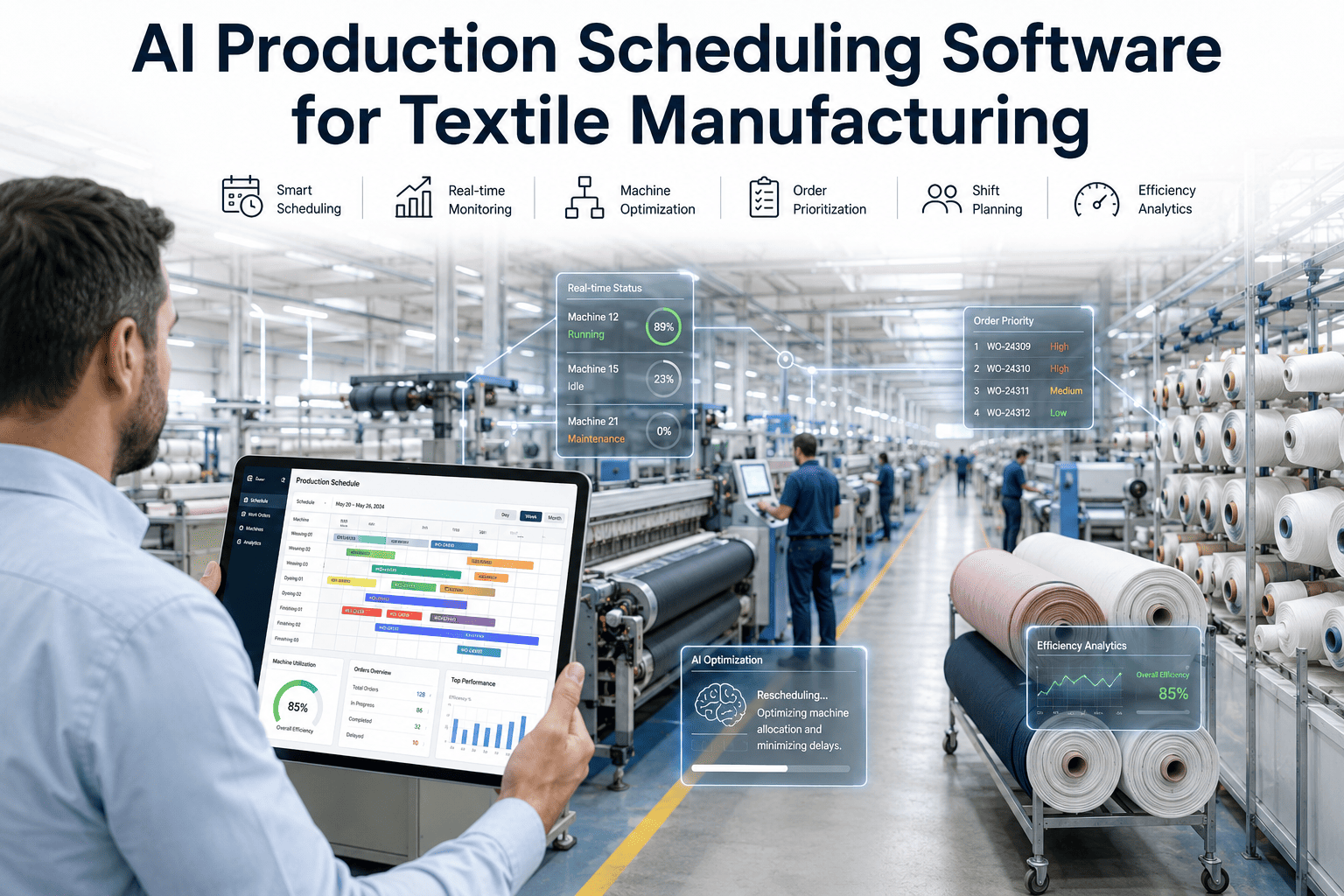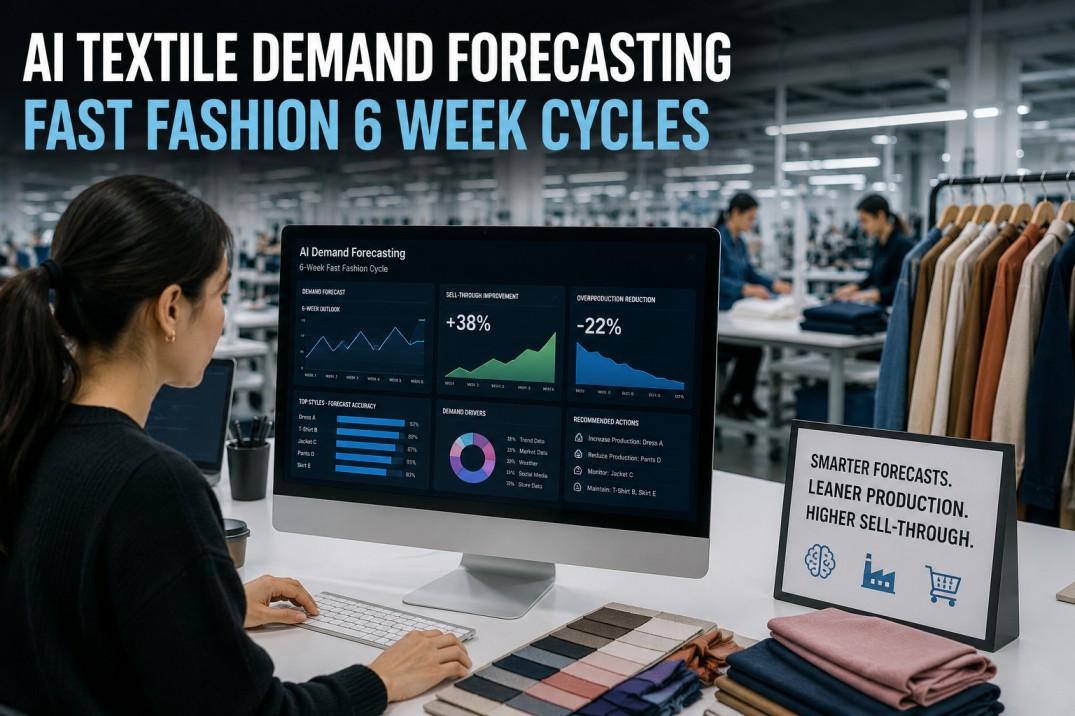
Textile manufacturers have always played a guessing game with demand — ordering too much yarn, weaving too many meters, or scrambling when a trend spikes overnight. Today, that guessing game is over. Artificial intelligence and machine learning are now giving textile mills the ability to predict what buyers will want, when they will want it, and how much — weeks before the order arrives. Book a free demo to see how iFactory's AI-powered production intelligence helps your mill stay ahead of demand shifts without overproducing or understocking.
Why Traditional Textile Demand Forecasting Keeps Failing
For decades, textile manufacturers relied on the same playbook: last year's orders, a buyer's rough estimate, and gut feel. It worked — until fast fashion, global supply chain volatility, and climate-driven raw material fluctuations made the old playbook obsolete. Today, a trend can spike in 48 hours and collapse in two weeks. No spreadsheet can track that.
Relies on repeat patterns that no longer exist in fast-moving markets. Trend shifts render past data unreliable within a single quarter.
Buyers hedge their projections. Soft LOIs and indicative forecasts leave factories producing for volumes that never materialize into confirmed orders.
Climate disruptions, global events, and shifting fashion calendars have decoupled textile demand from predictable seasonal patterns across all product categories.
Processes hundreds of data signals simultaneously — sales patterns, social trends, raw material costs, regional weather, competitor activity — updating forecasts in real time.
How Machine Learning Actually Predicts Textile Demand
AI demand forecasting is not a single model — it is a layered system of algorithms that each process different types of data, then combine their predictions into a single, high-confidence forecast. Here is how the layers work together in a textile manufacturing context.
Time Series Forecasting
LSTM (Long Short-Term Memory) neural networks analyze multi-year order histories, identifying non-obvious cyclical patterns — like a 14-month demand cycle for workwear fabrics tied to corporate procurement calendars, invisible to human analysts.
Social & Trend Signal Processing
Natural Language Processing models scan global fashion weeks, social media volume data, e-commerce category searches, and runway reports to detect emerging fabric and color trends 6–12 weeks before they appear in buyer RFQs.
Supply Chain Risk Modelling
Random Forest classifiers evaluate raw material availability — cotton futures, polyester chip prices, dye chemical supply — and predict their impact on production feasibility and delivery commitments across a 90-day horizon.
Buyer Behaviour Prediction
Collaborative filtering algorithms — the same technology behind recommendation engines — map buyer ordering patterns, reorder intervals, and expansion signals to predict which product categories each buyer is likely to increase or decrease in coming months.
Ensemble Model Output
A final ensemble model — combining all four signal streams using XGBoost — produces a weighted, confidence-scored demand forecast. Production teams receive not just a number, but a confidence band showing the realistic range of demand across pessimistic, base, and optimistic scenarios.
What AI Demand Forecasting Changes on the Production Floor
The output of an AI demand forecast is not just a number on a dashboard. When integrated with production scheduling — as iFactory does — it directly reshapes how work orders are created, how yarn is purchased, and how loom capacity is allocated weeks in advance.
Want to see how iFactory connects AI demand signals directly to your production scheduling? Book a live walkthrough and see it applied to your specific product categories.
The Data That Feeds Textile AI: What Machines Are Learning From
A demand forecasting model is only as good as the data it learns from. For textile manufacturing, the inputs span multiple domains — internal factory data, market signals, and external economic indicators — all feeding a continuously learning model.
Internal Production Data
3–5 years of completed work orders, machine output logs, quality rejection rates, and seasonal production cycles form the base training dataset.
Buyer Order Patterns
Buyer-wise order histories, reorder intervals, product category shifts, and communication signals from RFQ timelines feed buyer behaviour models.
Raw Material Pricing
Cotton MCX futures, polyester chip indices, dye chemical cost indices, and freight rate benchmarks inform supply-side constraint modelling.
Fashion Trend Signals
WGSN trend reports, runway coverage, social media volume by fabric and colour category, and e-commerce search velocity data feed trend timing models.
Macroeconomic Indicators
Export-import data, regional GDP growth, consumer confidence indices, and currency fluctuation data contextualize demand within broader economic cycles.
Climate & Seasonal Signals
Monsoon forecast data, temperature deviation indices, and El Niño impact models adjust demand forecasts for weather-sensitive product categories like outerwear and activewear.
AI Forecasting Across the Textile Value Chain
Demand prediction does not stop at the finished goods level. In an integrated textile mill, AI forecasting cascades backward through the entire value chain — ensuring every department is planning based on the same forward-looking intelligence.
Style & Volume Prediction
AI forecasts which fabric constructions, colours, and weights will be in demand — enabling advance production planning for 8–12 weeks out, reducing reliance on last-minute buyer confirmations.
Loom Capacity Allocation
Based on finished goods forecasts, loom scheduling is planned 4–6 weeks ahead. Warp beam preparation, design setup, and machine maintenance windows align with predicted demand peaks.
Yarn Count & Quantity Planning
Spinning plans are adjusted based on weaving requirements. Count mix, twist levels, and blended yarn compositions are pre-planned against forecasted fabric specifications — reducing yarn inventory waste by up to 31%.
Fibre & Chemical Procurement
Cotton, polyester, and dye chemical procurement is timed against demand forecasts and raw material price models — enabling forward buying at optimal price points and avoiding spot market premium costs.
The Real Cost of Getting Textile Demand Wrong
Forecasting errors do not just create inconvenience — they translate into direct financial losses across inventory, production, and buyer relationships. The table below captures what a single poor forecasting quarter typically costs a mid-sized textile mill.
How iFactory Brings AI Demand Forecasting to Your Production System
iFactory's AI module does not exist in isolation. It is embedded directly within the production scheduling and work order system — so forecast outputs automatically translate into production plans, machine assignments, and material procurement triggers without manual intervention.
Connect Your Data Sources
iFactory ingests your ERP order history, buyer profiles, and production records. External market signals are connected through iFactory's pre-built data connectors — no custom integration required for standard data types.
AI Model Calibration
The ML models are calibrated on your factory's specific product mix, buyer portfolio, and seasonal patterns over a 4–6 week onboarding period. The model learns your factory, not a generic textile benchmark.
Forecast Dashboard Goes Live
Production managers see a rolling 12-week demand forecast by product category, buyer, and fabric construction — updated daily with confidence scoring and deviation alerts for significant forecast changes.
Auto-Translated to Work Orders
Approved forecast plans are automatically converted into advance work orders, loom scheduling blocks, and material procurement triggers — closing the loop between prediction and execution on the same platform.
Mills that implement AI demand forecasting report a 23% reduction in working capital tied up in excess inventory and a 31% improvement in on-time delivery rates within the first two quarters. The ROI is not theoretical — it shows up in the balance sheet.
Industry Adoption: Where Textile AI Forecasting Stands Today
AI-driven demand forecasting has moved from an experimental capability to an operational necessity across the global textile industry. The adoption curve is accelerating — and manufacturers who delay are increasingly competing at a structural disadvantage.
of top 100 global apparel brands now require AI-backed demand forecasts from tier-1 suppliers as part of vendor qualification
of Indian textile exporters report they lost at least one major buyer to a competitor with better demand planning capability in 2024
reduction in emergency freight costs reported by mills using AI demand planning, because production timelines align with shipping windows proactively
of textile manufacturers using AI forecasting report improved buyer relationships and higher repeat order rates within 12 months of implementation
Frequently Asked Questions
Let AI Tell You What Your Buyers Will Order Next
iFactory's AI demand forecasting gives textile manufacturers a 6–12 week forward view of demand — automatically connected to production scheduling, work orders, and material procurement. One platform, end to end.