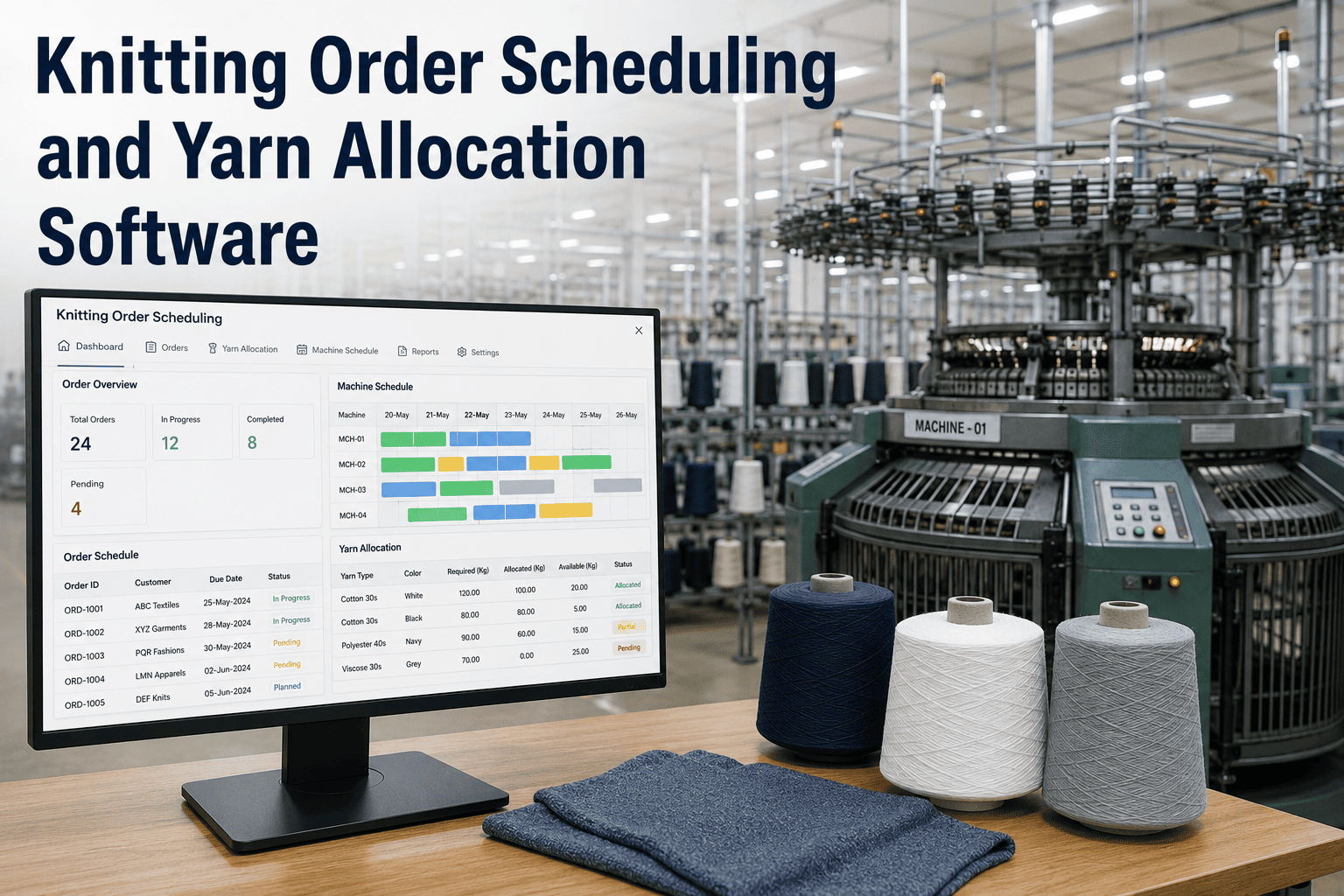
In circular knitting operations, the complexity of scheduling orders across dozens of machines—each with unique gauge, diameter, and yarn requirements—can overwhelm even seasoned planners. Traditional spreadsheets or ERP modules fail to account for the critical interplay between yarn availability, machine setup times, and delivery commitments. An AI-driven Advanced Planning and Scheduling (APS) system transforms this chaos into a streamlined, data-backed workflow. By dynamically balancing production priorities, changeover durations, and yarn inventory constraints, manufacturers can reduce idle time by up to 30% and improve on-time delivery rates to over 95%. This guide dives deep into the technical architecture of modern knitting scheduling software, revealing how smart algorithms optimize every stitch of your production plan. For a personalized demonstration of how iFactory can revolutionize your knitting floor, Book a Demo with our team.
Transform Your Knitting Operations Today
Stop juggling spreadsheets. Let AI optimize your machine scheduling, yarn allocation, and delivery planning in real-time.
The Technical Anatomy of Knitting Order Scheduling
Knitting production scheduling is not merely about sequencing orders; it involves a multi-dimensional optimization problem. Each order specifies a fabric style, which dictates the machine gauge, cylinder diameter, and yarn types. The scheduler must consider machine availability, setup times for changing yarns or adjusting machine parameters, and the current inventory of each yarn. An APS system uses constraint-based modeling to represent these variables. The core algorithm evaluates thousands of possible sequences, selecting the one that minimizes total changeover time while respecting all hard constraints—like delivery dates and yarn stock. This approach replaces manual guesswork with a mathematically proven schedule, often generated in minutes rather than hours.
Core Capabilities of Knitting Scheduling Software
Machine Capacity Planning
Real-time visibility into each machine's workload, including current job progress, scheduled maintenance windows, and historical efficiency data. The system automatically suggests load balancing across machines of the same gauge to prevent bottlenecks.
Yarn Allocation & Inventory
Integrates with your yarn inventory system to check availability before scheduling. Allocates specific yarn lots to orders, tracking consumption and alerting when stock falls below reorder thresholds. This prevents delays due to missing materials.
Changeover Optimization
Minimizes downtime by grouping orders with similar yarn types, gauges, or diameters. The system calculates exact changeover times based on historical data, reducing setup durations by up to 25%.
Delivery Commitment
Compares the planned completion date against customer-requested delivery dates. The system flags potential delays and suggests priority adjustments or overtime to meet commitments, improving customer satisfaction.
How AI Solves the Yarn Allocation Puzzle
Yarn allocation is often the most constrained variable in knitting scheduling. Each yarn type may have multiple lots with different dye lots, and using the wrong lot can cause color variation. The AI engine in iFactory's APS system maintains a digital twin of your yarn warehouse, tracking each lot's location, quantity, and quality attributes. When scheduling an order, the system reserves the most appropriate lots based on first-expiry-first-out logic and color consistency rules. It also considers the yarn's physical properties—like elasticity and tensile strength—to match the fabric's technical requirements. This granular control eliminates the risk of running out of a critical yarn mid-order, a common cause of production stoppages.
Changeover Sequencing: The Hidden Efficiency Driver
Changeovers in circular knitting are not all equal. Switching yarns on the same machine may take 10 minutes, but changing the cylinder diameter can require 45 minutes. The scheduling algorithm assigns a weight to each changeover type, then uses a variant of the traveling salesman problem to find the sequence that minimizes total weighted changeover time. This is especially powerful when dealing with large order backlogs. The system can also suggest which orders to produce on which machine to minimize the number of diameter changes. Real-world deployments have shown a 20% increase in machine utilization simply by optimizing the order of jobs on each machine.
Implementation Roadmap for Knitting APS
Data Integration
Connect the APS to your ERP, MES, and yarn inventory systems. Extract machine specifications, order details, yarn master data, and historical changeover times. This typically takes 2–4 weeks.
Model Calibration
Configure the constraint model with your specific rules: minimum order quantities, preferred machine assignments, yarn substitution rules, and maintenance schedules. Validate the model against past production data.
Parallel Run
Run the AI-generated schedule alongside your manual process for 2–4 weeks. Compare key metrics like machine utilization, on-time delivery, and changeover time. Adjust model parameters as needed.
Full Deployment
Go live with the AI-driven schedule. Train planners on exception handling and manual overrides. Monitor performance dashboards daily. Achieve full ROI within 3–6 months.
Traditional vs. AI-Driven Knitting Scheduling
| Parameter | Traditional Spreadsheet | AI APS (iFactory) |
|---|---|---|
| Schedule generation time | 4–8 hours | 5–15 minutes |
| Changeover optimization | Manual grouping | Algorithmic sequencing |
| Yarn allocation accuracy | Error-prone | Real-time lot tracking |
| Delivery date confidence | Low | 95%+ reliability |
| Scalability (machines) | Up to 20 | Unlimited |
Ready to Optimize Your Knitting Schedule?
See how iFactory's AI can reduce changeovers by 25% and boost on-time delivery to 95%+.
Integrating Knitting MES with Scheduling
For true real-time scheduling, the APS must communicate bidirectionally with the Manufacturing Execution System (MES). When a machine completes a job, the MES sends a signal to the APS, which automatically updates the remaining schedule. This closed-loop system allows the AI to react to disruptions—like machine breakdowns or urgent orders—instantly. The MES also tracks actual changeover times, which the APS uses to refine its models. Over time, the system learns which machine operators are faster at certain changeovers and adjusts the schedule accordingly. This level of integration turns the scheduling process from a static plan into a dynamic, self-optimizing workflow.
Advanced Features for Knitting Operations
What-If Simulation
Planners can simulate the impact of adding a rush order, changing a delivery date, or reallocating yarn lots. The system shows the effect on all downstream orders, enabling informed decisions without disrupting the live schedule.
Multi-Plant Coordination
For manufacturers with multiple knitting facilities, the APS can distribute orders across plants based on machine availability, yarn stock, and shipping costs. This optimizes the entire enterprise rather than individual plants.
Predictive Maintenance Integration
By analyzing machine run hours and historical failure patterns, the APS can schedule maintenance during planned changeovers, reducing unplanned downtime. This extends machine life and improves overall equipment effectiveness (OEE).
Client Success: 40% Reduction in Changeover Time
A major circular knitting manufacturer with 45 machines implemented iFactory's APS. Within three months, they reduced average changeover time from 35 minutes to 21 minutes. The AI grouped orders by yarn family and diameter, and automatically scheduled maintenance during low-demand periods. On-time delivery improved from 78% to 96%. The planner reported saving 10 hours per week previously spent on manual scheduling. The system paid for itself in under six months.
Frequently Asked Questions
How does the software handle last-minute rush orders?
The AI instantly recalculates the schedule when a rush order is entered. It evaluates which existing orders can be delayed without missing their delivery dates, and which machines can accommodate the new order with minimal changeover impact. The planner can see the trade-offs in real-time and approve the change. For more details on rush order handling, visit our support page.
Can the system integrate with our existing ERP?
Yes, iFactory's APS supports standard integration protocols like REST APIs, ODBC, and file-based imports. We have pre-built connectors for SAP, Oracle, Microsoft Dynamics, and many textile-specific ERPs. The integration typically takes 1–2 weeks. For a detailed integration guide, contact our integration team.
What data is needed to start using the software?
You need machine master data (gauge, diameter, speed, maintenance schedule), order data (style, quantity, delivery date, yarn requirements), and yarn inventory data (lot numbers, quantities, locations). Historical changeover times are optional but improve accuracy. Our onboarding team will help you map your data. Book a Demo to discuss your specific data readiness.
How does the software handle yarn substitutions?
The system can be configured with substitution rules. For example, if Yarn A is out of stock, the AI can suggest Yarn B if it has similar properties and is approved by quality. The planner must confirm the substitution before the schedule is updated. This flexibility prevents production stoppages while maintaining quality standards. Learn more about substitution logic here.
Is the system suitable for small knitting factories?
Absolutely. While the software scales to hundreds of machines, it is equally effective for small operations with 5–20 machines. The cloud-based deployment means no upfront hardware investment. Smaller factories often see the highest percentage improvement because manual scheduling is more error-prone. Book a Demo to see a tailored demo for your operation size.
Take Control of Your Knitting Production
Eliminate scheduling headaches and yarn shortages. Achieve 95%+ on-time delivery with AI-driven planning.