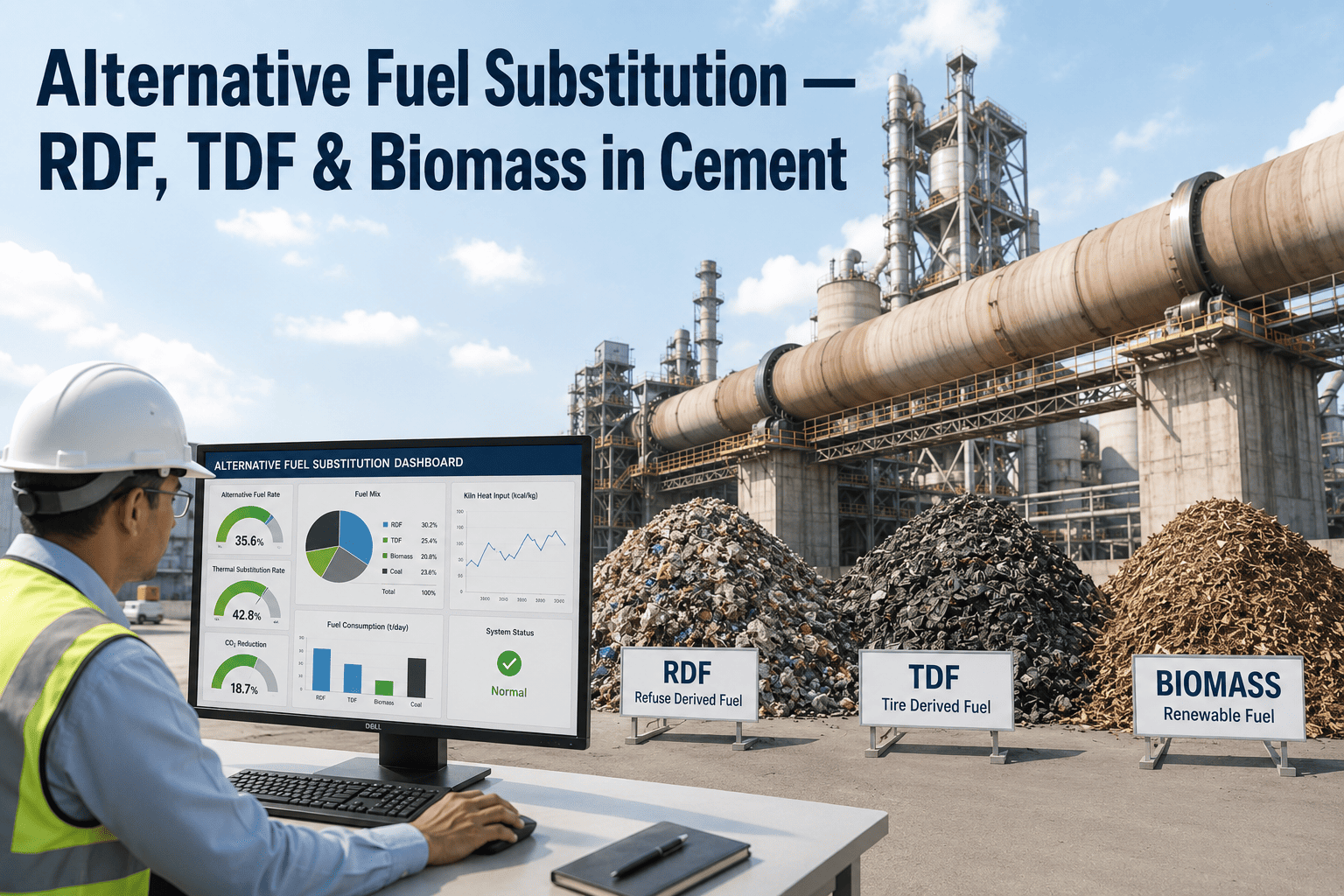
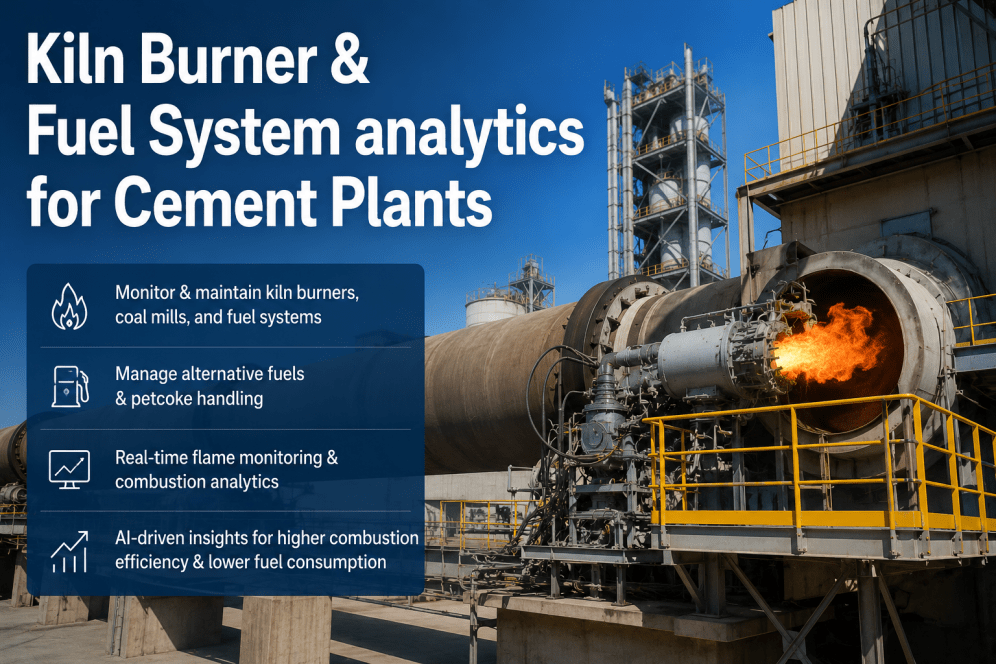
As we approach 2026, the cement industry is moving beyond basic waste-burning toward Prescriptive Co-Processing Governance. The integration of RDF quality tracking, pneumatic feeding analytics, and chlorine bypass optimization is no longer a secondary project — it is the new baseline for reducing thermal costs and achieving Net-Zero targets. This article explores how iFactory’s 2026 roadmap delivers a measurable shift from "Fuel Tracking" to "Co-Processing Profitability." Book a demo to see these 2026 co-processing benchmarks in action.
Accelerate Your Plant's Shift to High-TSR Alternative Fuels
iFactory’s 2026 platform combines ultra-low latency Edge AI with multi-sensor fusion to stabilize kiln performance while burning complex RDF, biomass, and waste-tire streams.
Why Traditional Fuel Monitoring is Becoming Obsolete in 2026
In the complex environment of a modern cement plant burning RDF and biomass, reactive dashboards are a liability. By 2026, the delta between "Predictive" (finding a feed failure) and "Prescriptive" (adjusting the kiln air-flow to compensate for low-CV fuel) will be the primary driver of Thermal Substitution Rate (TSR) expansion. Legacy systems lack the contextual intelligence required to handle the volatile moisture and chlorine levels in waste fuels. iFactory’s 2026 engine bridges this gap, providing plant managers with a Co-Processing Copilot that handles both asset health and burner set-point optimization simultaneously. Request a business case to evaluate your shift to Prescriptive co-processing.
The Top 5 Trends Powering the Next Tier of Alternative Fuel Analytics
iFactory's 2026 Co-Processing Platform integrates directly with your plant’s OT layer — turning RDF moisture, conveyor vibrations, and bypass temperatures into autonomous operational decisions.
— Production Manager, European Cement Group
Applying 2026 AF Analytics Across the Cement Value Chain
The true value of Alternative Fuel Analytics 2026 is in the specific moments where prescriptive guidance replaces "best-guess" feeding decisions.
Scenario 1: RDF Moisture Compensation
AI identified a 15% spike in RDF moisture at the intake. System generated a prescriptive air-temp adjustment for the preheater, preventing a kiln-temperature drop and saving 4 hours of reheating energy.
Scenario 2: Shredder Knife Fatigue
Edge AI identified a micro-vibration pattern in the RDF shredder rotor. AI prescribed a knife rotation during a scheduled 1-hour break, preventing a catastrophic rotor failure during the night shift.
Scenario 3: Spontaneous Combustion Safety
Wireless mesh thermal sensors identified a 12°C rise in the center of the biomass silo. The **AI Copilot** prescribed an immediate nitrogen purge and material rotation, preventing a silo fire.
Scenario 4: Chlorine Bypass Efficiency
By predicting the exact bypass extraction rate needed for a high-plastics fuel mix, AI-synchronized the bypass fan speed, preventing preheater clogging while allowing for record-high plastics substitution.
Evolution of Alternative Fuel Support: 2024 vs. 2026
For cement operations leaders, this comparison illustrates the performance gap between conventional "AF Tracking" and the 2026 iFactory Prescriptive engine.
| Capability | Legacy / Manual | Standard 2024 PdM | iFactory 2026 Green |
|---|---|---|---|
| TSR Optimization | Fixed Mix (Ad-hoc) | Monthly TSR Average | Real-time Prescriptive TSR |
| Fuel Quality | Lab Tests (Daily) | Online Analyzers | AI Virtual Lab Correlation |
| Safety Governance | Visual Inspections | Silo Smoke Detectors | Thermal Mesh Predictive Safety |
| Business Impact | Cost of Fuel (Generic) | 2-4× ROI (Substitution) | 10-15× ROI (SHC + Uptime) |
| Clog Prevention | Reactive Air-Cannons | Pressure Alarms | Prescriptive Bypass Control |
Deploying 2026 AF Analytics: The 4-Phase Path
Integrating Prescriptive Co-Processing Analytics into a cement plant requires a phased approach that ensures kiln stability during fuel substitution.
AF Asset Audit & Wireless Safety Mesh
Audit of existing AF feeding systems and identifying "Edge-Ready" critical assets. Wireless mesh thermal coverage is established in fuel yards without any plant stoppage.
Quality Correlation & Bypass Mapping
Installation of prescriptive sensors on dosing systems and bypass fans. AI starts fusing fuel quality data with kiln pressure streams to build the "Co-Processing Fingerprint."
Prescriptive Feeding & Copilot Activation
Activation of the **GenAI Copilot** for AF maintenance. Prescriptive alerts are calibrated to move from "Alerting" to "Optimizing" feeding rates based on fuel CV.
Full Scale-Out & TSR Governance
Deployment expands across the full waste-stream portfolio. Continuous model improvement drives down thermal energy intensity and stabilizes clinker quality at 80%+ TSR.
Alternative Fuel Co-Processing: Frequently Asked Questions
Don't Just Burn Waste. Govern Your Co-Processing.
iFactory's 2026 alternative fuel analytics platform delivers real-time quality tracking, feeding system health, and prescriptive TSR guidance — purpose-built for high-substitution cement plants.