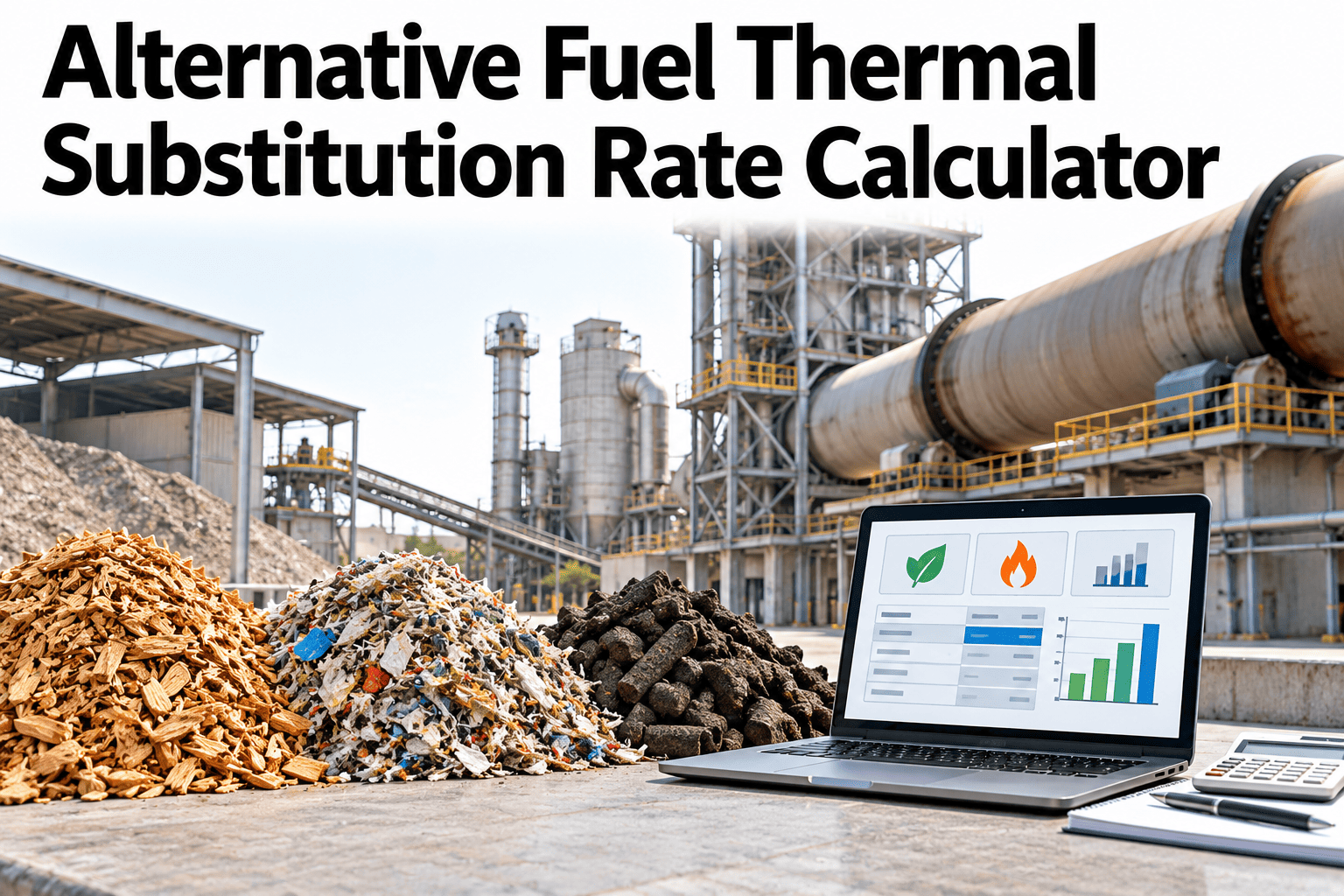
Thermal substitution rate, or TSR, is the headline number most cement plants report when discussing their alternative fuel program, but the calculation behind that single percentage hides a surprising number of judgment calls. Whether moisture content is accounted for correctly, which calorific value figure is used for a variable-composition fuel like RDF, and how data gaps get handled all affect the final number, sometimes by several percentage points. Getting the calculation method right, and being consistent about it reporting period to reporting period, matters as much as the alternative fuel program itself, since an inconsistent TSR calculation can make genuine progress look flat or make normal variation look like a breakthrough. If you want to work through your own TSR calculation method in detail, you can review your calculation approach with our team.
Calculate Your TSR Consistently, Not Just Impressively
A clear method for calculating thermal substitution rate, covering required inputs, calorific value handling, and data quality checks, so the number means the same thing every reporting period.
The Inputs the Calculation Actually Requires
TSR is calculated on a heat basis, not a mass or volume basis, which means getting the underlying heat content figures right matters more than the raw fuel quantities themselves.
The Calculation Method in Practice
The formula itself is simple, but applying it correctly across a mixed fuel stream takes a consistent, repeatable process.
Why Calorific Value Choice Changes the Result
Alternative fuels like RDF often have variable composition, which means a single assumed calorific value can skew the TSR calculation noticeably if it doesn't reflect what was actually burned.
| Approach | How calorific value is determined | Accuracy trade-off |
|---|---|---|
| Fixed assumed value | A single standard figure used for all batches | Simple, but inaccurate if fuel composition varies |
| Supplier-reported value | Calorific value from the fuel supplier's documentation | Better accuracy, but dependent on supplier reporting quality |
| Batch-tested value | Lab testing of representative samples per batch | Most accurate, but requires an ongoing testing program |
| Rolling average value | Average of recent batch tests applied going forward | Balances accuracy and practicality for variable fuels |
A rolling average based on recent batch testing is usually the most practical middle ground for fuels like RDF, where composition shifts meaningfully but full per-batch testing isn't always feasible.
Check Your Own Calculation Against These Methods
Share your current fuel data and calorific value approach and we will review how it compares to these methods.
Data Quality Checks Worth Running Before Reporting
A few consistency checks catch the most common errors before a TSR figure gets reported externally or used for internal decision-making.
Comparing TSR Under Different Scenarios
Running the calculation under a few different scenarios shows how sensitive the final TSR figure actually is to the assumptions behind it.
What iFactory Cement and Energy Specialists See in TSR Reporting
iFactory cement and energy specialists who review alternative fuel programs across multiple plants find that inconsistent calorific value handling is the most common source of TSR figures that don't hold up to scrutiny, more often than any issue with the fuel quantities themselves.
They recommend documenting the calculation method explicitly, including exactly how calorific value is determined for each fuel type, since this is usually the first thing an external auditor or stakeholder will ask to see when a reported TSR figure is questioned.
What Fuel and Energy Teams Ask About TSR Calculation
Get Your TSR Calculation Method Reviewed
Book a session with iFactory AI to review your calorific value handling, data quality checks, and calculation method against your fuel mix.