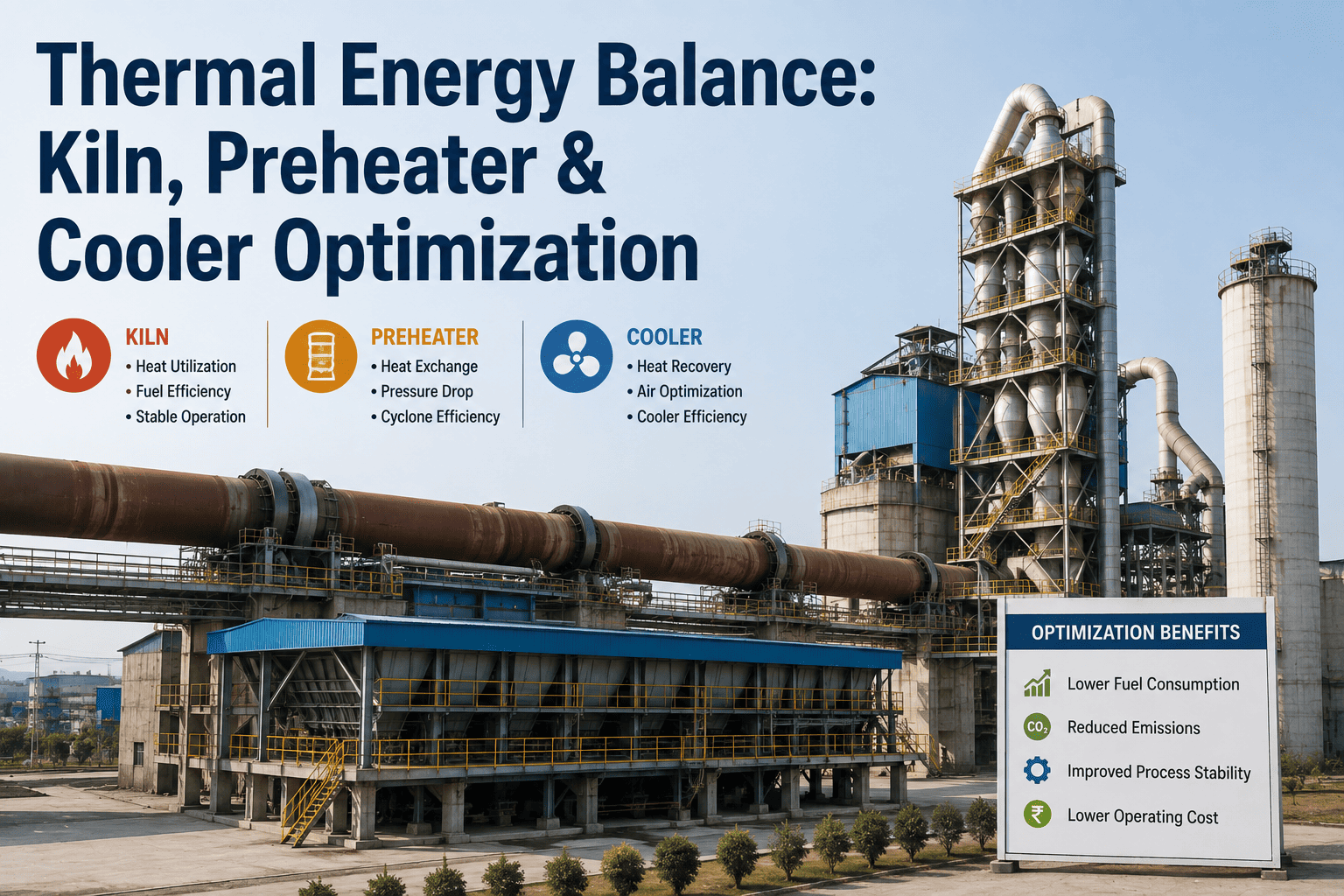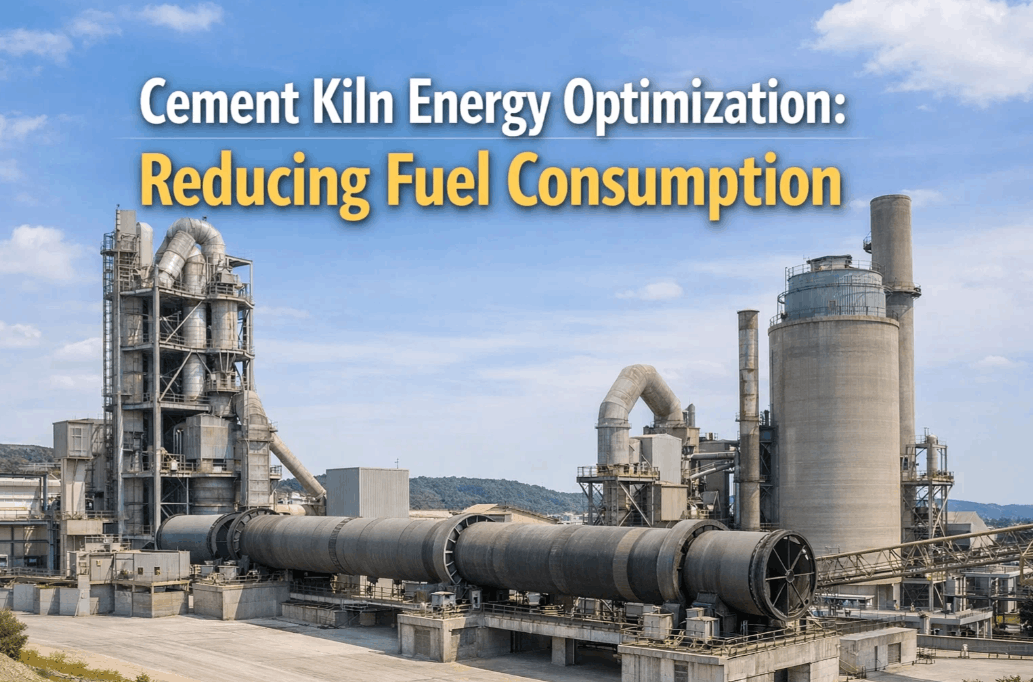
Thermal energy consumption in the kiln accounts for nearly 70% of a cement plant's variable operational costs. In clinker production, minor inefficiencies in the preheater tower, calciner, or burner nozzle don't just waste fuel—they destabilize clinker chemistry and trigger massive carbon emission penalties. This guide explores how kiln energy optimization leveraging AI-driven process control transforms the rotary kiln from an unpredictable thermal asset into a precision-tuned energy engine. By integrating real-time gas analysis with predictive flame geometry models, producers can reduce coal consumption and maximize alternative fuel usage with payback timelines as short as 8–12 weeks.
Optimize Kiln Fuel Consumption in Real Time
Detect thermal drift, preheater blockages, and combustion inefficiencies before they spike costs — with AI-driven energy tracking.
Why Cement Kiln Energy Optimization Matters for the P&L
The rotary kiln is the most energy-intensive component in the cement manufacturing process, requiring temperatures up to 1450°C to achieve clinkerization. Traditionally, operators manage this heat via manual setpoint adjustments and reactive responses to NOx/CO levels — missing critical opportunities to stabilize the specific heat consumption. Book a Demo to see how continuous kiln monitoring saves millions in fuel spend.
A simple 1% improvement in kiln thermal efficiency can save a Tier-1 facility over $500,000 annually in coal or petcoke costs. Modern plants must move beyond static burner settings toward AI-based kiln control that dynamically adjusts to raw meal chemical fluctuations and alternative fuel moisture levels. Real-time analytics for clinker energy optimization reduce specific energy consumption (SEC) while ensuring 100% compliance with sulfur and NOx emission limits.
Four Critical Inefficiency Modes in Cement Kilns
Kiln thermal losses follow predictable patterns of process drift. Identifying these modes early is the foundation of a successful fuel cost reduction strategy.
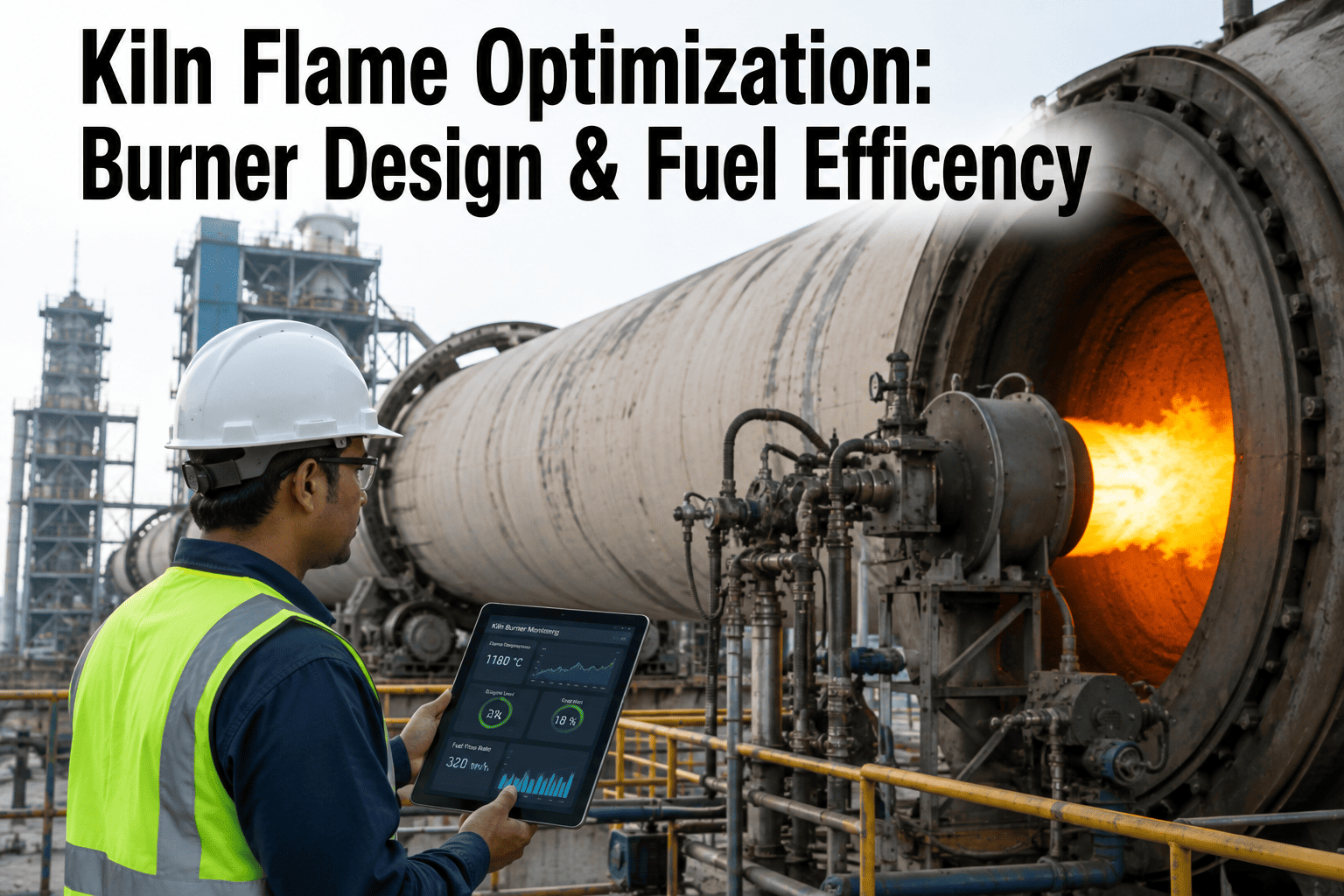
Sub-Optimal Air-to-Fuel Ratio
Excess secondary air cools the kiln unnecessarily, while late combustion increases CO levels and wastes fuel energy. AI correlates ID fan speeds with O₂/CO gas analysis to maintain the "perfect flame" profile in real-time. Book a Demo to optimize your burner stoichiometry.
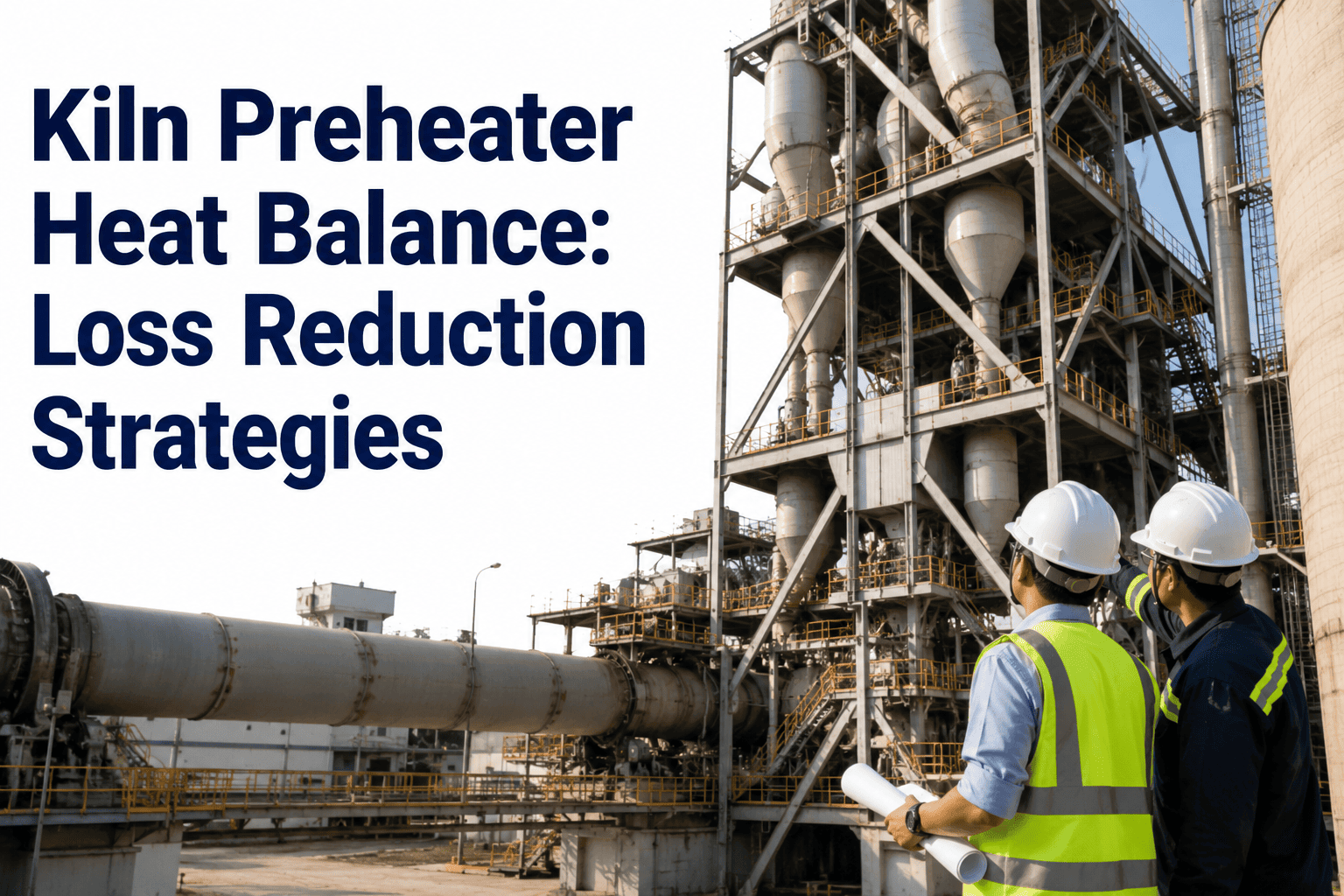
Preheater & Calciner Heat Loss
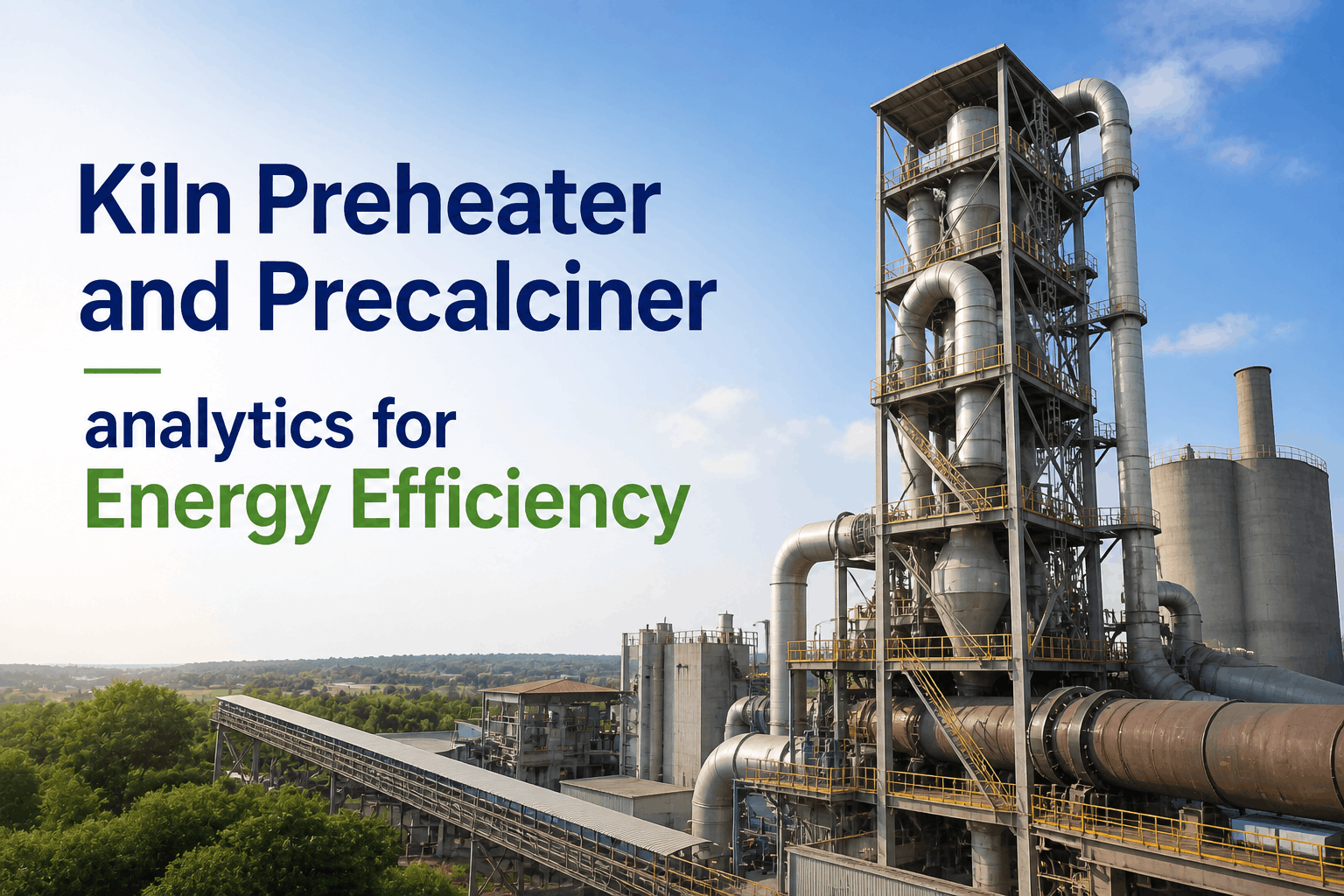
Fouling in preheater cyclones and inefficient calciner combustion cycles force the rotary kiln to do "thermal catch-up," spiking fuel demand. AI detects cyclone pressure drift and temperature stratification days before blockages occur.
Alternative Fuel (AF) Instability
Switching to RDF, tires, or biomass introduces calorific volatility. Without AI predictive dosing, these high-moisture fuels cause clinker cooling and "unburnt" material risks. Book a Demo to stabilize your alternative fuel mix.
Clinker Cooler Heat Recovery Failure
If the grate cooler doesn't efficiently return heat to the kiln as secondary/tertiary air, that energy is lost to the atmosphere. Analytics track clinker bed depth and fan pressure to ensure maximum thermal recuperation.
Kiln Energy Optimization ROI: Fuel Savings by Technology Adoption
Thermal optimization ROI scales with the level of digital integration. The table below outlines the validated savings across different kiln energy management strategies.
| Optimization Level | Primary Technology | Specific Heat Reduction | Annual Cost Savings | Payback Period | Year-1 ROI |
|---|---|---|---|---|---|
| Baseline Control | Standard SCADA Setpoints | 0–2% | $50K–$150K | 9–12 months | 1.2× |
| Gas Analysis Fusion | Real-time O₂/CO/NOx Feedback | 3–5% | $180K–$400K | 4–6 months | 3.5× |
| AI Predictive Kiln Control | Machine Learning MPC Optimization | 6–10% | $450K–$950K | 8–12 weeks | 7.2× |
| Full Alternative Fuel Autonomy | AI Dosing & Calorific Balancing | 12–18% | $1.2M–$2.5M | 6–10 weeks | 9.4× |
In high-capacity clinker lines, AI-based kiln control delivers a 7.2× first-year ROI simply by stabilizing the combustion zone. For plants aggressively pursuing Net Zero, the ROI on alternative fuel substitution is almost instantaneous.
Five Key Metrics for Cement Kiln Energy Monitoring
Effective thermal management requires real-time visibility into five interconnected process parameters. Book a Demo to see how iFactory automates SEC tracking.
1. Specific Heat Consumption (SHC) - GJ/t clinker
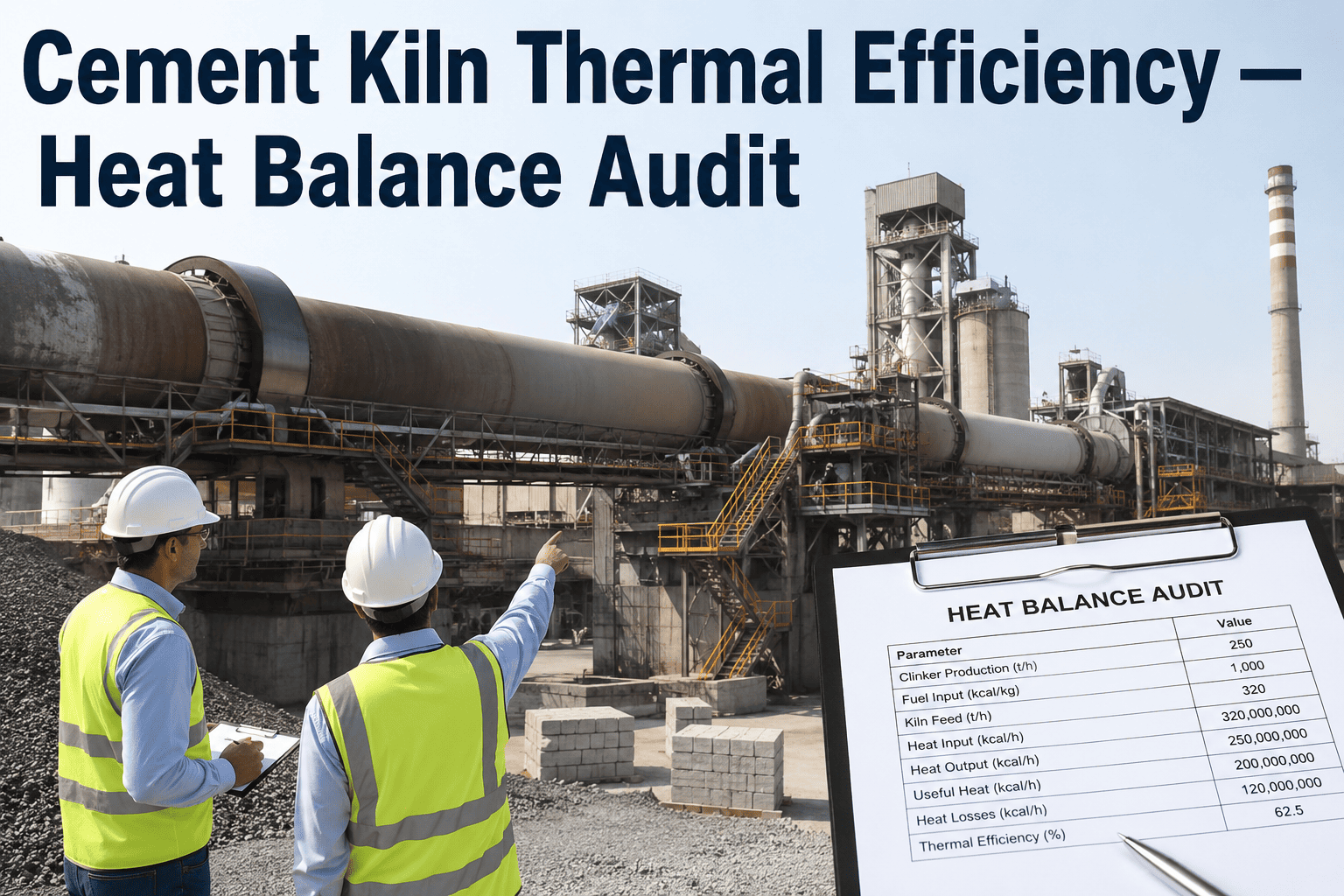
The primary KPI for kiln efficiency. AI tracks and correlates fuel mass flow with clinker production rates in real-time, identifying 5-minute efficiency drops instead of waiting for daily end-of-shift reports.
2. Preheater Exit Gas Temperature
High exit temps signal poor heat transfer or bypass issues. Continuous monitoring identifies Cyclone 1–4 efficiency losses, allowing for predictive air-cannon firing or process adjustments to trap heat before it escapes the stack.
3. Calciner Conversion Efficiency
Tracks the degree of calcination before material enters the kiln. AI optimizes secondary fuel firing in the calcination chamber to ensure 90%+ decarbonization with minimal thermal overshoot.
4. Kiln Drive Amperage (Torque)
A hidden indicator of clinker weight and "bed behavior." Rising torque without increased feed signals a "hot kiln" or material buildup. AI uses torque as a lead indicator for fuel dosing adjustments.
5. Alternative Fuel Substitution Rate (TSR)
Maximizing Thermal Substitution Rate (TSR) without compromising clinker quality. AI models predict the impact of varying AF qualities, ensuring the burner maintains 1450°C even as fuel moisture spikes.
Implementation Strategy: 90-Day Kiln Thermal Transformation
Deploying clinker energy optimization does not require a plant shutdown. Real-time kiln analytics deploy in 90 days with zero operational disruption and immediate thermal stability gains.
Connecting to PLC/SCADA feeds for fuel flow, gas analyzers, and preheater temps. We establish a 60-day retrospective thermal baseline to identify your current "Golden Batch" energy profile.
Machine learning models train on your specific kiln geometry and alternative fuel mix. We calibrate predictive alerts for O₂/CO imbalance and preheater drift. Operators begin using AI decision-support for burner setpoints.
Transition to prescriptive or closed-loop control for fuel dosing and fan speeds. A formal Thermal ROI report documents GJ/t clinker reduction and coal cost savings — achieving full project payback before Day 90.
Stop Guessing Your Kiln's Optimal Fuel Mix
Real-time thermal tracking, alternative fuel balancing, and preheater efficiency monitoring — deployed in 90 days for measurable SEC reduction.
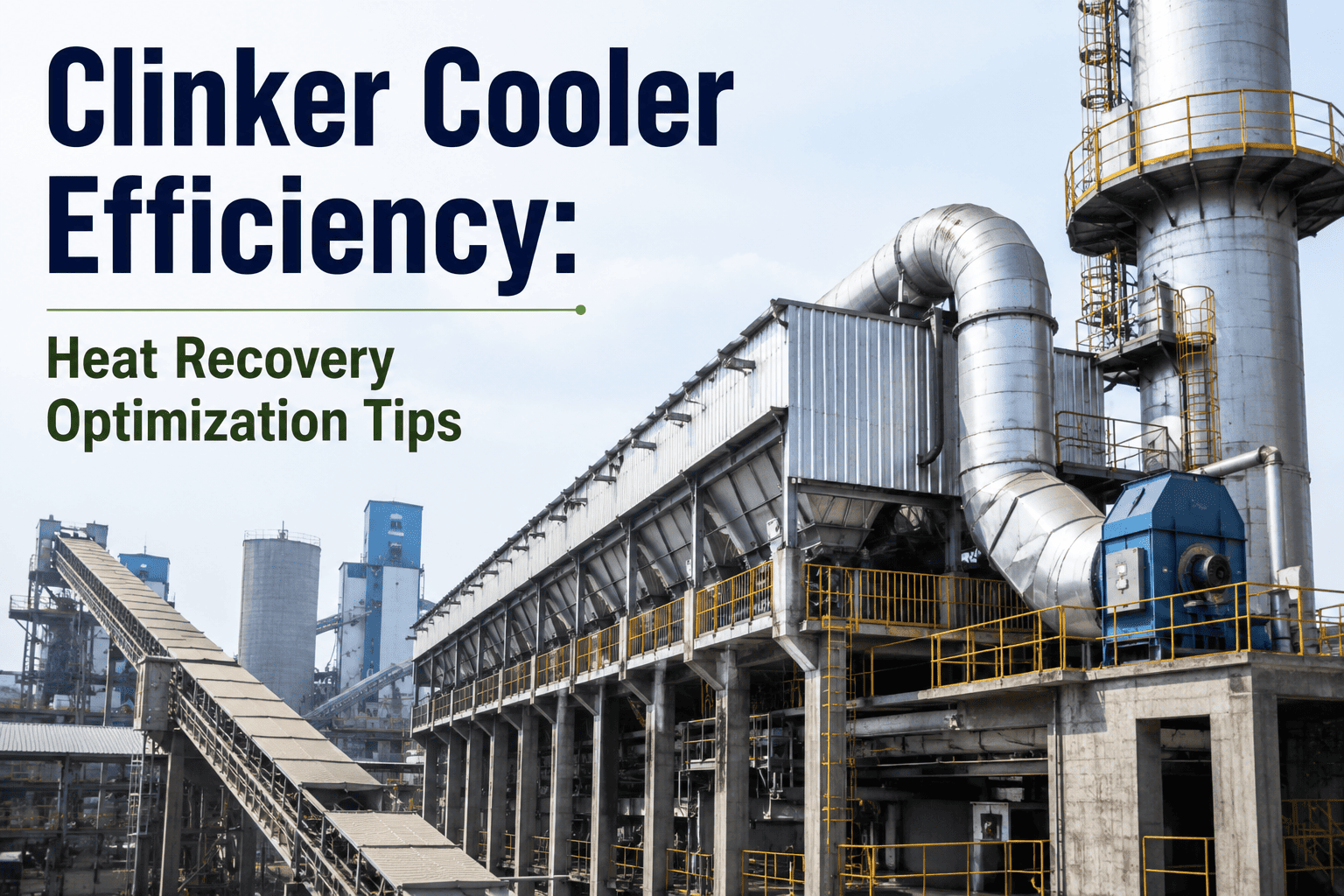
Predictive Efficiency for Kiln Burner Systems & Coolers
Kiln burner nozzles and clinker cooler grate plates degrade under intense thermal load. Analytics-driven predictive maintenance ensures these critical energy-recovery components operate at peak efficiency between annual turnarounds.
Flame geometry shifts and cooler fan efficiency losses typically precede catastrophic fuel spikes by 2-3 weeks. Book a Demo to see how iFactory uses thermal imaging and vibration fusion to predict component-level decay.
Thermal Efficiency Indicators Tracked in Real Time
| Burner Impingement (Heatmap) | Redirected flame contact = localized shell hot spots and 3%–5% direct thermal energy waste |
| Cooler Recirculation Temp | Falling secondary air temp = grate bed channeling or fan efficiency loss |
| Preheater Exit Static Pressure | Increasing pressure drop = cyclone build-up or coating formation in the smoke chamber |
| Kiln Shell Thermography Fusion | Correlating shell heat-loss to internal clinker thickness and thermal energy cement waste |
The Kiln Energy Optimization Maturity Curve
Specific Heat Consumption (SHC) savings scale with digital maturity. While Levels 1-2 address basic waste, Levels 3-5 unlock the deep competitive advantages of variable fuel mix management.
| Maturity Level | Capability | Savings Capture | Typical Facility Status |
|---|---|---|---|
| Level 1 — Manual Logs | Shiftly coal consumption records, SCADA trends | 0–3% | Legacy plants, limited gas analysis |
| Level 2 — Basic Loop Control | Standard PID burner control, O₂-based trim | 5–8% | Mid-size facility, basic instrumentation |
| Level 3 — Real-Time Thermal AI | Continuous SEC monitoring, predictive air analysis | 10–15% | Modernized kiln, full sensor fusion |
| Level 4 — Multi-Fuel Optimization | AI dosing for RDF/Biomass, calorific balancing | 20–30% | Alternative fuel leaders, AI-driven ops |
| Level 5 — Carbon-Linked Control | Closed-loop emission-to-fuel balancing, self-tuning kiln | 35%+ | Industry leader, Net Zero roadmap active |
Frequently Asked Questions
Below are the most common questions from cement operations leaders evaluating kiln thermal efficiency upgrades.
Does AI kiln control replace our existing DCS?
No. iFactory acts as an intelligent "Level 2" advisory or supervisory layer. We integrate via OPC-UA to your existing DCS (Siemens PCS7, ABB 800xA, etc.), serving optimized setpoints that your control system executes with safety interlocks intact.
How does the platform handle high-volatility alternative fuels like RDF?
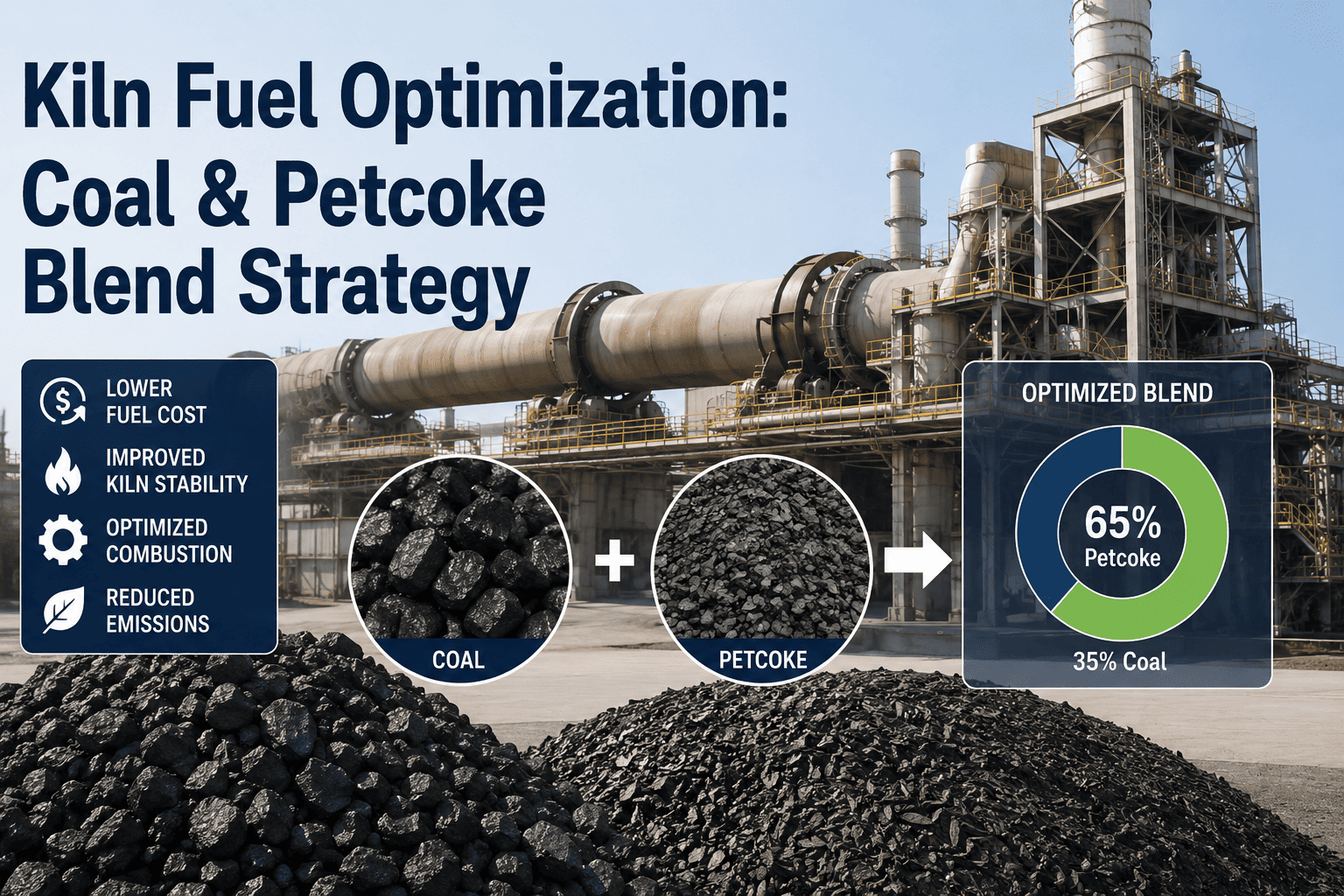
Our AI models focus on "feedforward" control. By analyzing the combustion characteristics and thermal feedback of the calciner in milliseconds, we adjust the primary coal/petcoke burner to compensate for the varying calorific value of the alternative fuel mix.
Can you track NOx and SOx compliance alongside energy?
Yes. Energy and emissions are thermally linked. Our optimization logic treats emission limits as a "hard constraint," ensuring your kiln remains under regulatory caps while searching for the absolute minimum fuel consumption point.
What is the typical reduction in coal consumption?
Tier-1 plants typically achieve a 2.5% to 4% reduction in primary coal consumption through burner stabilization alone. Savings increase significantly (10%+) when AI is used to aggressively increase the Thermal Substitution Rate (TSR) with cheaper alternative fuels.
Get Your Kiln ROI Model — Custom Built for Your Thermal Assets
See exactly how iFactory eliminates fuel waste, optimizes your AF mix, and delivers 90-day payback at your cement facility.