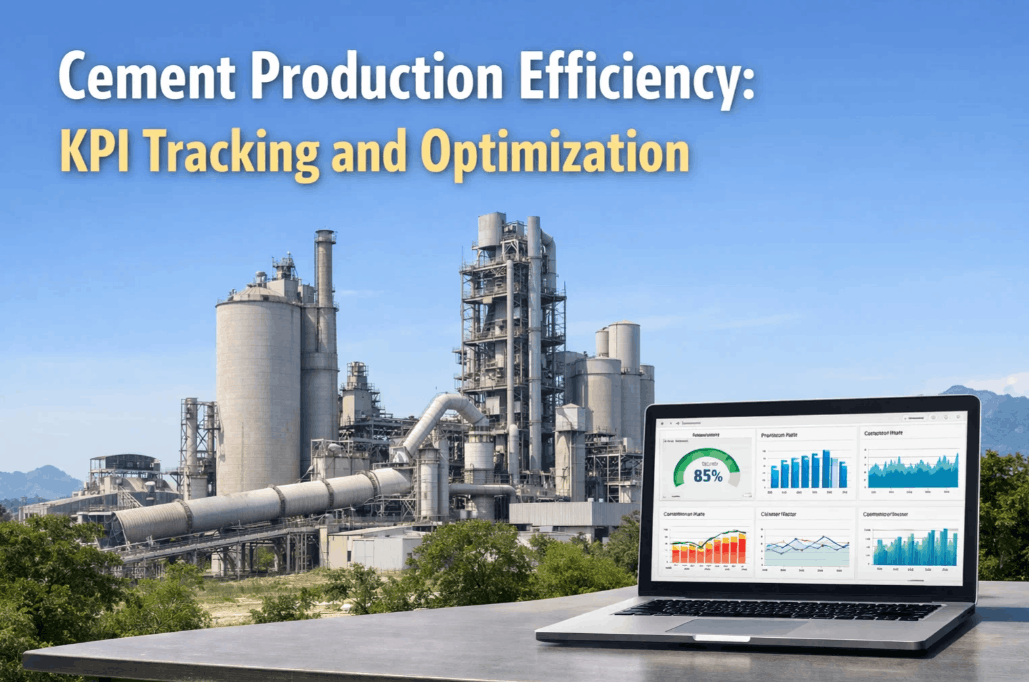
In the ultra-competitive global building materials market, cement production efficiency is no longer a matter of simple volume—it is a game of precision at scale. Modern cement plants are complex ecosystems where a 1% shift in clinker factor or a 20-minute increase in unplanned mill downtime can erase millions in quarterly margin. Traditional KPI tracking, involving manual logbooks and end-of-shift spreadsheets, is inherently reactive, capturing problems only after the opportunity to correct them has passed. iFactory's production analytics platform moves plants toward a proactive, real-time command center where OEE, clinker inventory, and specific energy consumption are tracked in milliseconds. Book a Production Audit to see how automated KPI tracking identifies hidden bottlenecks and stabilizes your output across all cement grades.
Optimize Cement Plant Efficiency with Real-Time KPI Tracking
Deploy automated OEE dashboards and clinker factor optimization to identify production losses instantly and maximize your facility's utilization rate.
Why Manual KPI Tracking is Choking Cement Plant Productivity
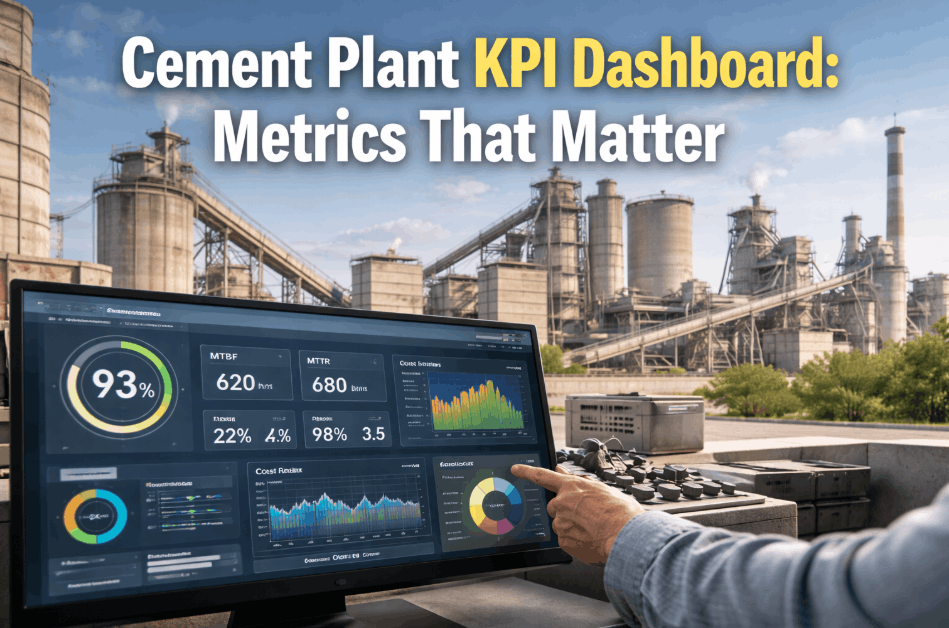
Most cement facilities suffer from "Data Silos"—where the kiln operator, the maintenance lead, and the quality lab all look at different numbers that don't synchronize until the weekly production meeting. This lack of a unified "single source of truth" makes it impossible to calculate true **OEE in cement plants** in real-time. When a finish mill slows down, is it due to a motor health issue, a raw material moisture spike, or a downstream silo blockage? Manual tracking can't answer this fast enough. iFactory's cement KPI tracking suite bridges this gap by fusing Level 1 PLC data with enterprise-level planning. We provide an instant, transparent view of your plant's availability, performance, and quality, allowing your team to fight small losses before they become major stoppages. Book a demo to see your plant's digital twin in action.
Intelligent KPI Tracking for the Modern Cement Factory
iFactory's production analytics suite provides the granular visibility needed to manage large-scale assets. We move your team from "what happened?" to "what is happening?" across your entire production chain.
Production Efficiency in Action: Eliminating Hidden Loses
The true power of cement performance tracking is revealed in the small everyday optimizations that compound into massive annual savings. These scenarios illustrate the impact of AI-driven visibility.
Scenario 1: Micro-Stoppage Detection on Packaging
The plant was meeting daily tonnage, but AI identified 40+ individual 2-minute stops in the palletizer section daily. Traced to a specific sensor calibration issue, these "invisible losses" were resolved, adding 200 tons to weekly output.
Scenario 2: Real-Time Clinker Ratio Control
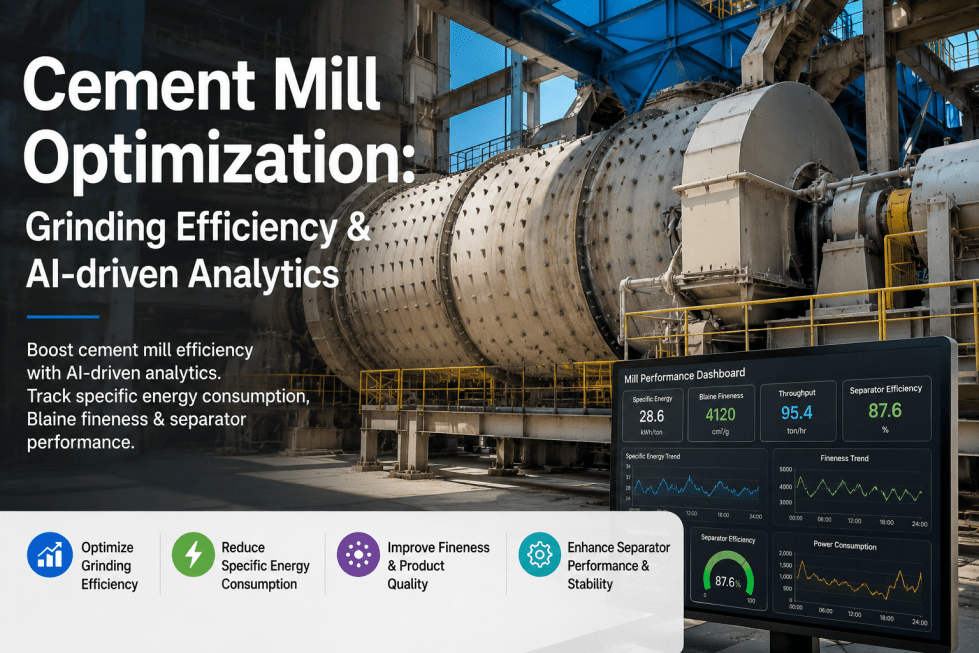
AI identified that Finish Mill 1 was running 1.5% richer in clinker than required to meet strength targets. By stabilizing the Blaine fineness window, the plant safely increased fly-ash substitution, slashing clinker costs instantly.
Scenario 3: Kiln Utilization Recovery
The platform flagged a high-vibration trend in the kiln ID fan that standard alarms ignored. A proactive 4-hour inspection revealed a developing bearing crack, preventing a catastrophic 48-hour unplanned shutdown. Book a demo to protect your assets.
Scenario 4: Shift Handover Data Integrity
By replacing manual logbooks with automated shift reports, the morning team received an exact downtime breakdown with timestamps and root causes pre-verified by AI. Communication lag was eliminated entirely.
Manual Production Reporting vs. iFactory KPI Analytics
Observe the operational shift when moving from retroactive "end-of-month" reports to a continuous, AI-driven production dashboard cement Command Center.
| Capability | Manual Spreadsheet / Logbook | Isolated Historian / SCADA | iFactory Production AI |
|---|---|---|---|
| OEE Accuracy | Estimated / Subjective | Availability only | 100% Data-Driven (A/P/Q) |
| Downtime Root-Cause | Technician's Guess | Fault code logs | AI signature-based diagnosis |
| Clinker Tracking | Physical survey (Weekly) | Feeder totalizers only | Dynamic mass-balance modeling |
| Performance (TPH) | Daily average only | Live flow trends | Target vs. Actual efficiency AI |
| Shift Reporting | Paper-based / Transcribed | Digital logs with gaps | Autonomous "Silo-to-Silo" reports |
| Energy SEC Linkage | Calculated at month-end | Basic meter trends | Live cost/efficiency correlation |
The Architecture of High-Performance Cement Production
Deploying cement plant output optimization requires a unified data layer that connects the raw meal silo to the final bag loader. iFactory constructs this "Digital Thread" without replacing your DCS.
Cross-Silo Data Integration
Ingests data from XRF analyzers, weight feeders, mill drives, and packing machines via OPC-UA. We eliminate islands of information, creating a continuous flow of production telemetry.
OEE & Performance Engine
The core AI engine calculates availability, performance, and quality scores every minute. It automatically subtracts planned maintenance, identifying exactly where throughput is bleeding during active shifts.
Clinker Inventory Modeling
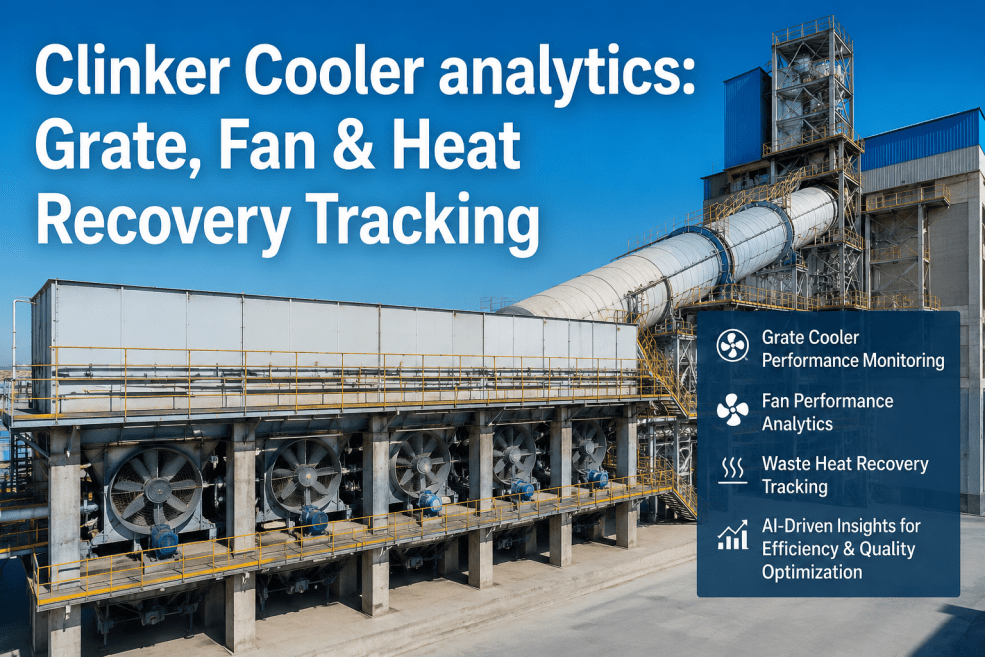
By correlating clinker cooler output with mill feed rates, the platform maintains a dynamic "clinker clock," predicting inventory depletion levels and recommending kiln speed adjustments for optimal stock management.
Prescriptive Decision Layer
Instead of just showing graphs, the platform issues "Bottleneck Alerts"—prompting supervisors when a specific downstream asset (like a bucket elevator) is capping the plant's overall TPH potential.
Deploying KPI Tracking & Optimization: A 6-Week Sprint
Scaling cement performance tracking is designed to be non-intrusive. We leverage your existing historian and SCADA data to turn on your plant's "Live Pulse" in just 42 days.
Instrumentation Audit & Logic Mapping
We audit your existing sensor health and map production logic for OEE—defining exactly what constitutes "Planned vs. Unplanned" downtime for your specific kiln and mill configurations.
Edge Connectivity & Dashboard Deployment
Edge gateways connect to the historian/DCS. Real-time dashboards for OEE, TPH, and Sec go live. Production teams begin seeing their "Live Pulse" across monitors and mobile devices.
Optimization Logic & Insight Delivery
The AI starts identifying bottleneck patterns and clinker factor outliers. Formal training sessions with site leads ensure teams can translate "AI alerts" into immediate production gains. Book a demo to begin.
Cement KPI Tracking & OEE: Frequently Asked Questions
You Can't Optimize What You Can't Measure—Precisely.
iFactory's production analytics platform delivers the real-time OEE, clinker tracking, and throughput optimization needed to dominate the cement market with the lowest possible cost per ton.