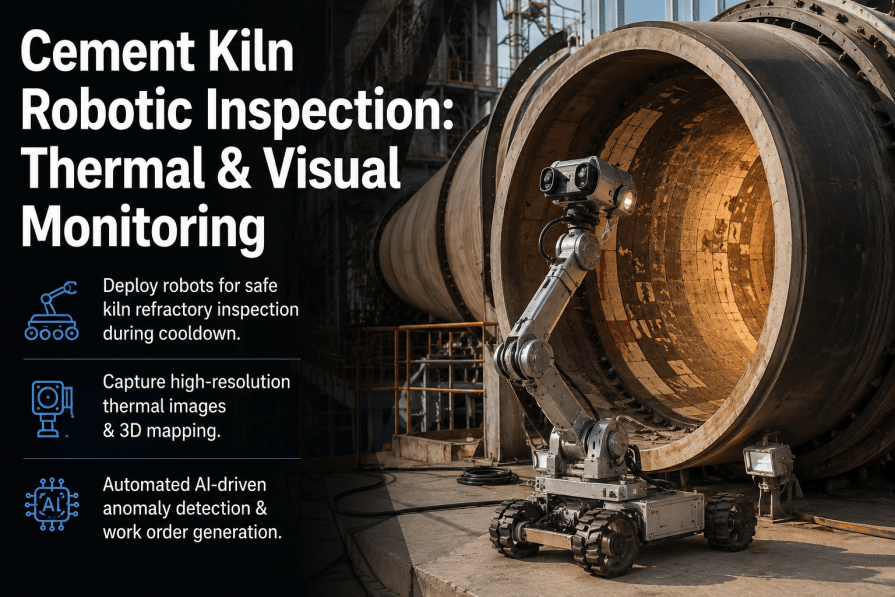
The rotary kiln is the thermal heart of cement production, and its refractory lining is the only barrier between 1450°C chemical reactions and structural shell failure. In the high-stakes environment of clinker production, refractory loss isn't just a maintenance expense—it is a catastrophic production stop. Traditional kiln management relies on periodic shell thermography and "tapping" during shutdowns, methods that are inherently reactive and prone to human error. Transitioning to cement kiln refractory analytics moves operators toward precise, AI-driven monitoring of lining thickness, coating stability, and thermal stress. By integrating satellite scanner data with kiln torque and burner analytics, iFactory's platform predicts lining failure weeks in advance, allowing for optimized replacement scheduling rather than emergency repair. Book a Lining Life Audit to see how iFactory extends campaign life while protecting your kiln's structural integrity.
Maximize Kiln Lining Life with AI-Driven Predictive Insights
Deploy real-time refractory wear monitoring and thermal stress analytics to stabilize your kiln coating, prevent red spots, and slash unplanned refractory-related downtime.
Why Traditional Kiln Refractory Monitoring Falls Short
Modern cement plants operate kilns at peak capacity, exposing refractory bricks to intense chemical attack, mechanical abrasion, and rapid thermal cycling. Legacy shell scanning systems provide raw temperature maps, but they lack the context needed to distinguish between a harmless "coating loss" and a deadly "lining thinning." This context gap forces maintenance teams to make high-stakes decisions based on incomplete data. When a shell temperature spikes, the question isn't just "how hot is it?" but "what is the remaining thickness of the brick?" iFactory's kiln lining replacement analytics bridge this gap. By fusing shell scanner feeds with kiln torque anomalies and flame geometry data, our AI model calculates exact remaining lining life, ensuring you replace bricks at the statistical end-of-life—never too early, and never after a failure. Book a demo to see how AI-driven refractory tracking stabilizes clinker production.
Intelligent Refractory Analytics for Continuous Kiln Operations
iFactory's refractory analytics cement kiln suite transforms raw thermal data into a predictive lifecycle roadmap. We move your team from reacting to red spots to orchestrating perfect refractory campaigns.
Refractory Analytics in Action: Stabilizing the Kiln Lifecycle
Deploying refractory wear monitoring provides the precision needed to navigate complex operational trade-offs. These real-world scenarios illustrate how AI-guided decisions prevent catastrophic downtime.
Scenario 1: Critical Coating Loss Detection
A sudden change in raw meal chemistry causes an unstable coating in the burning zone. AI detects the signature thermal spike pattern and recommends a specific burner adjustment shift. The coating is stabilized before the bricks suffer irreversible thermal shock.
Scenario 2: Shutdown Scope Optimization
Calculated remaining lining life for Ring 45–60 indicated 6 months of additional life. Instead of a full replacement during the winter stop, the AI-guided plan focused on a smaller, critical repair in the cooling zone, saving days of work and material.
Scenario 3: Red Spot Risk Prediction
Shell thermography showed a creeping temperature rise in the transition zone. AI correlated this with increasing kiln torque, identifying significant lining thinning. A targeted shell cooling fan was deployed, extending the campaign by 4 weeks to reach the planned stop.
Scenario 4: Post-Campaign Root Cause Analysis
AI analyzed 12 months of burner logs against the final refractory wear profile. It identified that excessive secondary air temperature spikes were the primary driver of premature wear on Ring 110, leading to a modified cooler operation protocol. Book a demo to start your optimization.
Traditional Pyrometry vs. iFactory AI Refractory Analytics
Modern kiln management requires more than just knowing "how hot the shell is." Observe the operational difference between raw thermal data and a fully integrated AI lining lifecycle platform.
| Capability | Manual / Scanner Only | Standard Thermal Software | iFactory Refractory AI |
|---|---|---|---|
| Thickness Estimation | Physical measurement during stop | Basic heat-loss calculation | Dynamic fusion modeling (+- 5mm) |
| Coating Detection | Subjective Scanner Interpretation | Fixed temperature threshold | Signature-pattern recognition AI |
| Refractory Replacement | Fixed time-based cycles | Linear wear-rate extrapolation | Condition-based AI optimization |
| Failure Alerts | Alarm after "Red Spot" appears | High-temperature alarms | Predictive thinning trend analysis |
| Burner Correlation | Manual log comparison | Overlay of burner logs | Automated flame impingement detection |
| Campaign Planning | Estimation after entry | Manual data entry needed | Continuous dynamic lifecycle mapping |
How iFactory Monitors Refractory Health at 1450°C
Deploying cement kiln lining AI-driven monitoring involves aggregating data from multi-point shell scanners, burner sensors, and kiln drive telemetry into a unified thermal context model.
Scanner Data Aggregation
Integrates seamlessly with all major shell scanner OEMs (Raytek, Wahlco, HGH). Ingests raw scan files directly, normalizing temperature data for emissivity corrections and kiln rotational speed variations.
Process Variable Fusion
Fuses thermal maps with secondary air temperature, kiln torque, feed chemistry, and burner fuel type. The AI model identifies the invisible process signatures that precede coating loss and lining thermal shock.
Thermal Signature Fine-Tuning
The AI is trained on thousands of kiln campaigns to recognize specific signature patterns—such as "lining slip," "longitudinal coating rings," and "localized brick spalling"—tailoring its sensitivity to your kiln's specific refractory brand.
Continuous Predictive Lifecycle
Maintains a living estimate of remaining lining life for every 10cm ring of your kiln. Automated reports provide constant feedback to operations and maintenance teams regarding the actual health of the thermal barrier.
Deploying AI Refractory Monitoring: A Strategic Rollout
Integrating refractory inspection cement analytics doesn't require a shutdown. We deploy the monitoring layer safely and securely over your existing thermal instrumentation in three strategic phases.
Thermal Data Integration & Baseline
Connecting to your existing kiln shell scanners and Level 1 process data. Historical campaign logs are ingested to build a site-specific baseline of refractory wear patterns and coating behavior.
AI Calibration & Wear Modeling
The AI model begins correlating shell temperatures with live process variables. We calibrate the thickness calculation algorithms against current known lining status to ensure accurate lifecycle forecasting.
Predictive Operations & Shutdown Planning
The predictive alert network goes live. Operations receive real-time coating stability alerts, and maintenance begins using condition-based triggers for future refractory replacement scheduling.
Cement Kiln Refractory Analytics: Frequently Asked Questions
Your Kiln Lining Deserves Better Than Just a High-Temp Alarm.
iFactory's predictive refractory analytics deliver real-time thickness modeling, automated coating stability alerts, and precision campaign optimization—purpose-built for cement plants operating high-capacity rotary kilns 24/7.