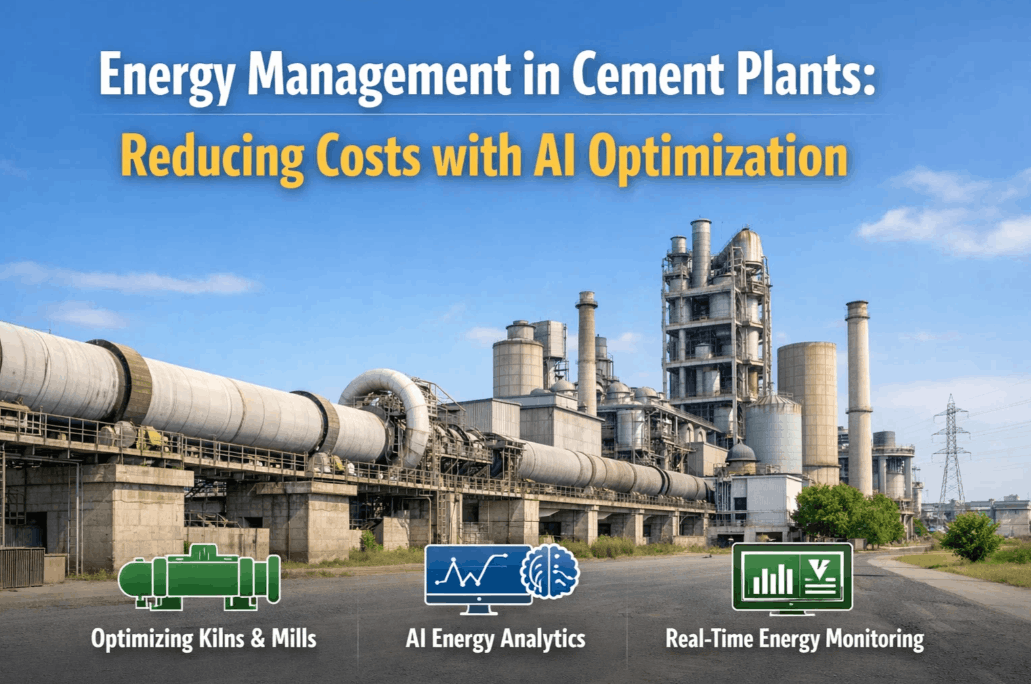
Energy consumption is the single largest controllable cost in cement manufacturing, often accounting for 30% to 40% of total production expenses. In an era of volatile electricity prices and aggressive decarbonization targets, traditional energy auditing—which relies on monthly bills and retroactive analysis—is no longer sufficient. Modern energy management in cement plants requires a real-time, AI-driven approach that synchronizes kiln thermal efficiency, mill power consumption, and compressed air demand with dynamic utility pricing. By shifting from passive monitoring to active AI optimization, producers can identify invisible energy leaks and peak-load penalties in real-time. Book an Energy Optimization Audit to see how iFactory's energy tracking software stabilizes your SEC (Specific Energy Consumption) and secures immediate cost reductions.
Cut Cement Plant Energy Costs by up to 30% with AI Optimization
Deploy real-time energy monitoring and AI-driven load balancing to optimize your grinding mills, kilns, and utility systems for maximum energy efficiency.
Why Traditional Cement Energy Monitoring Fails the P&L
Most cement facilities possess massive amounts of energy data sitting trapped in SCADA historians or isolated billing meters. This data is typically analyzed "post-mortem," looking at what happened last month rather than what is happening right now. The core problem in cement plant energy cost management is not a lack of meters; it's a lack of intelligent correlation. When a finish mill slows down, or a compressor leaks, the impact on the plant's peak load or specific energy consumption isn't immediately visible to the operator. iFactory's AI energy optimization platform bridges this gap. By fusing live power meter data with mill throughput and kiln thermal logs, our platform identifies deviations from the "Golden Batch" energy profile instantly. We turn energy from a fixed cost into a dynamic, manageable operational variable. Book a demo to understand how AI-driven monitoring protects your bottom line.
Intelligent Energy Management for High-Density Operations
iFactory's cement energy monitoring suite provides a unified command center for every kilowatt and kilocalorie consumed across your facility. We don't just track energy; we optimize it across every major asset.
AI Energy Optimization in Action: Solving Cost Volatility
The true value of cement energy efficiency is realized in the dynamic interplay between production demands and energy costs. These scenarios demonstrate the power of AI-guided energy management.
Scenario 1: Peak Demand Penalty Avoidance
Plant load reached 95% of its peak threshold during a hot afternoon. AI instantly alerted the manager and recommended a 20-minute pause on the slag dryer, successfully avoiding a massive demand penalty for the entire billing cycle.
Scenario 2: Low-Cost Energy Production Slotting
AI identified a localized drop in electricity prices due to renewable oversupply. The platform automatically prompted the planner to start Finish Mill 2 earlier than scheduled, locking in high-volume production at the lowest daily rate.
Scenario 3: Kiln Thermal Drift Correction
The SEC for clinker began drifting upwards by 5% without a clear process cause. AI traced the inefficiency back to a lagging tertiary air duct damper that had lost calibration, restoring thermal balance within minutes of the alert.
Scenario 4: Compressed Air System Tuning
AI detected abnormal power cycles on Compressor B during low-demand night shifts. Investigation revealed a massive leak in the baghouse pulse-jet system, which was repaired during the next break, saving significant idle power. Book a demo to see your plant's potential.
Traditional Energy Audits vs. AI-Powered Management
Moving from manual energy audit cement practices to continuous AI-driven optimization transforms energy from a "tax on production" into a competitive advantage.
| Capability | Manual Auditing / SCADA | Standard Energy Software | iFactory AI Energy Copilot |
|---|---|---|---|
| Data Refresh Rate | Monthly / Weekly | Hourly / Daily | Real-time (Minute-by-Minute) |
| Root Cause Analysis | Manual Spreadsheet Review | Static Charts & Trends | Automated AI Anomaly Detection |
| Peak Load Management | Fixed operational rules | Basic threshold alarms | Predictive cost-optimized scheduling |
| Specific Energy (SEC) | Calculated post-production | Totalizer-based tracking | Live correlation per ton / grade |
| Thermal Integration | Isolated fuel logs | Meter-only monitoring | Fused process-thermal AI models |
| Actionable Guidance | None — data only | Basic reports | Prescriptive operator prompts |
How iFactory Optimizes Power Consumption in Real-Time
Deploying AI energy optimization requires a robust architecture capable of ingesting high-frequency electrical data and process telemetry without disrupting plant control systems.
High-Frequency Meter Ingestion
Connects directly to power meters, VFDs, and utility sub-meters via Modbus-TCP or OPC-UA. We capture transients and harmonics that standard SCADA intervals miss, identifying motor health issues impacting energy.
Process-Energy Fusion Layer
The AI model synchronizes electrical loads with kiln feed rates, mill sounds, and chemical analysis. This allows the platform to determine the true energy efficiency of every ton produced, not just total consumption.
Dynamic Price Engine
Ingests real-time power market data and your specific PPA (Power Purchase Agreement) structures. The AI calculates the exact marginal cost of production at any given moment, enabling economic load switching.
Prescriptive Recommendation Loop
Instead of raw dashboarding, the platform serves "Decision Cards" to operators—recommending specific fan speed adjustments or feeder changes to return the asset to its peak energy-efficiency window.
Deploying AI Energy Management: From Audit to Optimization
Transforming your power consumption reduction strategy happens in logical, non-disruptive phases. iFactory engineers work with your electrical team to ensure 100% data integrity from day one.
Meter Network Audit & PPA Configuration
We audit your existing sub-metering points and digital utility feeds. Your specific energy billing structures and peak penalty windows are configured into the AI's economic modeling layer.
Level 1 Integration & Real-Time Tracking
Connecting the iFactory edge gateways to major power consumers (Mills, Fans, Kiln Drives). Live monitoring of SEC (Specific Energy Consumption) begins across all primary production units.
Autonomous Optimization & Peak Shifting
The AI starts issuing active peak-load warnings and optimization prompts. Energy savings are tracked daily against the established baseline, providing immediate ROI verification. Book a demo for full roadmap details.
Cement Plant Energy Optimization: Frequently Asked Questions
Stop Treating Energy as a Fixed Production Tax.
iFactory's AI energy optimization platform gives you the real-time granular control needed to slash peak load costs, optimize mill power draw, and stabilize kiln thermal efficiency across your entire facility.