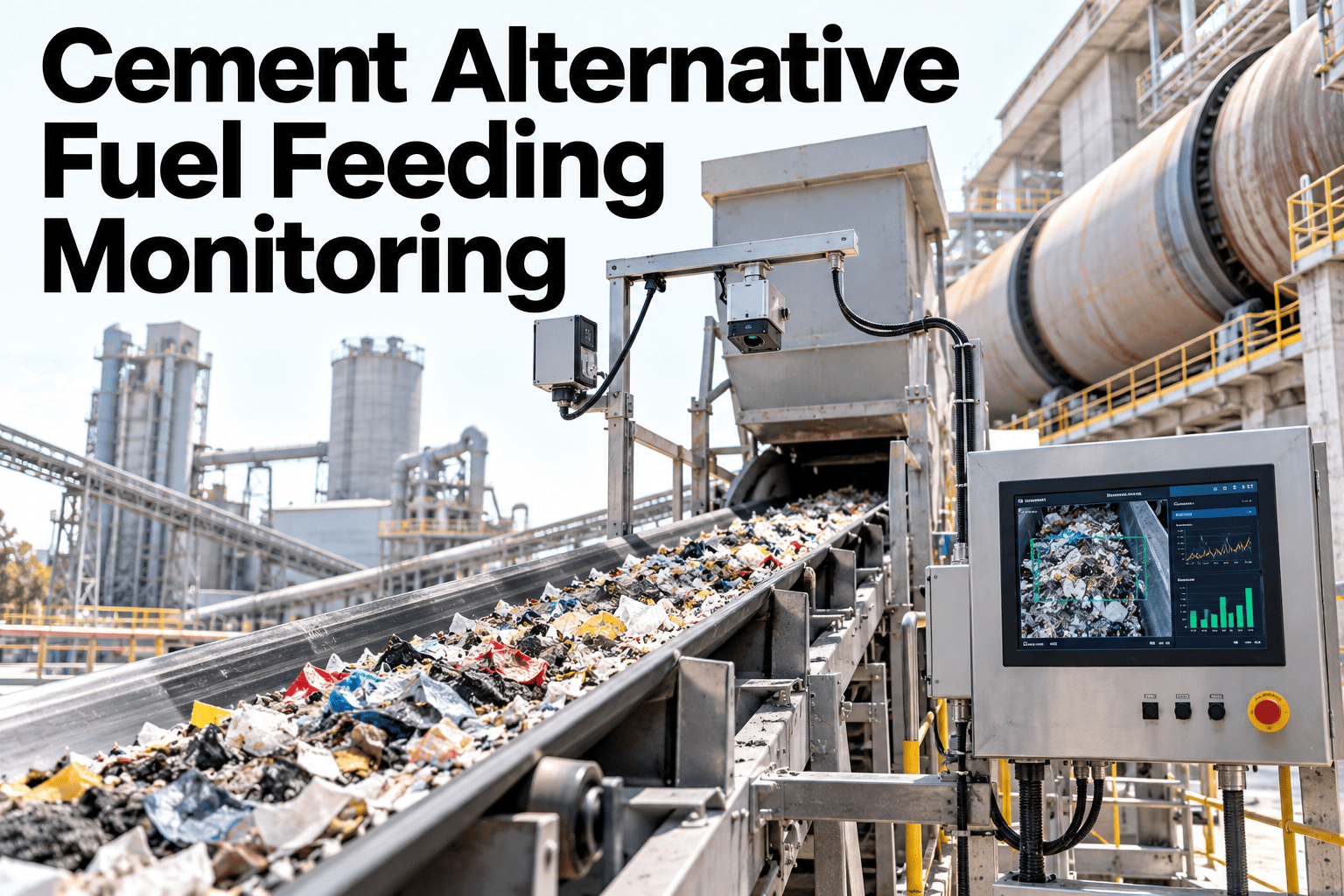
Feeding alternative fuel into a kiln is a fundamentally less predictable process than feeding coal, since RDF and similar fuels vary in moisture, density, and particle size batch to batch in ways that can cause a weigh feeder to deliver an inconsistent actual feed rate even when its setpoint hasn't changed. A feeder that looks fine on a quick glance can still be surging and dropping in ways that destabilize kiln temperature, and those feeding interruptions often go unexplained unless someone is watching the feed-rate trend closely rather than just checking whether the feeder is running. Monitoring feed-rate data continuously, with moisture and calorific context attached, is what turns a vague "the kiln was unstable today" into a specific, traceable cause, and if you want to see this kind of monitoring applied to your own feeding system, you can review a feed-rate trend example with our team.
Keep Alternative Fuel Feeding Stable Enough to Trust
Continuous feed-rate monitoring with moisture and calorific value context, so a weigh feeder surge or interruption becomes a traceable event instead of an unexplained kiln instability.
Why Alternative Fuel Feeding Behaves Differently From Coal
A weigh feeder designed and tuned around coal's relatively consistent density and particle size can struggle to maintain the same accuracy with a more variable alternative fuel stream.
The Feed-Rate Data Worth Tracking Continuously
A handful of continuously logged data points reveal whether the feeding system is actually delivering what the setpoint intends.
| Data point | What it reveals | Common cause if deviating |
|---|---|---|
| Actual vs setpoint feed rate | Whether the feeder is delivering the intended quantity | Bridging, density variation, or mechanical wear |
| Feed rate variance over time | How much the feed rate fluctuates minute to minute | Inconsistent material flow from the feed bin |
| Interruption frequency and duration | How often feeding stops entirely and for how long | Jamming, bin bridging, or conveyor issues |
| Weigh feeder calibration drift | Whether the feeder's own measurement accuracy is holding | Mechanical wear or sensor calibration lapse |
Tracking variance over time, not just whether the average feed rate matches setpoint, is often what catches a developing problem before it causes a visible kiln disturbance.
Why Moisture and Calorific Context Matters Alongside Feed Rate
A stable feed rate alone doesn't guarantee stable heat delivery if the fuel's moisture or calorific value is shifting batch to batch.
See Your Own Feeding Data Mapped This Way
Share a recent period of feed rate and moisture data and we will show how it connects to your kiln stability trends.
What Happens When Feeding Interruptions Occur
An interruption needs to be captured and understood quickly, since even a short feeding gap can trigger a compensating response elsewhere in the kiln operation.
What a Shift Report Actually Shows the Next Team
A structured shift report hands off exactly what the incoming team needs to know about feeding performance, rather than relying on a verbal summary.
What iFactory Cement and Energy Specialists See on Feeding Systems
iFactory cement and energy specialists who review alternative fuel feeding data across multiple plants consistently find that short, frequent interruptions, each individually unremarkable, often go uninvestigated as a pattern simply because nobody is aggregating them across shifts.
They recommend reviewing interruption frequency weekly specifically for this reason, since a pattern that looks like routine noise on any single shift often reveals a developing bin bridging or conveyor issue once viewed across several days together.
What Kiln and Fuel Teams Ask About Feeding Monitoring
Bring Feeding Monitoring to Your Alternative Fuel System
Book a session with iFactory AI to see feed rate, interruptions, and fuel quality context tracked together on your own kiln.