Cement plants burning biomass and waste-derived fuels alongside conventional fuel face a tracking problem that coal alone never created: alternative fuels vary batch to batch in moisture, calorific value and composition in ways that directly affect kiln stability and thermal substitution rate. A plant that logs only the tonnage received, without moisture, LHV and supplier batch detail attached, loses the ability to explain a kiln upset after the fact or to negotiate confidently on fuel quality with a supplier. Getting this data structured, from receipt through storage to feed-rate and reporting, is what turns alternative fuel use from a cost-saving experiment into a controlled, repeatable part of the fuel mix. Plant teams building this tracking can see biomass and waste fuel data tracked from receipt through kiln feed live before the next fuel delivery arrives.
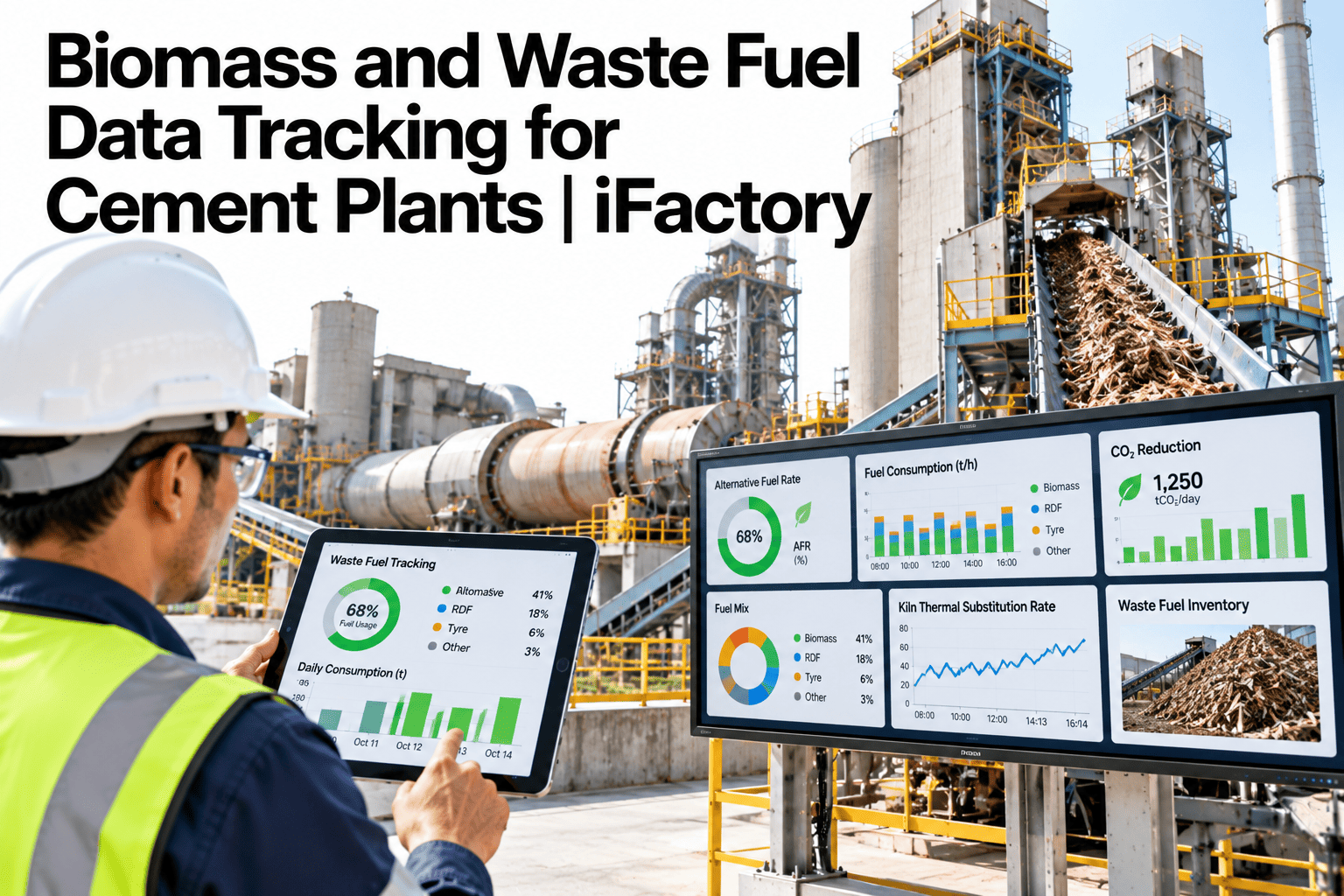
Biomass and Waste Fuel Data Tracking for Cement Plants
Fuel receipt, supplier traceability, moisture and LHV, feed-rate trends, storage and reporting, in one connected record.
Why Alternative Fuel Needs Its Own Tracking
Alternative fuels behave differently from coal in ways that a simple tonnage log cannot capture.
Moisture and LHV can swing meaningfully between deliveries, even from the same supplier.
A fuel quality swing can shift kiln stability in ways coal variation rarely does.
Without a logged quality record, a plant has little data to negotiate on fuel specification.
Structured tracking across receipt, storage and feed is what gives the plant control over a fuel source that is inherently more variable than coal.
Fuel Receipt Records
What gets logged at the point of delivery determines how much can be understood later.
Delivery Weight and Volume
Gross and net weight are recorded against the delivery note at the weighbridge.
Supplier and Source
The specific supplier and originating source are logged, not just a generic fuel category.
Visual and Contamination Check
A receiving inspection flags visible contamination before the load is accepted.
Sample Collection
A representative sample is taken at receipt for moisture and LHV testing.
Supplier and Batch Traceability
Each delivery is tracked as its own batch, linked forward to where it was stored, blended and fed into the kiln.
Trace a Recent Fuel Delivery Through to Kiln Feed
Book a 30-minute session and bring a recent delivery record. iFactory AI will show how it traces through storage, blending and feed.
Moisture and LHV by Fuel Type
Typical ranges vary significantly by fuel type, which is why tracking by batch matters more than a single plant-wide average.
| Fuel Type | Typical Moisture Range | Typical LHV Range |
|---|---|---|
| Biomass | Wide range, source dependent | Moderate, varies with moisture |
| RDF | Moderate, more consistent than raw waste | Moderate to high |
| Mixed waste fuel | Highly variable by load | Highly variable by load |
Logging moisture and LHV per batch, rather than relying on a supplier's nominal specification, is what lets the kiln team anticipate a quality swing before it affects stability.
Feed-Rate Trends
Feed-rate data, tracked against fuel quality, shows how the plant is actually managing the blend day to day.
Thermal Substitution Rate
The share of total thermal energy coming from alternative fuels is tracked continuously.
Feed-Rate vs Quality
Feed rate is compared against the batch's moisture and LHV to spot compensating adjustments.
Kiln Stability Correlation
Feed-rate changes are compared against kiln temperature and stability indicators.
Blend Ratio Tracking
The ratio of alternative fuel to conventional fuel is logged against production output.
Storage and Handling
Storage conditions affect fuel quality between receipt and feed, so this stage needs its own tracking too.
Outdoor or uncovered storage can change moisture content before the fuel reaches the kiln.
Batches mixed in storage lose individual traceability unless the blend is explicitly logged.
How long a batch sits in storage can itself affect quality, especially for biomass.
Reporting
The full data set needs to support both day-to-day operating decisions and longer-term review.
Daily Operating View
Current fuel mix, thermal substitution rate and quality trends for the operating team.
Supplier Quality Reports
Aggregated quality data by supplier, useful for contract and specification discussions.
Kiln Correlation Reports
Fuel quality and feed-rate data correlated against kiln performance over time.
Regulatory and Audit Export
Fuel records export in a format suitable for environmental and quality audits.
iFactory AI connects weighbridge, lab and feed-rate data into one tracked record. Scope covers data integration, traceability setup, and reporting configuration.
Expert Review
The plants that get the most value from alternative fuel tracking are the ones that connect quality data to kiln performance, not just to fuel accounting. A moisture or LHV swing that correlates with a kiln stability dip is a far more actionable finding than a quality log kept in isolation.
Storage tracking is the piece most plants add later rather than at the start, usually after a batch that tested fine at receipt caused an unexpected feed issue weeks later. Logging residence time and pile mixing from day one avoids that gap.
Frequently Asked Questions
Does this require a lab on-site to test moisture and LHV?
Many plants already run basic moisture and LHV testing on-site or through a contracted lab, and this data can be logged against the batch record as results come in. A full on-site lab is not strictly required to start tracking. Ask about your current testing setup in a working session.
How is traceability preserved once batches are blended in storage?
When batches are mixed, the blend is logged as a new combined record referencing its source batches, so the original quality data is not lost even though the material is no longer physically separable. Ask support about blend tracking for your storage setup.
Can this data support negotiations with alternative fuel suppliers?
Yes, aggregated quality data by supplier over time gives the plant concrete evidence for specification discussions, rather than relying on anecdotal experience with a given supplier. Request a sample supplier quality report.
Does this integrate with our existing weighbridge and ERP systems?
Yes, delivery weight and supplier data are pulled from existing weighbridge and ERP systems rather than requiring duplicate manual entry at receipt. Contact support about your specific weighbridge and ERP setup.
How long before feed-rate and kiln correlation data is reliable?
Most plants see a useful correlation view within six to nine weeks of connecting fuel quality and kiln data, with confidence improving as more batches and kiln conditions are captured. Book a session to estimate your own timeline.
Turn Fuel Variability Into Data You Can Act On
iFactory AI tracks biomass and waste fuel from receipt through storage, feed and reporting. Book a session on your own plant data.