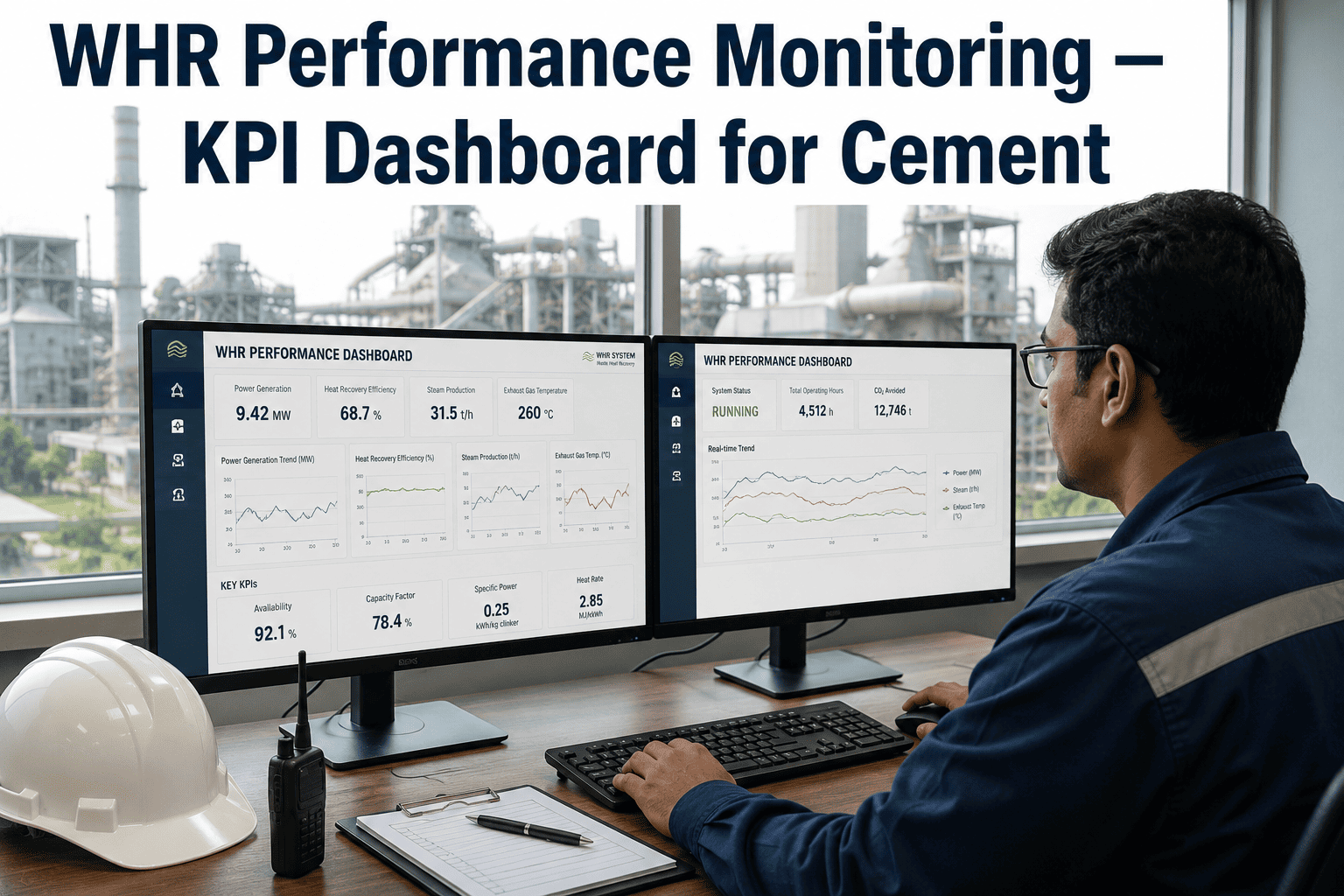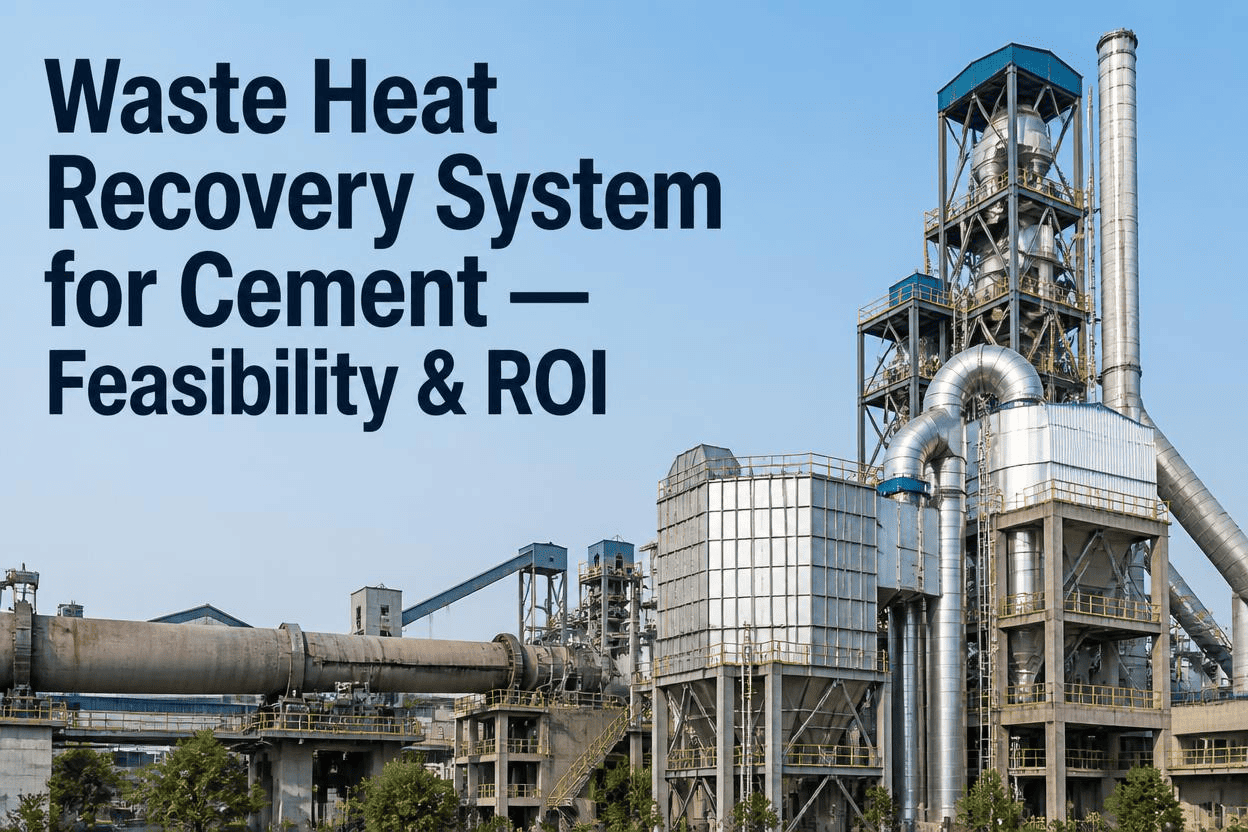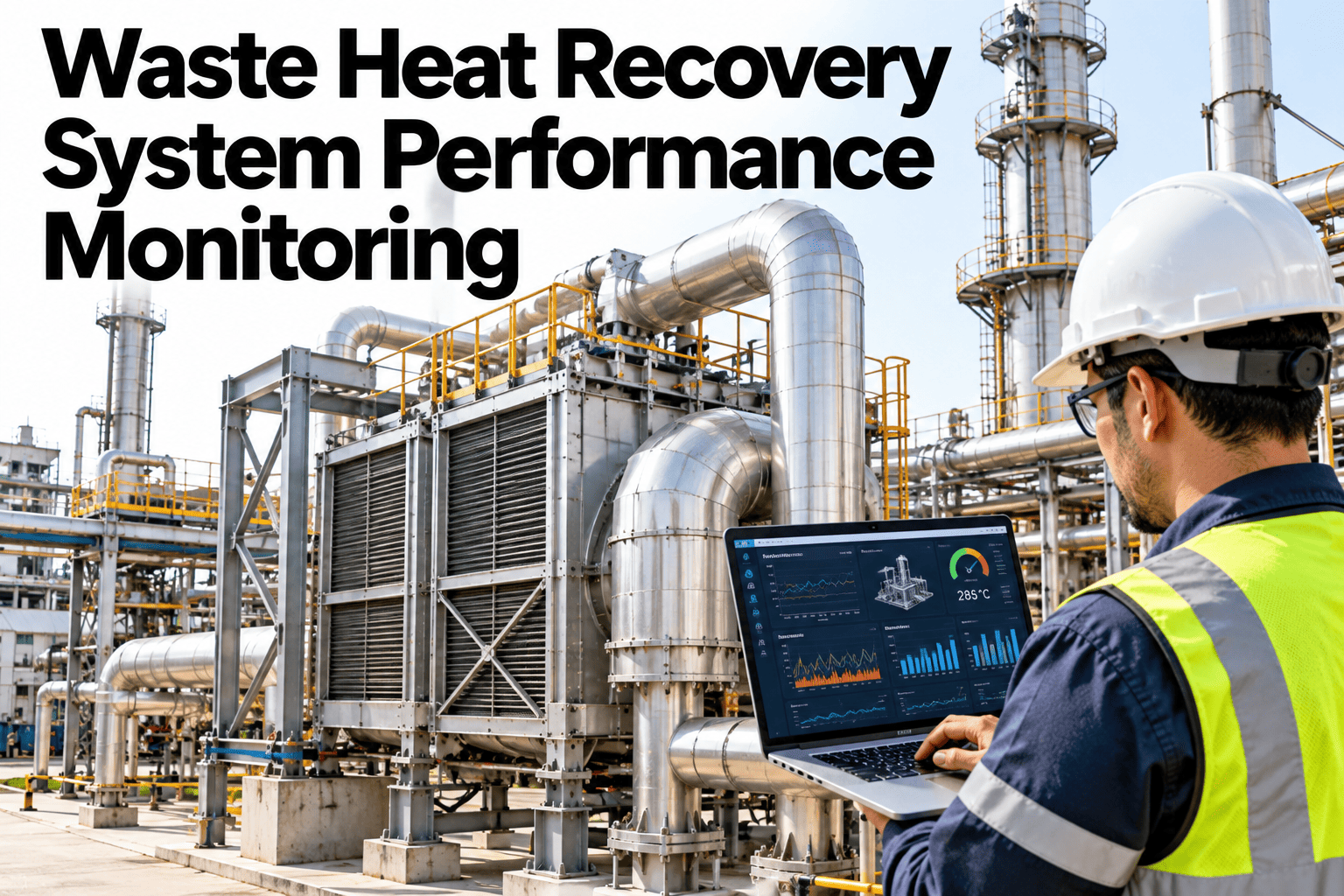
A waste heat recovery system looks like a straightforward investment on paper, capture exhaust heat from the kiln and preheater, convert it to power, and reduce grid dependence. What is harder to see without dedicated monitoring is whether the system is actually performing at its design potential day to day, since a WHR unit running at a fraction of its rated output rarely trips an alarm, it just quietly generates less power than it should. Tracking generation against availability and the actual heat-source conditions feeding the system is what reveals whether an underperforming WHR unit is a real problem or simply reflecting lower kiln output that day, and if you want to see this kind of tracking applied to your own WHR data, you can review a performance trend with our team.
Know Whether Your Waste Heat Recovery System Is Actually Performing
Generation, availability, and heat-source condition tracking that separates a genuine WHR performance issue from a day of simply lower kiln output.
Why Heat-Source Conditions Drive WHR Output More Than Anything Else
A waste heat recovery system has no fuel of its own, its output is entirely dependent on the exhaust heat the kiln and preheater happen to be producing at any given moment.
Tracking Energy Yield Against Expected Potential
Raw generation figures alone do not tell you whether the system is performing well, they need to be compared against what the current heat-source conditions should actually support.
| Condition | Expected generation range | What a shortfall suggests |
|---|---|---|
| Full kiln rate, stable fuel mix | Near design capacity | Equipment-side issue worth investigating directly |
| Reduced kiln rate | Proportionally lower output expected | Likely normal, confirm against kiln rate before flagging |
| High alternative fuel ratio | Output may vary from baseline | Check exhaust temperature trend for that period |
| Post-maintenance period | Should return close to prior baseline | A persistent gap suggests maintenance did not fully resolve the issue |
Reading generation figures without this context is the most common reason WHR performance gets misjudged, either flagged unnecessarily or, worse, a genuine issue dismissed as normal variation.
Why Shutdown Tracking Is as Important as Output Tracking
A WHR system that is technically available but shut down for an extended period loses recovery potential just as surely as one running at reduced output.
See Your WHR System's Real Availability
Share your recent WHR generation and shutdown logs and we will show where performance stands against expected potential.
How Data Integration Makes This Tracking Possible
None of this works as a manual exercise at scale, since it depends on correlating several data streams continuously rather than periodically.
Turning Performance Data Into a Regular Report
Monitoring only matters if it produces a report people actually review on a predictable schedule, rather than data that sits unused until someone asks for it.
What iFactory Cement and Energy Specialists See on WHR Systems
iFactory cement and energy specialists who review WHR performance across multiple plants find that the majority of flagged "underperformance" cases turn out to be a correct response to reduced kiln output rather than an actual WHR equipment issue, which is exactly why context-aware tracking matters more than a raw generation number alone.
They also note that shutdown tracking tends to be the most underused part of WHR monitoring, even though recurring short shutdowns often add up to more lost generation over a quarter than any single extended outage.
What Plant Teams Ask About WHR Performance Monitoring
Bring Performance Monitoring to Your Waste Heat Recovery System
Book a session with iFactory AI to see WHR generation, availability, and heat-source conditions tracked together on your own plant data.