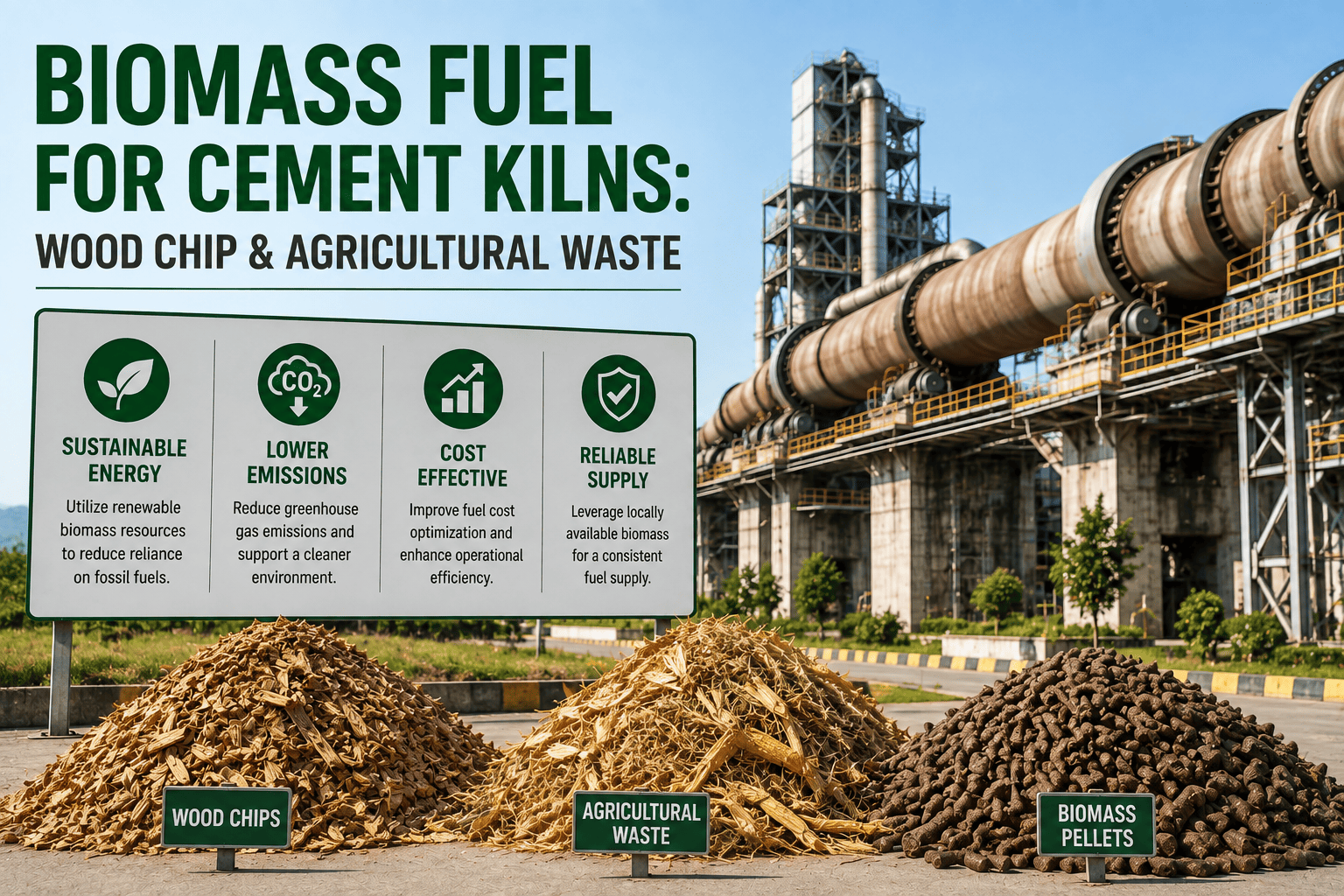
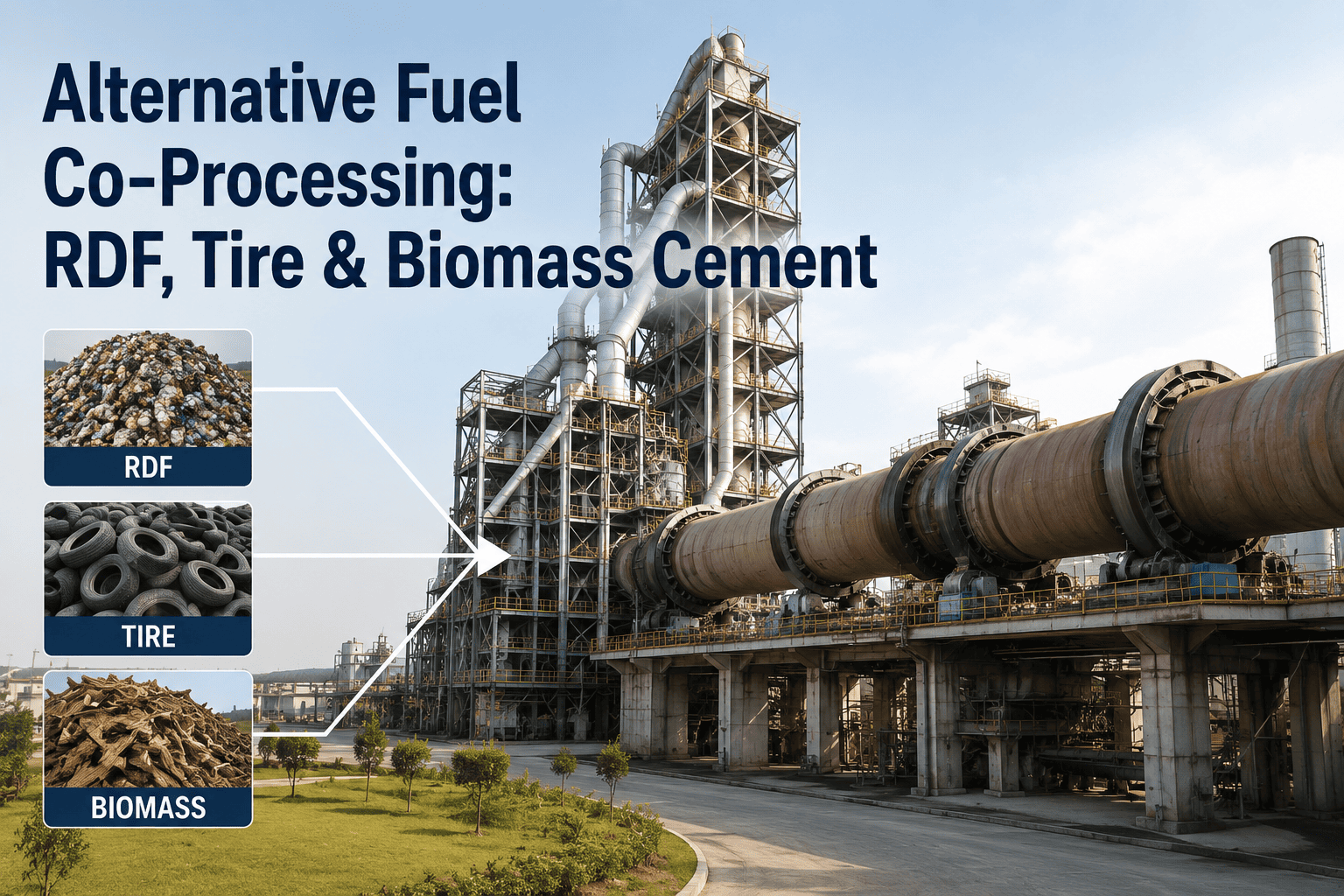
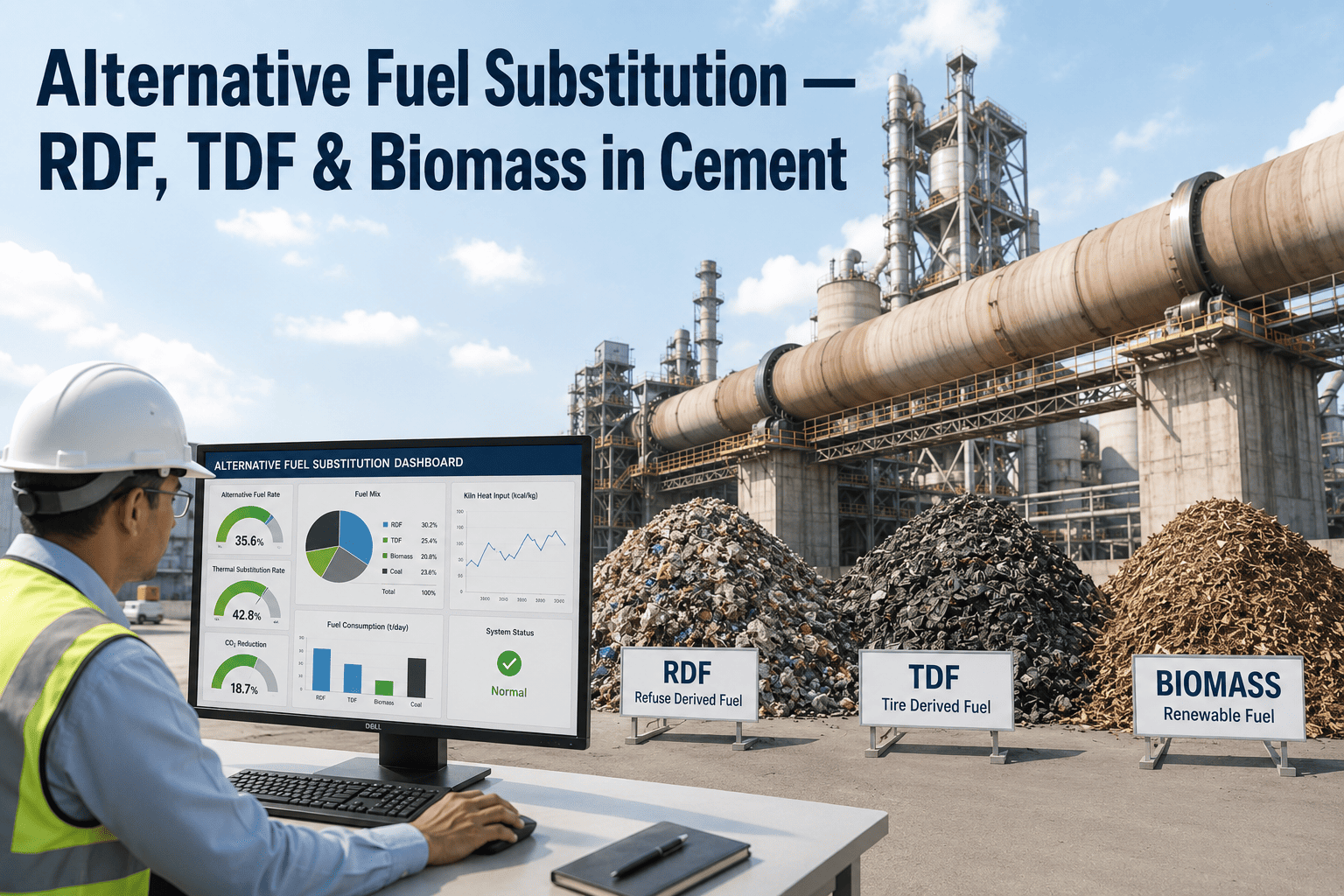
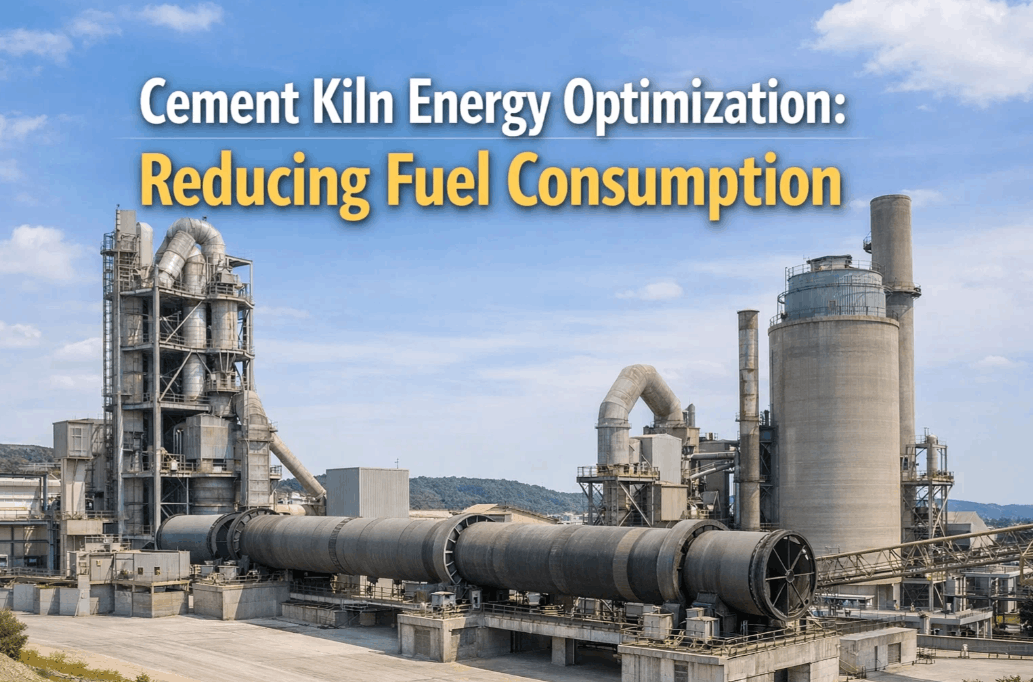
Cement kilns already run on fuel flexibility — most modern rotary kilns can fire coal, petroleum coke, and alternative fuels through the same burner system with only moderate adjustment, which is exactly why biomass has become one of the fastest-growing substitution fuels in the industry. Wood chips, rice husk, bagasse, and other agricultural residues carry a calorific value roughly half that of coal on a like-for-like basis, but because their carbon is counted as biogenic rather than fossil under most greenhouse gas accounting frameworks, every tonne burned in place of coal delivers an emissions reduction that shows up directly in Scope 1 reporting. The catch is that biomass isn't a drop-in replacement — moisture content, particle size, and ash chemistry all behave differently from coal, and a plant that treats biomass procurement like a coal purchase order usually finds out the hard way through kiln instability or clogged feed systems. Getting the specification and handling right is what separates plants that hit double-digit biomass substitution rates from plants that tried it once and quietly went back to coal, and a demo walkthrough is the fastest way to see how a live substitution program is actually monitored day to day.
FUEL OPTIMIZATION · CEMENT
Wood Chips and Agricultural Waste as Cement Kiln Fuel — A Specification-First Guide
Biomass substitution can cut fuel-related CO2 without a capital rebuild, but only when moisture, calorific value, particle size, and ash chemistry are controlled as tightly as any other kiln input.
13–16 MJ/kg
Typical calorific value of wood and paper biomass, roughly half that of steam coal
10–50%
Moisture content range across biomass types, from dry mill residues to fresh forest wood chips
≤6%
Typical ash content specification for graded wood chip fuel entering a kiln feed system
Biogenic
Carbon classification that lets biomass combustion count as a direct emissions reduction, not a shift in source
01
The Calorific Value Trade-Off
Why Biomass Burns Cooler Than Coal — And Why That's Manageable
The single biggest adjustment a kiln team makes when introducing biomass is accepting a lower calorific value per kilogram fed. Wood and paper fractions typically deliver 13 to 16 MJ/kg against roughly 25 to 29 MJ/kg for typical steam coal, meaning a straight kilogram-for-kilogram substitution would starve the kiln of heat. In practice this is solved by feeding a higher mass rate of biomass rather than swapping fuel one-to-one, and by blending biomass with a portion of higher-calorific alternative fuel or coal so the flame temperature profile stays within the kiln's stable operating band.
Calorific Value by Fuel Type (Approximate, As-Received Basis)
Refuse-Derived Fuel (Plastic-Rich)
Wood Chips / Paper Fraction
High-Moisture Organic Fraction
Moisture is the variable that swings calorific value the most within a single fuel category. Forest wood chips can arrive anywhere from 10% moisture for dried mill residue up to 50% for freshly chipped material, and every percentage point of added moisture reduces the net calorific value delivered to the kiln because energy is consumed evaporating that water before combustion contributes usable heat. This is precisely why a wood chip specification without a firm moisture ceiling is not a usable specification.
02
Fuel Comparison
Wood Chips vs Agricultural Waste — Side-by-Side Fuel Properties
Not all biomass feedstocks behave the same in a kiln feed system, and choosing between wood chips, rice husk, and bagasse usually comes down to what's actually available near the plant rather than which one performs marginally better on paper.
| Feedstock |
Calorific Value (As-Received) |
Typical Moisture |
Ash Content |
Handling Note |
| Graded Wood Chips |
2,200–2,700 kcal/kg |
~45% (±5%) |
≤6% |
Requires drying or blending to stabilize feed heat value |
| Rice Husk |
~3,000–3,400 kcal/kg |
8–12% |
15–20% |
Low bulk density, needs dedicated pneumatic feed line |
| Bagasse |
~1,800–2,200 kcal/kg |
45–55% |
2–4% |
Seasonal availability tied to sugarcane crushing season |
| Construction & Demolition Wood |
~3,900 kcal/kg (dried) |
~15% (dried) |
Variable |
Contaminant screening required for nails, coatings, treated wood |
Rice husk's higher ash content is worth flagging specifically — while it burns hotter and drier than wood chips, its silica-rich ash behaves differently in the kiln system and needs to be accounted for in clinker chemistry modeling, not just fuel heat balance.
MODEL YOUR OWN BIOMASS BLEND
See What a 15% Wood Chip Substitution Actually Does to Your Kiln Heat Balance
Bring your current fuel mix and moisture data to a working session and see the substitution modeled against your kiln's actual thermal profile before you commit to a supply contract.
03
Quality Specification
The Five Specification Limits Every Biomass Supply Contract Needs
A biomass fuel specification that only names the feedstock type — "wood chips" or "agricultural residue" — leaves too much variability for a kiln team to manage reliably. These five limits are what turn a generic feedstock into something a plant can actually run on.
SPEC 01
Total Moisture Ceiling
Set a firm as-received moisture limit — typically 40 to 50% for wood chips — since moisture above this level drops net calorific value fast enough to destabilize kiln temperature control.
SPEC 02
Minimum Net Calorific Value
Specify a minimum MJ/kg or kcal/kg on an as-received basis, not a dry-basis figure, since dry-basis numbers overstate what the kiln actually receives once moisture is accounted for.
SPEC 03
Particle Size Distribution
Define a target size range, typically one to two inches for chipped material, since oversized pieces jam feed screws and undersized fines create dust handling and combustion-uniformity problems.
SPEC 04
Ash and Contaminant Limits
Cap ash content, generally around 6% for wood chips, and require screening for metal, glass, and treated or coated wood that would introduce unwanted elements into clinker chemistry.
SPEC 05
Chlorine and Sulfur Thresholds
Limit chlorine and sulfur content, since both elements affect kiln buildup and preheater cycling, and agricultural residues in particular can carry variable chlorine depending on soil and fertilizer history.
04
Handling & Storage
Where Biomass Programs Actually Fail — And It's Rarely the Kiln
Most biomass substitution problems show up before the fuel ever reaches the burner. Storage, drying, and feed system design carry more operational risk than the combustion chemistry itself.
A
Moisture Drift During Storage
Wood chips stored outdoors absorb rainfall and ambient humidity, meaning a load that met specification at delivery can drift out of range within days if storage isn't covered or monitored on a rolling basis.
B
Bridging and Feed System Jams
Low bulk density and irregular particle shape cause biomass to bridge in silos and hoppers far more often than coal, which is why dedicated feed screws and agitation systems are usually needed rather than reusing coal-handling infrastructure unmodified.
C
Seasonal Supply Variability
Agricultural residues like bagasse are tied to crop harvest cycles, meaning a plant relying on a single feedstock needs either seasonal storage capacity or a secondary biomass source to maintain a stable substitution rate year-round.
D
Fire and Self-Heating Risk in Storage Piles
Biological decomposition in moist biomass piles generates heat that can reach self-ignition temperatures if pile size, turnover frequency, and moisture aren't actively managed, making storage monitoring a safety requirement, not just a quality one.
05
Kiln Feed Points
Where Biomass Actually Enters the Kiln System
Biomass fuel isn't necessarily fired through the main kiln burner — where it enters the system depends on particle size, calorific value, and how much combustion time the fuel needs before it's fully burned.
Main Kiln Burner
Higher-calorific, finely processed biomass can be co-fired here alongside coal or petcoke, typically at lower substitution percentages to protect flame stability.
→
Precalciner / Riser Duct
Lower-calorific, coarser biomass like wood chips is commonly fed here, where longer residence time and lower required flame temperature accommodate slower-burning fuel.
→
Bypass / Coarse Fuel Chute
Bulky or variable-size feedstock such as whole agricultural residue bales is often introduced through a dedicated coarse-fuel chute rather than pulverized fuel lines.
Frequently Asked
Biomass Fuel Substitution Questions Kiln Teams Ask First
What substitution rate can we realistically target with wood chips or agricultural waste?
Substitution rates depend heavily on feed system design, available biomass supply, and how much variability the kiln's control system can absorb, but plants with dedicated biomass handling infrastructure commonly run sustained rates in the range that global roadmap targets treat as the near-term 2030 benchmark for alternative fuels overall. Starting substitution at a lower rate through the precalciner while feed and drying systems are validated, then scaling up as moisture and particle-size control improves, is the approach most plants take rather than attempting a high substitution rate from day one. A
demo session can help model a realistic target against your specific kiln configuration.
Does using biomass fuel change our clinker quality or chemistry?
Biomass ash composition differs from coal ash — rice husk in particular carries a much higher silica content, and wood ash carries different alkali and trace mineral profiles — so a biomass substitution program needs to be modeled into raw mix chemistry rather than treated as a pure fuel swap. Most plants manage this by adjusting raw meal composition slightly to compensate for the ash contribution once a stable biomass blend is established, and by tracking clinker free lime and alkali content closely during the transition period. This is a solvable chemistry adjustment, not a quality risk, as long as it's planned for rather than discovered after the fact.
How do we prevent moisture variability from destabilizing kiln temperature once biomass is in the fuel mix?
The most reliable approach is continuous or frequent moisture testing at the point of feed rather than relying on delivery-time certificates, since moisture can shift meaningfully during storage even for material that met specification when it arrived. Blending biomass with a more calorifically stable fuel stream, and feeding it through the precalciner where temperature swings have more thermal mass to absorb, both reduce the practical impact of moisture variation on kiln stability. Plants that skip continuous moisture monitoring are the ones most likely to see unexplained kiln temperature swings traced back to a biomass delivery weeks later.
Is agricultural waste biomass available reliably enough to build a long-term fuel strategy around it?
Availability depends entirely on what grows or is processed near your plant — bagasse is only available in volume during and shortly after crushing season, while rice husk and construction wood debris tend to have more consistent year-round supply depending on regional agricultural and demolition activity. Most plants that build a durable biomass strategy blend two or more feedstocks specifically to smooth out seasonal gaps, rather than depending on a single crop-linked residue stream. Mapping supply within economic transport distance of your plant is worth doing before signing a long-term offtake agreement.
What's the biggest operational mistake plants make when starting a biomass fuel program?
The most common mistake is reusing coal-handling and coal-feed infrastructure unmodified, since biomass's lower bulk density, irregular particle shape, and higher moisture cause bridging, jamming, and feed-rate inconsistency in systems designed around coal's flow properties. The second most common mistake is writing a fuel specification without firm moisture and particle-size limits, which leaves too much variability for consistent kiln operation. Reviewing your current feed system design against biomass-specific handling requirements through
support before committing to a large supply contract avoids both of these early.
SPECIFICATION-DRIVEN · KILN-SAFE · CARBON-NEUTRAL
Turn Biomass From a Pilot Project Into a Tracked Substitution Program
iFactory monitors moisture, calorific value, and feed-rate data in real time as biomass moves from delivery to burner, so your substitution rate is a number you can defend — not an estimate you hope holds up.