Cement kilns are one of the few industrial processes capable of destroying refuse-derived fuel, whole tires, and biomass waste completely, at temperatures and residence times that leave no ash requiring separate landfill disposal. That capability is why thermal substitution rates above 60 percent are now standard at leading European plants, while many North American and Asian facilities remain below 20 percent, often not because of kiln chemistry limits but because of fuel handling and injection infrastructure gaps. Closing that gap is where most co-processing programs actually stall, and it is where AI-assisted fuel monitoring now plays a growing role.
Alternative Fuel Co-Processing for Cement Kilns
Handle RDF, tire-derived fuel, and biomass safely at scale, with the monitoring infrastructure needed to protect clinker quality as substitution rates climb.
Three Alternative Fuel Streams, Three Handling Challenges
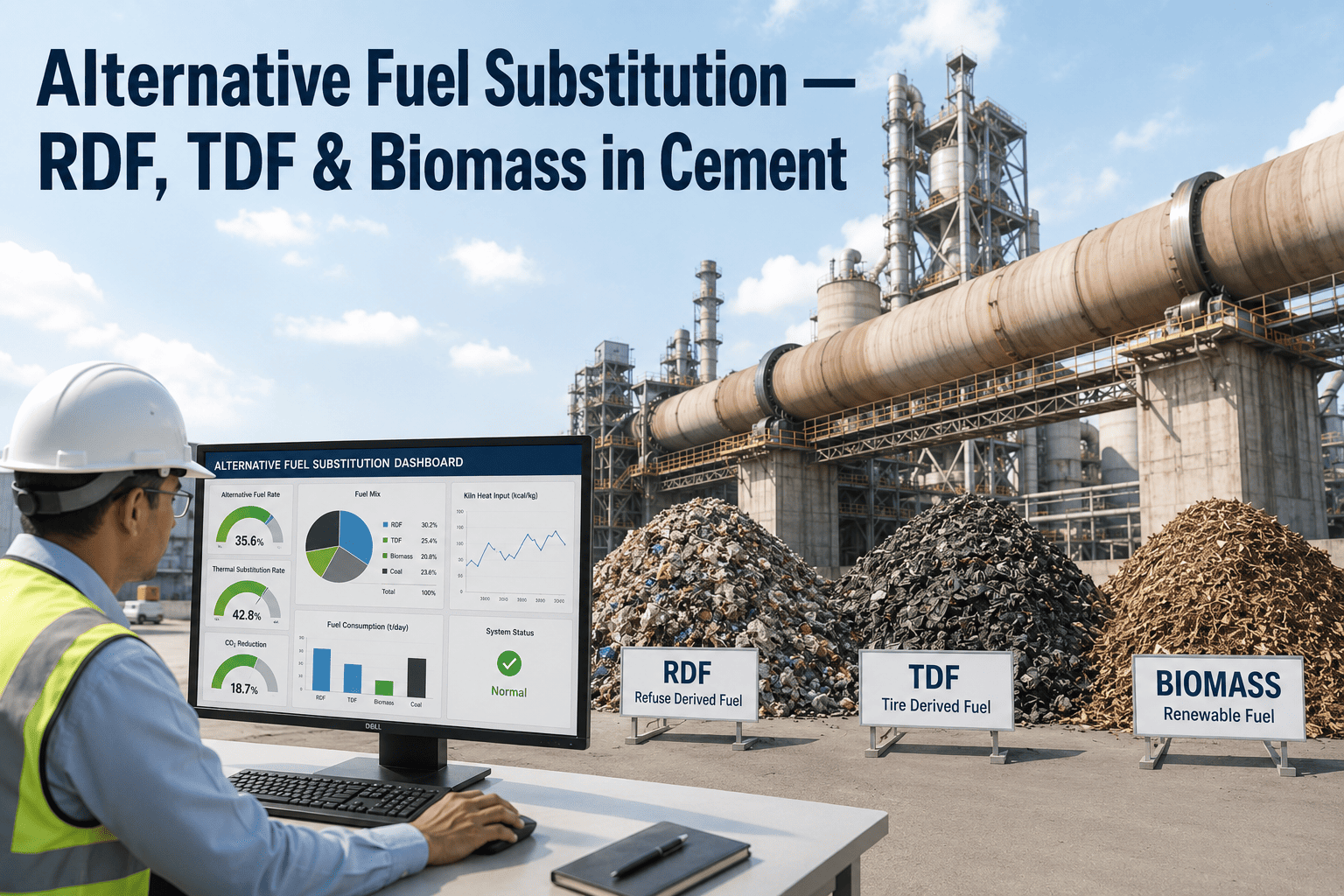
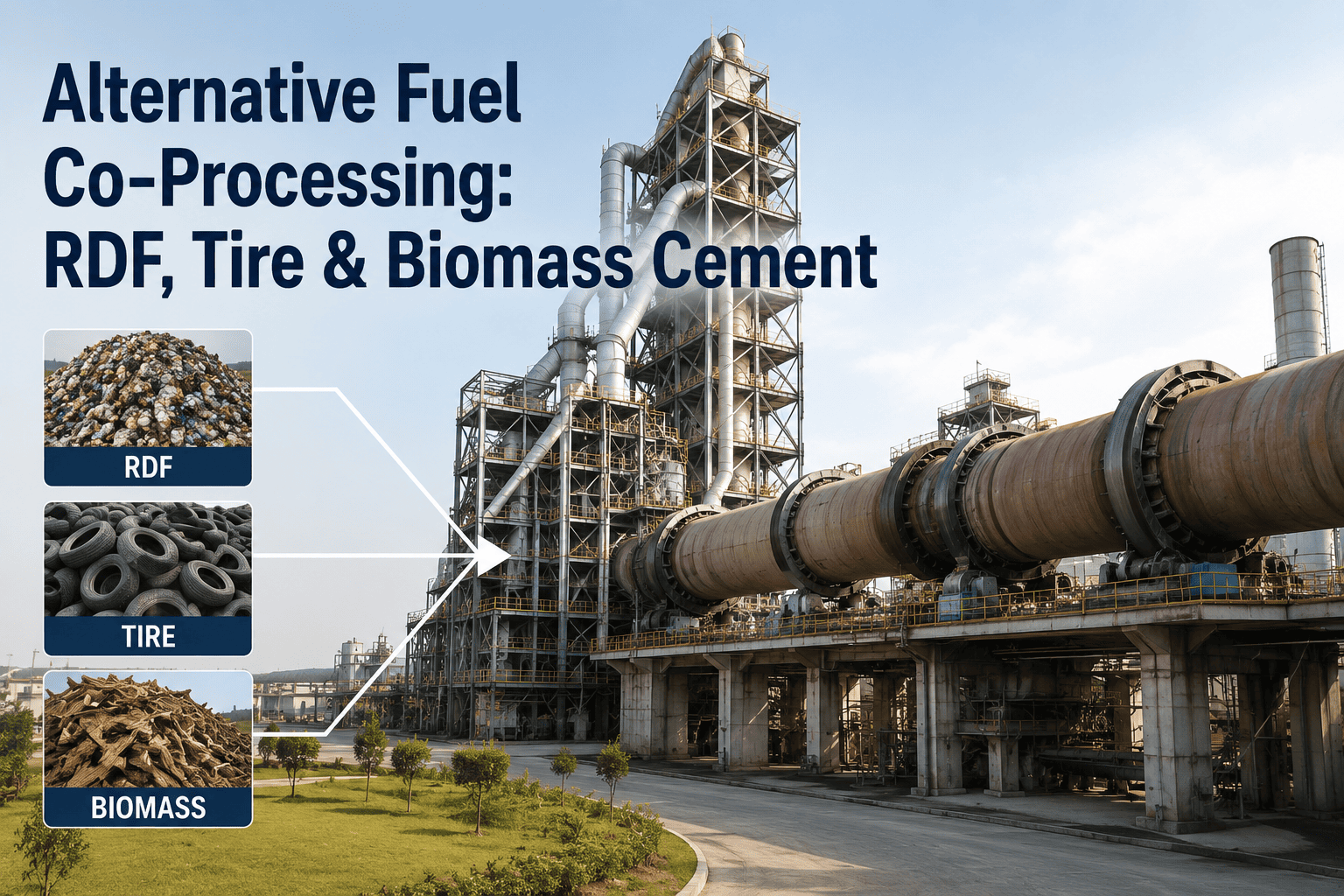
Refuse-derived fuel, tire-derived fuel, and biomass are frequently grouped together under the alternative fuel label, but each brings a distinct set of handling, storage, and combustion characteristics that a single generic system cannot manage well. Programs that try to force all three fuel types through identical infrastructure typically see chronic feed disruptions, inconsistent thermal substitution, and quality variability that erodes the business case for co-processing in the first place.
Refuse-Derived Fuel
Calorific value: 12-18 MJ/kg
Processed municipal and commercial waste shredded to specification. Requires consistent particle sizing and moisture control to avoid feed system bridging and combustion instability at the main burner or precalciner.
Tire-Derived Fuel
Calorific value: 28-32 MJ/kg
Whole tires or shredded chips fed typically at the kiln inlet or calciner. High steel and sulfur content requires careful feed rate control to manage SO2 emissions and avoid coating buildup from steel wire residue.
Biomass Fuel
Calorific value: 10-16 MJ/kg
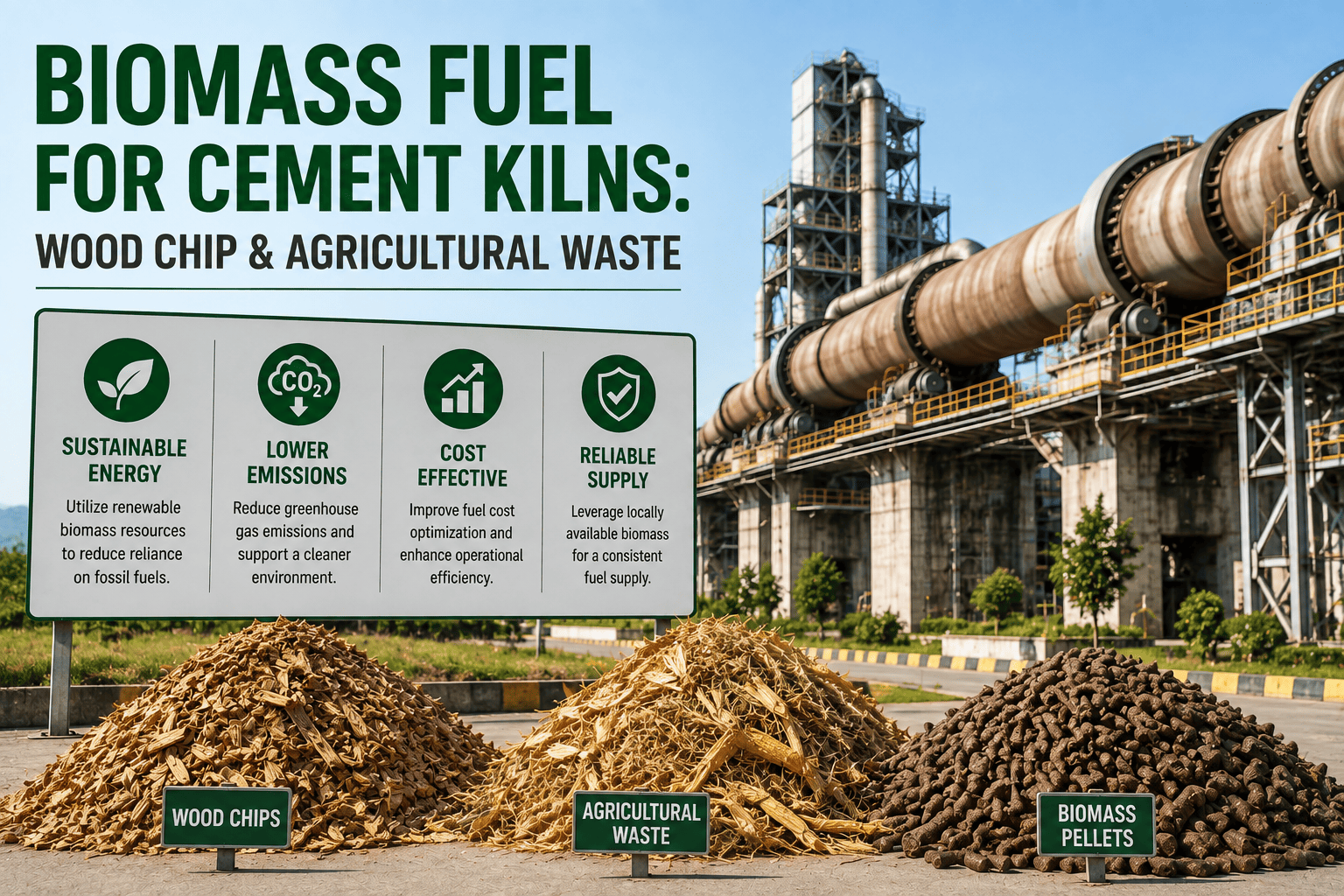
Agricultural residue, wood waste, or sewage sludge with high moisture variability. Storage requires active moisture and spontaneous combustion monitoring, since biomass piles carry elevated self-heating risk.
Storage Infrastructure by Fuel Type
Storage decisions made early in a co-processing program tend to be expensive to reverse, since bunker and silo construction is a significant capital investment. The comparison below reflects storage practices proven across cement plants running mixed alternative fuel programs, balancing safety requirements against operational flexibility.
| Fuel Type | Recommended Storage | Key Safety Requirement | Typical Buffer Capacity |
|---|---|---|---|
| RDF | Enclosed bunker, walking floor | Fire detection, negative pressure ventilation | 1-3 days feed supply |
| Tire-derived fuel | Open yard or covered pad | Fire break spacing, sprinkler coverage | 3-7 days feed supply |
| Biomass | Covered silo or enclosed shed | Moisture monitoring, temperature probes | 1-2 days feed supply |
Fuel Injection Points Along the Kiln System
Where alternative fuel enters the kiln system directly affects both combustion efficiency and clinker quality risk. Whole tires and coarse RDF typically enter at points with longer residence time and higher combustion tolerance, while finer, higher-calorific-value materials can be introduced closer to the main flame where combustion happens faster.
Main Burner (Kiln Hood)
High calorific value, finely processed fuel with tight particle size specification. Directly affects flame shape and burning zone temperature, requiring the tightest quality control of any injection point.
Kiln Inlet
Coarser RDF and whole tires benefit from the longer residence time and higher temperature available at this point, allowing more complete combustion of larger particle sizes.
Precalciner
Handles the highest volume of alternative fuel in most modern systems, tolerating a wider range of fuel types and moisture content while maintaining calcination efficiency.
Riser Duct or Bypass
Used in some configurations for very high moisture biomass or waste streams that would otherwise destabilize combustion closer to the burning zone.
Rising thermal substitution rates only pay off if clinker quality holds steady. iFactory tracks free lime and clinker chemistry against every alternative fuel batch, so quality teams see the connection between fuel mix and output before it becomes a customer complaint.
Thermal Substitution Rate Benchmarks
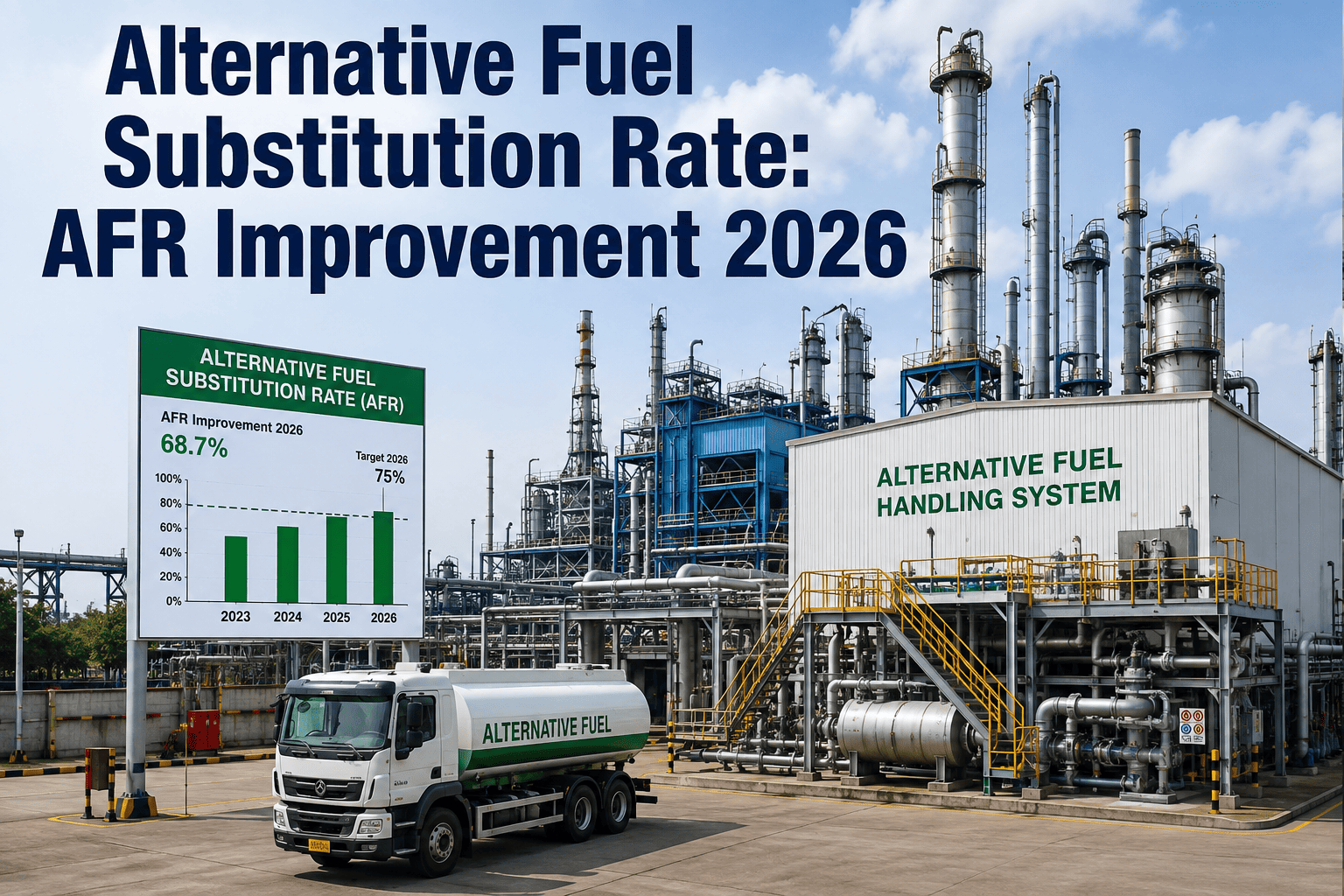
Thermal substitution rate, the percentage of total kiln fuel energy supplied by alternative fuels, is the headline metric for co-processing programs, but the achievable rate depends heavily on kiln configuration, precalciner design, and the regulatory environment a plant operates in. The benchmarks below reflect typical ranges by program maturity rather than absolute targets, since every plant's ceiling is different.
Why Programs Stall Before Reaching Their Ceiling
Most co-processing programs do not plateau because kiln chemistry cannot handle more alternative fuel, they plateau because the operational systems around fuel handling were never built to scale past the initial pilot volume. Recognizing which barrier applies determines whether the next investment should go toward storage capacity, feed system upgrades, or quality monitoring.
Fuel Quality Specification and Supplier Management
Consistent alternative fuel quality is what separates a program that reliably holds its substitution rate from one that constantly retreats to conservative levels whenever a bad batch arrives. Building a formal fuel specification, and holding suppliers to it with a real acceptance and rejection process, is the single highest-leverage step most programs can take to stabilize operations at their target thermal substitution rate.
Safety Program Requirements for Alternative Fuel Handling
Alternative fuel storage and handling introduces fire and dust explosion risks that differ meaningfully from conventional coal handling, and a safety program built around coal-handling assumptions alone will miss important hazards specific to RDF, tire, and biomass storage. Fire detection response time, self-heating monitoring in biomass piles, and dust explosion mitigation in RDF processing areas each require dedicated procedures rather than generic combustible material handling rules.
Continuous Temperature Monitoring
Install temperature probes throughout biomass and RDF storage areas to detect self-heating trends early, since spontaneous combustion typically develops gradually and is preventable if caught in the early stages.
Dust Explosion Mitigation
Apply dust collection, housekeeping, and ignition source control specific to RDF processing and transfer points, where fine combustible particulate can accumulate in ways coal handling systems are not typically designed to manage.
Fire Suppression Coverage
Size sprinkler and foam suppression systems specifically for the fuel type stored in each area, since tire fires and RDF fires behave differently and require different suppression approaches to be effective.
Regulatory and Permitting Considerations
Increasing thermal substitution rate beyond a certain threshold often triggers additional permitting requirements or emissions testing obligations, depending on jurisdiction, and plants that build regulatory engagement into the program timeline from the start avoid the schedule delays that come from discovering a permitting gap after equipment is already ordered. Regulatory bodies overseeing waste-derived fuel co-processing typically want to see a defined quality control program alongside the permit application, which is another reason a documented fuel specification and testing protocol pays off beyond its operational value.
Measuring Program Success Beyond Substitution Rate
Thermal substitution rate is the headline number, but a mature co-processing program tracks a broader set of metrics that reveal whether the program is actually delivering value sustainably rather than just hitting a percentage target. A program running high substitution rate with frequent quality holds or emissions excursions is not actually performing well, even though the top-line number looks strong.
Frequently Asked Questions
What is a realistic thermal substitution rate target for a new co-processing program?
Most new programs should plan for a phased approach, starting in the 5 to 15 percent range during the first year while feed systems, storage infrastructure, and quality monitoring processes are validated. Plants that skip this validation phase and attempt to jump straight to 30 percent or higher substitution often experience feed disruptions and clinker quality inconsistency that damage confidence in the program. A realistic two to three year roadmap targeting 25 to 40 percent, supported by continuous quality monitoring, produces more durable results than an aggressive early push.
How does tire-derived fuel affect kiln coating and refractory life?
Steel wire embedded in tires can contribute to coating irregularities if feed rate and injection point are not properly managed, since localized steel accumulation creates uneven thermal loading on the refractory. Well-managed tire-derived fuel programs monitor coating pattern and shell temperature closely during ramp-up, adjusting feed rate at the first sign of irregular buildup. Properly operated, tire-derived fuel co-processing does not meaningfully shorten refractory life compared to conventional fuel operation, but poorly monitored programs can see accelerated localized wear.
Can biomass and RDF be co-processed through the same feed system?
Some plants successfully blend RDF and biomass through shared feed infrastructure, particularly when both are processed to similar particle size specifications, but this requires careful moisture management since biomass moisture content varies more seasonally than processed RDF. Plants running high volumes of both fuel types generally see better consistency with separate storage and metering systems feeding a common injection point, allowing each fuel stream's unique handling requirements to be managed independently before blending.
What emissions parameters need the closest monitoring during co-processing ramp-up?
Sulfur dioxide and particulate emissions typically require the closest attention during co-processing ramp-up, since alternative fuel sulfur and ash content can differ significantly from conventional coal or petcoke. Continuous emissions monitoring during substitution rate increases allows the operations team to correlate any emissions shift directly with the specific fuel batch or blend ratio in use, rather than discovering a compliance issue only during periodic regulatory testing.
Does higher thermal substitution rate always reduce fuel costs?
Alternative fuels are typically lower cost per unit of energy than coal or petcoke, and many facilities receive a gate fee for accepting waste-derived fuel, which improves the cost picture further. However, the net savings depend on transportation distance, required pre-processing, and any infrastructure investment needed to handle the fuel reliably. A properly modeled cost analysis comparing delivered cost per gigajoule across fuel options, rather than a simple headline price comparison, gives a more accurate picture of the true savings potential for a specific plant.
Scale your alternative fuel program with confidence by monitoring fuel quality, feed consistency, and clinker impact in one system. iFactory helps cement plants push thermal substitution rate higher without quality surprises.