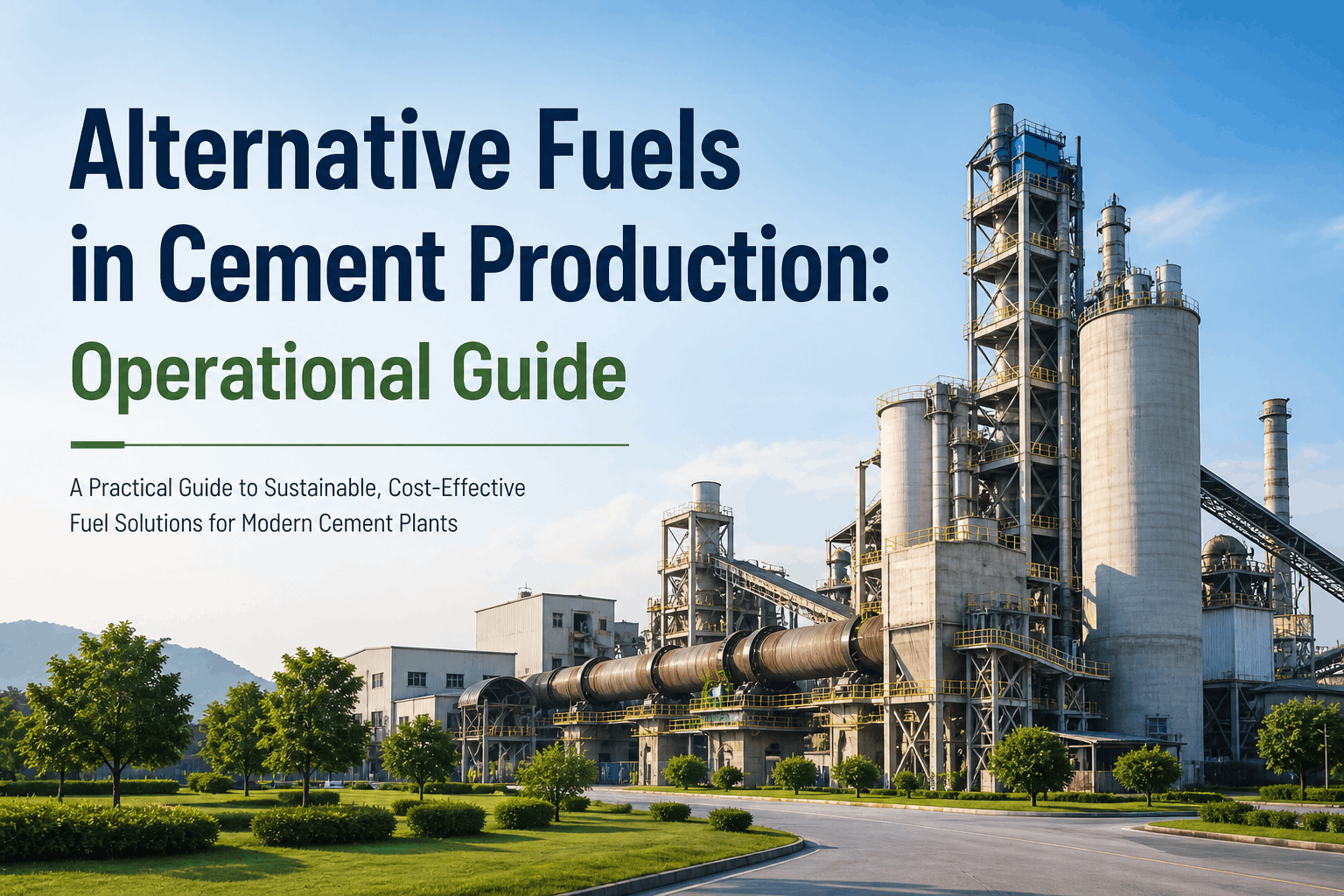
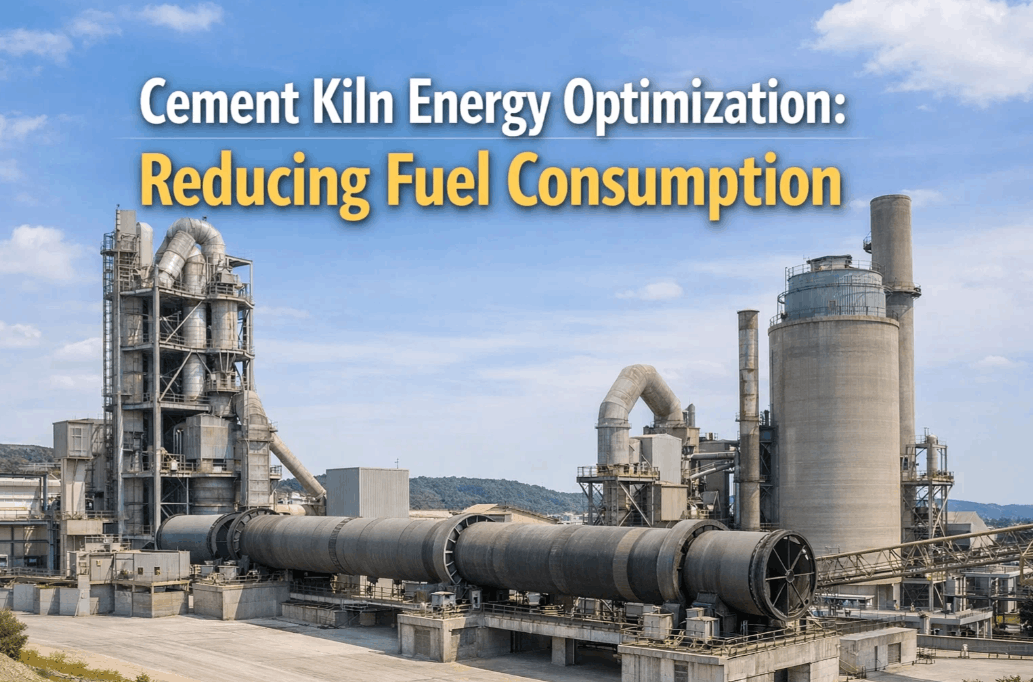
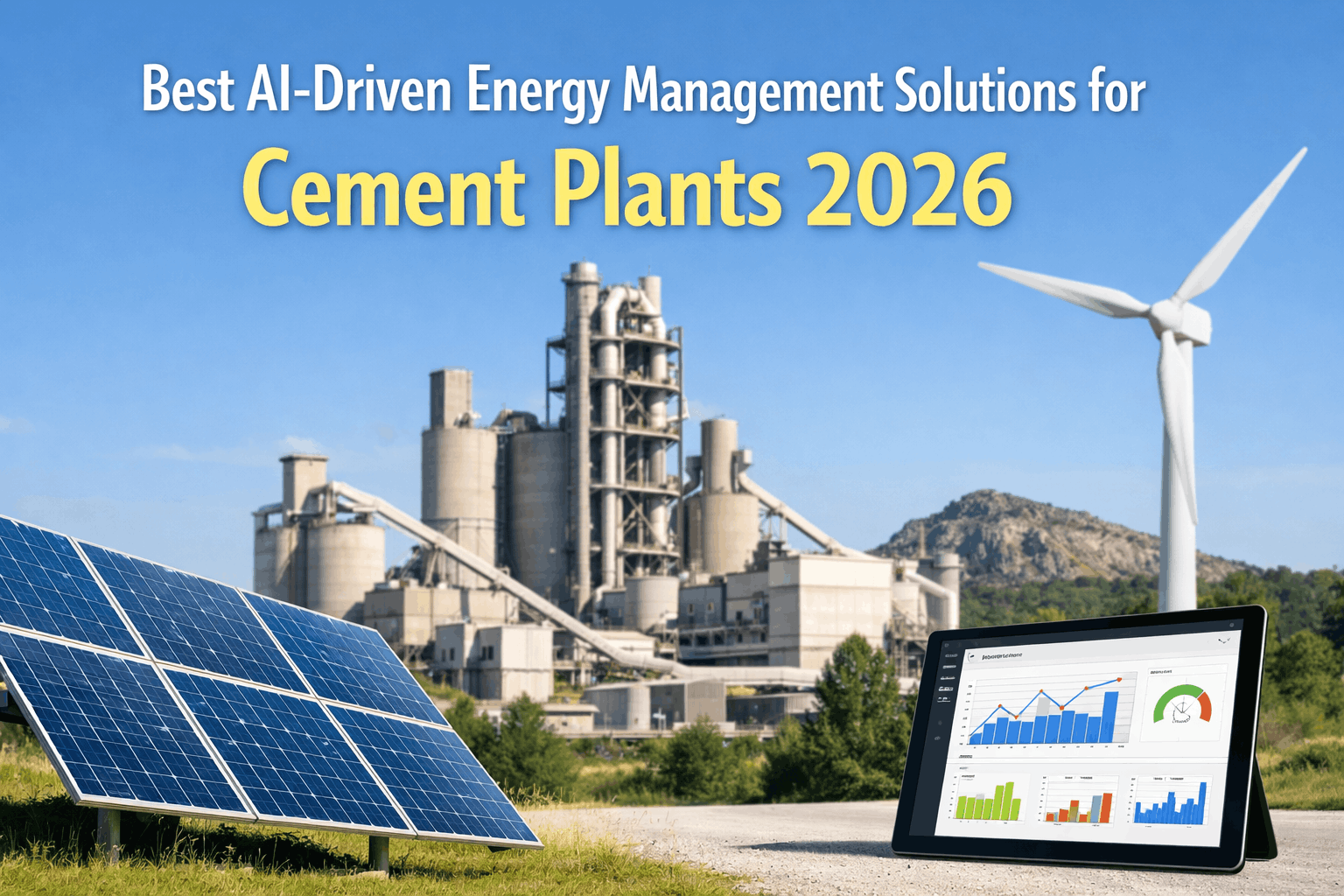
The cement industry stands at a defining crossroads. Responsible for roughly 5% of global CO₂ emissions, it faces mounting regulatory pressure, volatile fossil fuel costs, and rising sustainability mandates — all at once. In 2026, the question for plant operators is no longer whether to transition to alternative fuels like RDF, biomass, and industrial waste, but how fast and how intelligently. That intelligence is now being delivered by AI — and iFactory is leading that shift inside cement plants around the world.
AI-Powered Alternative Fuel Management
in Cement Manufacturing
From RDF variability to real-time emissions compliance — AI turns alternative fuel chaos into operational precision.
Book a Free DemoWhy Alternative Fuels Are Now Non-Negotiable
Traditional kiln fuels — coal, petcoke, heavy fuel oil — are losing ground rapidly. Government emissions targets, carbon taxes, and ESG investor scrutiny are creating a strong push toward alternative fuel and raw materials (AFR). Meanwhile, waste-derived fuels like Refuse-Derived Fuel (RDF) are not just greener — they're increasingly cheaper than conventional options.
Leading manufacturers like CEMEX, LafargeHolcim, and HeidelbergMaterials have already crossed the 30%+ thermal substitution rate (TSR) threshold. For plants still hovering below 15%, the gap is not just environmental — it's competitive. If you're working through the transition and need guidance, get support from the iFactory team.
Non-recyclable MSW processed into combustible form. High calorific value, variable moisture.
Agricultural residues, wood chips, rice husks. Carbon-neutral combustion profile.
Tire-derived fuel (TDF), plastic-derived fuel (PDF), sewage sludge.
Textiles, mixed plastics processed and co-fired in rotary kilns.
Why Plants Struggle to Scale AFR Without AI
The biggest barrier to higher TSR isn't supply — it's variability management. Alternative fuels don't behave like coal. Their calorific value, moisture content, and chemical composition shift batch to batch. Without AI, operators are forced to run conservative fuel ratios to avoid kiln instability — sacrificing both savings and emissions performance.
RDF and biomass batches have inconsistent heating values and moisture — unpredictable without real-time analysis.
Sudden calorific drops or spikes disrupt temperature profiles, risking clinker quality and equipment.
Inconsistent combustion generates NOx, SO₂, and CO surges — triggering compliance alerts.
Without reliable control, operators cap AFR ratios well below economic and environmental optimums.
How iFactory AI Solves Alternative Fuel Management
iFactory's AI platform integrates with your MES, Energy Monitoring, and Quality Control systems to deliver closed-loop fuel optimization — continuously, in real time.
Real-Time Fuel Mix Monitoring
iFactory continuously analyzes AFR feed belts and calculates live calorific values based on composition, moisture, and historical combustion data. The system predicts how each fuel batch will perform before it enters the kiln — eliminating guesswork from your control room operators.
Automated alerts flag oversized particles, foreign objects, or sudden moisture surges before they cause belt blockages or combustion disruptions.
Adaptive Combustion Control
When fuel characteristics shift — say, from high-calorific RDF to moist biomass — AI automatically fine-tunes primary and secondary airflows, burner angles, and fuel injection rates to maintain optimal kiln conditions without operator intervention.
Quality Parameter Control
Every fuel mix adjustment is cross-referenced against clinker quality targets. iFactory ensures TSR increases never come at the cost of product integrity — protecting your C3S, C2S, and free lime parameters in real time.
Emissions Impact Tracking & Sustainability Reporting
Every fuel substitution decision is logged with its corresponding CO₂, NOx, and SO₂ impact. iFactory generates automated sustainability reports aligned with CBAM, GHG Protocol, and internal ESG dashboards — turning operational data into boardroom-ready decarbonization proof. Get support setting up your emissions tracking workflow.
What AI-Managed AFR Delivers
The iFactory AI Fuel Management Workflow
iFactory connects to belt sensors, moisture analyzers, calorimeters, and your DCS/SCADA layer to ingest live fuel feed data continuously.
Machine learning models calculate real-time calorific values and predict combustion behavior for the current fuel blend — before it hits the kiln.
The AI recommends or automatically adjusts AFR proportions, airflow, and burner settings to maintain temperature stability and clinker quality.
Every operational decision is tagged with its CO₂, NOx, and energy impact — automatically populating your sustainability and compliance reports.
The AI model learns from each shift, each batch, and each anomaly — getting progressively smarter at your specific plant conditions over time.
The 2026 Regulatory Landscape Demands Action Now
The EU Carbon Border Adjustment Mechanism (CBAM) is now live, imposing carbon costs on cement imports. Domestic producers face tightening EU ETS quotas, and EPA's Smart Sectors initiative in the US is actively expanding biomass fuel regulatory pathways for cement plants.
CEMEX has publicly committed to 32% alternative fuel substitution globally. LafargeHolcim targets net-zero operations by 2050, with AFR as a cornerstone strategy. Plants still relying on manual fuel management in 2026 are not just falling behind — they're accruing real financial liability from carbon pricing mechanisms.
AI-powered fuel management isn't a future investment — it's the operational baseline for competitive cement manufacturing today. Get support from the iFactory team to start your assessment.
Regulatory Milestones: 2024–2026
EPA releases Biomass Fuel Classification Fact Sheet. CBAM transitional phase begins for cement.
EPA Smart Sectors forum expands biomass co-processing pathways. EU ETS tightens cement quotas further.
CBAM full enforcement. RDF co-firing standards tighten globally. AI-driven AFR management becomes operational necessity.
Ready to Maximize Your Thermal Substitution Rate?
iFactory AI integrates directly with your existing MES, DCS, and quality control infrastructure. No rip-and-replace. Just smarter fuel decisions — starting from day one.
Schedule a Demo with iFactory