-analytics-roller,-table-hydraulic-tracking.png)
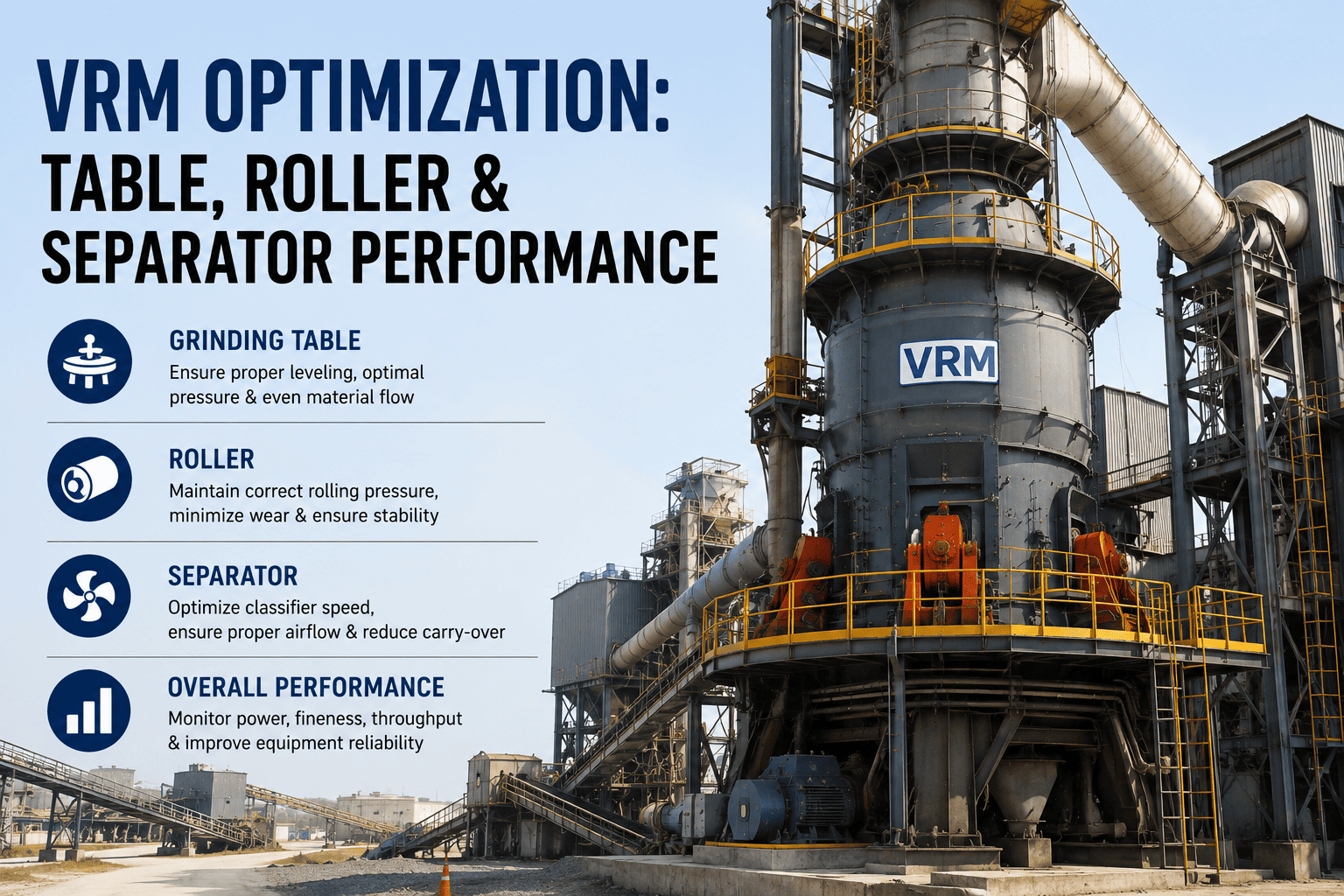
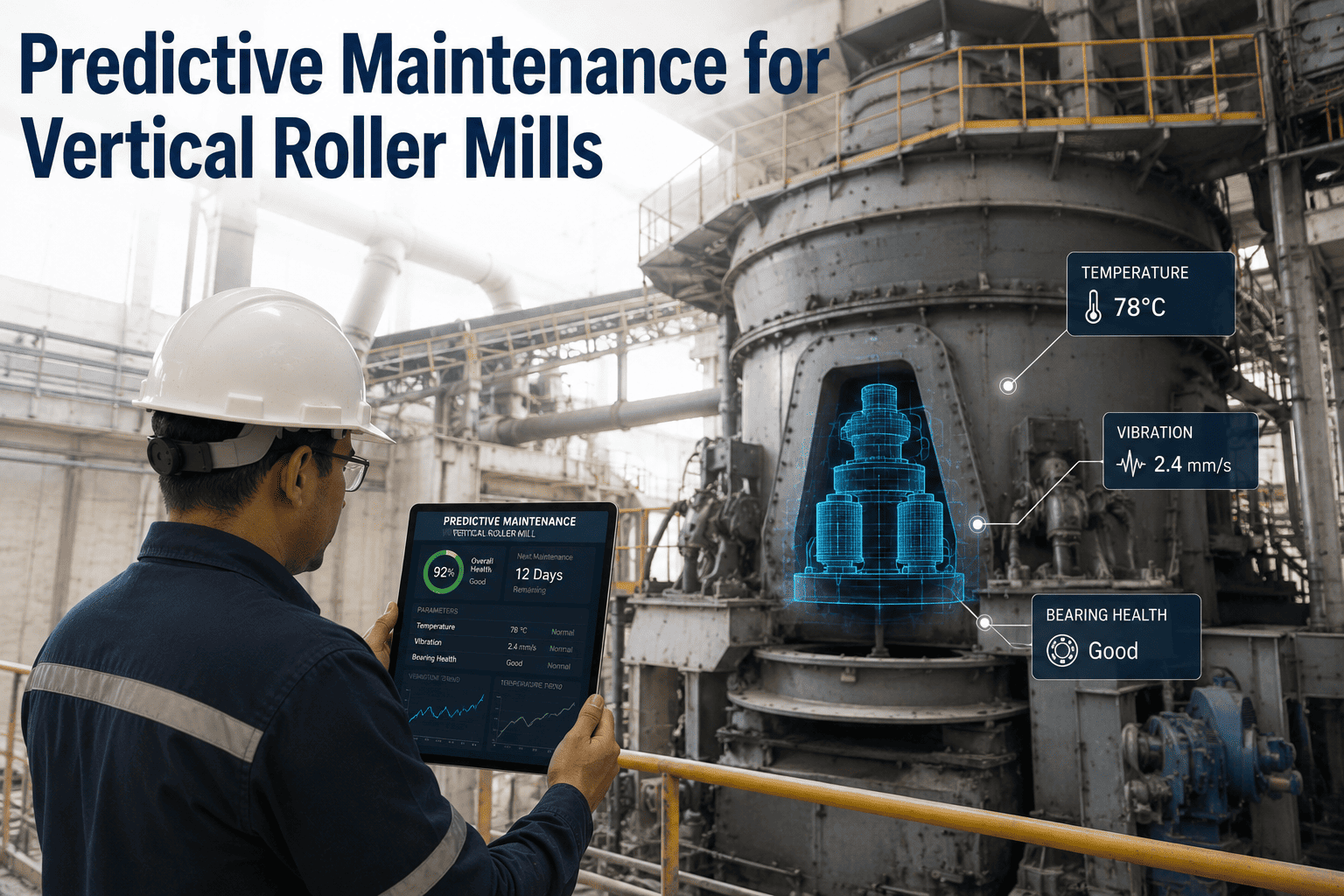
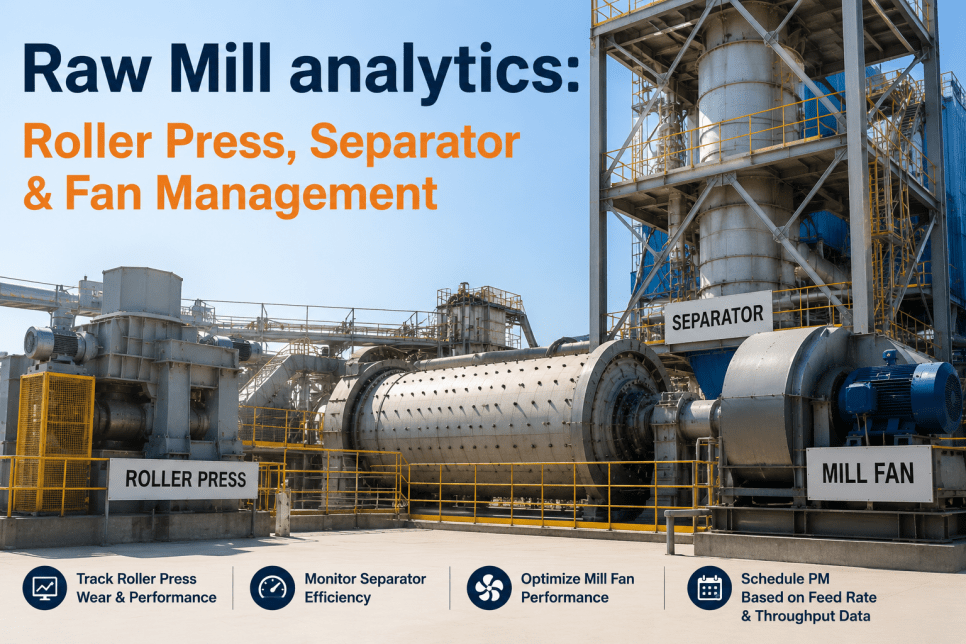
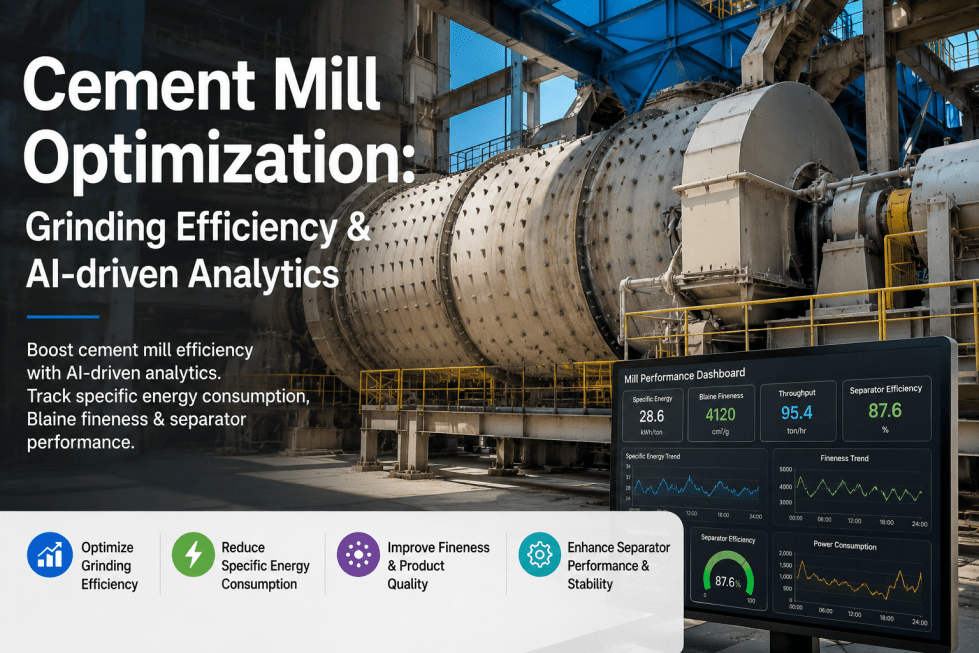
Vertical Roller Mills (VRM) are the energy-intensive hub of a modern cement plant — often accounting for 70% of a facility's total grinding power consumption. A single roller bearing failure or a hydraulic accumulator rupture doesn't just halt production; it triggers a cascade of mechanical shocks through the gearbox that can lead to weeks of unplanned downtime. Machine learning algorithms trained specifically on VRM internal dynamics detect harmonic shifts and hydraulic pressure transients with 99.6% accuracy, weeks before failures become visible. iFactory’s VRM analytics platform monitors roller wear, grinding table condition, and hydraulic system health in real-time, delivering a 30-day lead time for mission-critical parts procurement. Within 16 months, our AI-driven deployment at a 1.2 MTPA complex recovered $7.2M in avoided maintenance costs and production losses. Book a free VRM reliability assessment.
Vertical Roller Mill analytics Yields $7.2M Annual Savings
Predictive roller wear tracking, hydraulic pressure transient analysis, and grinding table vibration profiling — achieving 99.6% detection accuracy for internal mill faults.
Why VRM Maintenance Demands Specialized AI
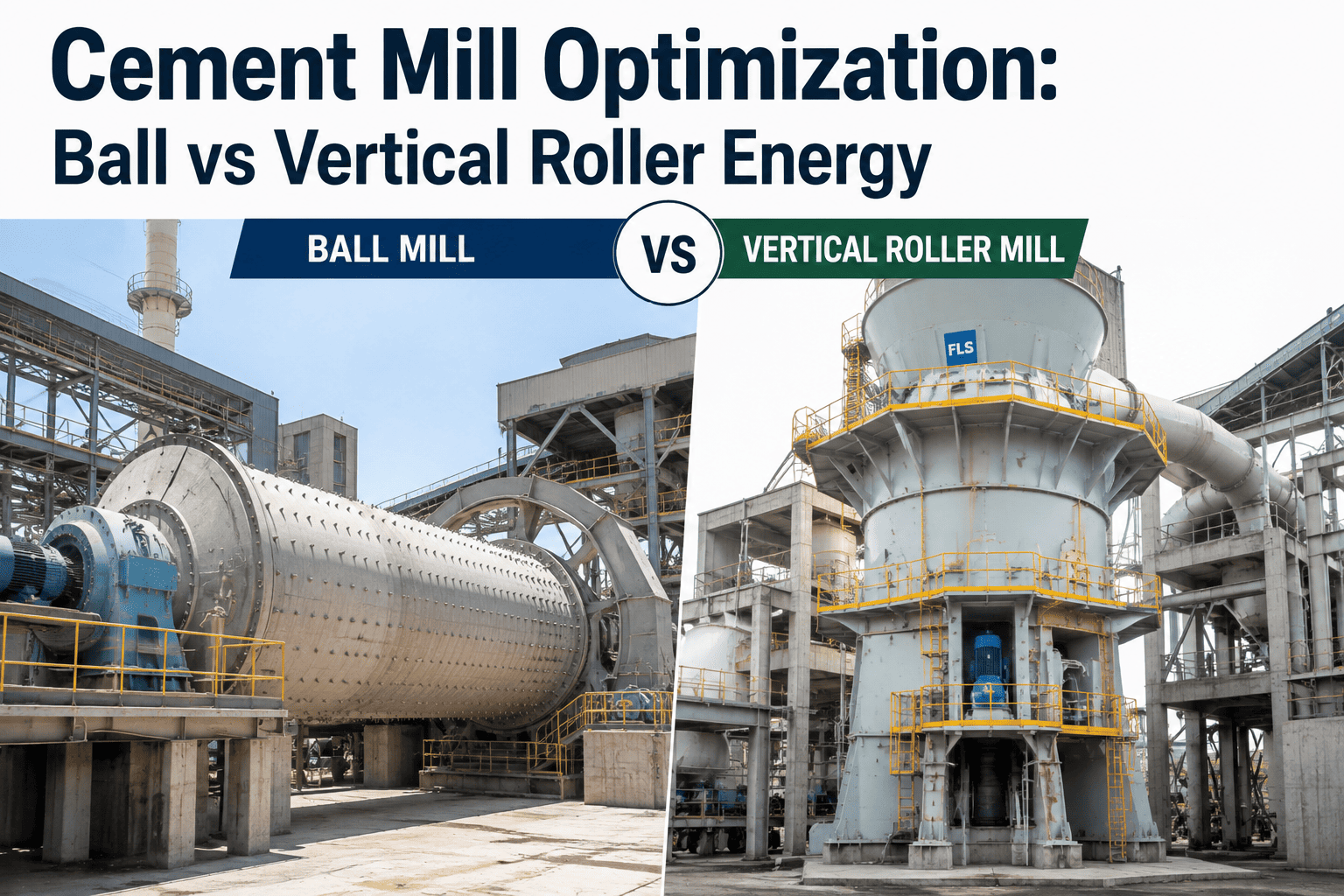
Unlike the robust simplicity of a Ball Mill, a Vertical Roller Mill is a complex integration of high-pressure hydraulics, low-speed rotating rollers, and aerodynamic classifiers. Traditional vibration monitoring fails because the high-frequency "chatter" of the grinding process masks the low-frequency bearing fault signatures. Request a comparison for your mill type.
VRM Fault Atlas — 18 Failure Modes Tracked by AI
iFactory's VRM specific model is trained on data from all major mill OEMs (Loesche, FLSmidth, Gebr. Pfeiffer), covering every critical sub-system with automated root cause correlation.
Multi-Sensor Fusion Architecture for VRM analytics
VRM inspection requires more than just cameras; it needs the fusion of mechanical vibration, high-speed pressure transients, and acoustic harmonics to isolate component faults from the heavy background noise of grinding.
Wireless Roller analytics
High-G wireless vibration and temperature sensors mounted on roller carrier housings. Integrated ceramic thermal shielding for high-heat raw mill air streams. 10kHz sampling for early-stage bearing fatigue detection.
Hydraulic Transient Probes
High-speed response pressure transducers (ms latency) record the Arm-system's reaction to mill "thumps." AI identifies bladder nitrogen loss or check-valve hammer weeks before hydraulic shutdown.
Acoustic Table Monitoring
Ultra-directional acoustic sensors focused on the roller-table gap. AI separates the "crunch" of raw material from the "clink" of metal-on-metal contact, identifying minimum bed depth violations.
Liner Wear AI Visualization
Digital Twin mapping of grinding table segments. By correlating power draw and feed chemistry with bed depth, iFactory predicts the exact remaining life (mm) of every liner segment.
Verified Outcomes — 14 Months Post iFactory VRM Deployment
Summary of metrics from a 3-mill VRM circuit. The deployment focused on reducing the #1 downtime cause: hydraulic system failure and unexpected roller bearing burnout.
What the Maintenance Head Said
In our Vertical Roller Mill, the background vibration from grinding clinker is so loud it acts like white noise. Traditional sensors kept giving us false alarms, so the crew started ignoring them. iFactory’s AI focused on the hydraulic pressure transients and low-frequency bearing harmonics. It caught a Nitrogen bladder burst in the #1 Accumulator at 2am. If we hadn’t seen it, the resulting hydraulic arm resonance would have cracked the table segments within 48 hours. The system paid for itself in that one night.
Vertical Roller Mill (VRM) FAQ
How does the system differentiate between normal 'vibration' and a bearing fault?
This is where 'Multi-Sensor Fusion' is critical. iFactory correlates mill vibration with hydraulic pressure transients and motor current. A bearing fault has a mathematically precise frequency signature (BPFO/BPFI) that persists regardless of material bed depth, whereas grinding vibration varies directly with feed rate and hardness. The AI isolates these constant-frequency 'pings' with 99.6% accuracy.
Can we monitor roller wear without stopping the mill?
Yes. By using ultra-directional acoustic sensors and correlating bed depth variations with arm position sensors, iFactory calculates 'Wear-Velocity'. This provides a millimeter-accurate projection of the table and roller liner thickness while the mill is in full production, allowing relining to be scheduled during planned outages only.
What the typical ROI period for VRM analytics?
For a 300 tph raw mill, the ROI is usually less than 6 months. This is achieved through the elimination of 'emergency relining' stops and the prevention of gearbox shock-damage caused by hydraulic accumulator failure. Most plants see a 4.8% reduction in specific energy consumption (kWh/t) within the first year.
Schedule a VRM Reliability Audit
Let our reliability engineers map your current VRM downtime root causes and show you the predictive look-ahead we can provide for your hydraulic and roller systems.