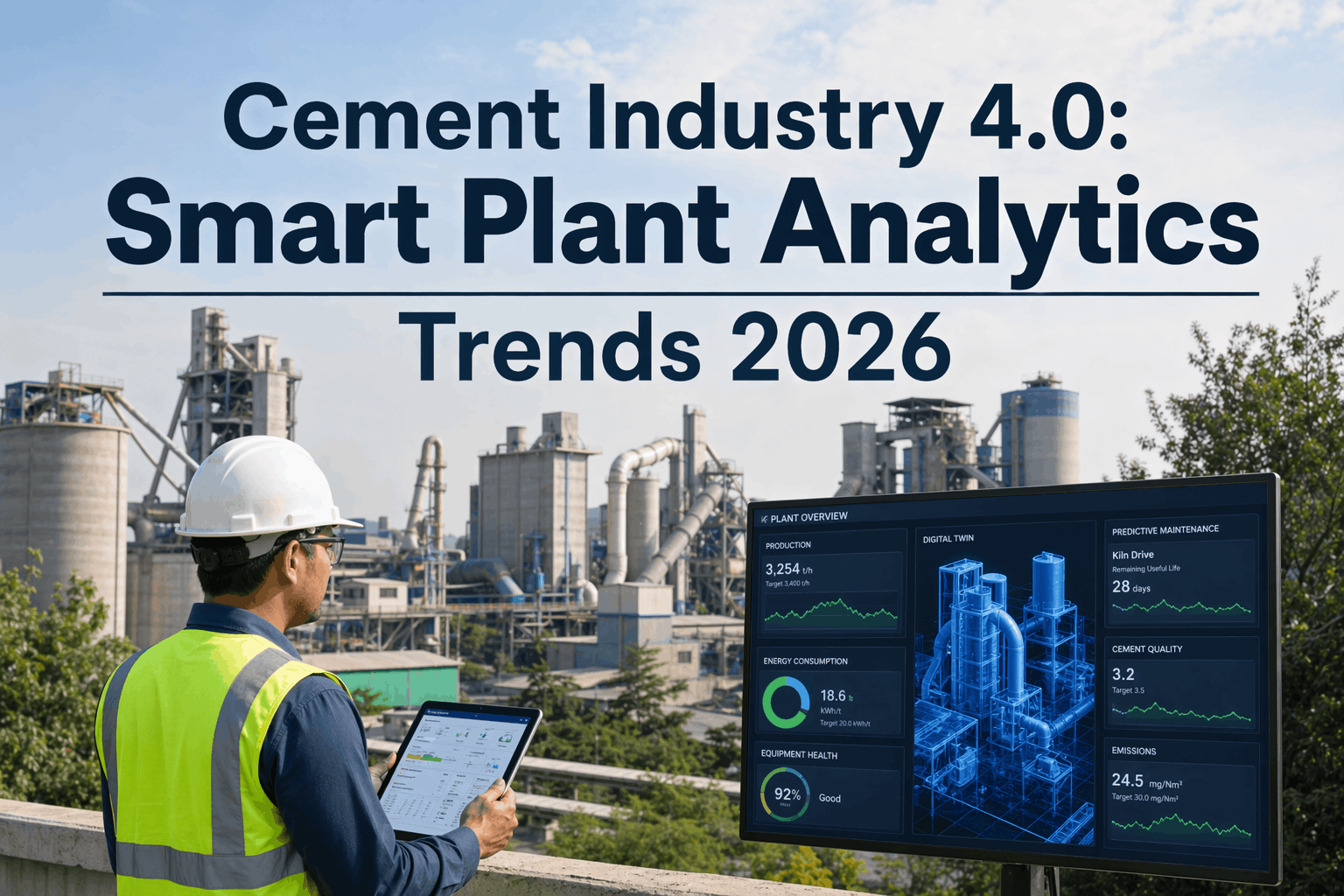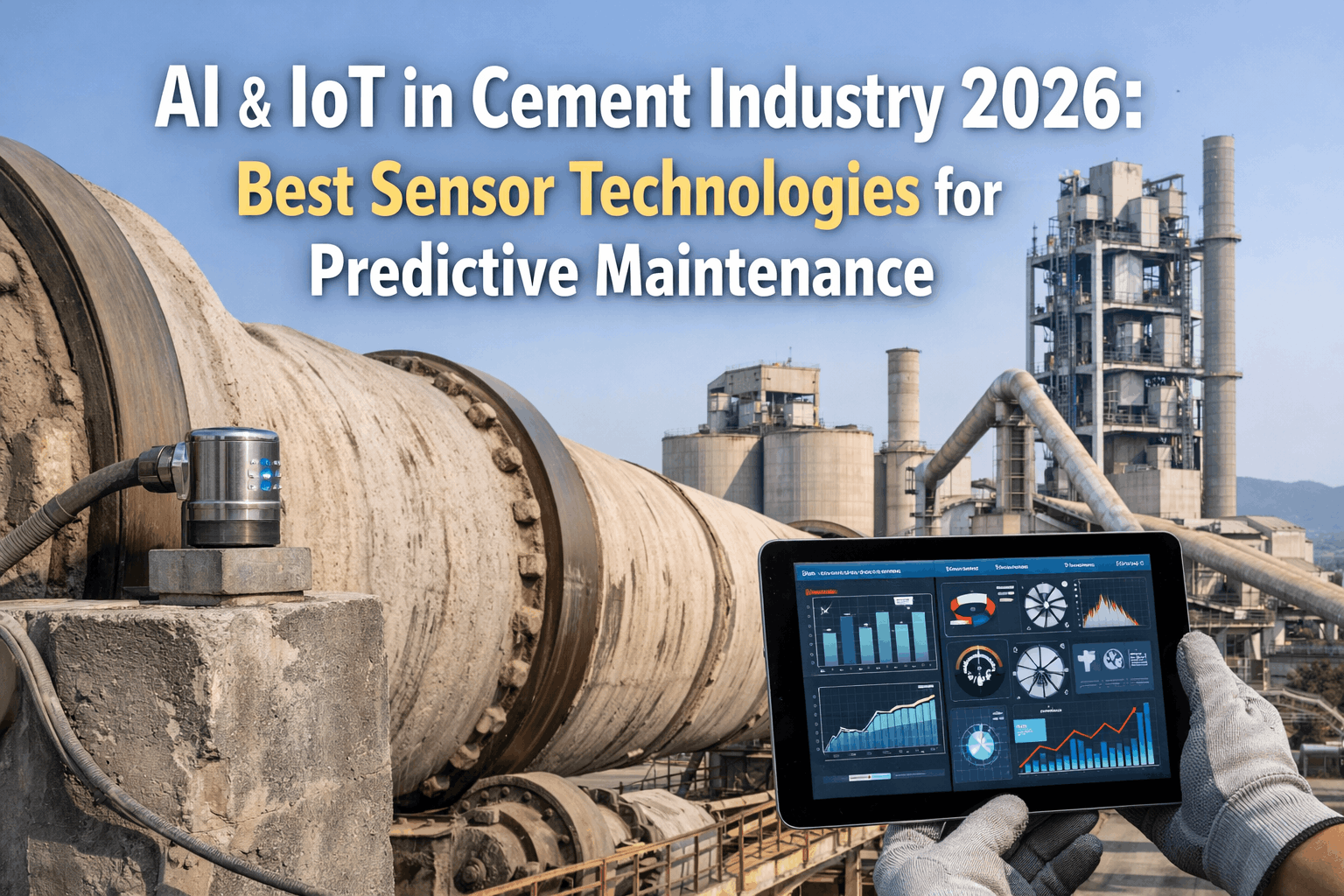
As the global cement sector pushes toward Net Zero by 2050, the 2026 Benchmark Report reveals a widening performance gap between facilities using legacy maintenance schedules and those utilizing high-density AI analytics. Drawing data from over 200 global plants, this report defines the new industry standards for Overall Equipment Effectiveness (OEE), Mean Time Between Failures (MTBF), and Specific Energy Consumption (SEC). For plant managers, benchmarking is no longer a luxury—it is the foundation for surviving competitive cost-pressures and regulatory carbon taxes. Book a demo to see how your plant scores against world-class averages.
Assess Your 2026 Benchmark Score
Our engineers can help you map your current KPIs against the Global Top 5% using our proprietary analytics toolkit.
The 2026 Cement Analytics Performance Matrix
To evaluate your facility effectively, you must compare your performance metrics against industry peer groups. The table below outlines the cement industry benchmarks across the three primary digital maturity tiers observed in 2026.
| Key Performance Indicator (KPI) | Legacy (Reactive) | Global Average | World-Class (Top 5%) |
|---|---|---|---|
| Kiln MTBF (Days) | < 45 Days | 65 Days | 120+ Days |
| Specific Energy (kWh/ton) | > 120 kWh | 95 kWh | < 80 kWh |
| Unplanned Downtime (%) | > 12% | 7.5% | < 3% |
| Maintenance Cost / Ton | $5.20 | $3.80 | $2.45 |
| Refractory Consumption | High (Reactive) | Standard Cycle | Optimized Heatmaps |
Maintenance Spend Allocation: Reactive vs. Predictive
Where is your maintenance budget being consumed? World-class plants don't necessarily spend less on labor; they spend less on emergencies. This chart visualizes the shift in budget allocation when moving from reactive legacy systems to iFactory's predictive analytics suite.
Emergency Parts & Air-Freight
Planned Proactive Maintenance
Digital Maturity: The Journey to Cement 4.0
Reaching world-class benchmarks requires a structural shift in how data is processed. Most plants fail to scale because they treat AI as a standalone project rather than a cultural evolution. This cement analytics benchmark roadmap defines the four levels of digital evolution.
Reactive to Preventive
- Digitization of paper shift logs.
- Time-based maintenance schedules.
- Basic mobile connectivity on-site.
Predictive to Autonomous
- Condition-based monitoring for all 100+ assets.
- DCS data-correlation for root-cause AI.
- Auto-generation of prescriptive work orders.
Monitoring Frequency: Legacy vs. AI Standards
One of the most significant differences between average and world-class plants is the frequency of technical auditing. Digital systems like iFactory allow for high-frequency monitoring at zero additional labor cost, whereas legacy plants rely on manual inspection windows that leave assets vulnerable to failure between rounds.
| Monitoring Category | Legacy Plant Frequency | iFactory AI Standard | Predictive Impact |
|---|---|---|---|
| Vibration Analysis | Monthly (Contractor) | Continuous (24/7 Sensors) | Eliminates Bearing Failure Stoppages |
| Kiln Shell Thermal | Shiftly (Visual) | Real-time (Scanner Sync) | Prevents Refractory Red-Spots |
| Bag Filter DP | Daily Log Sheet | Minute-by-Minute Log | Identifies Leaking Bags Instantly |
| Lubrication Audit | Weekly Verification | Rule-Based Auto-Alerts | Prevents Planetary Gearbox Scoring |
Detailed KPI Breakdown: Reliability & Efficiency
Benchmarking your **kiln performance** or **vertical mill efficiency** requires a granular look at the mechanical stresses that drive your production ceiling. The following cards detail the best practices used by world-class producers to maintain their competitive edge. Book a demo to deep-dive into these KPIs.
Total Asset Health Scoring (TAHS)
Top-tier plants move beyond binary "Running/Stopped" metrics. TAHS aggregates vibration, temperature, and current draw into a weighted health score (0-100) for every critical gearbox and motor in the facility.
Dynamic Clinker-to-Energy Sync
World-class sites utilize AI to stabilize the Kiln burner flame and ID fan speeds in real-time. This prevents the "over-shooting" of temperatures that leads to excessive clinker cost benchmarks.
Stop Guessing. Start Benchmarking.
iFactory's benchmark analytics suite allows you to compare your plant's performance against global standards in real-time. Turn your data from a cost-center into a competitive advantage.
Frequently Asked Questions
What data sources are used for the 2026 Benchmark Report?
Our data is aggregated from 200+ integrated and grinding cement plants globally, utilizing anonymized telemetry from DCS systems, mobile inspection logs, and financial performance audits.
How much can AI really reduce maintenance cost per ton?
On average, plants moving from Level 2 (Preventive) to Level 4 (Predictive) see a 35% reduction in total maintenance spend per ton of clinker produced due to the elimination of emergency part procurement and shift-overtime.
How do high Alternative Fuel (AF) rates impact these benchmarks?
High AF rates (swiping out coal for tire-derived or municipal waste) increase thermal volatility. Predictive AI is essential here; sites with 80%+ AF substitution see a **15% higher OEE** when using AI-driven burner-stability logic compared to manual control.
What is the typical payback period for moving up one digital maturity level?
Most integrated facilities report a **payback period of 6-9 months** when moving from reactive to predictive monitoring, primarily driven by the prevention of a single unplanned kiln "stop/start" cycle.
How do you normalize data across different PLC/DCS brands?
iFactory uses a universal industrial mapping layer that normalizes raw tags from Siemens, ABB, and Rockwell into a standard "Cement KPI" schema, ensuring benchmarks are valid regardless of your plant's vintage or hardware choice.
Can AI benchmarks help identify quality deviations (Clinker Chemistry)?
Yes. By correlating burner temperatures with kiln motor torque and feed chemistry, AI can predict clinker free-lime levels with 92% accuracy before lab samples are even taken, reducing off-spec production significantly.