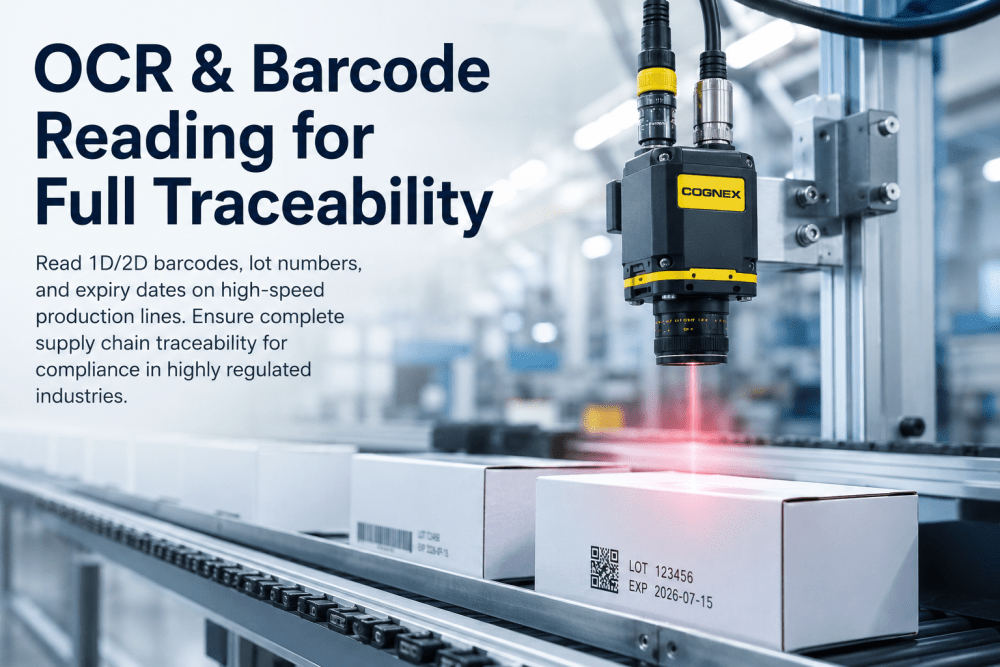
Across U.S. pharmaceutical, food and beverage, automotive, and electronics manufacturing, regulatory traceability is no longer a best practice — it is a compliance requirement with direct production and legal consequences when it fails. The FDA's Drug Supply Chain Security Act requires serialized unit-level traceability for every prescription drug package. FSMA traceability rules require lot-level tracking for high-risk food categories. Automotive OEM supplier quality standards mandate part-level barcode verification at every production handoff. And the electronics industry's counterfeit part risk has elevated component-level traceability from a quality program to a supply chain security obligation. In all of these contexts, human visual inspection and manual scanning are insufficient — not because workers are careless, but because high-speed production lines move too fast for manual scan rates, fatigue degrades accuracy across a shift and the manual scan record is disconnected from the production data that gives traceability its value. iFactory's machine vision OCR and barcode reading platform addresses this at the architecture level: high-speed AI vision that reads 1D and 2D barcodes, lot numbers, expiry dates, and serialized characters directly on the production line at rated line speed — with every read linked to the production order, the timestamp, and the upstream process data that constitutes a complete traceability record. Facilities running iFactory's OCR and barcode traceability platform report 99.8% first-pass read rates at line speeds up to 600 units per minute, 100% traceability coverage replacing sampled manual verification, and average annual compliance cost savings of $340,000 per production line from eliminated manual inspection labor, rework from undetected mislabeling, and regulatory documentation preparation.
Machine Vision OCR and Barcode Reading for Full Production Traceability
A complete deployment guide for U.S. production and quality managers implementing high-speed AI vision reading across barcodes, OCR text, lot numbers, and expiry dates — with automated traceability record generation for FDA, FSMA, and OEM compliance requirements.
Six Production Scenarios Where Manual Verification Fails and AI Vision Succeeds
Each scenario below represents a documented compliance failure mode that manual scanning and visual inspection cannot reliably prevent at production speed. Book a Demo to see iFactory reading your label and barcode types at your line speed.
High-Speed Line Barcode Gaps
A packaging line running 400 units per minute requires a scan every 150 milliseconds. Manual gun scanning achieves 20 to 40 scans per minute. At line speed, any scan gap means unverified units proceed without a traceability record — creating compliance exposure on every unit between confirmed reads. AI vision reads every unit continuously at line speed with no gap.
Wrong Lot Number on Outbound Shipment
A wrong-lot mislabeling event that passes end-of-line inspection initiates a recall that costs an average $10 million for a Class II FDA recall and multiples of that for a Class I event. AI OCR verification of printed lot numbers against the active production order at the label application station catches the mislabeling at the $22 correction cost rather than the recall cost.
Expired Product in Distribution Channel
Expiry date verification by manual visual inspection misses transposed digits, partial print failures, and label curl that obscures date fields. AI machine vision reads the expiry date from every unit using character segmentation that detects partial print and validates the date against the configurable minimum remaining shelf life threshold — flagging short-dated or expired units before they enter distribution.
2D Code Print Defect — Unreadable at Point of Sale
A 2D DataMatrix or QR code with a spot defect, smear, or insufficient contrast prints on 0.2 to 0.8% of units on typical inkjet or laser coding systems. Without 100% in-line read verification, these defective codes reach the distribution channel where they cannot be scanned for serialization verification — generating returns and compliance gaps in serialized track-and-trace systems.
Counterfeit or Wrong Component at Assembly
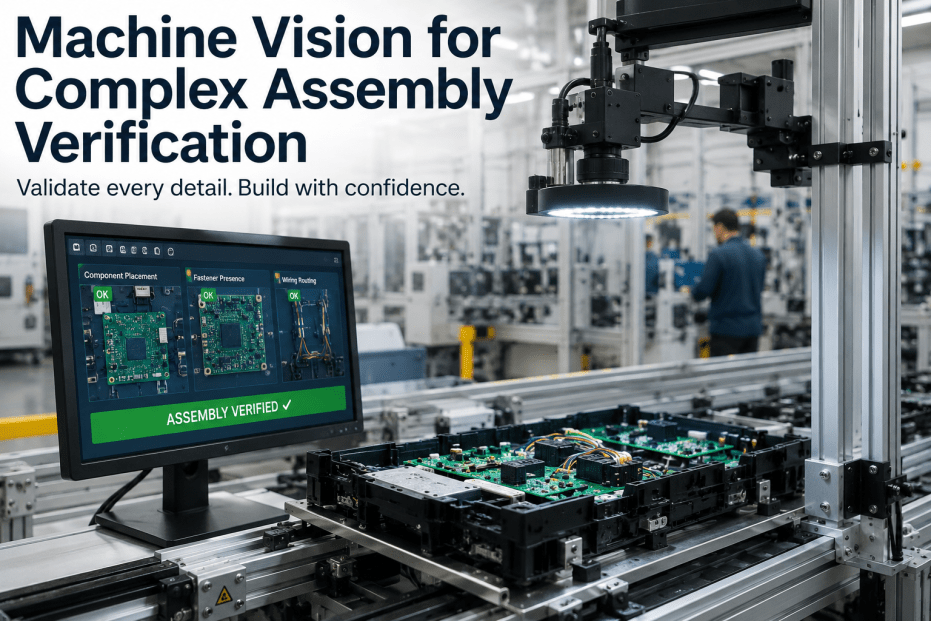
In electronics and automotive assembly, a component barcode that reads as a different part number than specified — a counterfeit part, a wrong-revision component, or a substitution made without ECO authorization — creates a product liability and quality risk that only 100% in-line barcode verification at component placement can prevent. Sampled verification catches the statistically expected occurrence, not the specific defective unit.
Regulatory Audit Documentation Gap
An FDA 483 observation or a customer audit finding that production records do not demonstrate 100% traceability coverage — because the traceability system relies on sampled manual scanning with gaps between reads — can result in production hold, market withdrawal, and consent decree obligations that far exceed the cost of implementing 100% AI vision coverage. iFactory's platform generates the complete per-unit electronic traceability record automatically.
How iFactory AI Vision Reads Every Code Type at Line Speed
Reading barcodes, 2D codes, OCR text, and expiry dates reliably at production line speed requires different imaging configurations, illumination approaches, and AI model architectures for each read type. iFactory's platform integrates all four reading capabilities into a single production line inspection station — one camera position, one edge processor, one traceability record per unit.
1D Linear Barcode Reading — Code 128, GS1-128, ITF-14, Code 39
1D barcode reading at production line speed requires illumination geometry calibrated to the substrate and print process — a label on a glass bottle has different specular reflection characteristics than a printed carton or a direct-to-product ink jet code. iFactory's 1D barcode module uses diffuse illumination with gradient correction, achieving consistent contrast on labels applied to curved, textured, and reflective surfaces. Read rates of 99.8% on well-printed codes are maintained on damaged codes with up to 20% bar element damage through AI-assisted reconstruction. Grade reporting (ISO/IEC 15416) is produced per unit for print quality monitoring and printer performance management.
2D Code Reading — DataMatrix, QR Code, PDF417, GS1 DataMatrix
2D code reading for pharmaceutical serialization (GS1 DataMatrix encoding GTIN, serial number, lot, and expiry) and electronics traceability (DataMatrix on PCBs, components, and assemblies) requires sufficient camera resolution to resolve the minimum module size at the maximum line speed. iFactory's 2D reading module selects camera resolution and shutter speed based on the minimum code size and maximum line speed specification — ensuring that the captured image resolves at least 5 pixels per module for reliable decode. For direct part marking (DPM) on metal surfaces — dot peen, laser engraving, and electrochemical etching — iFactory uses low-angle lighting configurations that provide maximum contrast on embossed and engraved surfaces that standard overhead illumination cannot resolve.
OCR Character Reading — Lot Numbers, Serial Numbers, Product Codes
OCR reading of printed lot numbers, serial numbers, and product codes requires character segmentation models trained specifically on the font families and print processes used in industrial coding — inkjet, thermal transfer, laser, and label printing — not on the document fonts that commercial OCR software is optimized for. iFactory's industrial OCR module is trained on the specific character sets produced by each coder type and performs character-level confidence scoring, flagging characters where the model confidence falls below the configured threshold for human review rather than generating a confident misread that becomes a traceability record error. Content verification against the active production order checks that the read lot number matches the expected lot for the current production run — catching wrong-lot mislabeling events at the print-and-apply station.
Expiry Date and Best Before Verification
Expiry date reading requires OCR character segmentation followed by date format interpretation — the AI must not only read the characters but interpret them as a date in the configured format (MMYYYY, DDMMYYYY, YYMM, Julian date) and validate that the interpreted date falls within the configured minimum remaining shelf life threshold. iFactory's expiry verification module handles date format configuration per product family and issues alerts for dates that are expired, less than the configured minimum remaining shelf life, or that cannot be parsed as a valid date in the expected format — catching transposed digit errors and partial print failures that produce a date field that reads as an invalid date rather than a wrong date. Date verification results are logged per unit for shelf life documentation and distribution allocation decisions.
The Traceability Record Chain: From Code Read to Compliance Documentation in Under 200 ms
The compliance value of machine vision traceability is not in the read itself — it is in the verified, linked, and archived record that proves the read happened, what it found, and which production conditions were present at that moment. iFactory's traceability chain completes the full read-to-record workflow in under 200 milliseconds per unit, edge-processed with no cloud latency.
Continuous Triggered Image Capture at Line Speed
A photoelectric trigger sensor detects each unit passing the inspection station and fires a strobe-synchronized image capture within 1 to 3 ms of trigger. The strobe duration — typically 50 to 200 microseconds — freezes motion completely at line speeds up to 600 units per minute on a standard 500 mm conveyor pitch. Camera resolution and field of view are sized to the smallest code on the largest label for the product family — ensuring that every code type is resolvable in a single captured image without mechanical reorientation of the unit.
Multi-Code Simultaneous Read — All Symbols in One Frame
iFactory's reading engine processes all code types present in the captured image simultaneously — 1D barcodes, 2D codes, and OCR text fields are all decoded in a single inference pass. For labels containing multiple codes (a serialized pharmaceutical label with a GS1 DataMatrix plus a human-readable lot number plus an expiry date), the engine returns all three reads in a single result package with per-element confidence scores. Total processing time from image capture to read result: 40 to 120 ms depending on the number of code types and the OCR character count.
Content Verification Against Active Production Order
Read values are immediately cross-referenced against the active production order data from the MES — confirming that the lot number matches the active lot, the product code matches the scheduled product, and the expiry date falls within the configured acceptable range for the current production run. This content verification step is what distinguishes traceability verification from barcode presence confirmation — the system is confirming that the right information is printed, not just that a scannable code is present.
Pass / Reject Signal and Line Divert Control
Units that pass content verification receive a pass signal to the line control PLC within the 200 ms window. Units that fail — unreadable code, content mismatch, expiry date out of range, or below-grade print quality — receive a reject signal that activates the configured divert mechanism: air blast ejector, belt diverter, or stop-and-alert for manual intervention. Reject signals include the specific failure category code that allows the line operator to distinguish a print quality rejection from a content mismatch rejection and respond appropriately without stopping the line for all rejection types.
Automated Traceability Record Generation and MES Linkage
Every verified unit generates a traceability record containing: the decoded values from all code types, the content verification result, the image capture timestamp, the production order and line ID, the print quality grade per symbol, and a reference image thumbnail for visual confirmation. Records are written to the iFactory traceability database and transmitted to the MES via REST API, creating the unit-level electronic batch record entry that satisfies FDA 21 CFR Part 11, DSCSA, and FSMA recordkeeping requirements without manual transcription. Batch traceability reports covering an entire production run are generated automatically at batch closure.
See iFactory Reading Your Label and Barcode Types at Your Line Speed
iFactory's vision engineering team demonstrates the complete read-and-verify workflow using your product's label specification — showing read rates, content verification, and the automated traceability record output before any hardware commitment is made.
From serialized pharmaceutical DataMatrix to food date code OCR and automotive component barcode verification, iFactory covers every read type in a single managed platform — 99.8% first-pass read rate, under 200 ms traceability record generation, full FDA 21 CFR Part 11 documentation. Book a label-specific demo now.
AI Vision Traceability vs. Manual Scanning: Capability and Compliance Comparison
Manual barcode scanning and visual inspection cannot meet the coverage, speed, or documentation requirements of modern regulatory traceability standards. The comparison below maps exactly where the gap between manual and AI vision traceability lies — and which compliance requirements each approach can and cannot satisfy.
Measured Traceability and Compliance Outcomes
Verified performance outcomes from iFactory OCR and barcode traceability deployments at U.S. pharmaceutical, food, and industrial manufacturing facilities within the first 12 months of full production deployment.
Ready to model these outcomes against your facility's current traceability coverage and compliance documentation cost? Book a 30-minute traceability ROI assessment with iFactory's vision engineering team.
Expert Review: What Compliance and Quality Leaders Say About AI Vision Traceability
Quality directors and compliance professionals with direct experience implementing machine vision traceability in regulated U.S. manufacturing environments share their perspective on what makes AI vision different from conventional scanning approaches.
The regulatory gap in most pharmaceutical packaging operations I audit is not that companies lack a traceability system — they all have one. The gap is that the traceability system covers 3 to 8% of units actually produced, because the rest are verified by a manual scan that the operator may or may not have performed correctly at line speed. When an FDA investigator asks "can you show me the traceability record for unit serial number X from this batch?", the honest answer at most facilities is "we have a sample record that tells us the batch was compliant, not a unit-level record for that specific unit." DSCSA requires a unit-level record. AI vision at 100% coverage is how you get from sample records to unit records without doubling your labor headcount.
The business case for machine vision traceability in food manufacturing changed completely when FSMA Section 204 traceability rule requirements were finalized. Before, you could argue that your lot-level paper records satisfied the spirit of the requirement. After, the rule requires lot-level electronic records with specific data elements that manual systems cannot generate consistently. What I tell every food manufacturer I work with is: the cost of implementing AI vision traceability is a fraction of the cost of a single FSMA enforcement action or a voluntary recall that required a manual records search to identify affected lots. The documentation the AI system generates automatically would take days to compile from manual records — and in a recall, days matter enormously.
Conclusion
Machine vision OCR and barcode traceability is the solution to a regulatory compliance requirement that manual inspection approaches structurally cannot meet: 100% unit-level traceability coverage at production line speed, with per-unit electronic records that satisfy FDA DSCSA, FSMA, and OEM supplier quality documentation requirements without manual transcription. The 99.8% first-pass read rate and 100% coverage at production line speeds are the performance outcomes that matter — but the compliance outcome that justifies the investment is the complete, defensible traceability record for every unit that leaves the production line.
iFactory's platform delivers that record automatically: every unit captured, every code read, every content verification performed, every result linked to the production order and archived with a timestamp and image reference. The $340,000 annual compliance savings per production line at comparable facilities is the aggregate of eliminated manual inspection labor, avoided recall cost from early mislabeling detection, and regulatory documentation preparation — all from replacing a gap-prone manual process with continuous AI vision coverage. Book a traceability assessment to see iFactory's platform reading your specific label and code types at your line speed.
OCR and Barcode Traceability: Frequently Asked Questions
Machine Vision OCR and Barcode Traceability — 100% Coverage, 99.8% Read Rate, Full Regulatory Documentation
iFactory's AI vision platform reads every 1D barcode, 2D code, lot number, and expiry date on your production line at rated speed — generating the per-unit electronic traceability record that FDA DSCSA, FSMA, and OEM supplier quality requirements demand.
99.8% First-Pass Read Rate · 100% Unit Coverage at Line Speed · Under 200 ms Read-to-Record · FDA 21 CFR Part 11 Compliant · DSCSA and FSMA Compatible