In cement manufacturing, an 18% improvement in production efficiency isn't a marginal gain — it's a transformation. It means more tonnes per hour from the same kiln, fewer stoppages interrupting your grinding circuits, and quality that holds consistent across every shift. When one mid-sized cement producer deployed iFactory's AI-powered Manufacturing Execution System, that's exactly what happened — and it happened within twelve months. This is the story of how visibility gaps become competitive advantages, and how an MES built for the realities of cement plants turns raw production data into measurable efficiency gains.
What "Visibility Gaps" Actually Cost a Cement Plant
Before iFactory, the plant operated the way most cement facilities do: shift logs on paper, production data locked inside individual machine PLCs, quality lab results arriving hours after the batch had already moved downstream. Supervisors managed by walking the floor. Decisions were made on intuition and experience — not data.
The gaps weren't obvious from the outside. Output looked acceptable. Maintenance happened on schedule. But under the surface, three chronic problems were quietly draining efficiency every single day. Get support from iFactory's team to identify the same patterns in your operations.
How iFactory Was Deployed Across the Plant
iFactory's MES connected to the plant's existing PLC and SCADA infrastructure without requiring a system replacement. The deployment followed a structured three-phase approach that kept production running throughout.
Data Integration
iFactory connected to kiln PLCs, mill drive systems, cooler controls, and quality lab instruments via OPC-UA and Modbus. All sensor streams centralized into a unified data layer. Historical production data ingested for AI model baseline training.
Dashboard Deployment
Real-time production dashboards rolled out to control room screens, supervisor tablets, and mobile devices. Shift handover reports automated. KPI targets set for throughput, energy consumption, and quality parameters per production line.
AI Activation
Quality prediction models activated. Automated scheduling logic configured with maintenance calendar, raw material supply chain, and production order inputs. Alert thresholds tuned to plant-specific operating parameters. Full MES live across all production lines.
The Four Systems That Drove the 18% Gain
The efficiency improvement didn't come from a single feature — it came from four interconnected capabilities working simultaneously across the production process.
Real-Time Production Dashboards
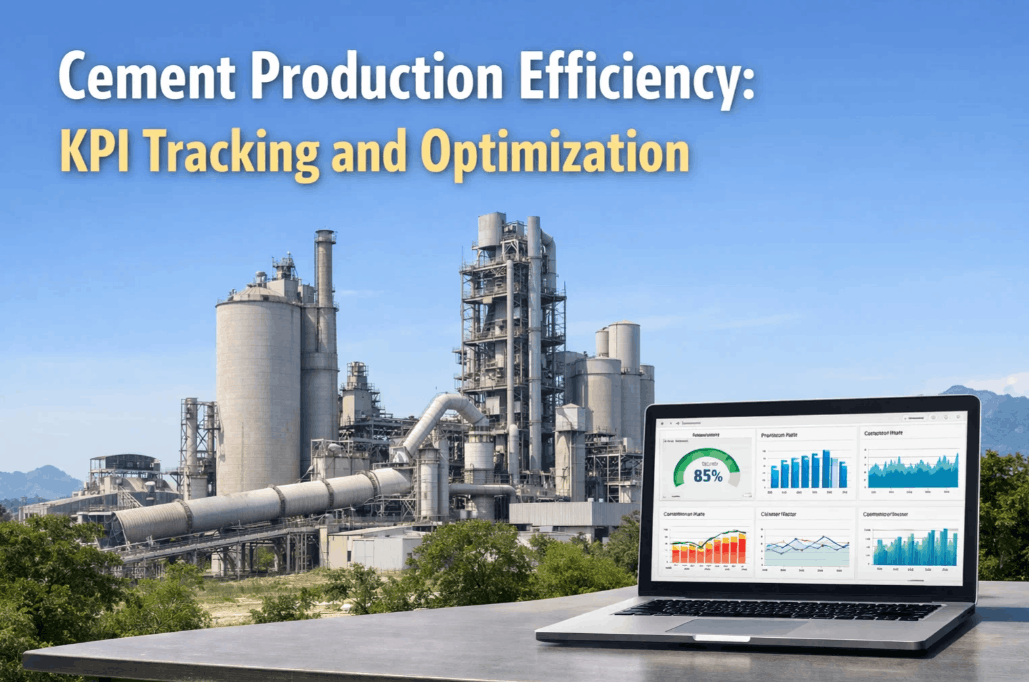
For the first time, every level of the plant — from control room operators to the plant manager — could see live production performance against targets. Kiln feed rate, mill throughput, cooler efficiency, and packing line output displayed on a single unified screen, updated every 30 seconds.
The impact of visibility alone was significant. When operators could see throughput dipping in real time, they could intervene within minutes rather than discovering the loss at shift end. Supervisors stopped making rounds and started managing by data — allocating attention to the machines that actually needed it. The plant estimated that real-time visibility alone accounted for roughly 5–6 percentage points of the total 18% efficiency gain.
AI Quality Monitoring
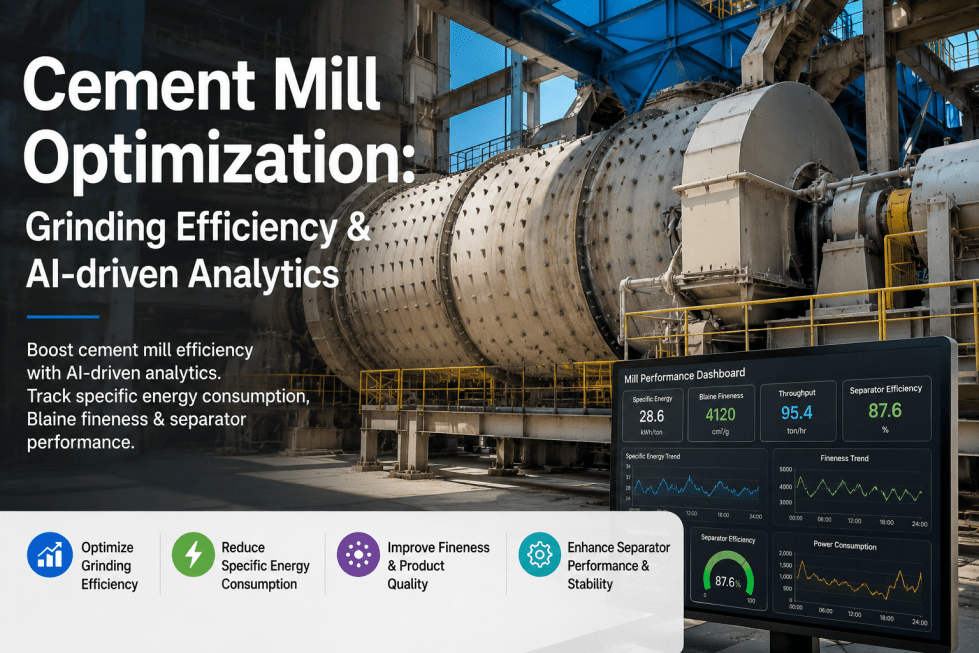
Machine learning models correlate hundreds of real-time process variables — raw mix chemistry, kiln temperatures, mill differential pressure, separator speed — to predict cement compressive strength and setting time before the batch exits the grinding circuit. Quality deviations are flagged and corrected while production is still in progress, not after the fact.
Automated Production Scheduling
iFactory's scheduling engine integrates maintenance windows, raw material inventory levels, energy tariff periods, and customer order priorities into a single optimized production plan. Conflicts that previously caused unplanned stops are resolved automatically — days in advance rather than hours into the problem.
Cross-Shift Continuity
Automated digital shift handover reports — pulled directly from production data — replaced paper logs and verbal briefings. Incoming supervisors arrive fully briefed on the previous shift's performance, open issues, and pending alerts. Knowledge no longer walks out the door at the end of every shift.
The Numbers After 12 Months
Every metric tracked from deployment day one. Results validated against 12 months of pre-deployment baseline data from the same plant. Get support to model your own plant's potential improvement.
How AI Quality Monitoring Works in a Cement Plant
Traditional cement quality control is a lagging indicator. The lab tests a sample, returns a result, and by the time a deviation is confirmed, hundreds of tonnes of material have already been produced under the same off-spec conditions. The correction happens after the damage is done.
iFactory's AI quality monitoring flips this model entirely. Machine learning algorithms run continuously on live process data — raw feed chemistry from XRF analyzers, kiln inlet and outlet temperatures, cyclone pressure drops, separator speeds, and mill differential pressure — correlating these variables in real time against predicted final product properties. When the model detects a combination of process conditions that historically produces below-spec cement, it flags the deviation and recommends a specific corrective action: adjust feed rate, modify kiln firing, change separator speed.
At the plant in this case study, the average time between quality deviation and corrective action dropped from 2.8 hours to 23 minutes. That single improvement accounted for the majority of the 31% reduction in quality defects. Get support to understand how AI quality models can be calibrated to your specific cement grades and product specifications.
Could Your Cement Plant Achieve Similar Results?
iFactory's team will walk you through a live platform demo and provide a production efficiency assessment tailored to your plant's current operations, equipment configuration, and quality challenges.
Book a Free DemoWhy Scheduling Is the Hidden Efficiency Driver
In cement plants, production scheduling seems straightforward until it isn't. A planned maintenance window overlaps with a peak-demand customer order. A raw material delivery delays the start of a critical grinding run. An equipment alert fires at midnight and nobody can reach the parts supplier until morning. These collisions between maintenance, supply chain, and production are the source of a large fraction of unplanned downtime — and they're almost entirely preventable with the right system in place.
iFactory's automated scheduling engine holds a live, integrated view of four data streams simultaneously: the production order book with customer delivery commitments, the maintenance calendar with upcoming planned work, raw material inventory levels and incoming delivery schedules, and real-time equipment condition data from the predictive monitoring system. When a potential conflict forms — a maintenance task threatening to overlap with a high-priority production run — the scheduling engine surfaces the conflict days in advance and proposes alternative timing options ranked by production impact.
Where the 12-Month Payback Comes From
The ROI in this deployment came from four distinct value streams. Understanding each one helps plant managers model the expected return for their specific operation.
Your Plant's 18% Efficiency Gain Starts Here
iFactory AI MES is purpose-built for the operational complexity of cement manufacturing. Real-time dashboards, AI quality prediction, automated scheduling, and predictive maintenance — all in one connected platform. Book a demo and see exactly how it applies to your plant.
Book a Demo with Our Team