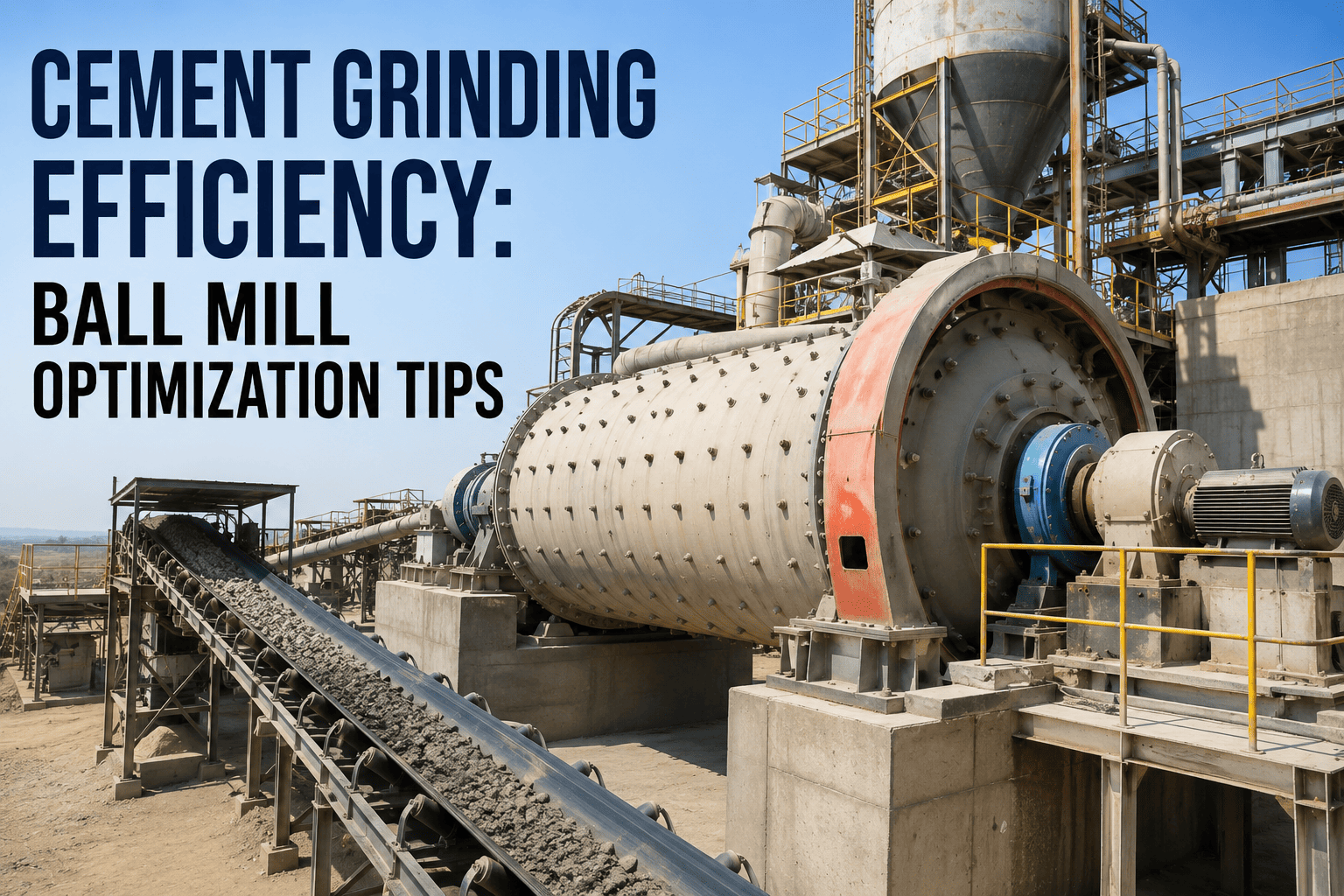
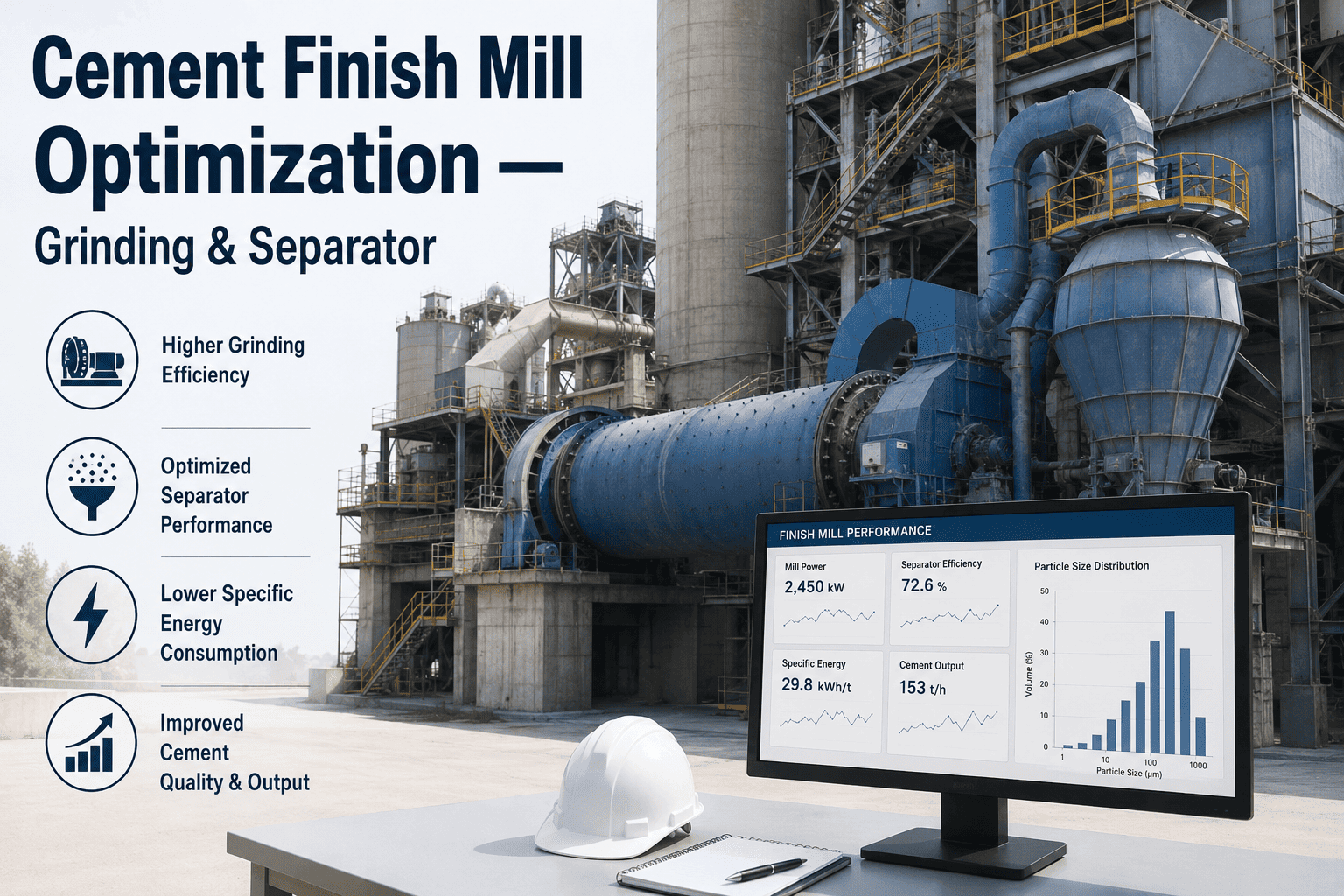
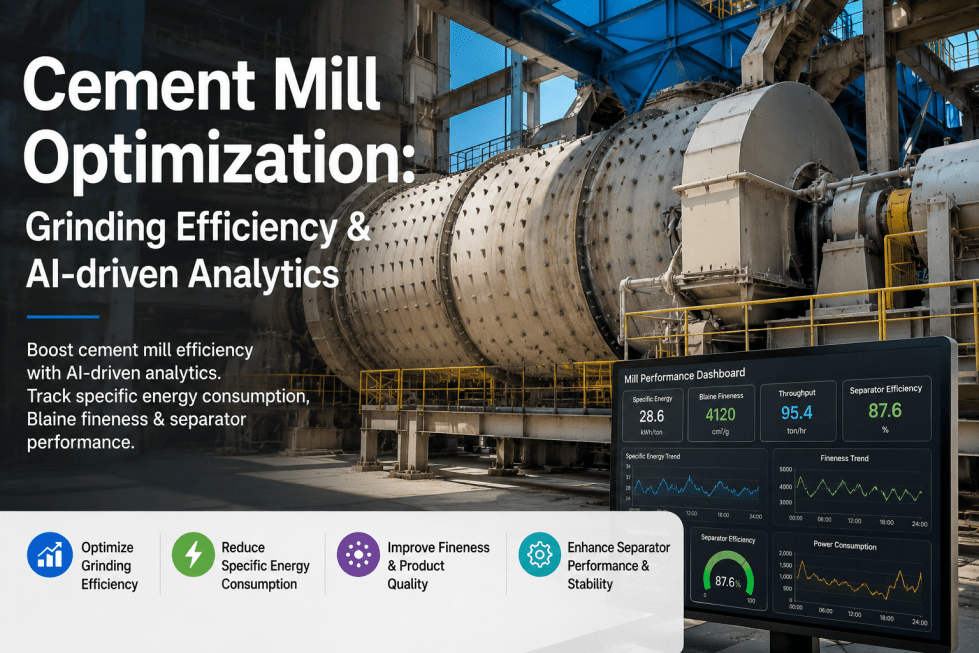
Cement grinding is the single most energy-intensive operation in the entire production chain — consuming between 60 and 70% of a plant's total electrical demand. Yet the brutal reality buried in peer-reviewed research is that only 1 to 5% of that energy actually performs particle size reduction. The rest becomes waste heat and vibration. For a typical 2,000 TPD facility, this inefficiency translates to millions of dollars in avoidable electricity costs every single year. In 2026, AI-powered grinding optimization has moved from experimental to essential — and the plants adopting it are separating themselves from those still running on manual setpoints and quarterly audits.
Why Traditional Grinding Control Fails
In most cement plants, grinding circuits are still governed by fixed setpoints established during commissioning — feed rate, separator speed, grinding pressure — and adjusted manually by operators responding to product fineness readings taken every hour or two. This approach was sufficient when raw material chemistry was consistent, energy was cheap, and carbon wasn't priced. None of those conditions exist anymore.
The real challenge is that grinding is a deeply multi-variable, non-linear process. Feed rate affects mill load. Mill load changes power draw. Power draw shifts with media wear. Media wear accelerates with clinker hardness variation. Separator efficiency drops when temperature fluctuates. Every one of these variables is changing simultaneously, every minute of every shift — and traditional PID-based control loops optimize each variable in isolation, blind to the interactions between them. The result: persistent over-grinding, wasted electricity, and unnecessary equipment wear.
This is exactly the operational gap that iFactory's AI grinding optimization platform is designed to close. Sign up for iFactory to see how real-time AI closes the loop between sensor data and setpoint control in your grinding circuit.
How AI Grinding Optimization Actually Works
Modern AI optimization for cement grinding does not replace your DCS or SCADA infrastructure — it adds an intelligent prediction and recommendation layer on top of it, reading live sensor feeds and continuously recalculating optimal setpoints across the entire circuit. Here is how the four core components operate together.
Want to understand how iFactory's AI layer integrates with your specific DCS platform? Book a demo and our engineering team will walk through a compatibility review tailored to your grinding circuit configuration.
VRM vs Ball Mill: Where AI Makes the Biggest Difference
Vertical Roller Mills (VRMs) and Ball Mills respond differently to AI optimization because their energy profiles, variable sensitivity, and failure modes are fundamentally different. Understanding these differences is critical for prioritizing where to deploy AI tools and what performance gains to realistically expect.
| Parameter | Ball Mill | VRM | AI Optimization Impact |
|---|---|---|---|
| Baseline kWh/ton | 32–42 kWh/t | 19–26 kWh/t | AI reduces both by 10–20% |
| Most Critical AI Variable | Feed rate + media grading | Working pressure + gas flow | SHAP analysis identifies top drivers |
| Separator Optimization | External separator speed | Integrated classifier rotor | AI prevents over-classification |
| Energy Efficiency (physics) | First-law: ~80% | First-law: ~62% | AI narrows gap via setpoint precision |
| Real-Time Adaptation Speed | Slower response to feed changes | Faster, more sensitive | AI recalibrates every 60 seconds |
| Predictive Maintenance Value | Liner wear, media charge | Roller wear, vibration patterns | AI flags degradation before failure |
Research using SHAP (SHapley Additive exPlanations) on industrial VRM data confirmed that working pressure and input gas flow carry the highest importance for both output temperature and motor power respectively — meaning these are the variables where AI setpoint optimization delivers the fastest and largest kWh/ton reductions. For ball mills, feed rate control combined with media grading optimization consistently produces the most significant measurable gains.
The Best AI-Powered Tools for Cement Grinding Optimization
The 2026 landscape of AI grinding tools has matured considerably from early expert-system approaches. The most effective platforms now combine real-time process analytics with energy cost modeling and maintenance intelligence in a unified interface. Here are the key tool categories and what to evaluate in each.
What AI Grinding Optimization Delivers Financially
The business case for AI grinding optimization is among the strongest of any industrial AI application — primarily because the baseline waste is so large and the technology doesn't require replacing capital equipment. The savings accrue from making existing assets perform closer to their theoretical optimum.