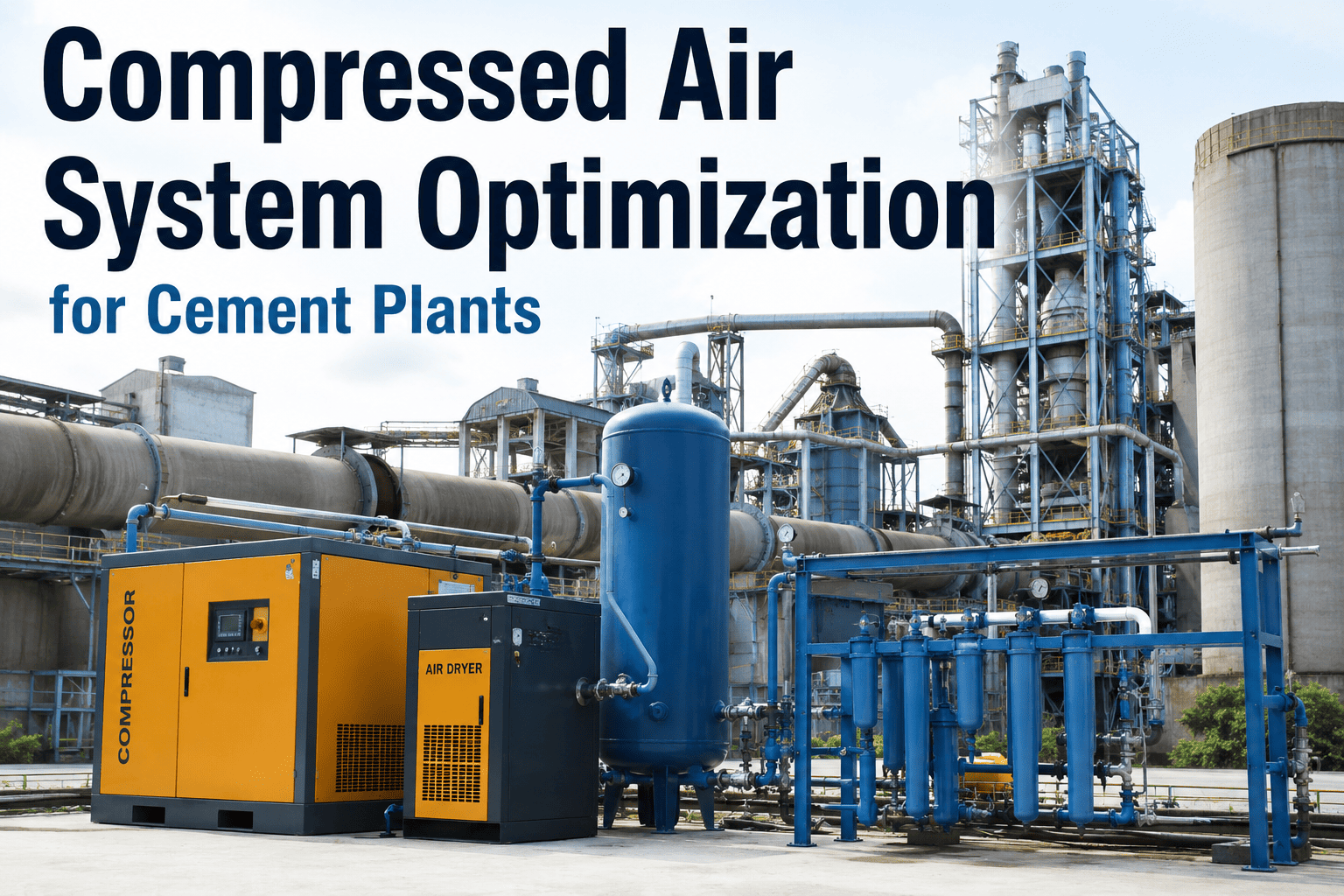
Compressed air systems are among the most energy-intensive utilities in cement manufacturing, often accounting for 10-15% of total plant electricity consumption. Despite their critical role in pneumatic conveying, instrumentation, and cleaning operations, these systems frequently operate at suboptimal efficiency due to undetected leaks, excessive pressure settings, and poorly sequenced compressors. In a typical cement plant, compressed air energy waste can reach 20-30% without any negative impact on production. This article presents a comprehensive, data-driven approach to optimizing compressed air systems specifically for cement plants. Drawing from real-world audits and industry best practices, we detail actionable strategies including leak detection and repair, pressure setpoint reduction, intelligent compressor sequencing, and demand-side management. By implementing these measures, cement plants can achieve substantial energy savings, reduce maintenance costs, and extend equipment life. For a personalized assessment of your plant's compressed air efficiency, Book a Demo with our experts today.
Cut Compressed Air Costs by 20-30% in Your Cement Plant
Proven strategies to eliminate waste, optimize pressure, and sequence compressors for maximum efficiency.
The Hidden Cost of Compressed Air
In a typical cement plant, compressed air is often considered a free utility. In reality, generating 1 Nm3 of compressed air can cost up to $0.03 in electricity alone. For a plant consuming 10 million Nm3 annually, this translates to $300,000 in direct energy costs. Leaks, pressure drops, and inefficient compressor operation can inflate this figure by 30% or more. Our audits have identified that 80% of plants have at least 20% leak rate, with some exceeding 40%. The financial impact is staggering.
7-Step Compressed Air Optimization Checklist
Conduct a System Audit
Measure flow, pressure, and power at multiple points. Identify baseline consumption and leak rate.
Fix All Leaks
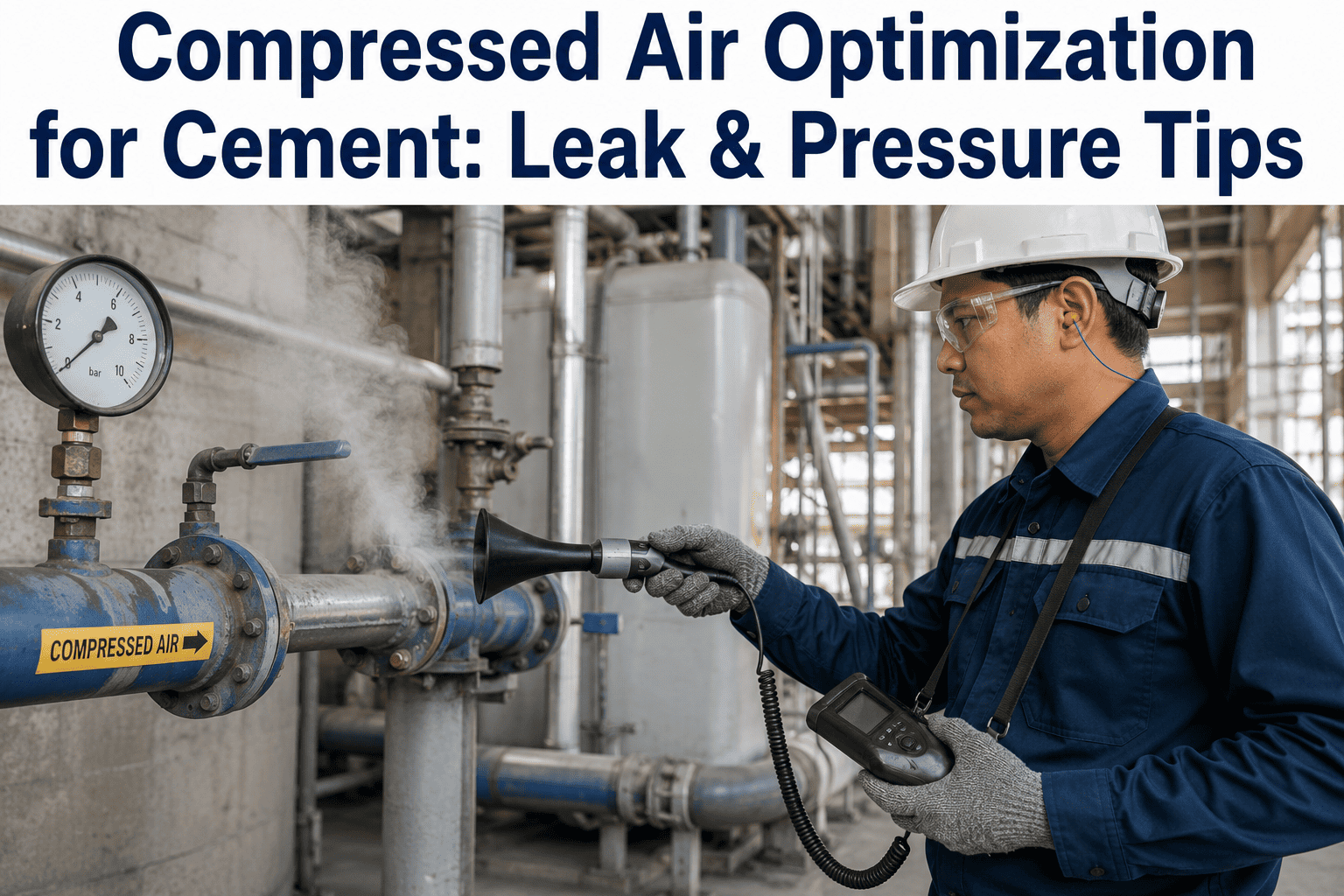
Prioritize leaks using ultrasonic detection. A single 3mm hole can cost $1,500/year.
Reduce Pressure Setpoint
Lowering pressure by 1 bar reduces energy consumption by 7%. Target the lowest acceptable pressure.
Optimize Compressor Sequencing
Use smart controllers to match supply with demand. Avoid part-load operation of multiple compressors.
Improve Air Treatment
Replace clogged filters, optimize dryer dew point, and minimize pressure drop across dryers.
Manage Demand Side
Eliminate inappropriate uses like open blowing. Use air knives or electric alternatives where possible.
Monitor and Maintain
Install continuous monitoring system. Track specific power (kW/Nm3) and trigger alarms on deviation.
Ready to Cut Your Compressed Air Costs?
Our experts will conduct a free preliminary assessment of your plant's compressed air system and identify quick wins for energy savings.
Deep Dive: Pressure Optimization and Leak Impact
Pressure Reduction Strategy
Most cement plants operate at 7-8 bar, but many processes only need 5-6 bar. By systematically reducing the system pressure, you can achieve significant savings. For every 1 bar reduction, energy consumption drops by approximately 7%. However, pressure must be reduced carefully to avoid affecting critical instruments. A zone-by-zone analysis is recommended.
| Pressure Reduction | Energy Savings | Annual Cost Saving (10M Nm3) |
|---|---|---|
| 1 bar | 7% | $21,000 |
| 2 bar | 14% | $42,000 |
| 3 bar | 21% | $63,000 |
Leak Detection ROI
A single 3mm diameter leak at 7 bar can waste up to 6.5 kW of power, costing $1,500 annually. In a typical cement plant, hundreds of such leaks exist. Using ultrasonic leak detectors, a trained team can locate and tag leaks in a few days. Repair costs are minimal, often just replacement of fittings or hoses. The payback period for a leak detection program is typically less than 3 months.
Real-World Case Study: 28% Reduction
5000 TPD Cement Plant in Rajasthan
The plant implemented a comprehensive optimization program including leak repair (found 340 leaks), pressure reduction from 7.5 to 6.2 bar, and installation of a smart sequencing controller. The project paid back in 8 months.
Frequently Asked Questions
How much can a cement plant save by optimizing compressed air?
Potential savings typically range from 20% to 30% of the compressed air energy bill. For a medium-sized cement plant with an annual compressed air electricity cost of $300,000, this translates to $60,000 to $90,000 in direct savings. Additional benefits include reduced maintenance costs for compressors and dryers, fewer production stoppages due to low pressure, and extended equipment life. The exact savings depend on the current system condition, leak rate, and pressure levels. A professional audit can provide a precise estimate. To get a customized savings projection for your plant, Book a Demo with our team.
What is the most common cause of compressed air waste in cement plants?
Undetected leaks are the single largest source of waste, accounting for 20-30% of total compressed air generation. In cement plants, leaks commonly occur at pipe joints, fittings, valves, and pneumatic tools. The dusty and abrasive environment accelerates wear on seals and connections. Other major causes include operating at unnecessarily high pressure, running compressors in part-load mode without proper sequencing, and using compressed air for inappropriate applications like cleaning or cooling. Regular leak detection surveys using ultrasonic detectors are highly effective. For a comprehensive leak detection program, visit Support to learn more about our services.
How does compressor sequencing affect energy consumption?
Poor compressor sequencing is a major contributor to energy waste. Many plants run multiple compressors simultaneously, each operating at partial load (e.g., 60-70% capacity). Centrifugal and screw compressors are most efficient at full load. Operating at part load increases specific power consumption (kW per Nm3). Intelligent sequencing controllers monitor system pressure and flow, and automatically start/stop compressors to maintain the most efficient combination. This can reduce energy consumption by 10-15% compared to manual or fixed sequencing. Advanced controllers also incorporate load sharing and pressure setpoint optimization. For more details on sequencing solutions, Book a Demo.
What is the role of air dryers in system efficiency?
Air dryers are essential for removing moisture from compressed air, but they also contribute to pressure drop and energy consumption. Refrigerated dryers can cause a pressure drop of 0.2-0.5 bar, which directly increases compressor energy use. Desiccant dryers consume purge air, typically 15-20% of the dryer's rated flow. Optimizing dryer selection and operation is critical. For example, replacing a desiccant dryer with a refrigerated dryer where dew point requirements are not stringent can save significant energy. Also, ensuring filters are clean and pressure differential is low reduces overall system losses. A well-maintained drying system can improve overall efficiency by 5-10%. For expert advice on your air treatment system, Support is available.
How often should a compressed air audit be performed?
We recommend a comprehensive compressed air audit at least once a year for cement plants. However, given the harsh operating environment, a quarterly leak detection survey is advisable. Continuous monitoring of key parameters such as system pressure, flow, and specific power (kW/Nm3) can provide real-time alerts on performance degradation. Many plants install permanent flow meters and pressure transmitters at strategic points to enable ongoing optimization. The audit should include measurement of all compressors, dryers, filters, and major consuming equipment. For a detailed audit methodology and to schedule one, Book a Demo with our energy experts.
Start Saving on Compressed Air Today
Our team of energy engineers will help you identify and implement the most impactful optimization measures for your cement plant. Contact us now.