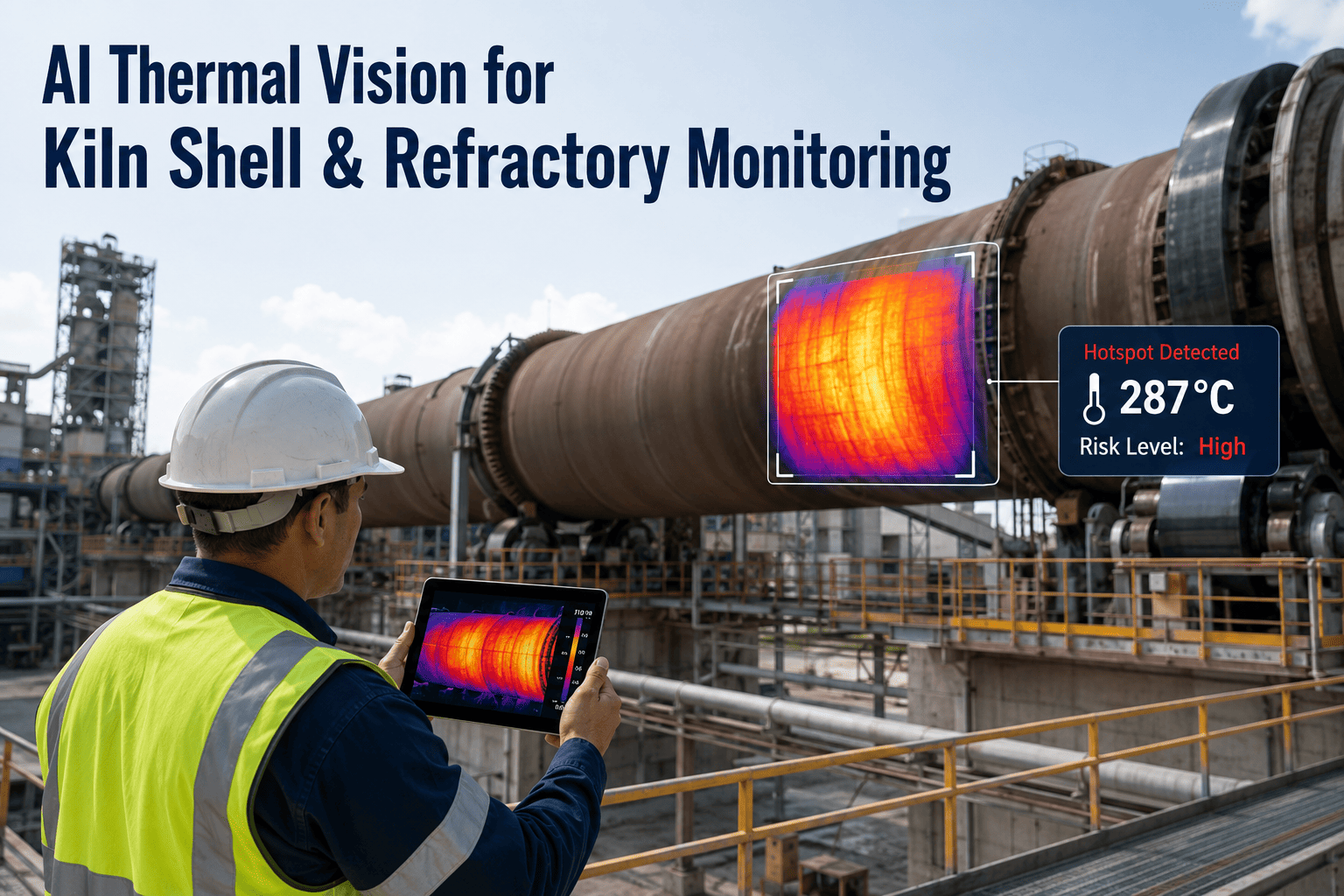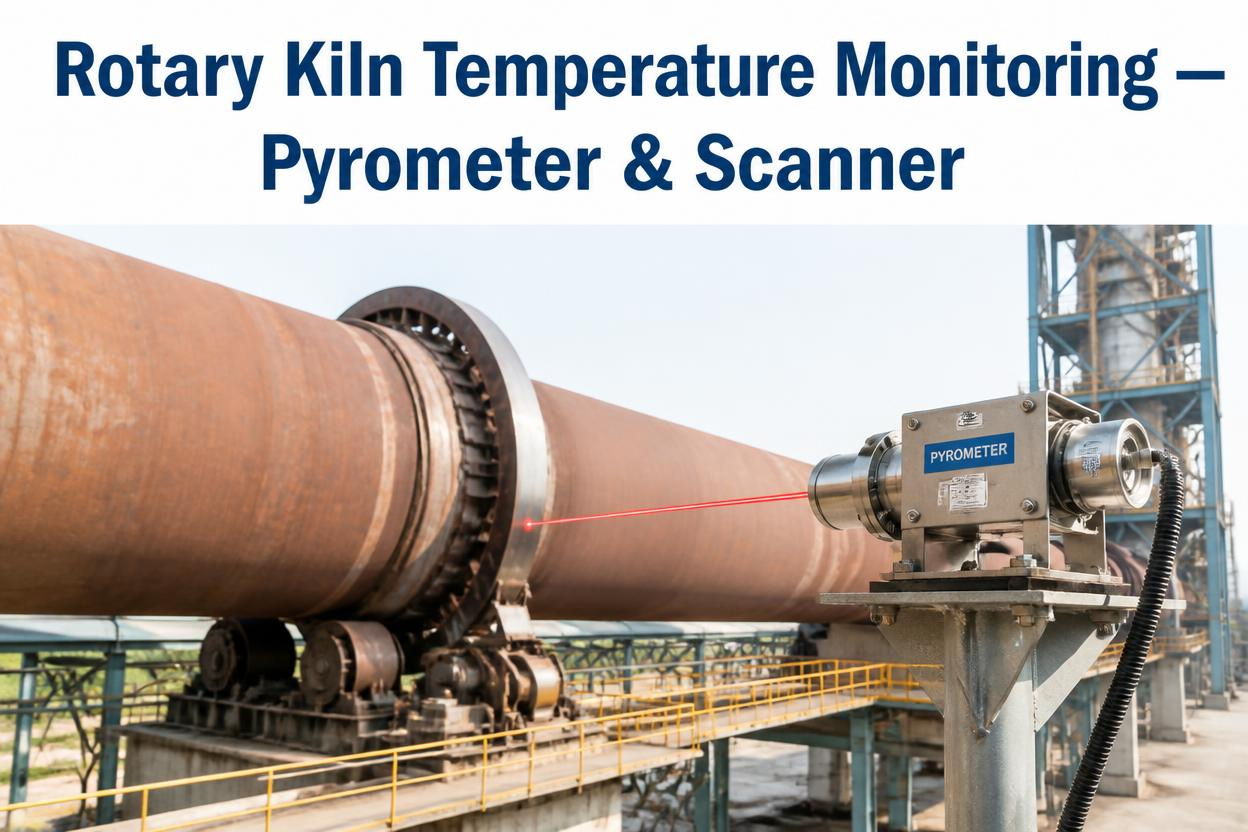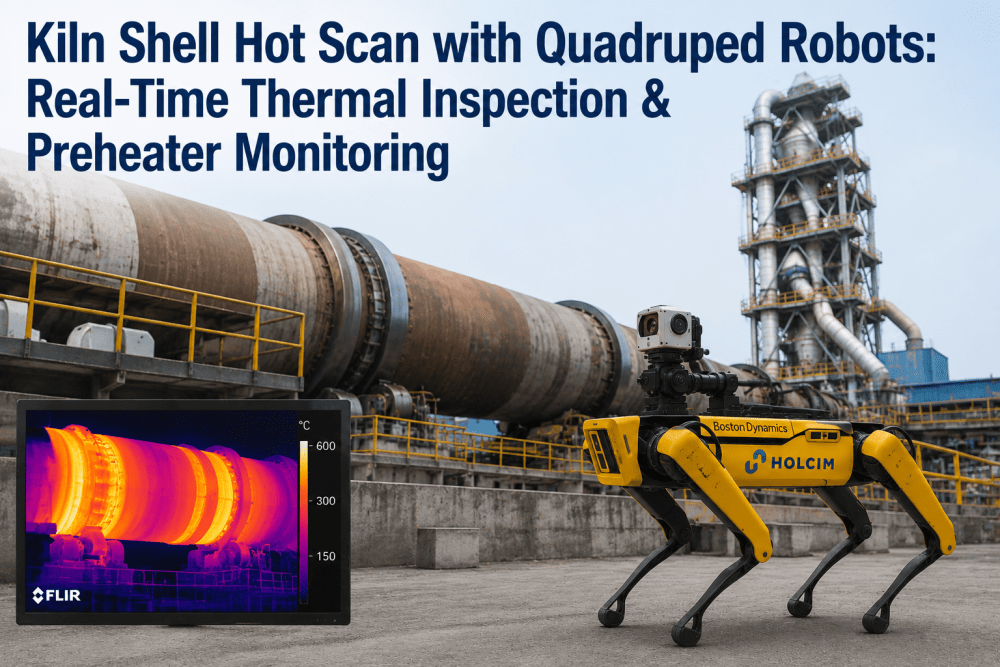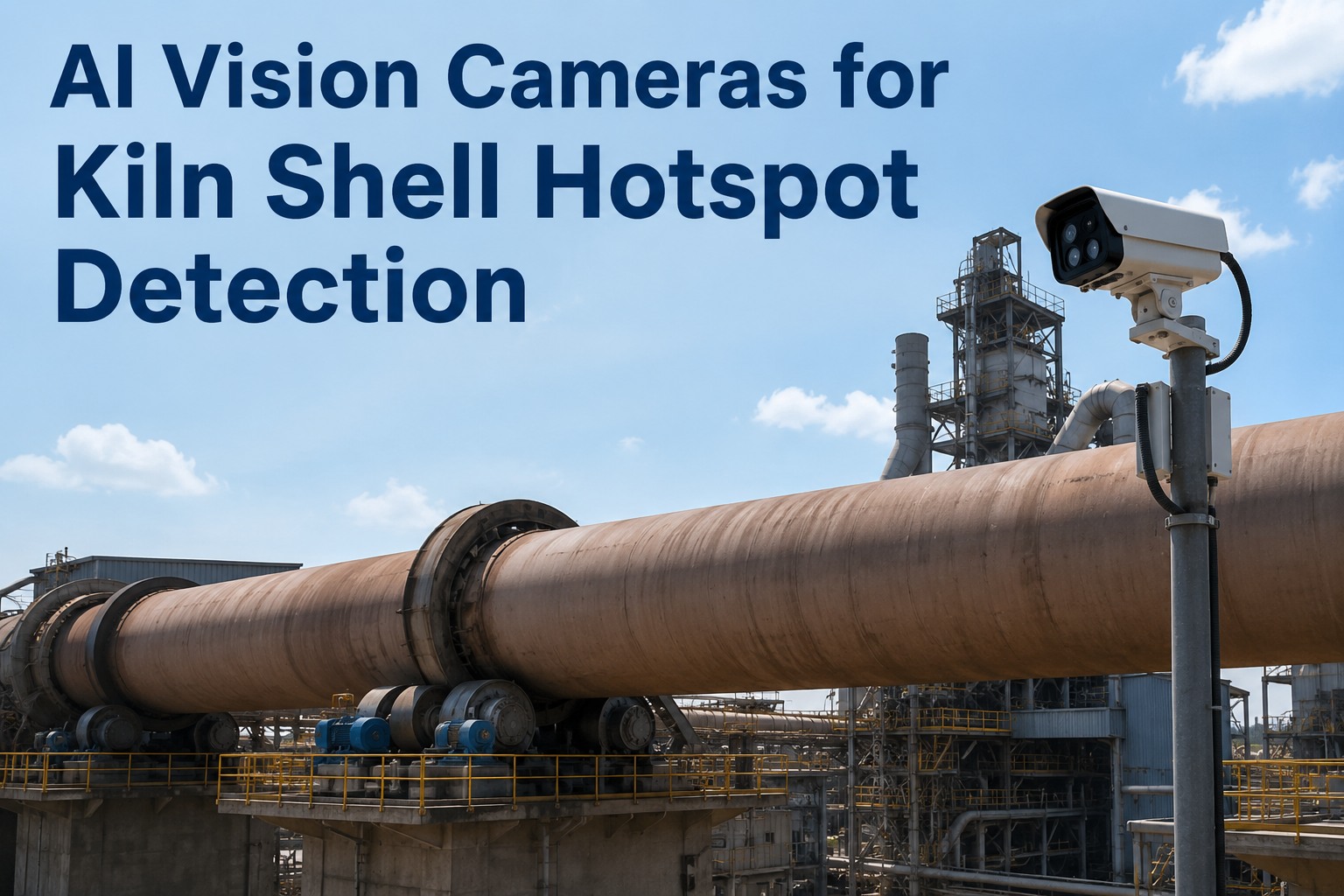
Rotary kiln shell hotspot detection is the highest-stakes predictive maintenance challenge in cement manufacturing — a single undetected refractory failure at a kiln shell can escalate from a localized hot zone to a catastrophic shell deformation, emergency kiln shutdown, and multi-week production outage that costs cement plants tens of crores in lost output, emergency repair labour, and refractory replacement. Kiln shell temperatures fluctuate continuously as the refractory lining wears, as brick joints open under thermal cycling, and as build-up patterns shift with raw mix chemistry — creating a dynamic thermal landscape that periodic handheld pyrometer readings and weekly visual inspections cannot map with the spatial resolution or temporal frequency required to catch developing hotspots before they breach critical temperature thresholds. iFactory's AI vision camera platform delivers continuous, full-shell thermal mapping with automated hotspot detection algorithms that identify developing refractory failures weeks before they become emergency events — automatically generating AI-driven work orders that route the right maintenance crew to the right shell location with the right urgency classification before a kiln stop becomes the only option. Plant managers and maintenance directors who schedule a kiln monitoring consultation with iFactory consistently discover that their existing camera mounting positions and network infrastructure can support full-shell hotspot analytics without civil work or additional hardware investment.
Detect Every Hotspot. Prevent Every Refractory Failure. Eliminate Unplanned Kiln Stops.
iFactory's AI vision camera platform delivers continuous rotary kiln shell thermal mapping, automated hotspot classification, AI-generated maintenance work orders, and refractory life analytics — purpose-built for the cement plant kiln environment.
Why Kiln Shell Temperature Monitoring Is the Most Critical Predictive Maintenance Decision in Cement Manufacturing
A rotary cement kiln operates at internal flame temperatures exceeding 1,450°C, separated from the steel shell by a refractory lining that is continuously degraded by thermal cycling, alkali attack, mechanical abrasion, and chemical corrosion from clinker and kiln feed. When refractory brick thins, loosens, or falls away — whether in the burning zone, the transition zone, or the lower cyclone inlet — the shell temperature at that location rises rapidly and, if undetected, can reach the steel's yield temperature within hours. The consequences of a missed hotspot are severe: shell deformation that requires plate replacement, emergency kiln stops that destroy production schedules, refractory relining campaigns under time pressure that cost 3–5× planned maintenance rates, and in the worst cases, catastrophic shell failure that creates safety hazards for kiln crew members working adjacent to the kiln. Thermal scanner systems using stationary pyrometers provide single-line temperature profiles but miss the circumferential shell area outside their fixed scan angle — a limitation that iFactory's multi-camera AI vision architecture eliminates by achieving full circumferential coverage at every shell cross-section simultaneously. Maintenance engineers and plant managers building robust kiln reliability programs should connect with iFactory's kiln monitoring team to review how AI vision camera placement maps to their specific kiln geometry and shell coverage requirements.
Refractory Blind Spots
Fixed pyrometer scanners cover a single axial line of the kiln shell — missing developing hotspots in circumferential positions outside the scan path until they have already reached critical temperature thresholds that trigger emergency shutdowns.
Thermal Escalation Speed
A refractory brick loss event can drive shell temperature from normal operating range to critical threshold in as little as 4–6 hours — far faster than shift-change inspection cycles or weekly thermal survey cadences can detect and respond.
Unplanned Stop Cost
An unplanned kiln stop for emergency refractory repair costs 3–5× more than a planned stop — driven by emergency contractor rates, expedited refractory material logistics, and the production revenue lost during unscheduled downtime that cannot be recovered in campaign scheduling.
Work Order Latency
Even when a hotspot is detected by a scanner or operator, the manual process of logging the observation, raising a maintenance request, routing it to the right crew, and scheduling access adds hours of delay that erode the early-warning value of the detection itself.
How iFactory's AI Vision Platform Monitors, Detects, and Responds to Kiln Shell Hotspots Continuously
iFactory's rotary kiln shell monitoring platform combines multi-angle AI vision cameras, thermal anomaly detection algorithms, automated hotspot classification models, and AI-driven work order generation to create a complete early-warning and response system that closes the gap between detection and corrective action. The platform processes continuous visual and thermal data streams from cameras positioned across the kiln shell to build a real-time temperature map of every shell section — identifying developing hotspots, trending temperature gradients, and refractory wear patterns that predict where the next failure event is most likely to occur. Maintenance managers who request a kiln analytics walkthrough receive a site-specific camera placement assessment showing exact coverage geometry for their kiln length and shell diameter.
Capability 1 — Full-Shell AI Vision Thermal Mapping
iFactory deploys AI vision cameras at optimised positions along the kiln length to achieve full circumferential shell coverage — eliminating the blind spots that fixed-angle pyrometer scanners leave between their measurement lines. The AI vision system processes continuous image streams to extract shell temperature profiles at every axial position and circumferential angle, building a dynamic thermal map that updates in real time as the kiln rotates. Temperature trends are visualised on a shell unwrapping display that allows maintenance engineers to see exactly where heat anomalies are developing, how fast they are progressing, and how they compare to the historical temperature baseline for each shell section. This full-shell visibility is the foundational capability that makes every other predictive intervention possible — because a hotspot you cannot see is a hotspot you cannot prevent. Plants that have deployed iFactory's full-shell mapping capability report detecting 100% of developing hotspot events an average of 18 days before they would have reached emergency intervention thresholds under their previous monitoring approach.
Capability 2 — AI Hotspot Classification and Severity Scoring
Not every shell temperature elevation represents the same risk level — and treating every anomaly as an emergency creates alert fatigue that causes maintenance teams to discount warnings at exactly the moment they matter most. iFactory's hotspot classification AI distinguishes between benign shell coating build-up effects, early-stage refractory thinning, active brick joint opening, and acute refractory loss events — assigning each detection a severity score from Watch through Advisory through Critical that maps directly to the urgency and nature of the required maintenance response. The classification model is trained on thousands of validated kiln shell thermal event records and continuously refined with plant-specific data as the system learns the normal thermal behaviour of each kiln section, tyre, and zone boundary. Automated alert routing delivers severity-matched notifications to the right responder — watch-level alerts to the maintenance dashboard, advisory-level alerts to shift supervisors, and critical alerts simultaneously to the plant manager, maintenance director, and on-call refractory specialist.
Capability 3 — Automated AI Work Order Generation
iFactory's most operationally transformative capability is its ability to automatically generate a fully populated maintenance work order the moment a hotspot crosses a configurable severity threshold — eliminating the manual observation-logging, verbal handoff, and CMMS data-entry steps that typically add 2–6 hours of latency between detection and repair crew mobilisation. Each AI-generated work order includes the exact shell location referenced by kiln metre position and clock angle, the current and trending temperature data, the hotspot severity classification, the recommended inspection or repair action, the required access equipment and refractory materials, and the suggested maintenance window based on production schedule integration. Work orders route automatically to the plant CMMS, appear in the responsible crew's mobile task queue, and are linked back to the iFactory monitoring dashboard so that the executing crew's findings and interventions are documented against the detection event — creating a closed-loop maintenance record that builds the refractory wear database for long-term predictive life modelling.
Capability 4 — Refractory Life Analytics and Campaign Planning
Beyond event-driven hotspot response, iFactory's kiln analytics platform builds a continuous refractory wear model that tracks the thermal history of every shell section across full refractory campaigns — identifying zones of accelerated lining wear, quantifying the influence of raw mix chemistry changes and fuel type variations on refractory consumption rates, and projecting the expected remaining service life of each kiln zone. Maintenance planners use iFactory's refractory life dashboard to schedule planned stop windows before critical zones reach their predicted end-of-life temperature threshold — converting reactive emergency stops into planned campaign extensions that are executed at optimal production scheduling moments. Plants using iFactory's refractory life analytics report a 34% reduction in emergency kiln stops and a 22% extension in average refractory campaign length compared to pre-deployment baselines. Maintenance planning teams who want to see live refractory life dashboard analytics can book a platform demonstration using historical thermal data from their own kiln as the baseline input.
Kiln Shell Monitoring Performance: Traditional Inspection vs. iFactory AI Vision Platform
Why iFactory Deploys AI Processing On-Premise at the Cement Plant — Not in the Cloud
Kiln shell thermal monitoring requires millisecond-level anomaly detection latency that cloud-dependent architectures cannot reliably deliver — a hotspot escalation event does not wait for network connectivity or cloud processing queue availability. iFactory's kiln vision platform deploys AI inference hardware on-premise at the cement plant, processing all camera feeds locally and delivering hotspot alerts, work order generation, and dashboard updates without dependency on internet connectivity or cloud service availability. All thermal imaging data, historical shell temperature records, refractory wear models, and maintenance event histories are stored and processed within the plant's own network perimeter — satisfying the data sovereignty requirements of cement groups with strict operational technology security policies. On-premise deployment also enables direct integration with the plant's DCS, SCADA, and CMMS systems through local OPC-UA and API connections that do not require data to traverse the internet. Compliance officers and IT security managers evaluating iFactory's architecture can schedule a technical security review to assess how iFactory's on-premise deployment model aligns with their OT security framework and network segmentation requirements.
| Monitoring Zone | Failure Mode Detected | Detection Method | Alert Severity Range | AI Work Order Action |
|---|---|---|---|---|
| Burning Zone (Hottest Zone) | Refractory brick loss, coating collapse | AI vision thermal gradient mapping | Advisory → Critical | Auto work order: emergency refractory inspection + cooling protocol |
| Upper / Lower Transition Zone | Brick joint opening, thermal spalling | Circumferential temperature deviation AI | Watch → Advisory | Auto work order: refractory survey at next planned stop window |
| Feed-End Zone | Alkali attack infiltration, brick loosening | Multi-session thermal trending AI | Watch → Advisory | Auto work order: endoscopic inspection scheduling |
| Kiln Shell Tyre Regions | Ovality-induced brick cracking, tyre migration | Circumferential scan + tyre slip correlation | Watch → Critical | Auto work order: tyre alignment check + refractory survey |
| Cooler Inlet Hood | Castable refractory spalling, nose ring erosion | AI vision localised temperature spike detection | Advisory → Critical | Auto work order: nose ring inspection + castable repair assessment |
| Full Shell Perimeter | Shell deformation, plate corrosion hot zones | Full-circumference temperature baseline deviation | Watch → Critical | Auto work order: shell thickness measurement + structural assessment |
A Three-Tier Deployment Framework for Complete Rotary Kiln Shell Monitoring
iFactory's kiln shell monitoring deployment framework accommodates plants at every stage of predictive maintenance maturity — from facilities installing their first AI vision camera at the burning zone through fully instrumented kilns with complete shell coverage, refractory life modelling, and CMMS-integrated automated work orders across every zone and failure mode. Each tier delivers immediate operational value while building the data infrastructure for the next level of predictive intelligence. Maintenance directors and plant managers planning their kiln reliability technology roadmap can book a configuration assessment to receive a site-specific deployment plan prioritising the highest-risk kiln zones in their specific plant.
Burning Zone AI Vision Hotspot Detection
For: Plants replacing or augmenting pyrometer scanners
- AI vision cameras covering burning zone and upper transition
- Real-time hotspot detection with severity classification alerts
- Automated AI work order generation on threshold breach
- Shell temperature trending dashboard with historical baseline
Full-Shell Monitoring & Refractory Wear Analytics
For: Plants targeting emergency stop elimination
- Multi-camera full-circumference shell thermal mapping
- All-zone hotspot classification with CMMS work order integration
- Refractory wear rate modelling with zone-level life projection
- Planned stop optimisation based on refractory life forecasts
Integrated Kiln Reliability & Campaign Planning Platform
For: Plants targeting maximum refractory campaign life
- Full kiln envelope monitoring: shell, tyre, nose ring, cooler inlet
- Raw mix and fuel chemistry correlation with refractory wear rates
- Automated campaign planning reports with stop window recommendations
- Multi-kiln fleet dashboard for group-level reliability benchmarking
How Cement Plants Are Using iFactory Kiln Vision to Prevent Refractory Failures and Protect Production
We had two unplanned kiln stops in a single campaign year before we deployed iFactory — both caused by hotspots in the lower transition zone that our pyrometer scanner missed because they were developing between its scan lines. The cost of those two emergency stops, including the emergency refractory contractor rates and the lost clinker production, was enough to fund the iFactory deployment five times over. Since go-live, iFactory has flagged four developing hotspots in the same zone — all detected an average of three weeks before they reached our emergency threshold, all resolved with planned repair windows, and all generating automated work orders that had the right crew and materials in position before we even held the morning maintenance meeting. The refractory campaign life on Kiln 2 has extended by 19% in the twelve months since deployment. That alone has changed how our board thinks about predictive maintenance technology.
AI Vision Kiln Shell Hotspot Detection — Frequently Asked Questions
How does iFactory's AI vision camera system differ from a traditional infrared pyrometer scanner for kiln shell monitoring?
Traditional pyrometer scanners measure temperature along a single axial line of the kiln shell as it rotates past the sensor — which means any hotspot developing in a circumferential position away from the scanner's fixed measurement line can escalate for hours or days before rotating into the scan path. iFactory's multi-camera AI vision architecture positions cameras at angles that together achieve full circumferential coverage of every shell section simultaneously, so there is no blind arc where a developing hotspot can hide between scan passes. The AI also analyses temperature gradient trends across adjacent shell sections to identify early-stage refractory thinning events that produce diffuse heat signatures rather than concentrated hot spots — a detection capability that single-point pyrometers cannot replicate. The result is both broader coverage and earlier detection compared to scanner-based monitoring architectures.
What temperature thresholds does iFactory use to classify a kiln shell hotspot as Watch, Advisory, or Critical?
iFactory's severity classification thresholds are configured during commissioning to reflect the specific refractory design specifications, shell plate material grades, and operating temperature profiles of each kiln — rather than applying generic industry thresholds that may not match the plant's specific refractory system. As a general framework, Watch alerts are triggered when a shell section exceeds the plant's established normal operating temperature band for that zone by a configurable margin; Advisory alerts are triggered when the temperature trend indicates continued escalation toward the plant's defined advisory threshold; and Critical alerts are triggered when the temperature approaches the plant's defined emergency intervention threshold where kiln feed reduction or kiln stop protocols must be initiated. All thresholds are reviewed and validated with the plant's refractory engineer and maintenance director during commissioning to ensure they reflect the plant's specific risk tolerance and refractory system characteristics.
How does iFactory's AI work order generation integrate with the plant's existing CMMS system?
iFactory connects to the plant's CMMS through standard API integration or direct database connector depending on the CMMS platform — supporting SAP PM, Maximo, Infor EAM, and most other enterprise CMMS environments. When a hotspot crosses a threshold that triggers work order generation, iFactory populates a fully structured work order in the CMMS with the kiln zone location, GPS-style shell coordinates by metre position and clock angle, current and trending temperature data, severity classification, recommended maintenance action, and required resources — without any manual data entry step. Work orders appear in the responsible crew's maintenance queue immediately, and when the crew completes the inspection or repair, their findings are logged back to iFactory as feedback data that refines the system's refractory wear model for that shell section over time. Plants without a CMMS can use iFactory's native work order management module as a standalone maintenance tracking environment.
Can iFactory's kiln monitoring platform operate reliably in the dust, heat, and vibration environment of a cement kiln platform?
Yes. iFactory's camera enclosures and edge computing hardware are specified for the cement kiln environment — rated for continuous operation at ambient temperatures up to 65°C, ingress protection to IP67 for dust and moisture, and vibration tolerance for kiln platform mounting positions. Camera enclosures include positive pressure purge systems that prevent kiln dust infiltration into the optical cavity and maintain lens clarity in high-dust environments without requiring frequent cleaning interventions. The AI processing hardware is housed in sealed enclosures with active cooling systems that maintain operating temperature within specification regardless of ambient kiln platform conditions. iFactory's field engineering team conducts a site survey at every deployment to verify that camera positions, cable routing, and enclosure specifications match the specific thermal, dust, and vibration conditions of the plant's kiln platform before hardware is specified and ordered.
How long does it take for iFactory's AI to learn the normal thermal behaviour of a kiln and begin generating meaningful predictive alerts?
iFactory's hotspot detection AI begins generating rule-based threshold alerts from day one of deployment — delivering immediate value for acute hotspot events without requiring a learning period. The AI's predictive classification layer, which distinguishes between benign thermal patterns and early-stage refractory deterioration events, reaches full accuracy after a 4–6 week baseline learning period during which the system maps the normal thermal signature of each kiln zone, tyre region, and zone boundary transition under varying production rates and fuel mixes. Most plants identify at least one previously undetected early-stage hotspot during this baseline period as the system's full-circumference coverage reveals shell sections that were outside their previous scanner's measurement arc. The refractory life modelling capability reaches its highest predictive accuracy after one complete refractory campaign cycle, as it accumulates the wear rate data needed to model zone-specific deterioration trajectories.
Does iFactory's kiln monitoring platform require internet connectivity to operate?
No. iFactory's kiln shell monitoring platform is designed for fully on-premise operation — all AI inference, hotspot detection, alert generation, work order creation, and dashboard processing run on edge computing hardware installed within the plant's own network perimeter. Internet connectivity is not required for any operational monitoring function. Optional cloud connectivity can be configured for plants that want to enable multi-site fleet comparison dashboards or remote access to kiln analytics by group engineering teams — but this is an elective capability, not a system dependency. Plants with strict OT network security policies that prohibit internet-connected devices on the kiln platform can deploy iFactory in fully air-gapped configuration without any reduction in on-site monitoring or alerting capability.
What is the typical payback period for iFactory's kiln shell hotspot detection deployment?
Payback periods vary by plant depending on historical emergency stop frequency, kiln size, and refractory campaign costs — but across iFactory's documented cement plant deployments, the average payback period is 8–14 months from commissioning. The primary value drivers are emergency kiln stop avoidance (each avoided emergency stop typically saves ₹2–8 crore in emergency repair costs and lost production), refractory campaign life extension (a 20% campaign extension on a large kiln reduces annual refractory spend by ₹1–3 crore), and planned stop optimisation (concentrating refractory repair work in optimised windows rather than emergency interventions reduces total repair labour and material cost by 30–40%). Plants that experience even a single avoided emergency kiln stop typically achieve full payback within the first 12 months of deployment — making the business case for kiln AI vision monitoring one of the most straightforward capital investment decisions in cement plant reliability management.
How many cameras are required to achieve full-shell coverage on a typical cement kiln?
Camera count depends on kiln length, shell diameter, and the presence of obstacles such as support piers, tyre structures, and kiln drive components that create coverage shadow zones. For a typical 60–80 metre cement kiln, iFactory's field engineering team designs a camera layout during the site survey that achieves full axial and circumferential coverage using 4–8 cameras — positioned at angles and distances calculated to eliminate blind arcs while accommodating the physical constraints of the kiln platform. Each camera placement is modelled in iFactory's coverage simulation tool before hardware is installed, generating a documented coverage map that confirms every shell section is within at least one camera's detection zone with sufficient angular resolution for accurate temperature measurement. The coverage simulation output is provided to the plant maintenance team as part of the system commissioning documentation.
Deploy AI Vision Kiln Shell Monitoring and Stop Emergency Refractory Failures Before They Stop Your Kiln
iFactory's AI vision platform delivers full-circumference kiln shell thermal mapping, automated hotspot severity classification, AI-generated CMMS work orders, and refractory campaign life analytics — giving your maintenance team the predictive intelligence to protect every kiln and maximise every campaign.