Cement plant dust control and respiratory safety represent the single largest occupational health liability in cement manufacturing — a chronic, pervasive hazard that affects every worker on every shift across every process zone from quarry blasting through clinker grinding to finished cement dispatch. Cement dust is not a nuisance; it is a regulated industrial pollutant and a documented cause of silicosis, occupational asthma, chronic obstructive pulmonary disease, and lung cancer when workers are chronically exposed above permissible exposure limits. OSHA's silica standard, MSHA's dust sampling requirements, and EPA's National Emission Standards for Hazardous Air Pollutants all establish enforceable limits that create simultaneous regulatory exposure for cement plants operating without real-time air quality monitoring, functioning dust collection analytics, and digital compliance documentation. iFactory's AI-driven dust safety platform closes the gap between what periodic stack testing and quarterly air sampling can detect and what 24/7 continuous monitoring with predictive baghouse and ESP analytics can prevent — turning a reactive compliance program into a proactive respiratory safety system that protects workers and satisfies regulators simultaneously. Plant managers and EHS directors who schedule a dust monitoring consultation with iFactory consistently find that their existing sensor and camera infrastructure can be activated for dust analytics without additional hardware investment.
Monitor Every Particle. Protect Every Worker. Satisfy Every Regulator.
iFactory's AI-driven dust safety platform delivers real-time baghouse analytics, ESP performance monitoring, fugitive dust quantification via AI vision cameras, and digital respiratory safety compliance records — purpose-built for the cement manufacturing environment.
Why Cement Plant Dust Exposure Is a Multi-Regulatory, Multi-Zone Safety Emergency
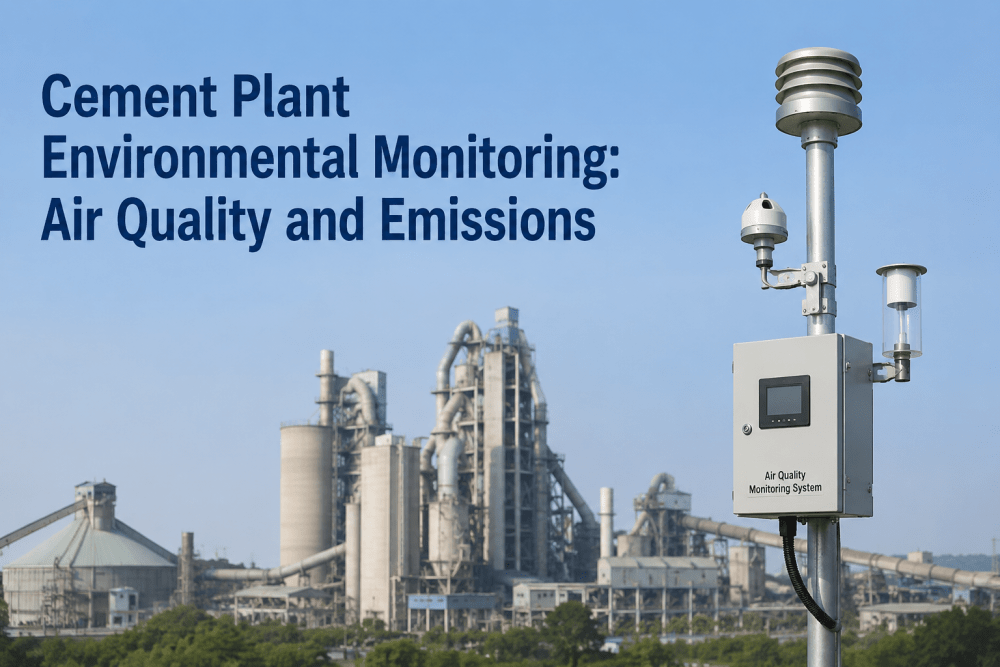
Cement dust is generated at every stage of production — limestone crushing, raw mill grinding, kiln feed conveying, clinker cooling, finish grinding, and cement storage and dispatch — creating dozens of simultaneous dust generation points that require active control strategies. The hazard is compounded by particle characteristics: cement dust contains respirable crystalline silica at concentrations that regularly exceed OSHA's permissible exposure limit of 50 micrograms per cubic meter as an 8-hour time-weighted average without functioning dust control systems. Particles in the PM2.5 and PM10 range penetrate deepest into the respiratory tract, and cement plant workers in dusty work zones without adequate respiratory protection accumulate lung burden that manifests clinically as silicosis, occupational asthma, or COPD over years of chronic exposure. The regulatory consequences of inadequate dust monitoring are severe: MSHA citations at cement plants carry per-day penalties for significant and substantial violations, EPA NESHAP violations at stack emission points carry penalties per ton of excess particulate matter, and OSHA silica citations have reached six-figure penalty levels at cement facilities with documented overexposure events. EHS managers building comprehensive dust control programs should connect with iFactory's environmental monitoring team to assess how AI-driven continuous monitoring integrates with their specific plant layout and dust control equipment inventory.
Silica Over-Exposure
Respirable crystalline silica in cement dust exceeds OSHA's 50 μg/m³ PEL in baghouse access areas, raw mill zones, and during maintenance tasks — creating documented silicosis risk for workers without real-time exposure monitoring.
Baghouse Failure Blindspot
A single undetected bag rupture spikes stack particulate emissions and kiln fan energy draw simultaneously — yet most plants run fixed-timer cleaning cycles that cannot detect the specific compartment of a failing bag until visible opacity events trigger regulatory notice.
Fugitive Dust Liability
Transfer points, storage piles, haul roads, and open conveyors generate fugitive dust plumes that are measurable by AI vision cameras but invisible to periodic manual opacity surveys — creating compliance gaps between inspection events that accumulate as permit violations.
PPE Compliance Gaps
Workers entering high-dust zones without appropriate respiratory protection create OSHA overexposure documentation liability even when ambient monitoring data shows compliant air quality — because personal exposure depends on task duration, proximity, and respirator donning compliance.
How iFactory's AI Platform Manages Dust Control Across Every Cement Plant Zone
iFactory's cement plant dust safety platform integrates four distinct monitoring and analytics capabilities that work in concert to give EHS teams complete visibility across point-source emissions, fugitive dust events, dust collection equipment health, and worker respiratory protection compliance. The platform processes data from differential pressure sensors, acoustic pulse profiling equipment, AI vision cameras, and personal air sampling records to create a unified dust safety intelligence layer that replaces fragmented, periodic monitoring with continuous, actionable visibility. Plant safety managers who request a dust analytics walkthrough receive a site-specific configuration assessment showing exactly how iFactory connects to their existing baghouse instrumentation and camera network.
Capability 1 — AI-Driven Baghouse and Bag Filter Analytics
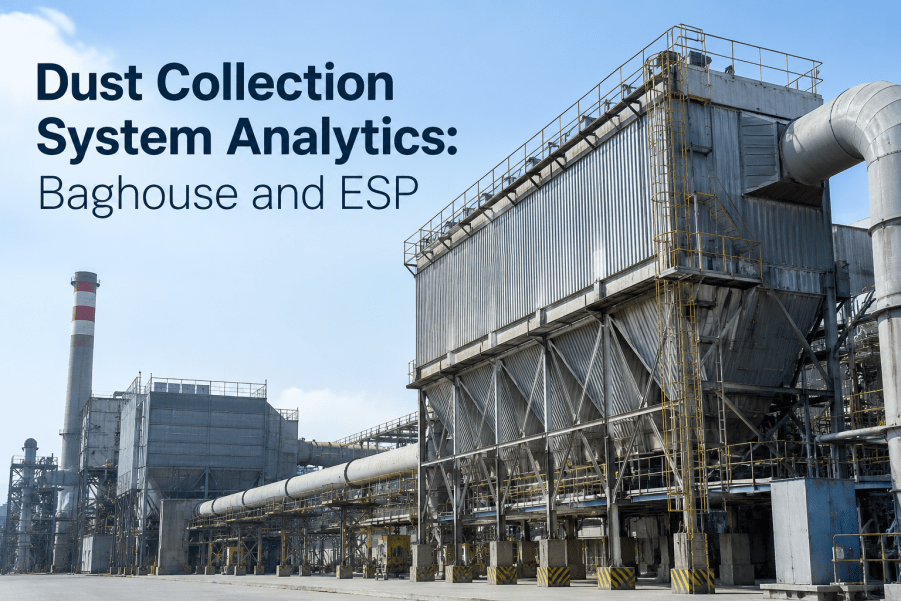
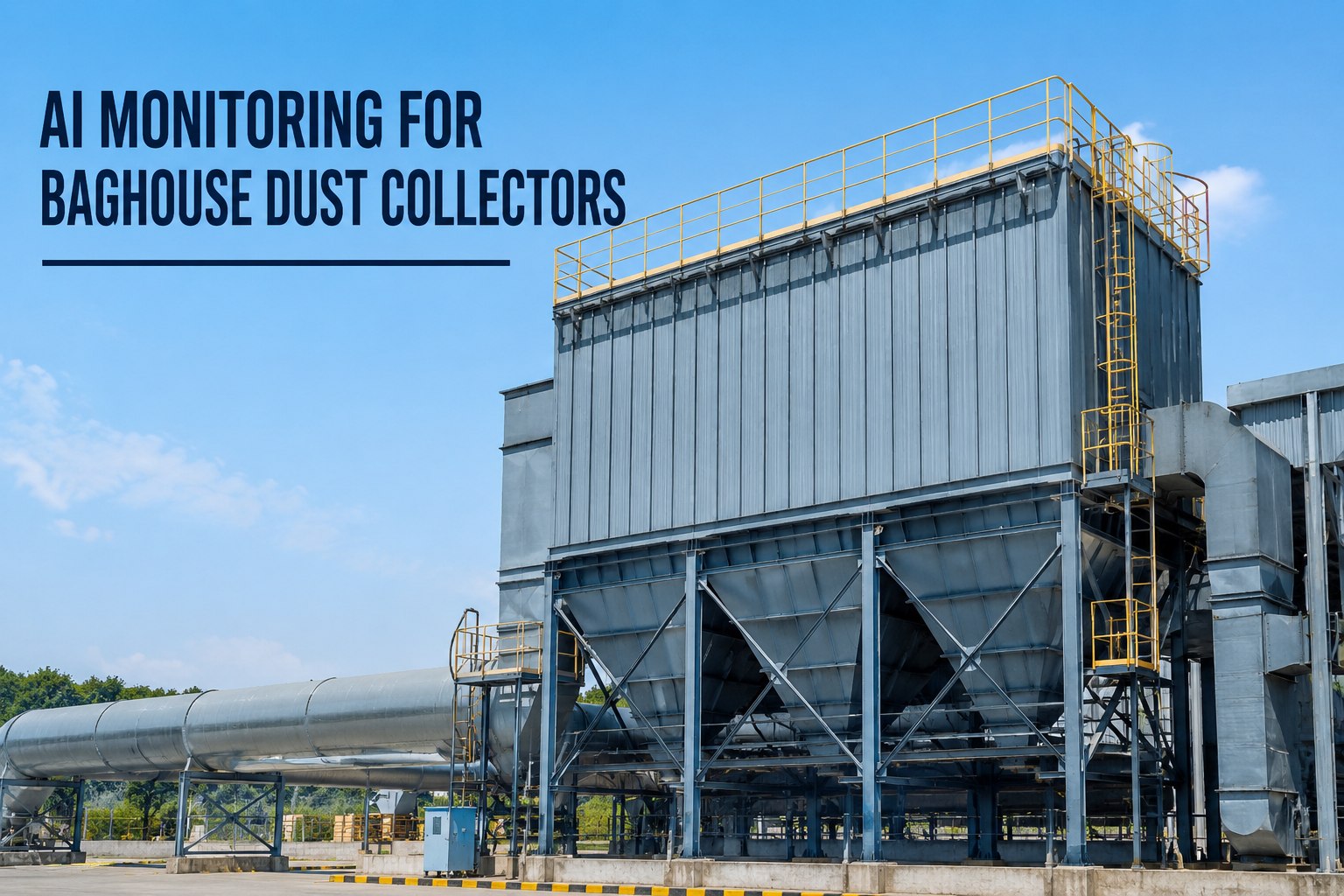
iFactory's baghouse analytics engine fuses high-frequency differential pressure sensing with acoustic pulse profiling to identify the exact compartment and row of a failing filter bag before any emissions breach reaches the stack monitoring system. Unlike fixed-timer cleaning cycles that waste compressed air and accelerate bag wear on already-clean compartments, iFactory's real-time dust loading analysis optimizes cleaning pulse timing to match actual loading conditions — extending filter bag life by an average of 24% and reducing compressed air consumption by 32% across documented deployments. The acoustic sensor layer independently identifies stuck pulse-jet valves, leaking diaphragms, and compartment bypass conditions up to 8 weeks before they would be detectable in routine walk-around inspections. Across 15 integrated cement works, iFactory has delivered a 28% reduction in particulate emissions and documented over ₹4.2 crore in annual savings from combined energy and bag replacement cost reduction. EHS and maintenance teams who want to see live baghouse dashboard analytics can book a platform demonstration using their own plant's sensor data as the baseline.
Capability 2 — ESP Analytics for Kiln and Clinker Cooler Emission Control
Electrostatic precipitator performance at kiln exit and clinker cooler exhaust points is among the highest-stakes emission control decisions in cement manufacturing — ESP collection efficiency degradation translates directly into stack opacity violations that trigger EPA NESHAP enforcement and state environmental agency notifications. iFactory's ESP analytics module monitors secondary voltage and current waveforms, inter-electrode spark rate, rapper activation patterns, and hopper level signals to build a continuous ESP health model that detects corona suppression, back-corona conditions, and rapper system failures before collection efficiency falls below regulatory thresholds. Automated alerts route to maintenance teams when ESP parameters deviate from optimized operating ranges, enabling corrective adjustments that maintain collection performance without kiln production interruptions.
Capability 3 — AI Vision Cameras for Fugitive Dust Quantification
iFactory deploys AI vision cameras across transfer points, conveyor discharge locations, storage pile perimeters, and haul road networks to continuously quantify fugitive dust plume severity — categorizing detections by location, intensity, wind direction, and frequency in a compliance record that satisfies EPA Method 22 visible emissions documentation requirements. Camera detections trigger immediate mobile alerts to dust control operators, generate automated work orders for water suppression system activation or enclosure inspection, and create timestamped evidence records that document both the emission event and the corrective response. This continuous documentation capability is particularly valuable during regulatory inspections and permit renewal processes, demonstrating systematic environmental management that periodic manual opacity surveys cannot credibly substantiate.
Capability 4 — Respiratory Safety Compliance and PPE Monitoring
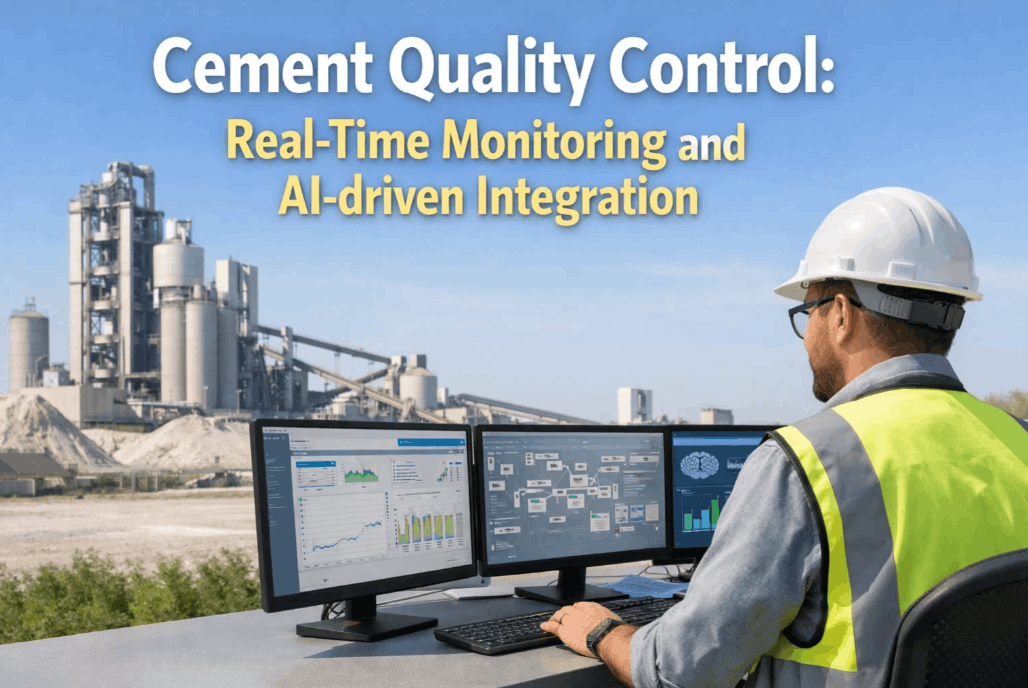
iFactory's AI vision PPE monitoring system detects respiratory protection compliance in real time across all high-dust plant zones — identifying workers entering baghouse access areas, raw mill enclosures, or clinker handling zones without appropriate respirators and generating immediate alerts to supervisors before exposure events occur. The system integrates with the plant's digital safety management records to log compliance events, document corrective interventions, and contribute to the medical surveillance trigger tracking that OSHA's silica standard requires when workers are potentially exposed above the action level of 25 μg/m³. Respiratory protection program managers can schedule a PPE compliance monitoring demonstration to see how iFactory's camera AI differentiates between respirator types and fits the alert routing to their specific zone access control architecture.
Dust Control Performance: Traditional Monitoring vs. iFactory AI-Driven Analytics
Cement Dust Compliance Standards iFactory Monitors and Documents Continuously
Cement plants operating in the United States face simultaneous dust and particulate compliance obligations under OSHA, MSHA, and EPA regulatory frameworks — each with distinct monitoring requirements, enforcement mechanisms, and penalty structures. iFactory's unified dust safety platform generates the continuous documentation evidence that all three regulatory bodies require, eliminating the administrative burden of maintaining separate compliance records for workplace air quality, stack emissions, and environmental permit conditions. Compliance officers building integrated dust regulatory programs benefit from talking with iFactory's regulatory compliance team about how platform records are structured to satisfy inspector documentation requests across all three agencies simultaneously.
| Regulatory Standard | Dust Control Requirement | Exposure / Emission Limit | iFactory Monitoring Approach | Compliance Documentation Output |
|---|---|---|---|---|
| OSHA 29 CFR 1910.1053 (Silica) | Respirable crystalline silica monitoring and control | PEL: 50 μg/m³ TWA · Action Level: 25 μg/m³ | Continuous zone air quality monitoring + AI PPE verification | Digital exposure records, medical surveillance triggers, corrective action logs |
| MSHA 30 CFR Part 71 (Surface Mines) | Respirable dust sampling and control program | 2.0 mg/m³ respirable dust · 0.1 mg/m³ silica content | Sensor-based continuous dust monitoring with MSHA-formatted sampling records | Automated dust sampling log exports in MSHA-required format |
| EPA 40 CFR Part 63 NESHAP (Cement) | Kiln, clinker cooler, and raw mill stack emissions | PM limits by kiln type; quarterly or semi-annual stack tests | ESP and baghouse continuous performance monitoring with opacity correlation | Continuous emission monitoring records for NESHAP compliance demonstrations |
| EPA Method 22 (Fugitive Emissions) | Visible emission observation at fugitive dust sources | Zero visible emissions from most regulated points | AI vision cameras with 24/7 plume detection and severity quantification | Timestamped visible emission records with corrective action documentation |
| OSHA 29 CFR 1910.134 (Respiratory Protection) | Medical evaluation, fit testing, and proper respirator use | Program required when controls cannot reduce exposure to PEL | AI vision respiratory PPE compliance monitoring in designated zones | Zone entry compliance logs, violation alert records, corrective action history |
| State Air Permit (Title V / SIP) | Facility-specific emission limits and control equipment O&M requirements | Facility-specific limits in operating permits | Integrated dust control equipment health monitoring with permit deviation alerts | Continuous O&M documentation records for annual compliance certifications |
A Three-Tier Deployment Framework for Comprehensive Cement Plant Dust Safety
iFactory's cement dust safety deployment framework is designed for plants at different stages of monitoring maturity — from facilities installing their first continuous dust sensors through fully integrated operations deploying AI vision cameras across all fugitive dust generation points. Each tier delivers independent regulatory and operational value while building the sensor infrastructure for the next level of analytics capability. Safety directors and plant managers planning their dust control technology roadmap can book a configuration assessment to receive a site-specific deployment sequence that prioritizes the highest-risk dust zones in their specific plant layout.
Baghouse & ESP Analytics Baseline
For: Plants entering continuous dust monitoring
- DP sensor integration on all baghouse compartments
- Acoustic pulse profiling for bag and valve fault detection
- ESP voltage/current waveform health monitoring
- Digital compliance record generation for permit O&M requirements
Zone Air Quality & Silica Exposure Monitoring
For: OSHA/MSHA silica compliance programs
- Continuous zone air quality sensors in high-risk dust areas
- OSHA silica action level and PEL breach alerts with automatic notifications
- Digital exposure record generation for medical surveillance compliance
- AI PPE compliance monitoring for respirator use verification
Fugitive Dust & Full Plant Respiratory Safety
For: EPA permit holders and high-profile compliance programs
- AI vision camera fugitive dust quantification at all generation points
- Automated EPA Method 22 documentation generation
- Integrated respiratory safety dashboard across all plant zones
- Regulatory agency-ready compliance report exports on demand
How Cement Plants Are Using iFactory to Transform Dust Safety and Compliance
We had three MSHA dust sampling violations in eighteen months before we deployed iFactory's baghouse analytics. The root cause every time was the same: bag failures we didn't catch until the dust was already reaching worker zones. iFactory's acoustic pulse profiling identified the exact compartment and row of failing bags eight weeks before any of our traditional monitoring would have flagged the issue. Our stack emissions dropped 28% in the first six months, our compressed air consumption on the baghouse cleaning system dropped by nearly a third, and we've had zero regulatory citations since deployment. The respiratory PPE monitoring on the cameras changed our workers' behavior faster than any safety training program we've ever run — people know the system sees them and the supervisor gets an immediate alert. That cultural shift alone was worth the investment.
Cement Plant Dust Control and Respiratory Safety — Frequently Asked Questions
What are the OSHA permissible exposure limits for cement dust and silica that plant managers must meet?
OSHA's respirable crystalline silica standard (29 CFR 1910.1053) sets a permissible exposure limit of 50 micrograms per cubic meter as an 8-hour time-weighted average and an action level of 25 micrograms per cubic meter. When worker exposures at or above the action level are confirmed, employers must implement a written exposure control plan, provide medical surveillance for affected workers, and maintain records of exposure assessments. Cement dust also contains total dust components regulated under OSHA's general dust PEL of 15 mg/m³ total dust and 5 mg/m³ respirable fraction, though the silica limit is typically the controlling standard in cement manufacturing environments. iFactory's continuous zone monitoring generates the sampling records and action documentation these requirements demand.
How does iFactory's baghouse analytics detect failing filter bags before stack emissions are affected?
iFactory fuses two sensing modalities to identify bag failures with 8-week advance warning. High-frequency differential pressure sensors visualize the DP signature across each compartment in real time — a compartment with blinding (rising DP) or a leak (falling DP toward clean-side pressure) shows a distinct deviation from the normal DP band. Simultaneously, acoustic sensors mounted on pulse-jet manifolds profile the sound signature of each cleaning pulse; a torn bag produces an acoustic signature change that the AI identifies as distinct from a properly sealed compartment. When both signals correlate to the same compartment and row location, the platform generates a targeted maintenance alert directing the repair crew to the exact bag that needs replacement — eliminating the guesswork of blinded-compartment opening and dramatically reducing maintenance labor per repair event.
What is the difference between baghouse analytics and ESP analytics, and why do cement plants need both?
Baghouses and electrostatic precipitators serve different points in the cement plant emission control architecture. Baghouses are typically deployed on raw mills, finish mills, clinker coolers, and material handling systems where dust loading is predictable and filter fabric media is appropriate. ESPs are typically deployed on kiln exhaust streams where high-temperature gas volumes and variable dust chemistry make fabric filtration impractical. Both systems can fail in ways that escape detection in periodic inspection programs — a blinded baghouse compartment and a back-corona condition in an ESP both produce progressive collection efficiency degradation without sudden visible failure indicators. iFactory monitors both with system-specific sensor and analytics architectures, ensuring that no emission control point operates in an unmonitored degradation state that accumulates regulatory and environmental liability.
How does AI vision camera monitoring for fugitive dust work in a cement plant environment?
iFactory's AI vision cameras use dust-specific detection algorithms that are specifically adapted to the cement plant environment — accounting for the extreme dust loads, heat shimmer, direct sunlight variation, and vibration conditions that compromise standard camera performance. The AI detects and categorizes visible dust plumes at transfer points, conveyor discharge locations, storage pile perimeters, and haul road surfaces by severity level, location reference, and wind direction at the time of detection. Each detection event is automatically timestamped, location-tagged, and logged to the compliance record — generating the continuous opacity observation documentation that satisfies EPA Method 22 requirements. Detections simultaneously trigger mobile alerts to dust control operators, who can activate water suppression systems or initiate equipment shutdown before the plume migrates to worker zones or fence-line receptors.
How does iFactory's respiratory protection monitoring interact with the plant's existing safety training program?
iFactory's AI vision PPE monitoring adds a real-time enforcement layer to the existing respiratory protection program — it doesn't replace training, medical evaluation, fit testing, or program administration. The system detects workers entering designated respiratory protection required zones without appropriate respirators and generates immediate supervisor alerts with the zone location, time, and camera ID. These alerts create digital corrective action records that feed into the safety management system, documenting both the violation and the response. The behavioral impact of visible, real-time enforcement consistently reinforces training program messages more effectively than periodic audit-based compliance checks — because workers understand that every zone entry is monitored, not just entries during scheduled safety observations.
Can iFactory's dust control platform integrate with existing SCADA and DCS systems in the cement plant?
Yes. iFactory is engineered for integration, not replacement of existing control infrastructure. The platform connects to plant SCADA, DCS, and plant historian systems through standard OPC-UA, Modbus, and API interfaces — ingesting real-time process data, sensor readings, and equipment status signals without requiring replacement of existing control hardware. Baghouse and ESP operational data that already flows through the plant DCS can be enriched with iFactory's AI analytics layer without additional field instrumentation in many cases. The platform also connects bidirectionally with CMMS systems to auto-generate corrective maintenance work orders when dust control equipment anomalies are detected — closing the loop between detection and corrective action without manual dispatcher intervention.
What types of documentation does iFactory generate for MSHA dust sampling inspections?
iFactory generates digital dust exposure documentation records that mirror MSHA's required sampling data elements: sampling location, worker position, sampling duration, measured concentration, and comparison to applicable dust standard limits. Continuous monitoring records supplement required personal sampling with ambient monitoring data that provides context for MSHA review of the plant's overall dust control effectiveness. When sampling data indicates exposures at or above the action level, iFactory automatically documents the corrective actions taken — ventilation adjustments, wet suppression activations, dust control equipment maintenance — creating the written exposure control plan evidence that MSHA inspectors look for during Program H and Regular inspections.
How long does it take to achieve measurable dust emission reductions after deploying iFactory's analytics platform?
Most plants begin receiving actionable baghouse compartment health alerts within the first 2–4 weeks of sensor deployment as the AI baselines normal operating pressure drop and acoustic signatures for each compartment. The first documented bag failure predictions typically occur within 45–60 days of deployment as the system identifies compartments already in early-stage deterioration. Measurable stack particulate emission reductions develop over the first 3–6 months as AI-optimized cleaning pulse scheduling replaces fixed-timer cycles and proactive bag replacements prevent the emission spikes that degraded compartments cause. Across iFactory's documented cement plant deployments, the 28% average particulate emission reduction is typically achieved within 12 months of full system commissioning.
Deploy AI-Driven Dust Control and Respiratory Safety Across Your Entire Cement Plant
iFactory's AI-driven platform delivers real-time baghouse and ESP analytics, fugitive dust AI vision monitoring, OSHA silica exposure tracking, and digital respiratory PPE compliance — giving your EHS team the continuous dust safety intelligence to protect every worker and satisfy every regulator.