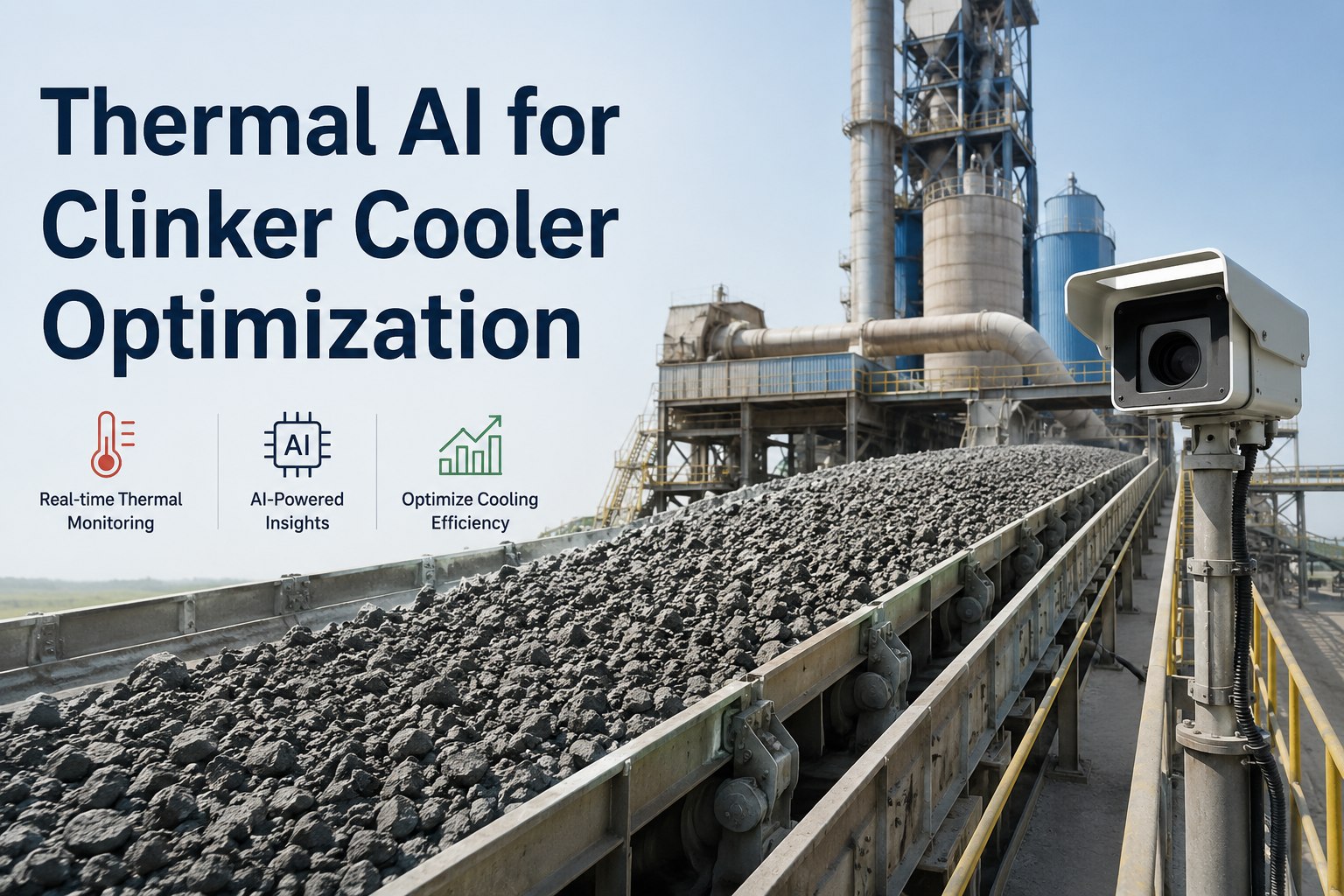
AI-Powered Clinker Cooling Optimization gives cement plants real-time visibility into clinker bed depth, cooling efficiency, and thermal anomalies that directly affect grate health, energy consumption, and clinker quality. In many cement plants, cooler operators rely on delayed visual inspections and manual observations to identify issues such as red river formations, uneven clinker distribution, and excessive thermal loading. By the time these problems become visible to operators, clinker temperatures have already damaged grate plates, reduced heat recovery efficiency, and increased fuel consumption across the kiln system. iFactory AI transforms clinker cooler operations from reactive monitoring into continuous thermal intelligence using edge-deployed thermal vision and real-time AI analytics. Book a demo to see AI Cooling Optimization in Action
Why Traditional Clinker Cooler Monitoring Fails
Most clinker coolers still depend on periodic operator inspection, isolated temperature measurements, and delayed process feedback from downstream quality analysis. These methods provide only partial visibility into what is happening inside the cooler at any moment. Critical thermal events such as red river formation, uneven bed depth, and localized overheating can develop within minutes while remaining invisible to operators until mechanical damage or efficiency loss has already occurred.
When clinker bed depth becomes unstable, airflow distribution across the cooler changes immediately. Areas with excessive clinker accumulation restrict airflow and create hot zones, while shallow regions allow clinker breakthrough that accelerates grate plate wear and reduces secondary air temperature stability. Traditional SCADA alarms detect only broad temperature deviations after the cooling imbalance has already affected kiln stability and energy efficiency.
Red River Formation
Red river formation occurs when overheated clinker channels through localized regions between grate plates. Without thermal AI visibility, operators typically detect the issue only after visible grate damage or abnormal cooler shell temperatures appear.
Grate Plate Damage
Uneven clinker loading and thermal concentration dramatically increase grate plate stress and wear. Replacing damaged grates creates unplanned downtime, expensive maintenance activity, and production loss.
Cooling Efficiency Loss
Poor clinker distribution reduces secondary and tertiary air heat recovery efficiency, forcing the kiln system to consume additional fuel to maintain thermal stability.
Delayed Operator Response
Most thermal deviations are identified only after operators review trends or physically inspect the cooler. iFactory AI delivers immediate alerts the moment abnormal thermal patterns begin forming.
How AI-Powered Clinker Cooling Optimization Works
iFactory's AI-powered clinker cooling optimization platform continuously analyzes live thermal camera feeds installed across the clinker cooler. The system processes thermal data directly on edge AI infrastructure inside the cement plant, enabling real-time detection without cloud latency. AI models identify abnormal thermal behavior instantly and generate operator alerts before equipment damage occurs.
Thermal AI continuously evaluates clinker bed height and thermal consistency across the cooler surface. Uneven bed profiles are identified instantly, allowing operators to correct grate speed and airflow imbalance before efficiency drops. Stable bed depth is the foundation of effective cooling optimization.
AI models detect red river formations through abnormal thermal concentration patterns and localized heat breakthrough between grate plates. Operators receive alerts before visible mechanical damage occurs. Early grate protection is the key outcome of detecting red river events in their earliest stage.
The platform tracks thermal uniformity across the clinker cooler and identifies airflow imbalance, overloaded cooling zones, and unstable discharge temperatures that affect kiln heat recovery efficiency. Optimized thermal distribution directly reduces kiln fuel consumption and improves secondary air quality for the energy savings cement plants depend on.
iFactory AI predicts regions of excessive grate thermal loading and generates maintenance alerts before structural grate damage develops, helping plants avoid emergency shutdowns and cooler rebuild costs. Grate protection intelligence works in combination with red river detection to provide complete cooler coverage.
AI-powered clinker cooling optimization extends beyond thermal protection to include clinker quality prediction. Cooling rate directly affects clinker mineralogy and grindability. By maintaining consistent cooling profiles, iFactory AI helps plants produce more uniform clinker that improves downstream grinding efficiency and cement strength development.
AI analytics continuously evaluate grate compartment pressures and fan performance in relation to the thermal distribution map. When airflow imbalance is detected, the system recommends targeted adjustments to individual compartment fans, ensuring consistent cooling efficiency across the full cooler width without operator guesswork.
Common Clinker Cooler Failure Modes AI-Powered Optimization Prevents
Understanding the specific failure modes that AI-powered clinker cooling optimization targets helps cement plant engineers and operations teams appreciate where continuous thermal intelligence delivers the greatest value. Each failure mode below represents a real cost driver that traditional monitoring consistently fails to prevent in time.
Snowmen Formation
Clinker snowmen form when large, partially cooled clinker masses accumulate at the kiln hood transition. Thermal AI identifies abnormal heat accumulation at the cooler inlet zone before snowmen grow large enough to restrict material flow or damage inlet refractory.
Grate Blowback Events
Sudden pressure imbalances between grate compartments can cause hot clinker fallback onto cooler components. Real-time thermal distribution monitoring detects the pressure and thermal signatures preceding blowback events, enabling preventive operator intervention.
Under-Grate Dust Buildup
Fine clinker dust accumulation beneath grate plates reduces cooling airflow and creates thermal dead zones. AI-powered analysis of grate zone thermal response patterns identifies segments where airflow restriction is developing, enabling targeted maintenance scheduling.
Satellite Cooler Imbalance
For kilns equipped with satellite coolers, uneven clinker distribution between tubes creates differential cooling that affects rotary kiln shell temperatures. Thermal AI tracks inter-tube temperature variance and alerts operators to developing imbalance before kiln shell damage occurs.
Edge AI Deployment for Cement Plant Environments
Thermal AI processing runs directly on industrial edge AI servers deployed inside the cement plant network. This architecture eliminates cloud dependency while ensuring ultra-fast thermal event detection with sub-second response times. Edge deployment also supports operation in harsh industrial environments where internet reliability and latency cannot be guaranteed.
Unlike cloud-dependent AI platforms, iFactory's edge-first approach means that AI-powered clinker cooling optimization continues to operate during network outages, maintains data residency within plant boundaries for security compliance, and achieves the millisecond-level response times that grate protection and red river detection demand.
Integration with Kiln and Pyroprocess AI Systems
AI-powered clinker cooling optimization does not operate in isolation. The clinker cooler is thermally and operationally connected to the rotary kiln, preheater tower, and calciner. iFactory AI integrates thermal cooler intelligence with broader pyroprocess monitoring to give operators a unified view of thermal performance across the entire cement production line.
When cooling instability affects secondary air temperature, the AI platform correlates this with kiln inlet conditions and preheater exit gas temperatures. This integrated view enables operators to understand whether a cooling event is causing kiln instability or whether an upstream kiln event — such as coating fall or kiln shell overheat — is driving abnormal clinker characteristics that then stress the cooler. Cross-system correlation is a capability that isolated edge AI systems cannot provide without iFactory's integrated pyroprocess architecture.
Secondary Air Temperature Stability
Stable secondary air temperature from the cooler is critical for kiln combustion efficiency. AI-powered cooling optimization actively maintains secondary air quality by ensuring consistent thermal distribution across all grate compartments.
Tertiary Air Duct Optimization
Tertiary air extraction from the clinker cooler directly affects calciner combustion efficiency. iFactory AI monitors cooler middle-zone temperatures to help operators maintain optimal tertiary air volumes without destabilizing clinker bed depth.
Kiln Feed Rate Correlation
Sudden changes in kiln feed rate directly impact clinker production volume and cooler loading. AI analytics anticipate cooler demand shifts based on upstream kiln feed data, enabling proactive grate speed and airflow adjustments before thermal imbalance develops.
Fuel Consumption Feedback
Cooler thermal efficiency directly drives kiln specific fuel consumption. AI-powered cooling optimization provides continuous feedback on heat recovery performance, enabling operations teams to track energy savings in real time.
Operational Benefits of AI-Powered Clinker Cooling Optimization
Ready to see these results at your plant? Book a demo to Explore Smart Cement Plant Analytics and speak with an iFactory AI engineer.
Implementation and Commissioning Process
Deploying AI-powered clinker cooling optimization at your cement plant follows a structured commissioning process designed to minimize disruption to ongoing operations. iFactory AI's engineering team works directly with plant instrumentation, process control, and operations staff to ensure the system is calibrated to your specific cooler design, clinker chemistry, and operational targets.
iFactory engineers conduct a detailed site survey of the clinker cooler to determine optimal thermal camera mounting positions that provide complete bed coverage. Camera placement is engineered to avoid thermal blind spots while accounting for cooler geometry, inspection ports, and existing instrumentation infrastructure.
Edge AI infrastructure is installed in the plant's electrical room or control building, connected to thermal cameras via industrial Ethernet. The edge server is pre-configured with iFactory's thermal AI models and requires no ongoing cloud connectivity to operate once commissioned.
During initial commissioning, AI models are calibrated against your plant's normal operating thermal patterns. This baseline period allows the system to distinguish plant-specific normal variation from genuine red river, grate overloading, and thermal distribution anomalies, minimizing false alerts during early operation.
AI thermal analytics are integrated into your existing SCADA or DCS operator displays. iFactory's application engineers conduct structured training with operations teams to ensure operators understand thermal alert types, response procedures, and how AI-powered cooling optimization supports their existing control strategies.
Who Benefits from AI-Powered Clinker Cooling Optimization
AI-powered clinker cooling optimization delivers measurable value across multiple roles within a cement plant — from operations and maintenance to process engineering and plant management. The following teams experience direct operational improvements when continuous thermal intelligence replaces periodic manual inspection.