Bag Filter/Dust Collector analytics Checklist for Cement Plants

By Alex Jordan on April 23, 2026

bag-filter-dust-collector-analytics-checklist-for-cement-plants

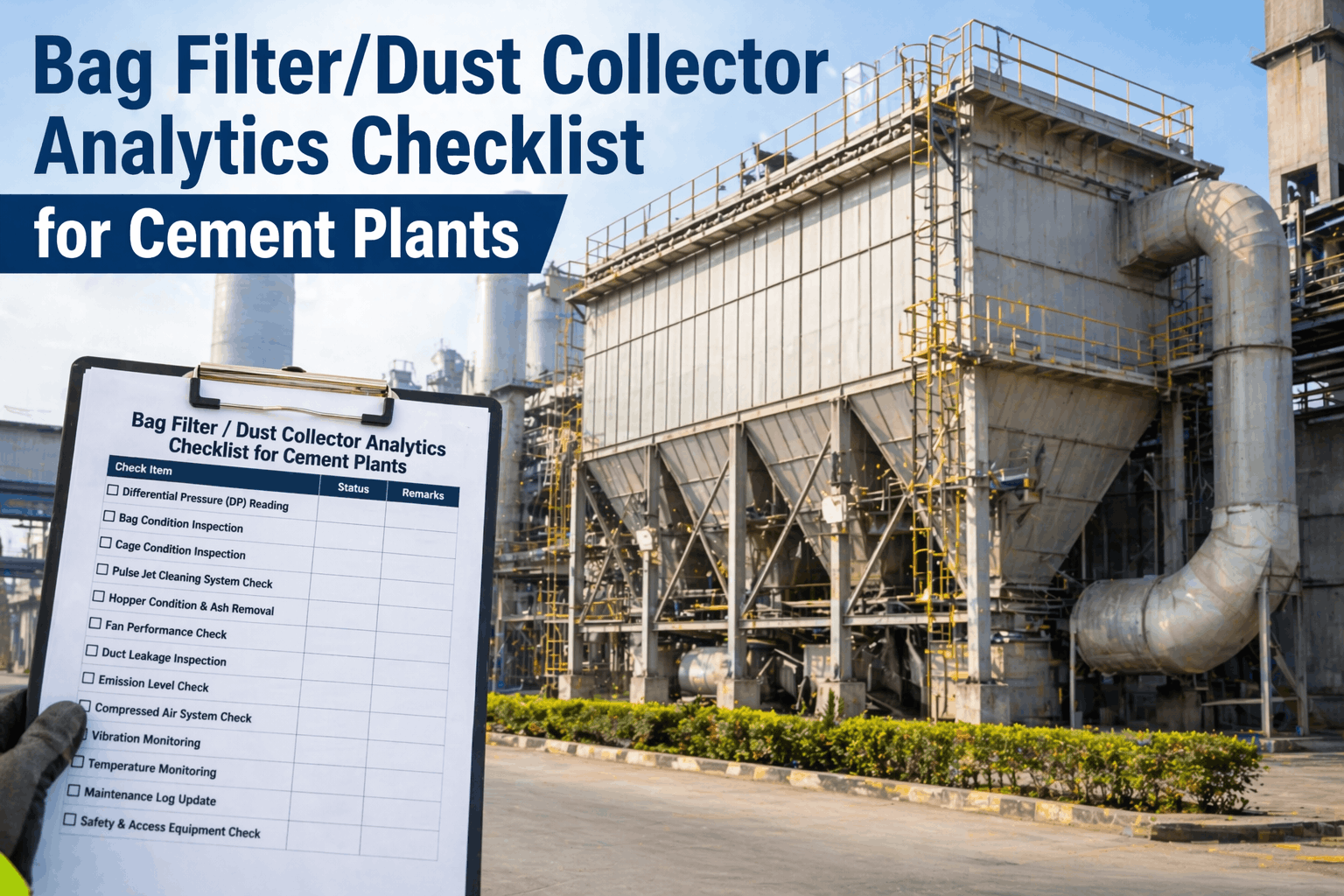
Maintaining zero-emission compliance in cement production is driven by the reliability of your filtration systems. This bag filter analytics checklist provides a deep technical framework for auditing dust collector performance—from pulse-jet timing to differential pressure (DP) trend correlation. By digitizing these dust collector inspection templates with iFactory, your environmental teams can detect bag blinding or cage failure early, ensuring 100% compliance with local EPA emission standards. Book a demo to automate your emission logs today.

EMISSION COMPLIANCE DP LOGGING AI ZERO LEAKAGE

Digitalize Your Baghouse Compliance Strategy

Transition from manual pressure logs to real-time bag filter analytics. Track every pulse cycle and emission surge on your mobile device with iFactory.

1. Differential Pressure (DP) & Airflow
2. Filter Bag & Cage Integrity Audit
3. Pulse-Jet Cleaning System Performance
4. Rotary Airlocks & Screw Conveyance
COMPLIANCE AI DATA INSIGHTS

Master Your Emission Compliance

Leverage bag filter analytics checkists that alert you to failed bags before the EPA monitors do.

5. ID Fan & Damper Control Analytics
6. Hopper Aeration & Discharge Health
7. Environmental Compliance & Emissions
8. Casing Structural & Seal Integrity

Why Continuous Baghouse Analytics Matters

Prevent Bag Blinding Shutdowns

Monitoring DP vs Pulse-Frequency trends prevents moisture condensation and "mud-blinding" that stops production for days. Book a demo to automate your wear logs.

Reduce Compressed Air Energy Costs

Auditing pulse-jet valve performance eliminates wasted air, potentially saving tens of thousands in compressor electricity annually.

Bag Filter Compliance FAQs

1. What is a normal Differential Pressure (DP) range for a cement bag filter?
A healthy range is typically 100-150 mmWG. Consistently high DP (>200 mmWG) indicates blinding, while sudden drops (<50 mmWG) suggest failed bags or leaks. Book a Demo to see our DP dashboards.
2. How often should compressed air Dew Point be audited?
Moisture is the #1 enemy of filter bags. Ideally, dew point should be monitored in real-time, but manual shift audits of the dryer are mandatory in high-humidity regions.
3. What causes sudden surges in stack opacity?
Surges are most commonly caused by "pop-off" bag snap-rings or small holes in the filtration media. AI-driven localization can tell you exactly which compartment is at fault.
4. Why is hopper aeration critical during rounds?
If dust settles and hardens in the hopper (bridging), it will eventually build up and "drown" the filter bags, causing massive structural damage to the cages.
5. Can iFactory automate our EPA emission reports?
Yes. iFactory aggregates manual rounds data with live CEMS data to generate audit-ready compliance reports for ISO 14001 and local regulatory bodies.

Share This Story, Choose Your Platform!