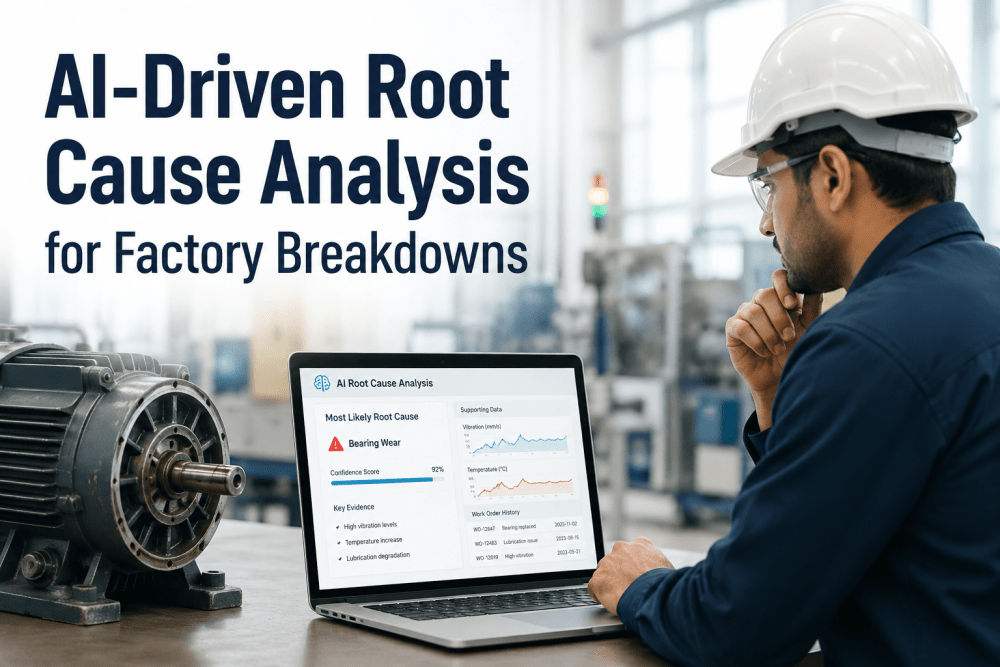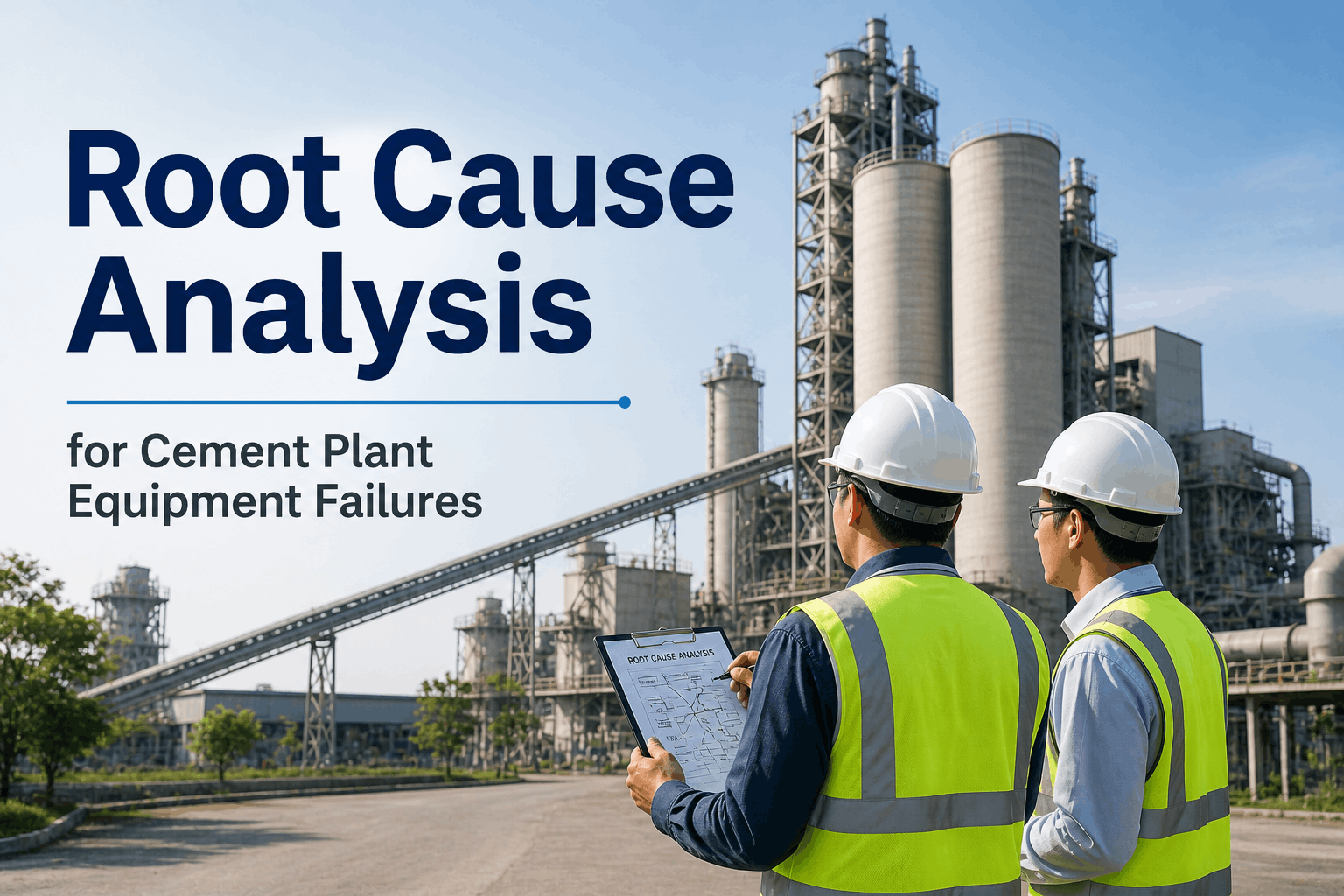
Equipment failure in cement plants doesn't just cost downtime — it triggers a cycle of recurring breakdowns, unoptimized maintenance spend, and kiln instability that eats into the bottom line. In 2026, AI-powered **Root Cause Analysis (RCA)** is transforming how cement producers investigate, analyze, and permanently eliminate mechanical failures before they can repeat. With kiln throughput pressures at an all-time high and technical expertise in short supply, book a demo to see how iFactory's digital RCA platform identifies the hidden "why" behind every breakdown, ensuring your cement operations run at peak reliability and efficiency.
Eliminate Recurring Failures with AI-Driven RCA
iFactory's analytics platform automates the Root Cause Analysis workflow — correlating sensor data with historical patterns to find and fix the source of your downtime.
Why Traditional RCA Fails in Modern Cement Plants
Cement plants are highly coupled mechanical systems. A failure in the vertical roller mill (VRM) hydraulic system might actually be rooted in upstream feed chemistry variations or power quality fluctuations. Traditional manual RCA — often performed on whiteboards days after the event — lacks the temporal resolution to see these hidden correlations. As plants become more automated, the volume of sensor data exceeds the capacity of even the most experienced maintenance teams to analyze manually. The result is a "fix the symptom" culture where the same bearing or gearbox fails every 6 months because the true root cause remains hidden.
AI-powered RCA systems for cement plants close this gap by performing "Post-Mortem Analytics" with millisecond precision. Rather than guessing why a kiln tire slipped, AI analytics correlate real-time shell temperature profiles, torque variations, and grease pressure logs to pinpoint the exact sequence of events leading to failure. Facilities using book a demo to understand how digital RCA reduces maintenance backlog while extending asset service life permanently.
How AI Automates Root Cause Analysis for Cement Assets
Automated RCA in cement manufacturing relies on machine learning models that can "look back" through months of SCADA and IoT data to identify failure signatures. When a kiln stops, the AI isn't just recording the downtime; it is performing a multi-variable analysis of the 48 hours preceding the event, identifying the specific "Lead Indicator" that drifted out of spec first. This converts a week-long investigation into a 10-minute digital report.
Automated Logic Chains for Faster Diagnosis
AI-driven logic engines guide maintenance teams through the "5 Whys" process, prepopulating the analysis with real-time data evidence. This eliminates guesswork and ensures investigations are grounded in hard asset data.
Hidden Linkage Identification Across Process Areas
AI identifies non-obvious correlations — such as how raw meal moisture levels affect fan vibration signatures — uncovering root causes that exist in different process silos than the failure itself.
Dynamic Failure Mode & Effects Analysis
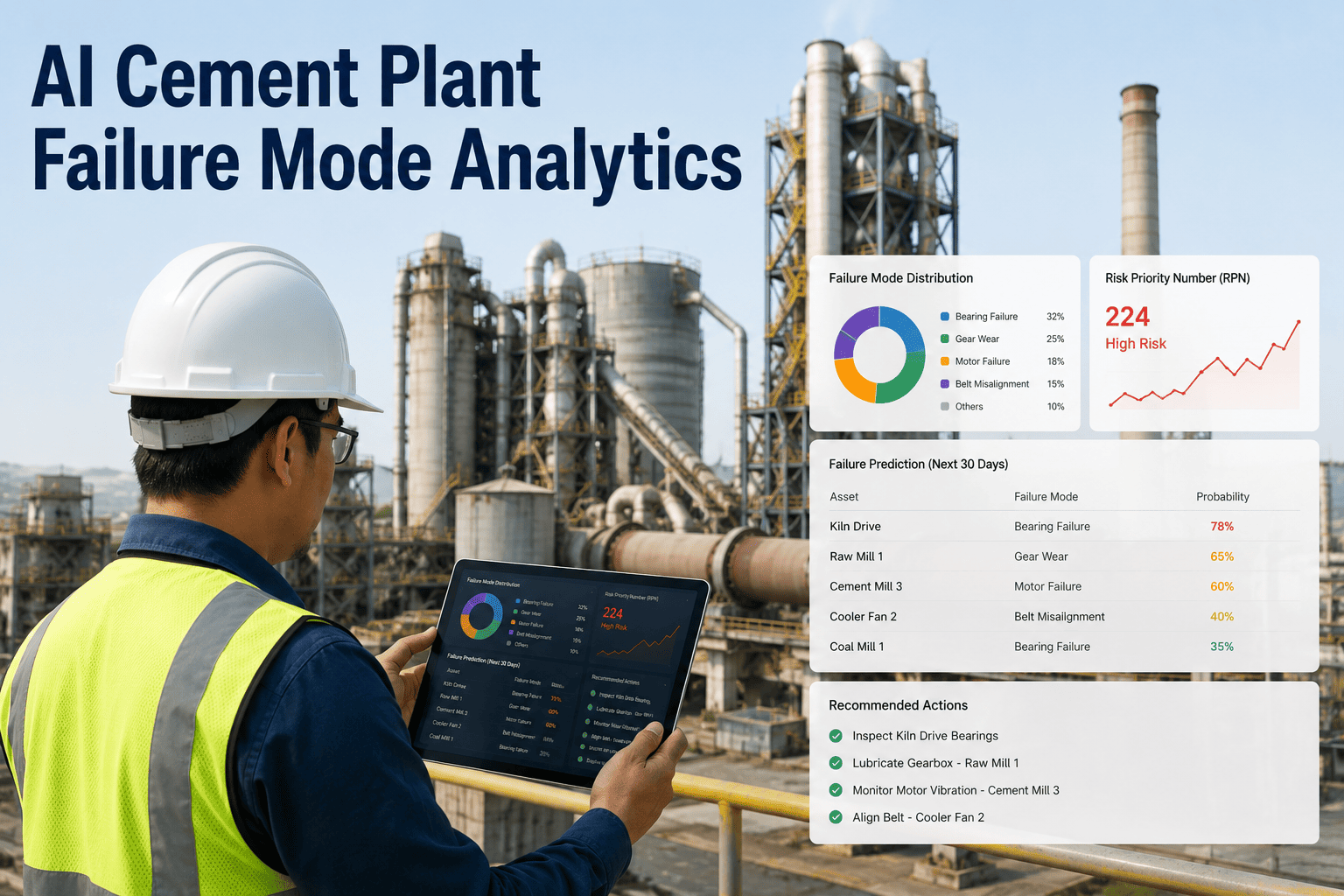
Traditional FMEA is a static document. iFactory turns FMEA into a living database, automatically updating the "Probability" and "Impact" scores of failure modes based on actual plant performance data.
Focusing Resources on the "Vital Few" Causes
AI automatically generates Pareto charts of failure modes, highlighting the 20% of root causes that drive 80% of your downtime — ensuring your maintenance budget is spent where it yields the highest ROI.
Critical Cement Failure Categories Requiring Systematic RCA
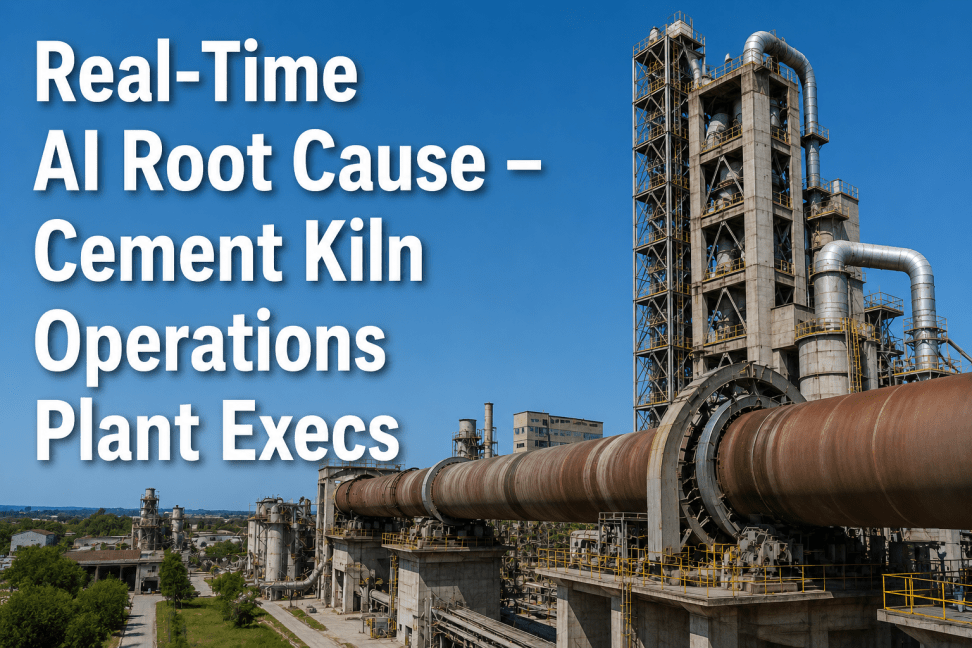
Not all cement plant failures are simple. High-consequence assets require deep, multi-disciplinary RCA to prevent catastrophic kiln feed stops. AI monitoring deployment strategies prioritize these complex failure modes where the "symptom" is often far removed from the "cause." Facilities looking to eliminate recurring clinker cooler or mill issues can book a demo to walk through a live RCA investigation case study.
Analyzing Premature Brick Failure Patterns
Recurring refractory loss is rarely just a "bad brick." AI RCA correlates shell scanner data with fuel mix variations (AFR) and kiln speed changes to identify if the root cause is chemical coating instability or mechanical shell deformation.
VRM Bearing & Hydraulic Failure Investigation
When a VRM bearing fails, AI analyzes vibration frequency spectra and hydraulic pressure cycles to determine if the cause was lubrication starvation, process-induced vibration from "mill-bumps," or material-feed surges.
Cooler Grate & Drive Failure Root Cause
Cooler grate wear is often symptomatic of "Snowman" formation or poor clinker distribution. AI RCA correlates cooler fan pressures with grate speed and kiln exit temperatures to optimize the clinker bed profile and eliminate grate-burn events.
Emission Spike & Filter Bag Life Analysis
Frequent bag replacements indicate poor pulse-jet timing or temperature excursions. AI RCA identifies the exact process event (e.g., kiln startup transients) that exceeds the bag's thermal limits, allowing for logic-based protection.
The AI RCA Workflow: From Incident to Permanent Fix
A successful RCA doesn't end with finding the cause; it ends with a "Permanent Corrective Action" that prevents recurrence. iFactory's digital RCA platform links the analysis directly to your work order management system, ensuring that the findings of an investigation are translated into new PM schedules or process set-point changes.
Our platform classifies investigations by severity — from routine component failure to "Kiln-Stop" events — with each level triggering a mandatory RCA workflow. This ensures that the "Lessons Learned" from a failure in Site A are automatically shared as "Predictive Alerts" for Site B. Facilities managing multi-site cement operations should book a demo to review our enterprise-wide failure sharing architecture.
RCA Performance: Traditional vs. AI-Driven Investigation
| Investigation Metric | Traditional Manual RCA | iFactory AI-Driven RCA | Operational Impact |
|---|---|---|---|
| Data Access | Manual log-sheet review and CSV exports | Instant access to high-frequency data streams | Investigation time reduced from days to minutes |
| Causal Identification | Subjective opinion and experience-based | Objective, data-driven correlation analysis | Eliminates "Guesswork" and bias in diagnosis |
| Inter-Process Linkage | Difficult to see links between silos | Automated correlation across all plant data | Uncovers root causes in remote process areas |
| Failure Recurrence | Common (30-50% recurrence rate) | Minimal (<5% recurrence for analyzed faults) | Permanent elimination of chronic breakdowns |
| Documentation | Paper forms or Excel spreadsheets | Automated, searchable Digital RCA Library | 100% audit-readiness and knowledge retention |
| Corrective Action | Manual email follow-up | Auto-generation of corrective work orders | Ensures fixes are actually implemented in the field |
Implementing Systematic RCA: The 3-Phase Roadmap
Digital RCA Workflow Integration
Configuring the iFactory RCA engine to trigger on every "Unplanned Stop." Importing historical failure data to create an initial "Failure Signature Library." Training the local team on the digital 5-Whys interface.
Correlation Modeling & Root Cause Discovery
The AI begins correlating failure events with process variables. First high-value "Root Cause" discoveries (e.g., linking cooler grate wear to specific fan speed logic) are identified and verified by the team.
Permanent Causal Elimination
RCA findings are hard-coded into the maintenance strategy. The plant transitions from "Break-Fix" to "Root-Cause Elimination," resulting in a sustained 45%+ reduction in unplanned downtime events.
The Reliability Voice: Transforming Cement Plant Performance
The long-term ROI of AI-driven RCA in cement plants compounds as your "Failure Library" grows. Every investigation creates a digital asset that teaches the AI how to recognize that failure pattern even earlier next time. In year one, you fix the symptoms; by year three, the AI is preventing the causes before the equipment even knows it's about to fail. This cultural shift, from reactive firefighting to data-driven reliability, is the hallmark of the world's most profitable cement plants.
Stop Fixing the Same Failures — Start Eliminating Them
iFactory's AI-driven RCA platform gives cement plants the visibility to find, analyze, and permanently fix the root causes of downtime — so your next breakdown is your last breakdown.
Expert Review: The Power of Systematic RCA
"Before iFactory, we were replacing our VRM rollers every 8 months and assuming it was just 'normal wear.' After one digital RCA investigation, the AI showed us that the root cause was a hydraulic pressure oscillation triggered during mill startups. We fixed the logic, and our rollers have now been running for 14 months without issue. The tool paid for itself in one investigation."
Frequently Asked Questions: RCA for Cement Equipment Failures
What is the difference between RCA and traditional maintenance?
Traditional maintenance focuses on returning an asset to service (Fixing the Symptom). RCA focuses on identifying why the asset failed in the first place (Identifying the Cause) and implementing a change to ensure it never happens again.
How does AI improve the "5 Whys" process?
AI prepopulates each "Why" with data evidence. For example, if you ask "Why did the motor overheat?", the AI can instantly show if the cause was high ambient temperature, over-current, or a failing cooling fan — removing subjective bias from the meeting.
Can we use RCA data for insurance and warranty claims?
Yes. iFactory generates audit-ready digital RCA reports that provide the "Proof of Root Cause" needed for major insurance claims or equipment warranty disputes, potentially saving millions in contested costs.
What is FMEA and how does it relate to RCA?
FMEA (Failure Mode and Effects Analysis) is a proactive risk assessment. RCA is a reactive investigation. iFactory links the two: when an RCA identifies a new root cause, it automatically updates your FMEA to improve your future preventive maintenance strategy.
How long does it take to perform an RCA with iFactory?
For major failures, a traditional RCA takes 2-4 days of data gathering. With iFactory, the data is already correlated, allowing the core investigation team to reach a conclusion and corrective action plan in under 60 minutes.
What is a "Snowman" in a clinker cooler, and can RCA prevent it?
A snowman is a build-up of clinker that stops the grate. AI RCA identifies the kiln-exit conditions and cooler fan settings that allow snowmen to form, providing set-point recommendations to eliminate them permanently.
Can RCA help reduce energy consumption?
Yes. Many "efficiency root causes" (like a partially blocked duct or a leaking seal) are identified during failure investigations. Fixing these causes reduces the specific energy consumption (kWh/t) of the plant.
Does the software support "Fishbone" (Ishikawa) diagrams?
Yes. iFactory features a digital Ishikawa interface where process data can be dragged-and-dropped directly onto the branches of the fishbone, creating a visually compelling and data-backed failure map.



.png)