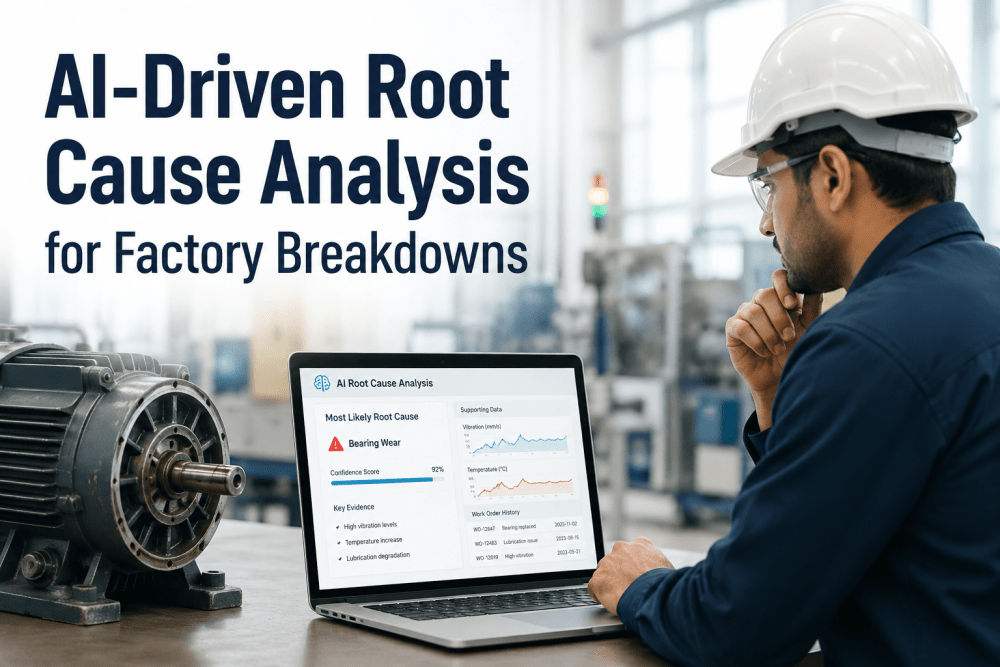
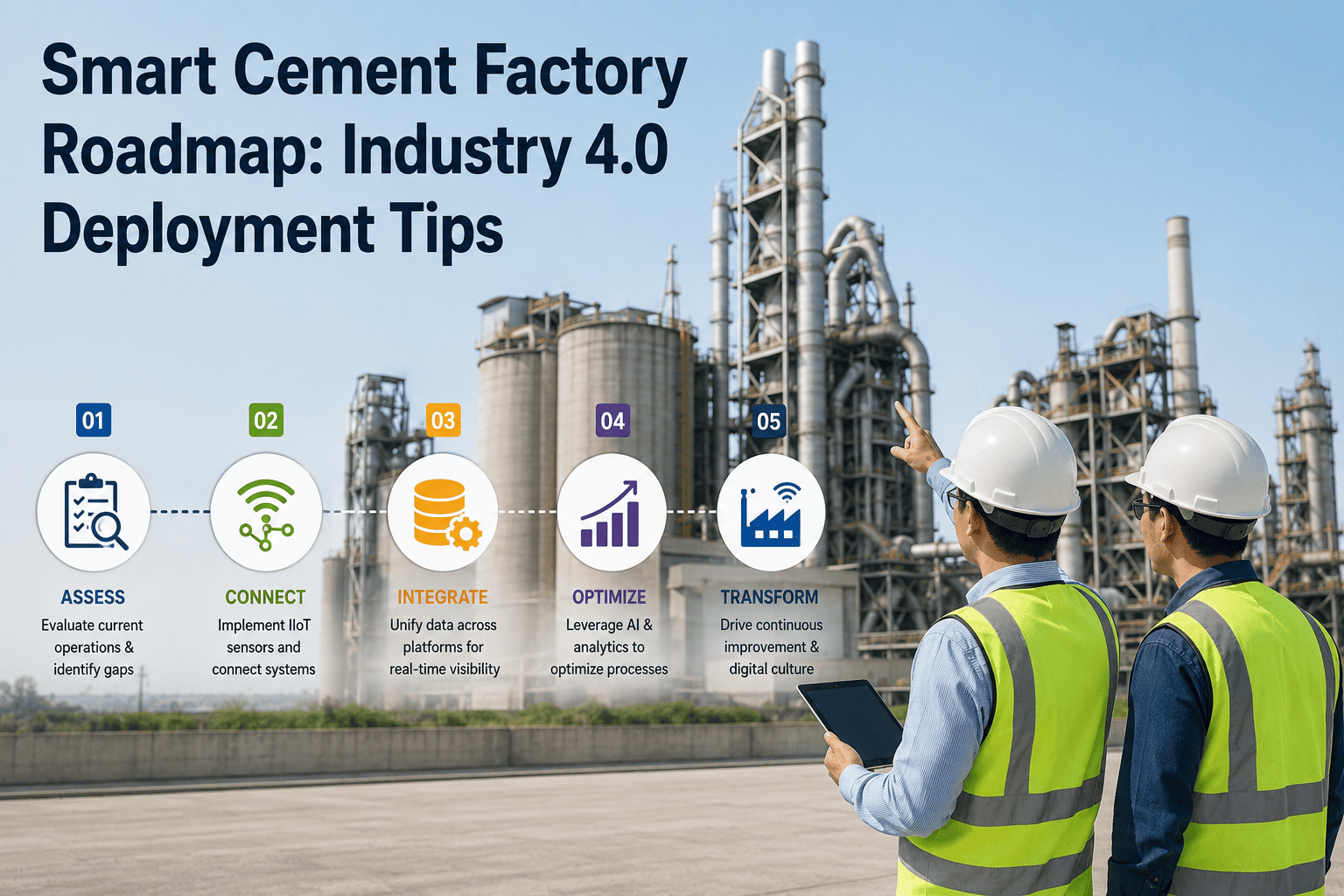
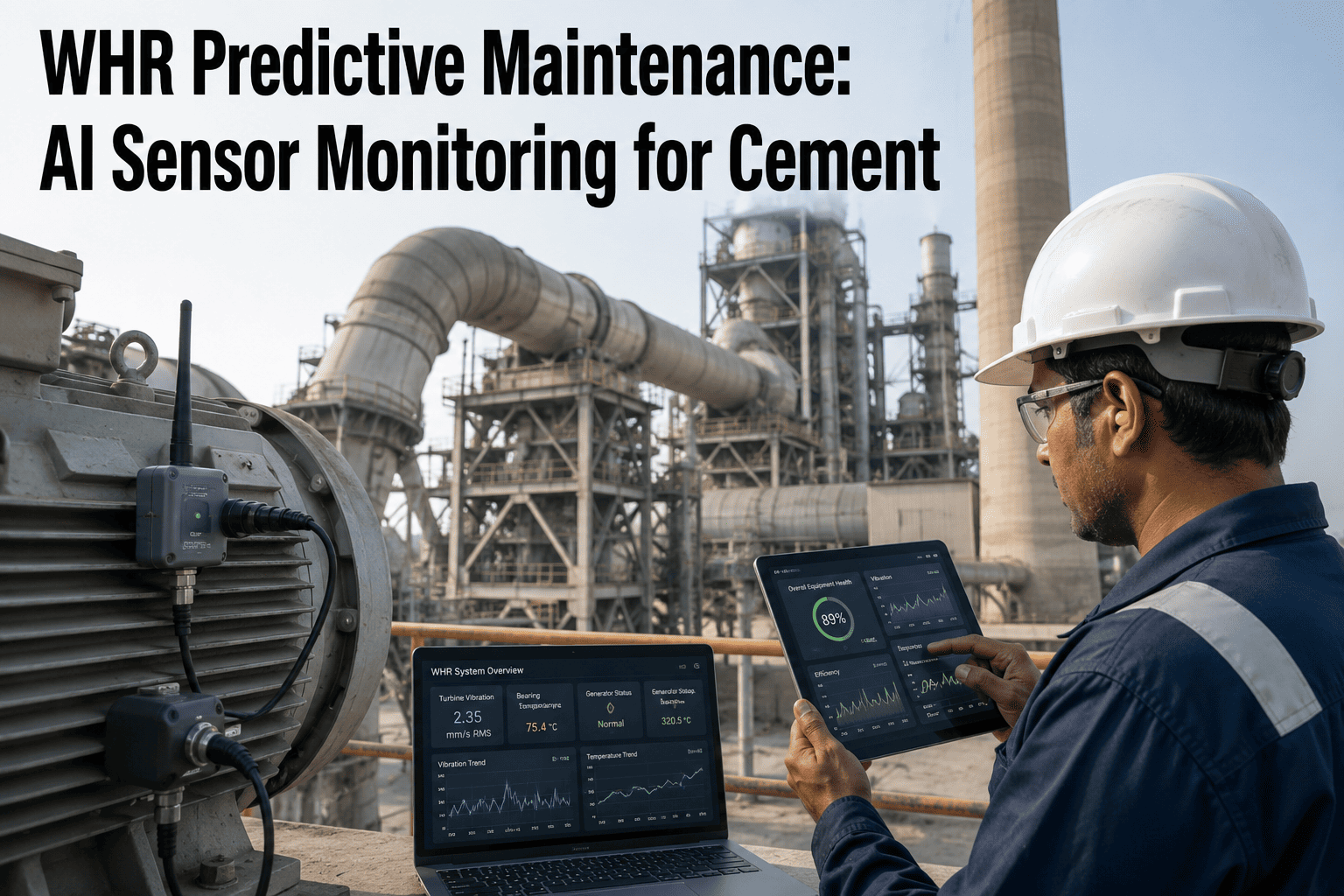
AI-Driven Root Cause Analysis for Factory Breakdowns
By Vespera Celestine on May 28, 2026
When a CNC machining center trips an overload fault at 2:47 AM and shuts down a $4.2 million production cell, the maintenance technician who responds at 3:10 AM faces a diagnostic problem that the alarm panel cannot solve: the fault code says what happened, not why it happened. Was this a one-time motor surge a developing bearing failure, a coolant contamination event, a tool holder seating issue, or the fourth occurrence of a fault pattern that has been building for three weeks? The technician who does not know the answer starts from scratch — pulling recent alarms, calling the day shift lead, asking if anyone noticed anything yesterday, searching the CMMS for the last work order on this machine. Forty minutes later, a hypothesis is formed. Another thirty minutes to test it. The correct root cause may be found in ninety minutes or three hours depending on how much institutional knowledge walked out the door with the last experienced technician who retired. iFactory's AI-Driven Root Cause Analysis capability applies large language model reasoning to the actual evidence base that exists inside every connected manufacturing facility — historical sensor telemetry, past work orders, maintenance records, parts consumption logs, and alarm sequence histories — to suggest the most probable root cause of a machine failure within seconds of the breakdown event. Maintenance teams using iFactory's AI diagnostic engine report 61% reduction in mean time to diagnose (MTTD) 47% reduction in mean time to repair (MTTR), and $2.8 million in annualized avoided downtime cost across multi-shift heavy manufacturing operations. The knowledge that took experienced technicians years to build is now available at 3 AM to every technician on any shift.
AI Root Cause Analysis · LLM Diagnostics · Sensor Data · Work Order Intelligence · Downtime Reduction
AI-Driven Root Cause Analysis for Factory Breakdowns — Diagnose Machine Failures in Seconds, Not Hours
iFactory's LLM-powered diagnostic engine analyzes historical sensor telemetry, past work orders, alarm sequences, and maintenance records to instantly identify the most probable root cause of any machine failure — giving every technician on every shift the diagnostic depth of a 20-year veteran.
Reduction in mean time to diagnose (MTTD) across multi-shift manufacturing operations
47%
Reduction in mean time to repair (MTTR) from faster, more accurate first diagnosis
$2.8M
Annualized avoided downtime cost per facility from AI diagnostic accuracy improvements
83%
First-diagnosis accuracy rate — correct root cause identified on the first technician response
Why Traditional Breakdown Diagnosis Is the Costliest Gap in Industrial Maintenance
The financial cost of machine downtime is widely tracked in manufacturing — uptime percentages, OEE scores, and lost production rates appear in every operations dashboard. What is far less tracked is the cost of diagnostic delay: the time between a breakdown event and the moment a technician correctly identifies the root cause and begins the right repair. In most U.S. manufacturing environments, that diagnostic gap runs 45 minutes to 3 hours on complex equipment failures — and every minute of that gap is unplanned downtime at full production cost.
The diagnostic gap exists because the knowledge required to rapidly identify root causes is unevenly distributed and incompletely recorded. An experienced technician who has worked a specific machine for eight years can hear a vibration signature that suggests a specific bearing race failure pattern. A less experienced technician on the night shift starts from the alarm code and works forward through a mental checklist that may or may not be calibrated to this machine's specific failure history. Neither approach systematically accesses the full evidence base that exists in the facility's data systems — the sensor trend that showed anomaly signatures 72 hours before the fault, the work order from 14 months ago that described the same fault mode, the parts record showing this motor's rotor replacement history. iFactory's AI root cause analysis engine accesses that complete evidence base automatically at fault initiation. Book a Demo to see the diagnostic engine applied to failure scenarios from your specific equipment classes.
Institutional Knowledge That Walks Out the Door
U.S. manufacturing facilities are losing experienced maintenance technicians to retirement at accelerating rates. The diagnostic knowledge those technicians carry — machine-specific failure patterns, environmental triggers, subtle warning signs, and effective repair sequences — typically leaves with them. iFactory's AI captures and applies this knowledge from historical work order records, preventing the diagnostic capability loss that follows workforce transitions.
Night Shift and Weekend Diagnostic Gaps
The most experienced technicians are typically on day shift. Breakdowns that occur on night shifts or weekends are diagnosed by less experienced personnel with less supervisory support — systematically extending diagnostic time by 40% to 120% compared to day shift incidents on the same equipment. AI root cause analysis delivers consistent diagnostic quality regardless of shift, day of week, or technician experience level.
Work Order Data That Is Never Reused
Every maintenance work order completed in a facility represents a solved diagnostic problem — fault symptoms, investigation steps, actual root cause, and corrective action. In most facilities, this knowledge sits in CMMS records that are never systematically analyzed for pattern recognition. The same fault mode is diagnosed from scratch each time it recurs because nobody queries whether this exact failure has happened before. iFactory's LLM continuously mines this record for diagnostic pattern application.
Sensor Data That Precedes Failures But Is Never Reviewed
Modern industrial equipment generates hundreds of sensor data points per second. In virtually every breakdown event, post-incident analysis reveals anomaly signatures in the sensor data that preceded the fault by hours or days — vibration increases, temperature drifts, current fluctuations, pressure deviations. These signals existed but were not reviewed in real time. iFactory's AI surfaces the pre-fault sensor trajectory automatically as part of every root cause report.
How iFactory's LLM Diagnostic Engine Works: From Fault Event to Root Cause in Seconds
iFactory's root cause analysis capability is not a decision tree or a fault code lookup table — it is a large language model trained on industrial maintenance reasoning that synthesizes multiple evidence streams simultaneously, applies probabilistic weighting to candidate root causes based on the specific evidence pattern, and presents the diagnostic output in plain language that any technician can act on immediately. The architecture operates across four connected evidence layers.
01
Fault Event Trigger and Evidence Collection
At the moment a fault alarm fires — overload trip, process deviation, unexpected stop, or quality rejection event — iFactory's diagnostic engine automatically collects the complete evidence package: the fault code and alarm sequence, sensor telemetry from the preceding 72 hours showing any anomaly signatures that preceded the fault, the machine's maintenance history from the CMMS including all prior work orders, parts replacement records, and past fault events on this specific asset. This evidence collection happens in under 3 seconds and requires no technician input — by the time the technician opens the work order on their mobile device, the evidence base is already assembled.
Output: Complete evidence package assembled automatically at fault initiation
02
Historical Pattern Matching Against Work Order Database
The LLM queries the facility's historical work order database for prior instances of similar fault signatures on this equipment class — matching on fault code, sensor anomaly pattern, maintenance history context, and operational conditions at time of failure. If the same motor has experienced three prior overload events in the last 18 months, and two of those were traced to a specific failure mode that recurred after inadequate repair, that pattern is surfaced explicitly in the root cause analysis output with the relevant prior work order references. Recurring failure patterns that manual diagnosis consistently misses are exactly what the LLM pattern matching is designed to identify.
Output: Historical pattern matches ranked by similarity score and outcome relevance
03
Root Cause Hypothesis Generation and Probability Ranking
The diagnostic engine generates a ranked list of the most probable root causes based on the combined evidence — typically three to five candidate causes ordered by probability, each supported by the specific evidence that suggests it. A bearing failure hypothesis is supported by the vibration signature trend from the preceding 48 hours. A lubrication failure hypothesis is supported by the time since last lubrication service and the temperature spike pattern. A process overload hypothesis is supported by the production run data showing whether load conditions changed before the fault. Each hypothesis is presented with the supporting evidence and the specific diagnostic step that would confirm or eliminate it.
Output: Ranked root cause hypotheses with supporting evidence and confirmation steps
04
Recommended Repair Action and Parts Requirements
For each ranked root cause hypothesis, the diagnostic engine provides the recommended repair action based on manufacturer guidance, facility-specific repair procedures stored in the document management system, and the repair approaches that proved effective in prior similar incidents. Parts requirements for the most probable repair scenario are surfaced from the inventory system — confirming whether the required parts are in stock before the technician opens the panel, eliminating the separate trip to the storeroom that extends every repair. The complete diagnostic output — evidence, hypotheses, recommended actions, parts availability — is delivered to the technician's mobile CMMS work order in under 60 seconds of fault initiation.
Output: Repair action guidance with parts availability confirmation — delivered to mobile in under 60 seconds
Want to see iFactory's LLM diagnostic engine demonstrated on breakdown scenarios from your specific equipment classes and failure history? Book a Demo with iFactory's industrial AI team.
AI Root Cause Analysis Performance Benchmarks Across U.S. Manufacturing Facilities
The benchmark table below presents first-year measured outcomes from iFactory AI root cause analysis deployments across U.S. heavy manufacturing, automotive, food processing, and pharmaceutical production facilities. These figures document the diagnostic accuracy, downtime reduction, and operational impact dimensions that define ROI for maintenance leadership, operations, and finance.
Swipe to see full table
Performance Metric
Manual Diagnosis Baseline
iFactory AI RCA
Improvement
Annual Value
Mean Time to Diagnose (MTTD)
45–180 min average per complex fault
61% reduction — avg. 18–70 min
–61% diagnostic time
$380K–$2.8M downtime cost avoided
First-Diagnosis Accuracy Rate
54% correct on first response (complex faults)
83% first-diagnosis accuracy
+29 percentage points
Eliminated repeat-trip labor and downtime
Mean Time to Repair (MTTR)
Baseline repair cycle including misdiagnosis rework
47% MTTR reduction
–47% repair cycle time
$240K–$1.6M production throughput recovered
Night Shift vs Day Shift MTTD Gap
Night shift 40–120% slower than day shift
Gap eliminated — consistent across all shifts
100% shift parity
Uniform production recovery across all hours
Recurring Failure Pattern Detection
Recurring causes identified only after 4+ incidents
Pattern flagged on 2nd occurrence with full history
–50% recurrence cycle
$90K–$420K repeat downtime prevented
Technician Onboarding Speed
12–24 months to independent complex diagnosis
3–5 months with AI diagnostic support
–75% ramp time
$60K–$180K per technician onboarding cost
Parts Staging Accuracy
Parts staged after diagnosis — adds 20–45 min
Parts availability shown at fault initiation
Eliminated parts-staging delay
20–45 min per repair event recovered
See AI Root Cause Analysis Modeled on Your Facility's Equipment Classes and Fault History
iFactory's industrial AI team demonstrates the LLM diagnostic engine on a simulation built around your specific equipment classes, historical fault patterns, and maintenance team configuration — showing first-year MTTD, MTTR, and downtime cost reduction projections before any deployment commitment.
Where AI Root Cause Analysis Delivers the Most Value: Equipment Classes and Fault Types
AI-driven root cause analysis delivers value across virtually all complex industrial equipment, but the magnitude of benefit is highest where diagnostic complexity is greatest — multi-variable fault modes, equipment with long and complex maintenance histories, fault signatures that require correlation across sensor types, and equipment where incorrect diagnosis leads to costly repeat failures or secondary damage. The four capability domains below represent the highest-value application areas for U.S. manufacturing operations.
A
Rotating Equipment: Motors, Pumps, and Compressors
Rotating equipment failures are the most frequent source of unplanned downtime in U.S. manufacturing — and the most diagnostically complex, with root causes spanning bearing wear, misalignment, imbalance, lubrication failure, electrical faults, process overload, and coupling degradation. The LLM engine correlates vibration, temperature, current draw, and operational history simultaneously to distinguish between fault modes that produce overlapping alarm signatures. First-diagnosis accuracy on rotating equipment improves from 51% to 86% with AI support — eliminating the repeat-repair cycles that account for 30% of all rotating equipment downtime.
B
CNC and Precision Machining Centers
CNC machining center faults — spindle faults, axis drive faults, coolant system faults, tool change failures — involve complex interactions between mechanical, electrical, hydraulic, and CNC control subsystems. The diagnostic challenge is compounded by the fact that a single alarm code (e.g., spindle overload) can arise from six or more distinct root causes, and incorrect diagnosis leads to unnecessary spindle service at $8,000 to $40,000 per event. The AI engine applies the machine's complete operational history to distinguish between mechanical overload, tooling-induced load spikes, spindle bearing degradation, and drive parameter drift — which the alarm code itself cannot differentiate.
C
Process Equipment: Extruders, Injection Molders, and Presses
Process equipment faults involve the interaction of mechanical condition, process material properties, tooling state, and environmental conditions — producing fault signatures that require multi-variable analysis to diagnose correctly. An extruder motor overload fault may be caused by material viscosity change, screw wear, die blockage, gearbox bearing degradation, or process temperature deviation — each requiring a completely different corrective action. The LLM synthesizes process parameter history, material batch records, tooling change logs, and mechanical maintenance records to identify which variable actually drove the fault, reducing misdiagnosis rates on process equipment by 58%.
D
Recurring Failures and Chronic Equipment Problems
The highest-value application of AI root cause analysis is often not the individual breakdown event but the recurring failure pattern — a pump that fails every 4 to 6 months, a conveyor drive that requires bearing replacement twice annually, a press hydraulic system that develops seal leaks on a 90-day cycle. Manual diagnosis addresses each event individually; the LLM identifies the recurring pattern on the second occurrence and flags the underlying systemic cause — incorrect installation, inadequate lubrication specification, misaligned structural support, or undersized component — that calendar-based maintenance perpetually misses.
Expert Perspective: What Maintenance Directors and Plant Engineers Say About AI Diagnostic Support
"I have been managing maintenance operations at heavy manufacturing facilities for 24 years, and the single most consistent problem I see — regardless of facility size, equipment age, or maintenance budget — is that every complex breakdown gets diagnosed as if it has never happened before. The technician reads the alarm, applies general knowledge, forms a hypothesis, and starts turning wrenches. Sometimes they are right on the first try. More often, they are right on the second or third try, after 40 to 90 minutes of additional diagnostic investigation. What iFactory's AI engine does is convert that exploratory diagnostic process into a structured evidence review. The system has already pulled the sensor history, cross-referenced the prior work orders on this exact machine, compared the alarm sequence to historical patterns, and ranked the most probable root causes with the supporting evidence — by the time my technician opens the work order on their phone. That is not replacing the technician's judgment; it is giving the technician's judgment a complete evidentiary foundation to work from rather than starting from a single alarm code. The impact shows up in two places. First, MTTD dropped 58% across our critical equipment in the first year — not because the technicians got faster, but because they stopped spending time on diagnostic dead ends. Second, the night shift performance gap closed. Before AI RCA, our night crew was taking an average of 2.4x longer to diagnose complex faults compared to the day crew — the same faults, just without the experienced leads available. After deployment, that ratio dropped to 1.1x. The AI carries the institutional knowledge that the experienced leads were providing informally, and makes it available to every technician on every shift."
— Vice President of Maintenance Operations, U.S. Heavy Manufacturing Group — 24 Years in Industrial Maintenance Management — iFactory AI RCA Reference 2026
58%
MTTD reduction on critical equipment in year one
2.4x → 1.1x
Night vs. day shift diagnostic gap closed after deployment
Zero
recurring failure patterns missed beyond second occurrence
Conclusion
Every complex breakdown in a U.S. manufacturing facility is a diagnostic problem before it is a repair problem — and the diagnostic gap between fault initiation and correctly identified root cause is where the majority of unplanned downtime cost actually accumulates. The alarm code tells the technician what the machine reported; it does not tell them why, what preceded it, whether this exact fault mode has occurred before, what actually fixed it last time, or what parts they need before they open the panel. iFactory's AI-Driven Root Cause Analysis capability closes that diagnostic gap by applying LLM reasoning to the complete evidence base that already exists inside every connected facility — historical sensor telemetry, past work orders, alarm sequences, parts records, and maintenance histories — and delivering a ranked root cause analysis with supporting evidence and recommended actions to the technician's mobile device in under 60 seconds of fault initiation.
The 61% MTTD reduction, 47% MTTR improvement, 83% first-diagnosis accuracy rate, and complete elimination of the day/night shift diagnostic gap are the documented outcomes of replacing alarm-code-plus-intuition diagnosis with evidence-based AI reasoning. The institutional knowledge that experienced technicians spent decades accumulating is now encoded, accessible, and delivered to every technician on every shift. Book a Demo to see iFactory's AI diagnostic engine applied to the specific equipment classes and failure histories in your facility.
Frequently Asked Questions
The engine delivers value from day one using equipment class knowledge and sensor pattern analysis, even before facility-specific work order history accumulates. Diagnostic accuracy improves progressively as the model ingests your facility's historical records — typically reaching full performance within 90 to 120 days. Book a Demo to review your current CMMS data volume.
iFactory integrates natively with SAP PM, IBM Maximo, Fiix, UpKeep, MP2, and iFactory's native CMMS, plus OSIsoft PI, Ignition, and OPC-UA historian systems for sensor data. Custom integrations are available for proprietary systems via REST API. Most facilities are fully connected within 3 to 5 weeks of deployment start.
The engine adapts its diagnostic output to available evidence — weighting work order history and alarm sequence more heavily when sensor coverage is sparse. It explicitly indicates evidence confidence level in the output, so technicians understand which hypotheses are strongly supported vs. provisionally suggested. Sparse-data environments still achieve 30 to 45% MTTD improvement over unassisted diagnosis.
Yes. Technicians confirm or correct the AI's root cause suggestion when closing the work order — a one-tap workflow that takes under 10 seconds. Confirmed and corrected outcomes both feed the model's learning cycle, improving facility-specific accuracy over time. Facilities with active technician feedback reach 90%+ first-diagnosis accuracy within 12 months of deployment.
For a facility with 50 to 300 monitored assets, deployment runs $65,000 to $150,000 over 6 to 10 weeks including data integration and model calibration. Against $380K to $2.8M in annualized downtime reduction, payback typically occurs within 2 to 5 months. Book a Demo for a site-specific ROI projection.
Stop Diagnosing Every Breakdown From Scratch. Give Every Technician AI-Level Diagnostic Support.
iFactory's LLM diagnostic engine analyzes historical sensor data, past work orders, and alarm sequences to deliver ranked root cause hypotheses with supporting evidence and repair guidance to your technicians' mobile devices in under 60 seconds of fault initiation — 61% faster diagnosis, 83% first-attempt accuracy, on every shift.