As global energy intensity standards transition from voluntary benchmarks to mandatory carbon-compliance thresholds, cement producers are finding that "average" performance is no longer commercially viable. A specific energy consumption (SEC) strategy based on static annual audits now faces dynamic carbon taxes and fuel price spikes that can render a plant uncompetitive overnight. In 2026, SEC benchmarking is no longer an optional "efficiency" task—it is the primary driver of corporate credit ratings and market survival. Achieving best-in-class performance demands a shift from generic reporting to a dynamic, normalized **SEC Benchmarking** model. This guide delivers a technical framework for mapping energy intensity across your entire production chain, leveraging AI-driven normalization to protect margins before the next regulatory shift arrives. Book a free demo to digitize your SEC roadmap.
Specific Energy Consumption (SEC) Benchmarking & Efficiency Mapping
A comprehensive technical roadmap for deploying AI-powered intensity analytics to benchmark thermal and electrical SEC against regional and global standards.
Energy Intensity Failures Cement Producers Cannot Afford to Ignore
Traditional plants rely on raw SEC numbers that ignore process variables. Today, managers must defend against six primary intensity-driven failure modes that threaten operational longevity. Schedule a consultation.
Marginal Efficiency Erosion
A slow, "invisible" drift in kiln heat consumption often goes undetected in monthly reports. iFactory's live benchmarking flags a 1% deviation in SEC immediately, allowing for rapid air-flow and burner tuning.
Unnormalized Production Data
Comparing energy use during winter vs. summer or different clinker types leads to "Apples-to-Oranges" errors. Our platform normalizes SEC data for clinker factor and moisture, providing a true performance baseline.
Thermal Energy Leakage
Kiln surface losses and inefficient cooler recuperation directly inflate thermal SEC. We use thermal imaging and mass-balance data to benchmark your heat recovery against theoretical maximums.
Electrical Intensity Overages
Inefficient grinding media or oversized mill motors can inflate electrical SEC by 15% without being noticed. iFactory benchmarks individual mill kWh/tonne against IE3/IE4 efficiency standards in real-time.
Benchmarking Gap Blindness
Plants often believe they are efficient until compared to regional leaders. Our dashboards provide "Gap Visibility," showing exactly where your plant sits on the global SEC efficiency curve.
Carbon Tax Vulnerability
Inadequate SEC reporting leads to higher carbon-liability assessments. We provide the "Verification Layer" that proves your actual energy intensity reduction, lowering your regulatory tax exposure. Book a demo.
Why Static "Annual Audits" Create Structural Risk
Traditional energy audits are snapshots of the past. A dynamic, benchmarking-driven approach is now required to maintain cement production service levels and margin stability.
Historical Bias Failure
Old audits assume the plant's best performance was its natural baseline. This misses the potential of AI-driven optimization, leading to under-engineered efficiency projects that fail to reach global targets.
Static Infrastructure Silos
Quarry, Kiln, and Mill departments rarely share SEC impact data. iFactory breaks these silos, showing how poor raw material moisture control at the quarry cascades into higher thermal SEC in the kiln.
The "Reactive Funding" Trap
Plants lacking real-time SEC benchmarking often miss out on federal efficiency grants. Proactive intensity modeling is now a requirement for non-discretionary funding; without it, you are reliant on high-cost CapEx.
Manual Audit Delays
Relying on manual spreadsheets to calculate multi-stage SEC takes weeks. iFactory's digital twins provide "Instant Visibility," flagging compromised efficiency zones within minutes of a production heat.
Secure Your Plant's Future with iFactory SEC Analytics
iFactory provides the predictive analytics and real-time benchmarking required to transform vulnerable cement operations into climate-hardened efficiency leaders.
From clinker-to-cement ratio optimization to thermal heat-rate tracking, our platform integrates directly with your SCADA and fuel-flow data to deliver an actionable SEC roadmap. Automate your GNR and ISO 50001 compliance reporting while securing your plant's credit rating through verified risk reduction. Schedule a benchmarking audit.
SEC Architecture: Four Deployment Models for Benchmarking
Cement producers can deploy SEC technology across four distinct architectural tiers, from purely predictive modeling to fully autonomous energy optimization.
Thermal Digital Twin
A 4D digital twin of the kiln and preheater system that simulates thermal SEC scenarios (e.g., 50% AFR substitution). It identifies exactly how heat-rate will fluctuate. Book a demo today.
Real-Time SEC Response Mesh
Deployment of live fuel-flow and power sub-meters across all critical assets. This "Live Nervous System" triggers automated efficiency alerts when SEC deviates from the optimized global baseline.
AFR Benchmarking Module
Monitoring the net calorific value (NCV) and carbon-impact of alternative fuels. We benchmark your Thermal Substitution Rate (TSR) against industry leaders to maximize coal displacement.
Autonomous SEC Optimization
Direct integration with SCADA to automatically adjust air-to-fuel ratios and mill separators for minimum energy intensity. This "Self-Healing" model requires the high-fidelity data iFactory provides. Talk to our engineer.
Regulatory Frameworks Driving Intensity Investment
2026 mandates from federal and international bodies now require verifiable SEC assessments for almost all infrastructure funding and insurance renewals.
The Evolution of SEC Benchmarking
From simple monthly totals to smart intensity twins: how the methodology of cement protection has transformed in the 21st century.
The Annual Audit Era
Emphasis on yearly energy reports. No intelligent monitoring; these systems were often overwhelmed by unexpected "extreme" efficiency drops that exceeded their static design capacity.
The KPI Explosion
Widespread realization that SEC needed to be tracked by production stage. Installation of early energy dashboards, but still lacking real-time data normalization for variable clinker factor.
The Rise of Live SCADA
First major industrial IoT initiatives. Focus on cloud-based storage, but difficulty in quantifying actual SEC performance gap against global best-in-class leaders.
Global SEC Normalization
Standardized reporting for "Getting the Numbers Right" becomes mandatory for funding. Intensity becomes a data task; plants begin integrating chemistry data to justify spending.
Autonomous Intensity Optimization
The current standard: iFactory AI manages predictive thermal tuning and sensor-based SEC warning. 100% data transparency becomes the baseline for insurance and ESG agencies.
Static Benchmarking vs. AI-Powered Intensity
A visual comparison of how plants respond to efficiency excursions using traditional methods versus the iFactory adaptive model.
High-Loss Vulnerability
Margin Continuity Guaranteed
How iFactory Delivers SEC Continuity
iFactory isn't just a dashboard—it's a plant-wide nervous system designed to withstand the stress of a volatile energy market. Our platform integrates deep-learning chemical models with high-fidelity asset data to provide an objective, real-time view of your SEC performance. Book a demo to see how we protect margins.
From kiln heat-rate monitoring to mill power benchmarking, iFactory provides the "Record of Resilience" that stakeholders demand. We ensure that every dollar spent on intensity reduction is measurable, verifiable, and optimized for maximum safety impact.
For large-scale cement groups with multi-plant operations, iFactory supports a federated benchmarking model, allowing individual plants to maintain their specific workflows while sharing a unified corporate SEC layer. This ensures that no "Siloed Inefficiency" cascades through the group's financial performance. Talk to our intensity engineer.
Quantifying the Benchmarking Advantage
Producers that have transitioned to AI-driven SEC benchmarking show measurable improvements in energy costs and long-term asset lifespan.
Ready to Build an SEC-Optimized Smart Plant?
Speak with an iFactory intensity specialist today about deploying predictive benchmarking across your plant's critical asset network.
Whether you are planning kiln retrofits, hardening electrical mills, or mitigating thermal excursions, iFactory provides the data infrastructure your margins depend on. Secure your grants, protect your assets, and guarantee continuity for the next decade. Book your SEC demo now.
SEC Benchmarking: Frequently Asked Questions
Q: Why is normalization critical for cement SEC benchmarking?
Energy use varies by clinker factor and moisture; normalization ensures you compare plants on an equal basis. This accuracy is vital for defending your efficiency record to regulatory and bond agencies.
Q: What is the current global "Best Practice" for Thermal SEC?
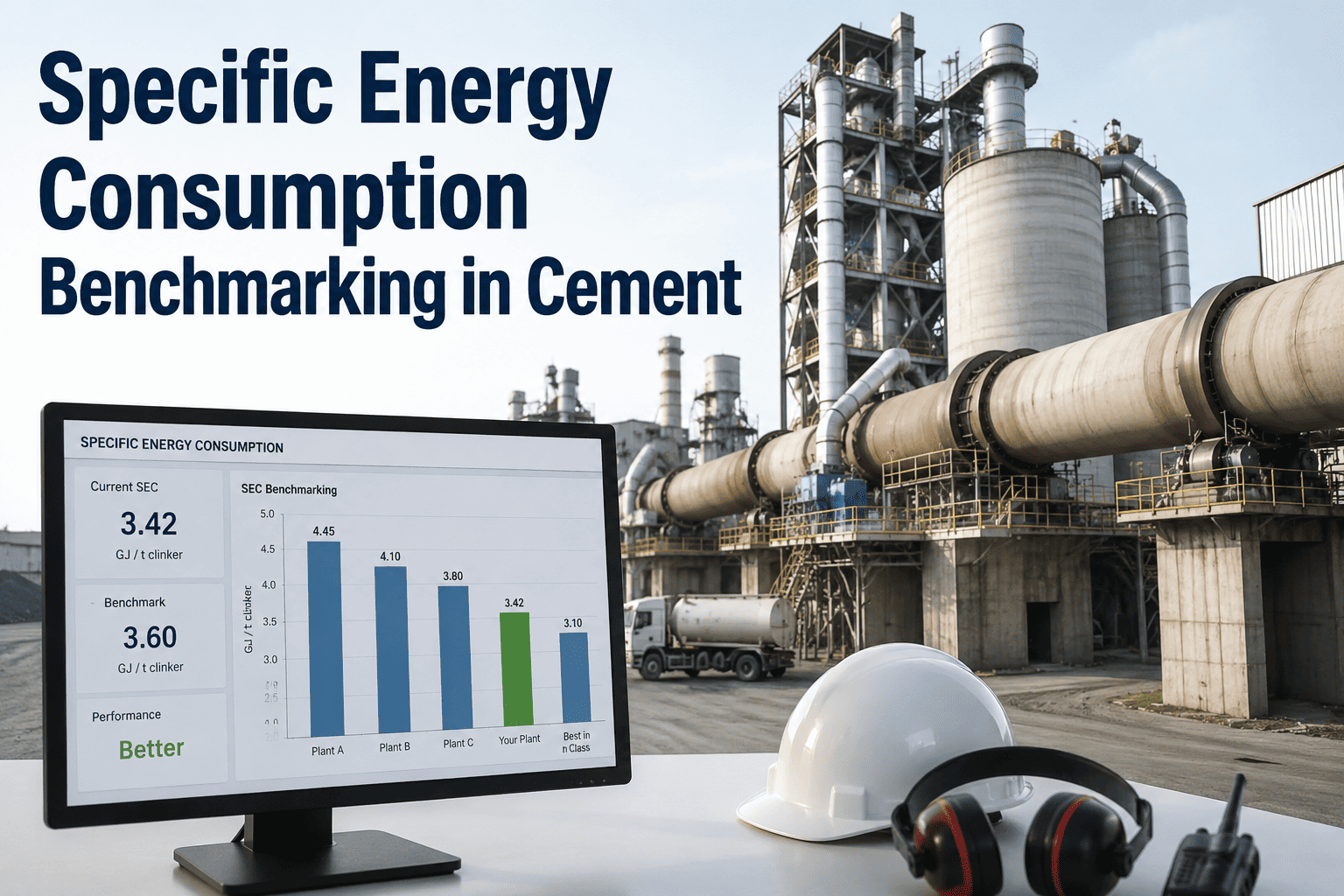
A 6-stage preheater kiln should target 3.0-3.2 GJ/tonne clinker. If your plant is above 3.5 GJ, you have a significant performance gap that iFactory can help bridge through real-time tuning.
Q: How does the platform calculate SEC for multi-fuel kiln burners?
We integrate live mass-flow data for coal, RDF, and biomass to calculate instantaneous specific heat consumption. This allows you to track the exact thermal impact of fuel substitution in real-time.
Q: Can iFactory help with National Energy Conservation Award audits?
Yes, our dashboards provide the audit-ready SEC reports required for major national energy performance awards. We automate the documentation of your efficiency gains, ensuring your recognition is backed by data.
Q: Does electrical SEC include the packing and quarry operations?
Most benchmarks focus on "Quarry-to-Gantry," including crushing, grinding, and packing. iFactory allows you to toggle between stage-specific SEC and total plant-wide intensity for holistic benchmarking.
Q: How does clinker mineralogy impact cement mill electrical SEC?
Harder clinker requires more grinding energy; we correlate mineral chemistry (LSF/C3S) to kWh/tonne. This helps mill operators predict energy intensity before the clinker even enters the mill feeder.
Q: Is the platform compliant with WBCSD "Getting the Numbers Right" reporting?
Our data export formats are specifically tuned to the GNR reporting framework for global cement sustainability. This ensures your annual corporate reporting is consistent with the latest industry standards.
Q: Can SEC benchmarking lower our municipal bond borrowing costs?
Verified energy intensity reduction is a key ESG indicator for bond-rating agencies like Moody's. iFactory provides the "Record of Resilience" that proves you are a lower-risk, more efficient investment.
Q: What is the lead-time for an SEC deviation alert?
iFactory provides intensity alerts within 5-10 minutes of a process excursion. This allows for immediate operator intervention, preventing hours of high-SEC operation that would show up only in later audits.
Q: Does the platform track water intensity alongside energy SEC?
Yes, we support a "Specific Resource Consumption" model that includes water (m3/tonne) and auxiliary materials. This provides a 360-degree view of your plant's operational footprint and resource efficiency.