
Cement Kiln Thermal Efficiency — Heat Balance Audit

By Johnson on July 6, 2026

cement-kiln-thermal-efficiency-heat-balance-audit

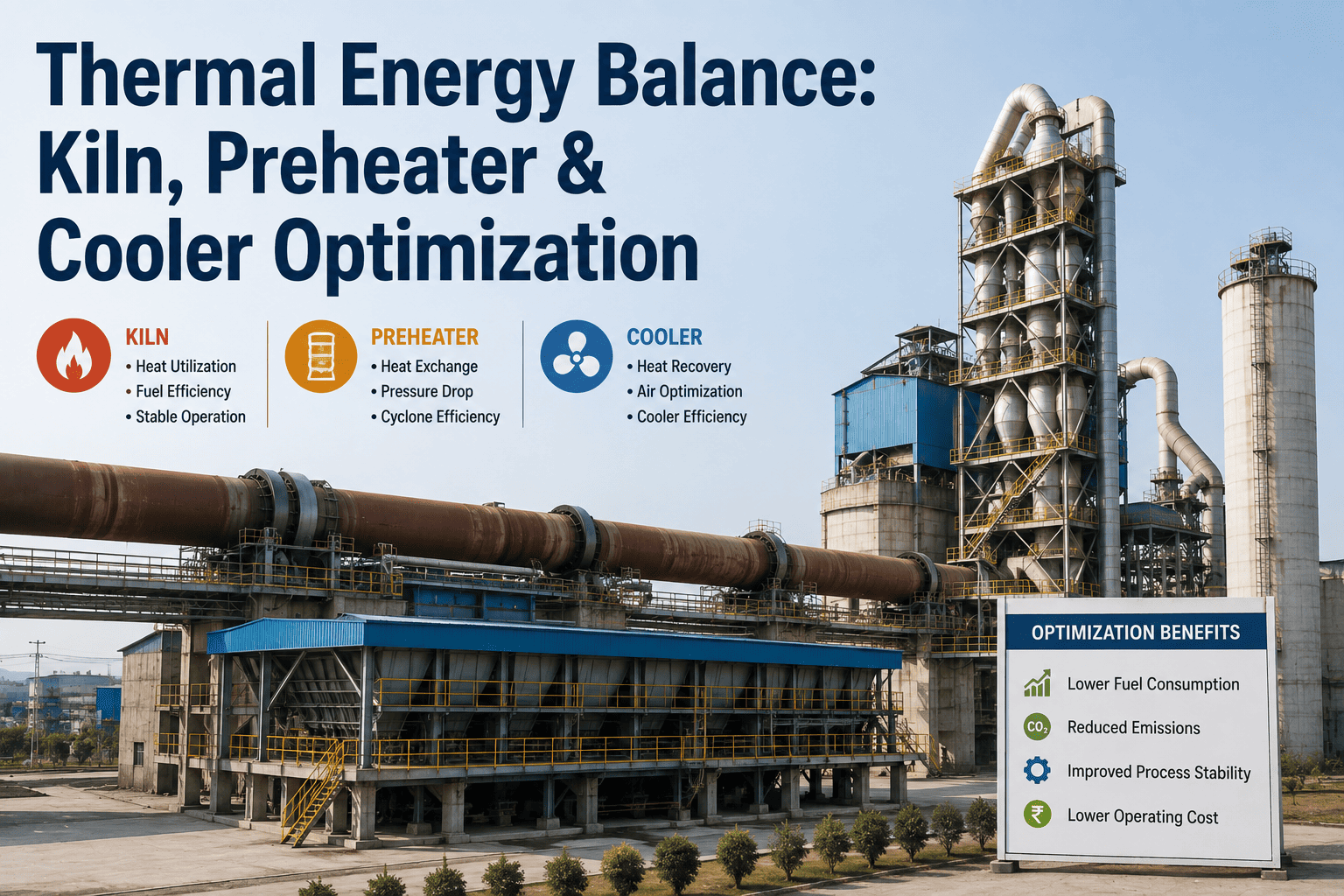
Half the fuel burned in a cement kiln never touches the clinker. It leaves through the stack, radiates off the shell, or exits with the cooler exhaust — and on most plants nobody has ever measured exactly how much goes where. A kiln heat balance audit changes that by turning "we think the kiln runs hot" into a documented split of every kilocalorie entering the system, ranked by how much of it can actually be recovered. Plants that run this exercise typically find that a third or more of total thermal input is sitting in three or four loss streams that respond to specific, low-capital fixes. Book a demo to see a heat balance audit built from your own kiln's live data.

Cement · Kiln Energy Optimization

Find the 30–40% of Kiln Fuel That Never Reaches the Clinker

A heat balance audit accounts for every kilocalorie entering the kiln system and shows exactly how much is trapped in exhaust gas, cooler stack losses, shell radiation, and unaccounted dust — instead of leaving it as a rounding error in the fuel bill.

Where the Energy Actually Goes

Four Loss Streams a Heat Balance Audit Puts a Number On

Published kiln energy audits consistently point to the same four loss categories. The share each one carries varies by kiln design, refractory condition, and cooler type, which is exactly why a plant-specific measurement matters more than an industry average.

15–22%
Kiln Exhaust Gas
Hot gas leaving the preheater carries away a larger share of input energy than any other single loss stream, and it grows fast when false air enters through cyclone doors, expansion joints, or meal pipes along the riser duct.
8–12%
Shell Radiation and Convection
Heat radiating off the kiln shell rises sharply wherever refractory has thinned or coating has fallen away, turning specific sections of the kiln barrel into a continuous, visible energy leak.
5–8%
Cooler Stack Losses
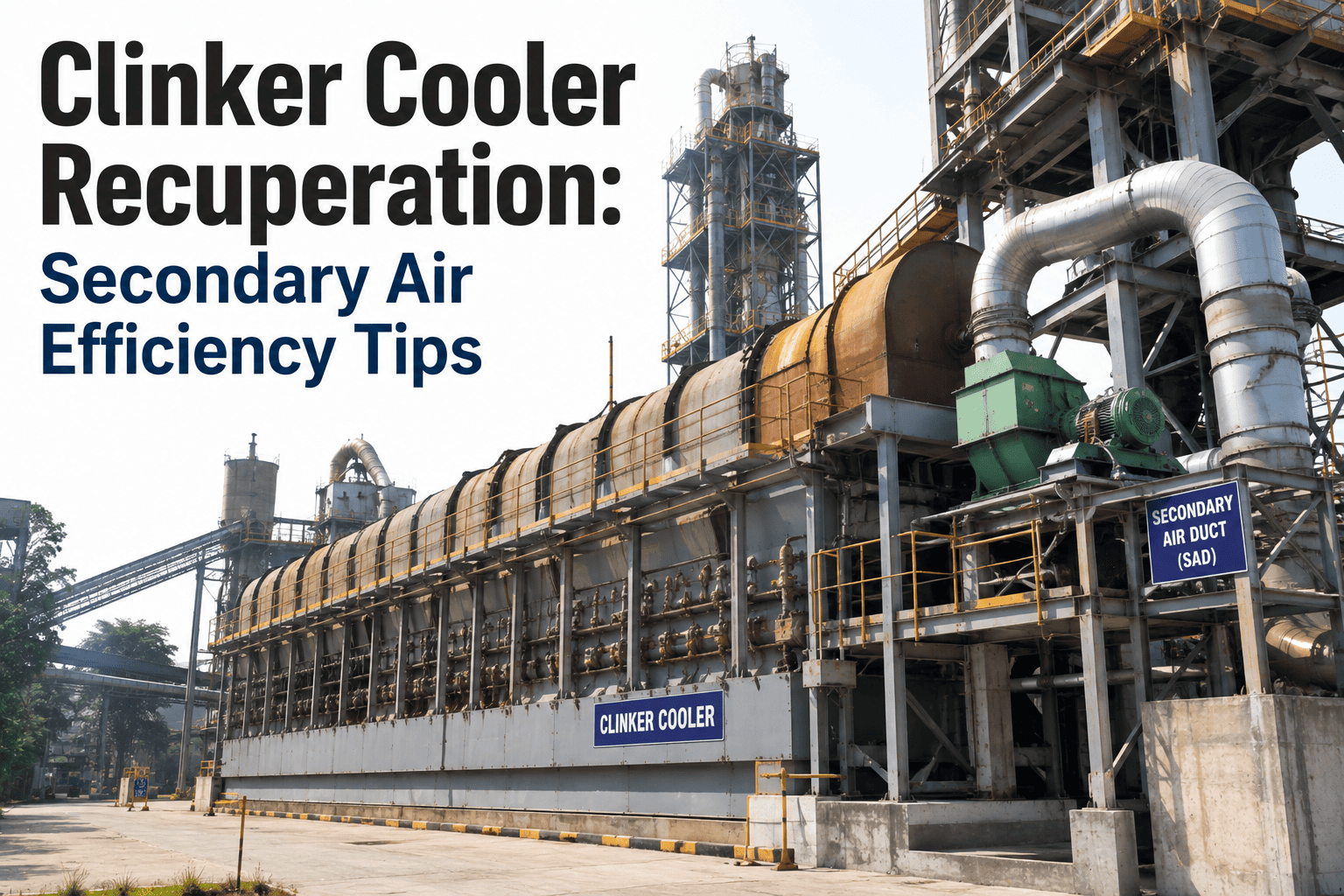
Clinker coolers are meant to return sensible heat to the kiln as combustion air, but worn grate plates and uneven air distribution let a meaningful share of that heat escape through the vent stack instead.
3–6%
Dust and Unaccounted Losses
Kiln dust carryover, moisture evaporation in raw feed, and minor measurement gaps close out the balance sheet, and while each is small individually, together they routinely hide a real, correctable inefficiency.
Specific Energy Consumption

How Your Kiln's Fuel Use Compares by Process Type

Specific energy consumption, measured in kilocalories per kilogram of clinker, is the single number that a heat balance audit is built to explain. The table below shows where different kiln generations typically land before any optimization work begins.

Kiln Process Type
Typical SEC (kcal/kg clinker)
Cooler Heat Recovery
Audit Priority
Wet process, older design
1,200–1,400
Not applicable
Critical
Long dry kiln, no preheater
1,000–1,100
Conventional grate, 60–70%
High
Preheater kiln, no precalciner
800–900
Air-beam grate, 70–75%
Moderate
Modern precalciner kiln
700–750
Latest-generation, 75–78%
Fine-tune
iFactory Runs the Heat Balance Directly From Your Kiln's Live Sensor Data.
Gas flow, temperature, oxygen trim, and cooler vent readings are pulled automatically into a live thermal balance, so the audit reflects this week's kiln condition instead of last year's commissioning report.
How the Audit Runs

Five Steps From Raw Sensor Data to a Ranked Loss List

A heat balance audit is only useful if it ends in a prioritized action list, not a static report. The sequence below is the same one applied whether the audit is done manually with portable instruments or continuously through plant sensors.

01
Establish the Input Baseline
Fuel flow, calorific value, kiln feed rate, and combustion air volumes are logged over a full production cycle to establish the total energy entering the system.
02
Measure Exhaust and Stack Losses
Preheater exit gas temperature and volume, along with cooler stack conditions, are recorded to quantify the two largest loss streams directly.
03
Map Shell Surface Temperatures
A thermal scan of the kiln shell identifies hot spots tied to refractory wear, converting a visual inspection into a quantified radiation loss figure.
04
Close the Balance and Rank Losses
Every measured stream is reconciled against total input, and the remaining gap is reported as unaccounted loss rather than hidden inside a single efficiency percentage.
05
Convert Findings Into a Fuel-Saving Work Order List
Each loss stream is matched to a specific corrective action — seal replacement, grate plate change, refractory repair — ranked by expected kcal/kg recovery.
What Closing the Gaps Is Worth

Recoverable Fuel Savings Once Losses Are Ranked

Not every loss stream is worth chasing with capital spend. The value of an audit is showing which corrections pay back fastest, based on documented relationships between operating conditions and fuel consumption.

~1%
Rise in specific fuel consumption for every 1% of excess combustion air above stoichiometric requirement
~3 kcal/kg
Added exhaust heat loss per kilogram of clinker for every 1% of false air entering the preheater string
Up to 8%
Gap between conventional grate coolers and latest-generation coolers in clinker heat recovery efficiency
From the Field

What a Documented Heat Balance Changed on the Ground

We knew our kiln ran hotter than it should, but every conversation about it stayed anecdotal until we ran a proper heat balance. The audit showed the exhaust gas loss was nearly a third higher than the design figure, almost entirely from false air at the riser duct seals and a cracked expansion joint we had walked past for months. Fixing both took less than a week of planned downtime, and the fuel consumption drop showed up in the very next kiln campaign's numbers, not in a projection.

— Process Engineering Lead, Integrated Cement Plant, 4,500 TPD Kiln Line
Frequently Asked Questions

Kiln Heat Balance Audits — Common Questions

What data does a kiln heat balance audit actually require?
A complete audit needs fuel flow and calorific value, kiln feed rate and moisture content, combustion air volumes, preheater exit gas temperature and flow, cooler vent air conditions, and a shell surface temperature survey. Most plants already generate this data through existing instrumentation; the audit's value is in reconciling it into a single balance rather than reading each sensor in isolation. Book a demo to see which of these your current sensor layout already covers.
How often should a cement plant repeat a heat balance audit?
A full audit is typically worth repeating after every major shutdown, refractory relining, or cooler overhaul, since each of these directly changes the loss profile. Plants running continuous thermal monitoring effectively keep the balance current at all times, catching drift in exhaust loss or shell radiation within days rather than waiting for the next scheduled inspection.
Which loss category usually offers the fastest payback to fix?
False air ingress into the exhaust gas stream is usually the fastest and cheapest to correct, since it is typically resolved through seal replacement and expansion joint repair during a planned stop rather than capital equipment investment. Shell radiation from localized refractory wear is close behind, while cooler upgrades tend to carry a longer payback due to higher equipment cost.
Can a heat balance audit be run without stopping kiln production?
Yes, the majority of the required measurements — gas flow, temperature, and oxygen readings — are collected while the kiln is running normally, since an accurate balance depends on capturing real operating conditions rather than a shutdown state. Only physical inspection items, such as internal refractory condition, require a planned stop to verify directly.
How does a heat balance audit differ from a general energy audit?
A general energy audit typically covers electrical consumption across the whole plant, including grinding and material handling, while a heat balance audit is scoped specifically to the thermal energy entering and leaving the kiln system. The two are complementary, but the kiln heat balance is the one that identifies fuel-specific savings tied directly to combustion and refractory condition. Contact support to scope which type of audit fits your current priority.

Stop Estimating Kiln Losses. Start Measuring Them.

A live heat balance turns exhaust gas, radiation, cooler, and dust losses into a ranked, plant-specific fuel-saving work order list instead of an industry average.

Share This Story, Choose Your Platform!