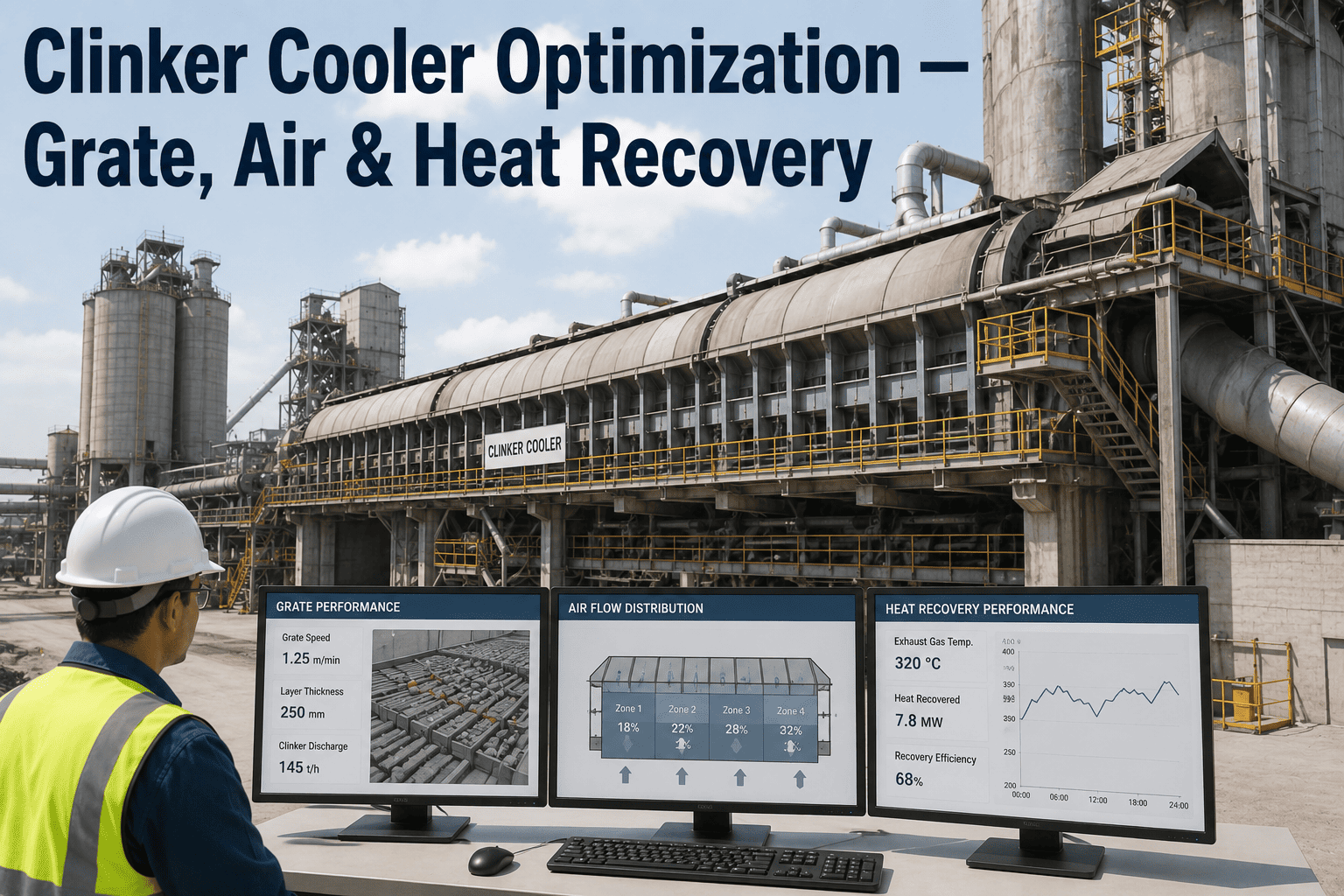
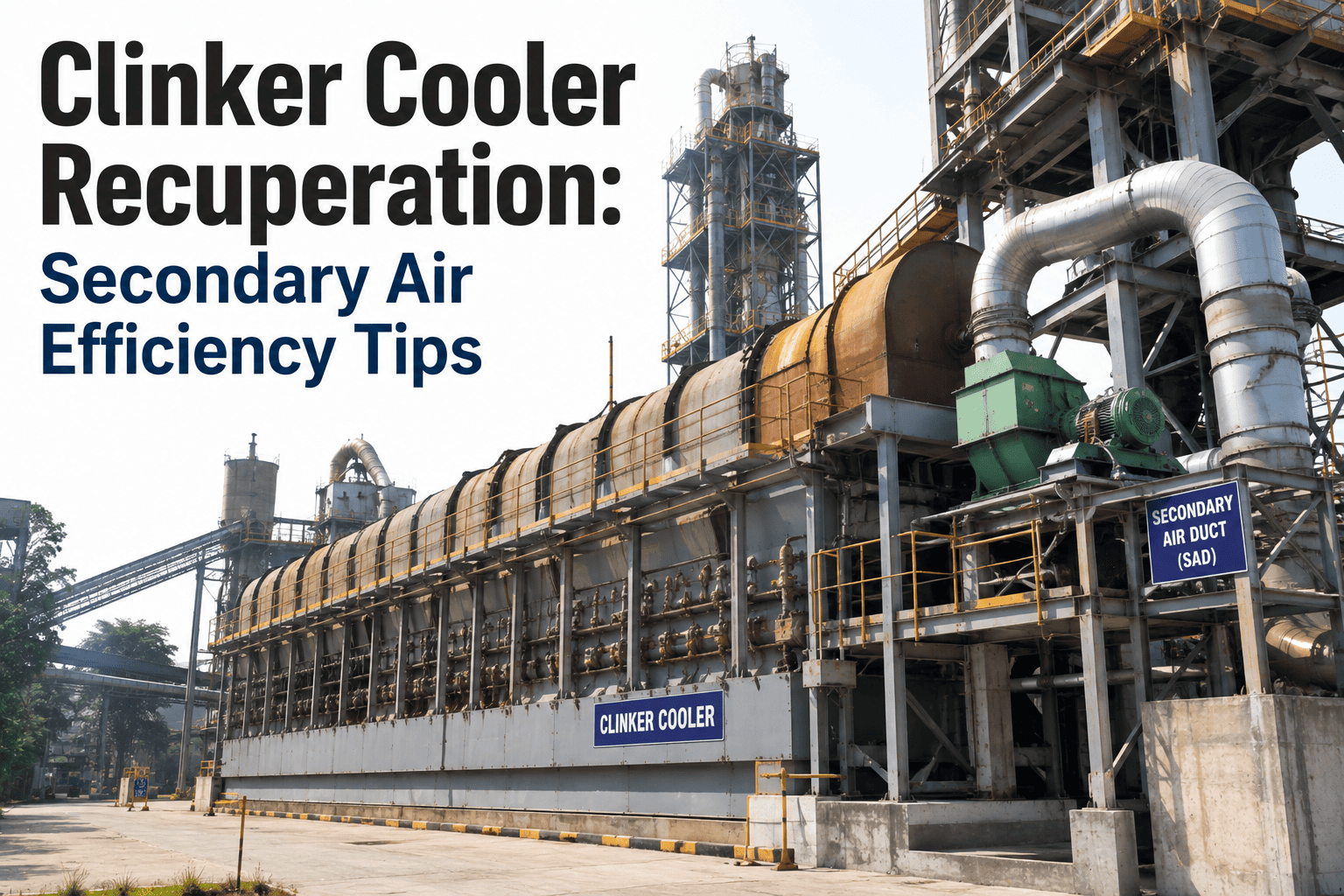
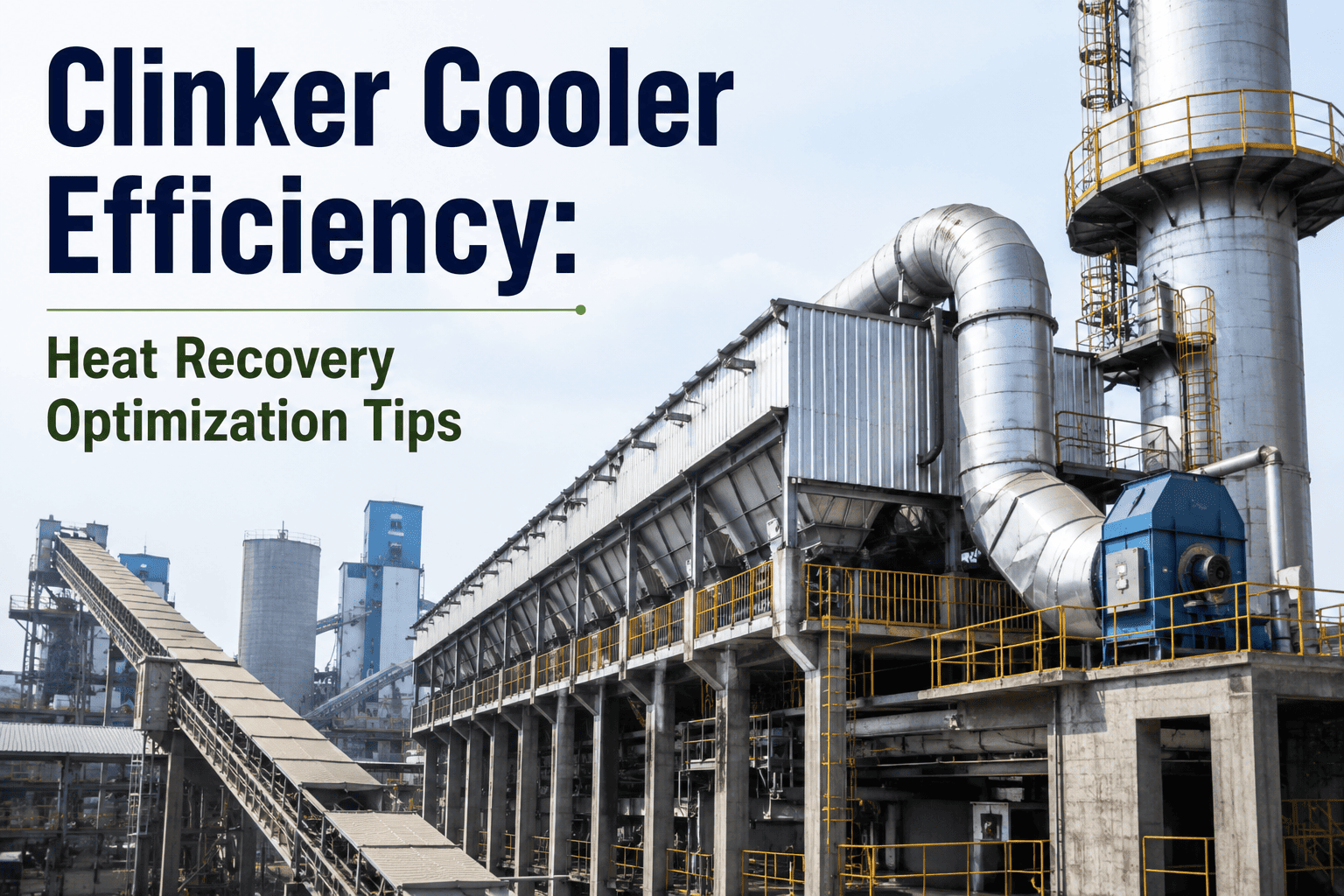
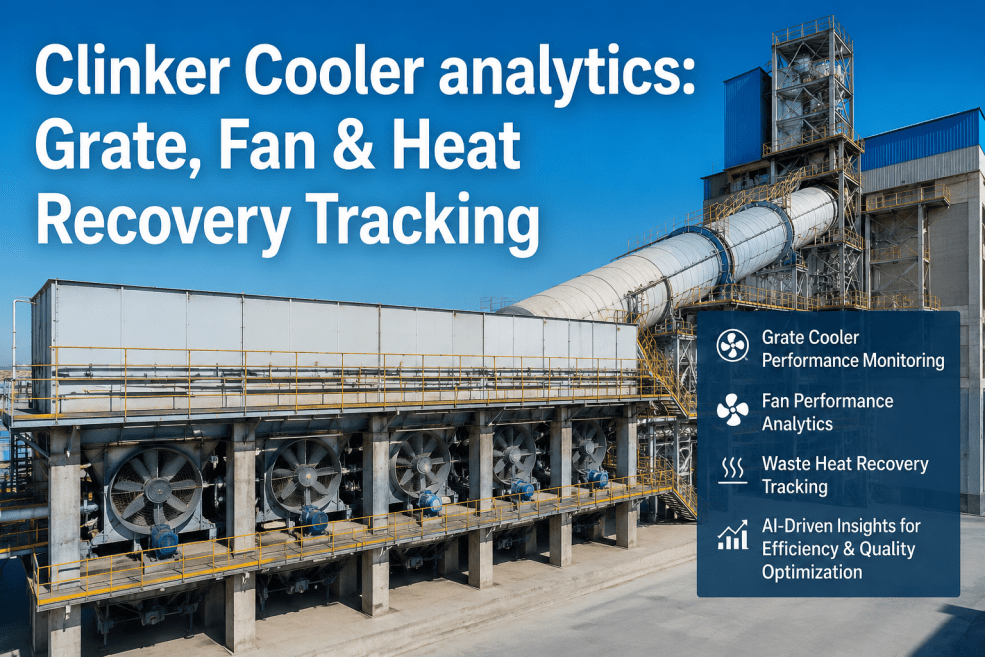
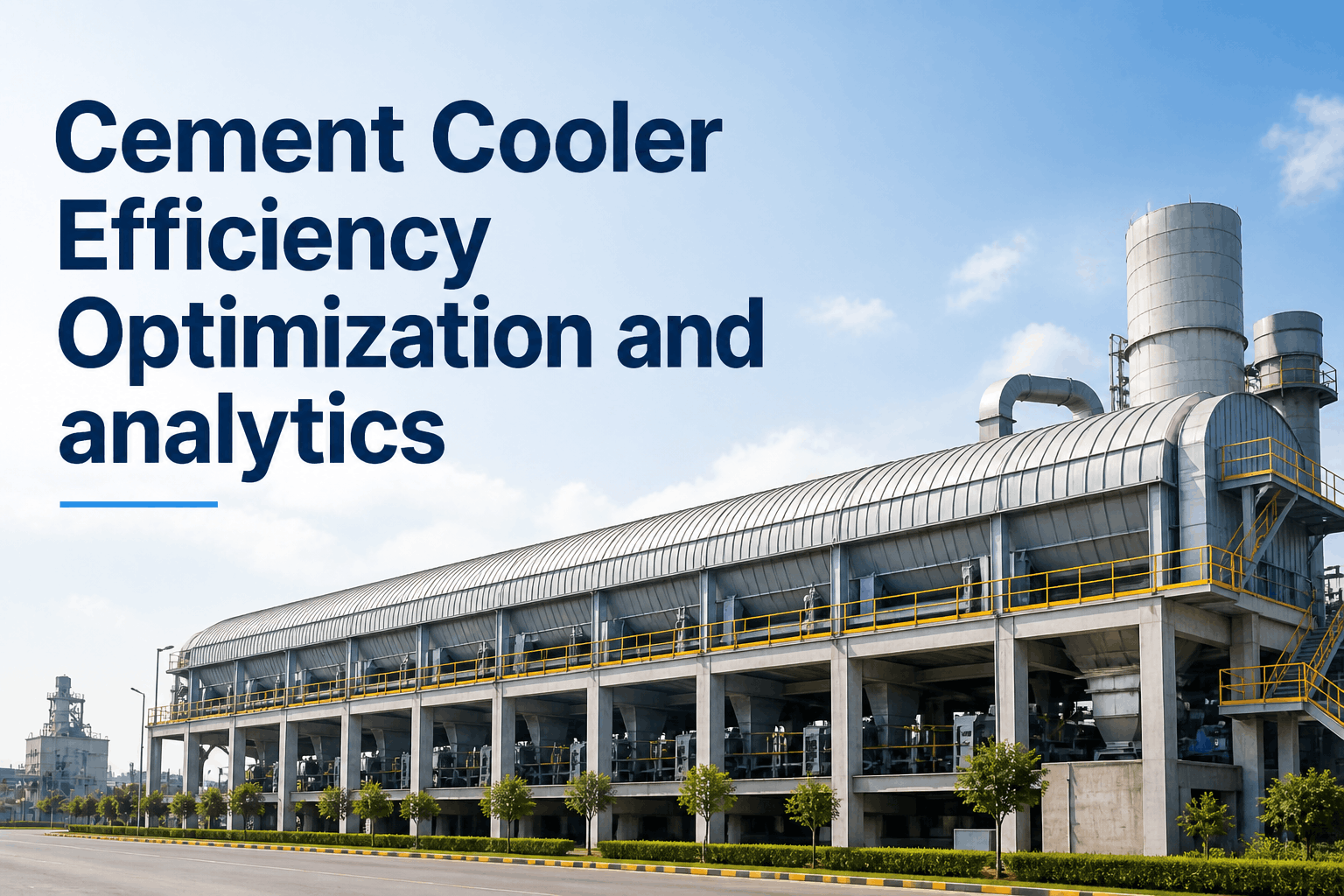
Clinker leaves the kiln at roughly 1,400°C, and the grate cooler's only job is to pull as much of that heat back into the process as possible before it disappears out the vent stack. Modern grate coolers recover 76–86% of that thermal energy under good conditions, yet most plants leave a meaningful share of that on the table through uneven air distribution, worn grate plates, and bed depth that drifts unnoticed shift to shift. The clinker cooler sits at the center of 35–40% of a kiln system's total process heat, which makes it one of the highest-leverage pieces of equipment a plant can tune. Book a demo to see your own cooler's recuperation efficiency measured in real time.
Cement · Clinker Cooler
Clinker Cooler Optimization — Recover the Heat You're Already Paying For
Secondary and tertiary air temperature, grate speed, and bed depth control determine whether your cooler returns 85% of clinker heat to the kiln or lets a costly share of it vent straight into the atmosphere.
Where the Heat Goes
Three Paths for Clinker's Sensible Heat
Every kilocalorie leaving the kiln with the clinker takes one of three routes through the cooler. Only two of them return value to the process.
Secondary Air
~1,050°C
Returned to the kiln as combustion air, directly lowering fuel demand at the main burner.
Tertiary Air
~900–1,100°C
Routed to the precalciner to support raw meal decarbonation without additional fuel.
Vent Stack Exhaust
200–350°C
Whatever heat isn't recuperated exits here — the portion an optimization program is built to shrink.
Where Efficiency Leaks Out
Four Conditions That Quietly Erode Cooler Recuperation
None of these show up as a single dramatic failure. Each one shaves a few points off recuperation efficiency, and together they add up to real fuel cost.
Red River Channeling
Overheated clinker channels through gaps between grate plates, bypassing the cooling zone and driving accelerated grate wear along with heat loss.
Uneven Bed Depth
Shallow zones let clinker break through before proper cooling, while excessive depth in other zones restricts airflow and starves heat transfer.
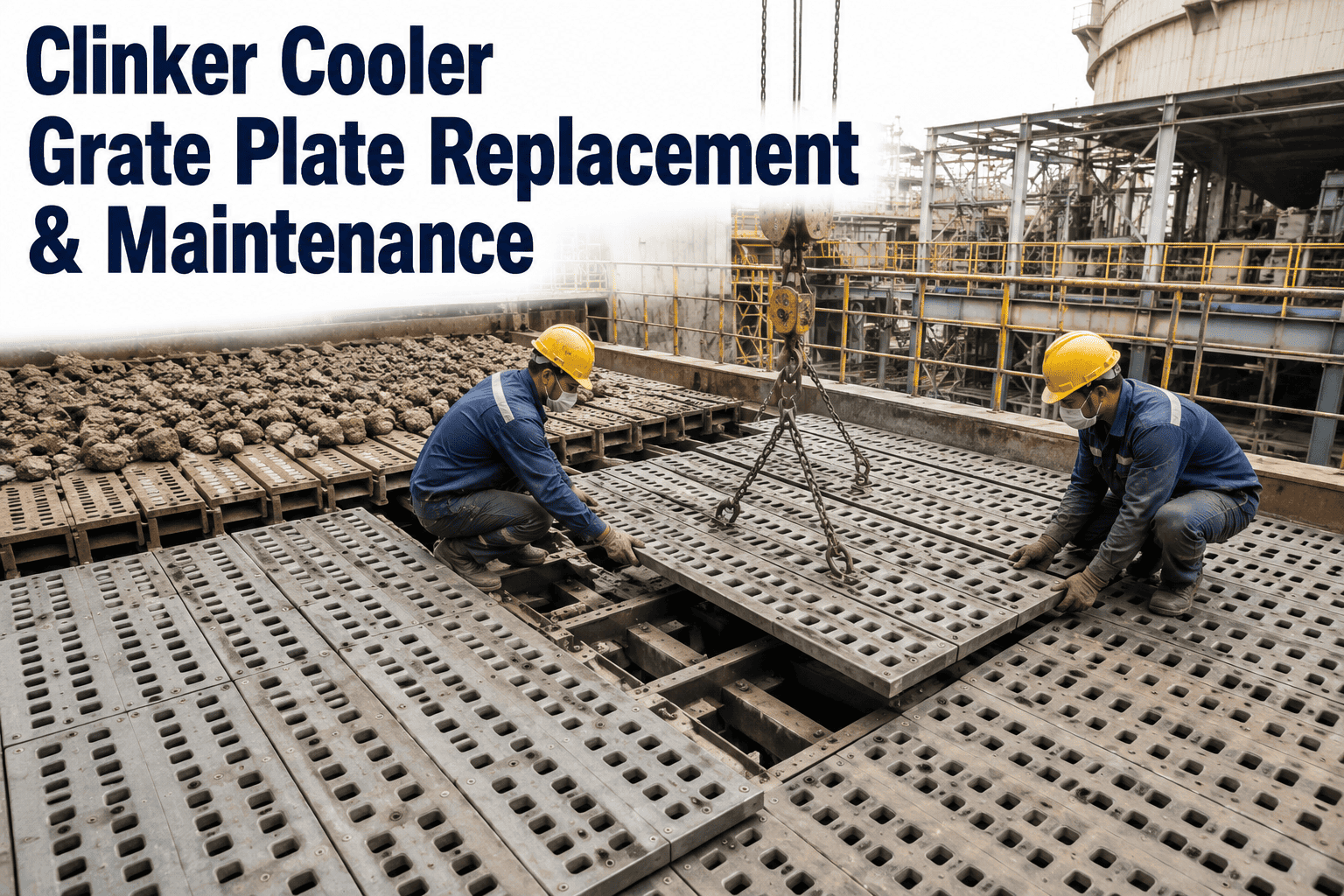
Worn Grate Plates
Enlarged slot openings from abrasion let fines spill through instead of being properly aerated, degrading controlled airflow across the bed.
Excess Total Air Volume
Running more cooling air than the bed needs wastes fan power without improving heat recovery, since the extra air simply passes through unused.
iFactory Watches Every Cooler Zone at Once, Not Just the Average.
Grate drive load, under-grate pressure, and discharge temperature are unified into one view so a red river event or bed depth drift is caught before it shows up in kiln fuel consumption.
What Optimization Is Worth
The Numbers Behind Cooler Optimization
2–5%
Reduction in specific heat consumption from real-time secondary and tertiary air temperature tracking
2 kWh/t
Fan power saved across the process by reducing total cooling air from 2.0 to 1.7 cubic meters per kilogram of clinker
15–30%
Heat recovery lost when red river channeling and bed depth problems go undetected
Optimization Levers
Where to Start Tuning a Grate Cooler
Increase cooling air mass by 5%
Improves energy and exergy efficiency by roughly 2%
Raise grate speed in step with clinker feed rate
Improves energy recovery efficiency and prevents bed overload
Recover exhaust air heat
Can raise energy and exergy recovery efficiency substantially
Replace worn grate plates on schedule
Restores controlled aeration and prevents fines spillage
From the Field
What Cost Us Before We Could See It
We knew our secondary air temperature had drifted lower over a few months, but nobody connected it to a specific cause until infrared scanning showed a section of grate plates had worn well past their aeration spec. The airflow imbalance had been quietly building for weeks, forcing the burner to compensate with more primary air and more fuel the entire time. Once we saw it as a single trend line instead of scattered readings, the fix was a straightforward plate replacement during the next planned stop.
— Maintenance Planning Lead, Cement Plant Pyroprocessing Team
Frequently Asked Questions
Clinker Cooler Optimization — Common Questions
What is recuperation efficiency and why is it the key cooler metric?
Recuperation efficiency is the ratio of heat returned to the process through secondary and tertiary air compared to the total heat entering the cooler with hot clinker. It is the primary KPI for cooler performance because it directly links cooler operation to kiln fuel demand — every point of recuperation efficiency lost has to be made up with additional burner fuel.
Book a demo to see this tracked continuously for your cooler.
What causes red river formation in a clinker cooler?
Red river forms when overheated, glowing clinker channels through localized gaps between grate plates rather than moving evenly across the bed, usually caused by uneven clinker distribution, broken or missing grate plates, or insufficient bed depth in specific areas. Without continuous thermal monitoring, operators typically only detect it after visible grate damage or abnormal shell temperatures appear.
How does clinker cooler performance affect cement quality, not just fuel cost?
Cooling rate directly influences clinker mineralogy, since rapid quenching preserves the crystal structure that gives cement its strength development characteristics. A cooler running with uneven airflow or excessive discharge temperature can produce clinker that grinds less efficiently and performs less consistently, linking cooler health to both energy cost and finished product quality.
Can waste heat from the cooler be used beyond returning air to the kiln?
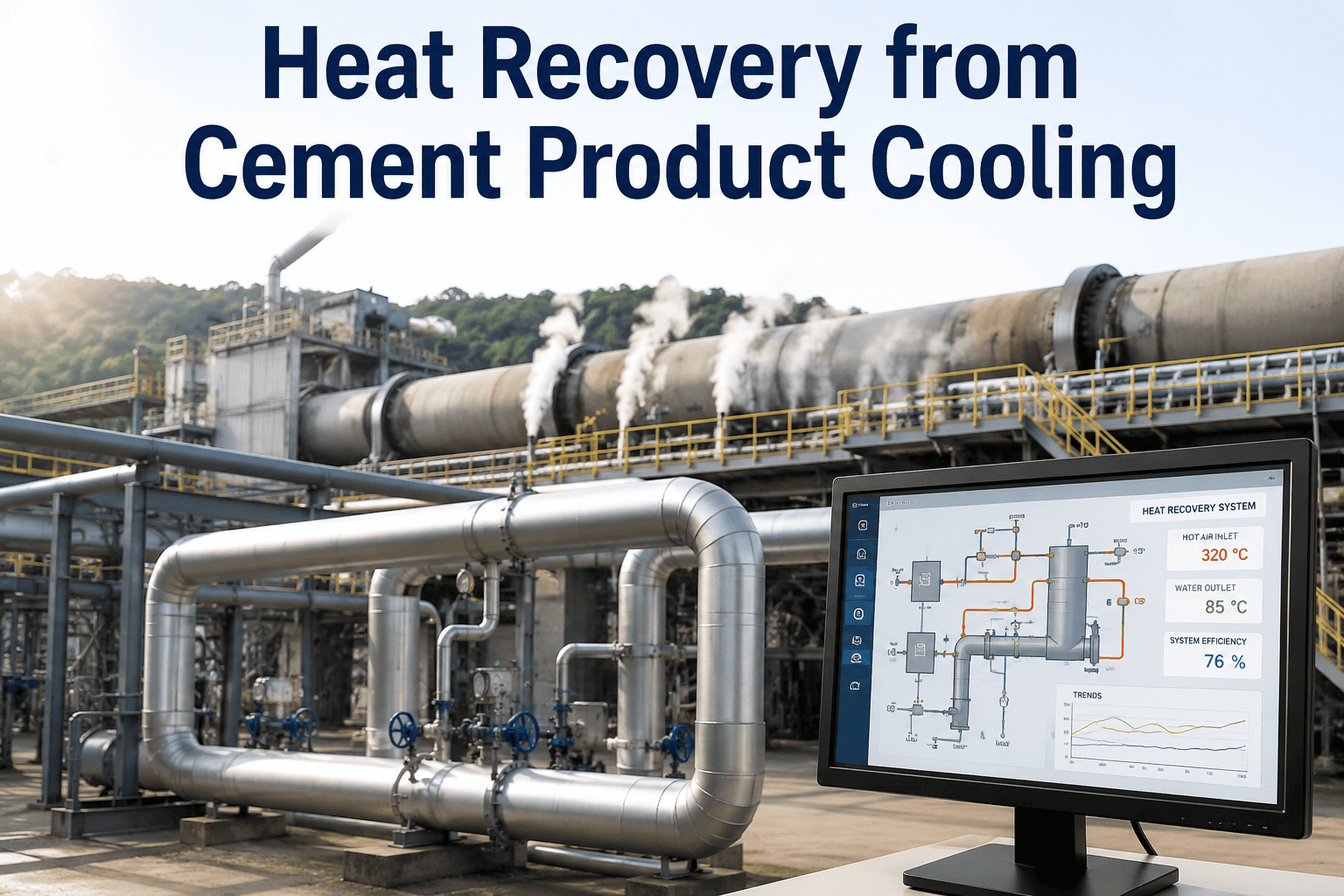
Yes, exhaust air from the final cooling zone that isn't needed for combustion air can feed a waste heat recovery system generating meaningful electricity per ton of clinker, turning what would otherwise be a stack loss into a secondary revenue stream many plants currently underutilize.
How often should grate plates and cooler internals be inspected?
Grate plates endure continuous abrasion and thermal cycling, so visual and infrared inspection during every planned shutdown is standard practice, with continuous discharge temperature monitoring between stops to catch developing red river conditions early.
Contact support for help setting up a cooler inspection and monitoring schedule.
Stop Losing Recuperated Heat to Airflow Problems You Can't See.
Unified visibility across grate speed, bed depth, and air distribution so red river events and efficiency drift get caught before they show up in kiln fuel consumption.