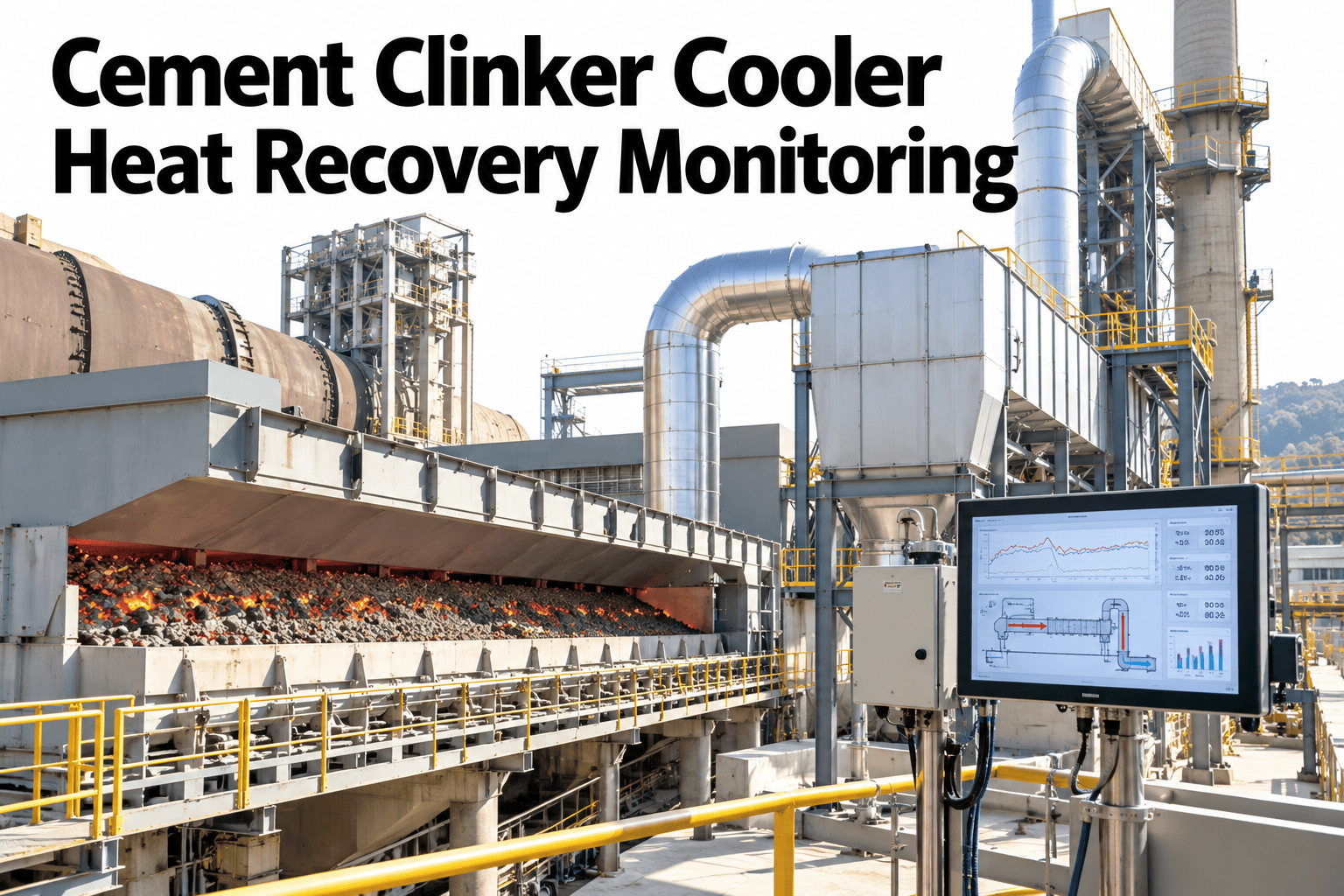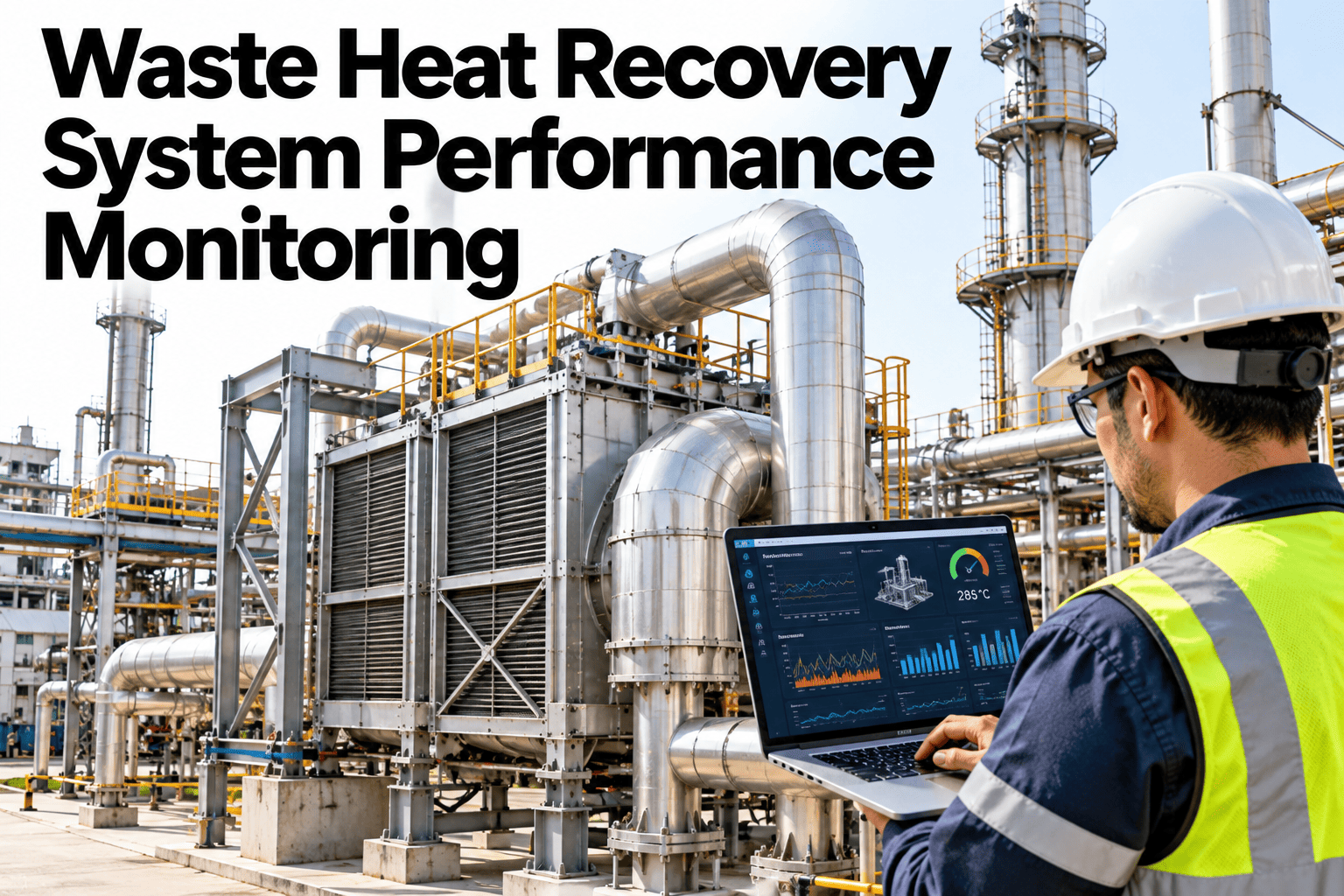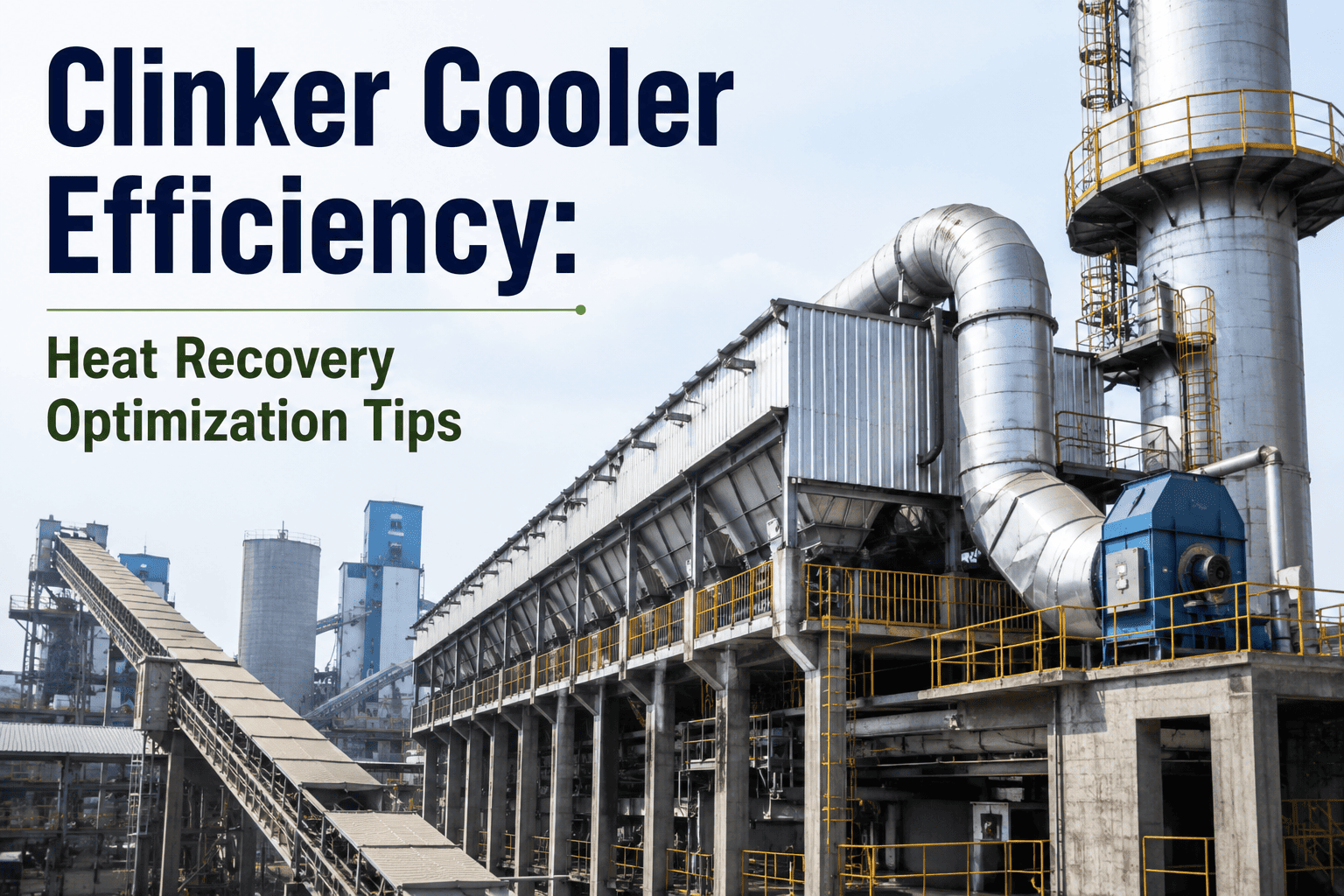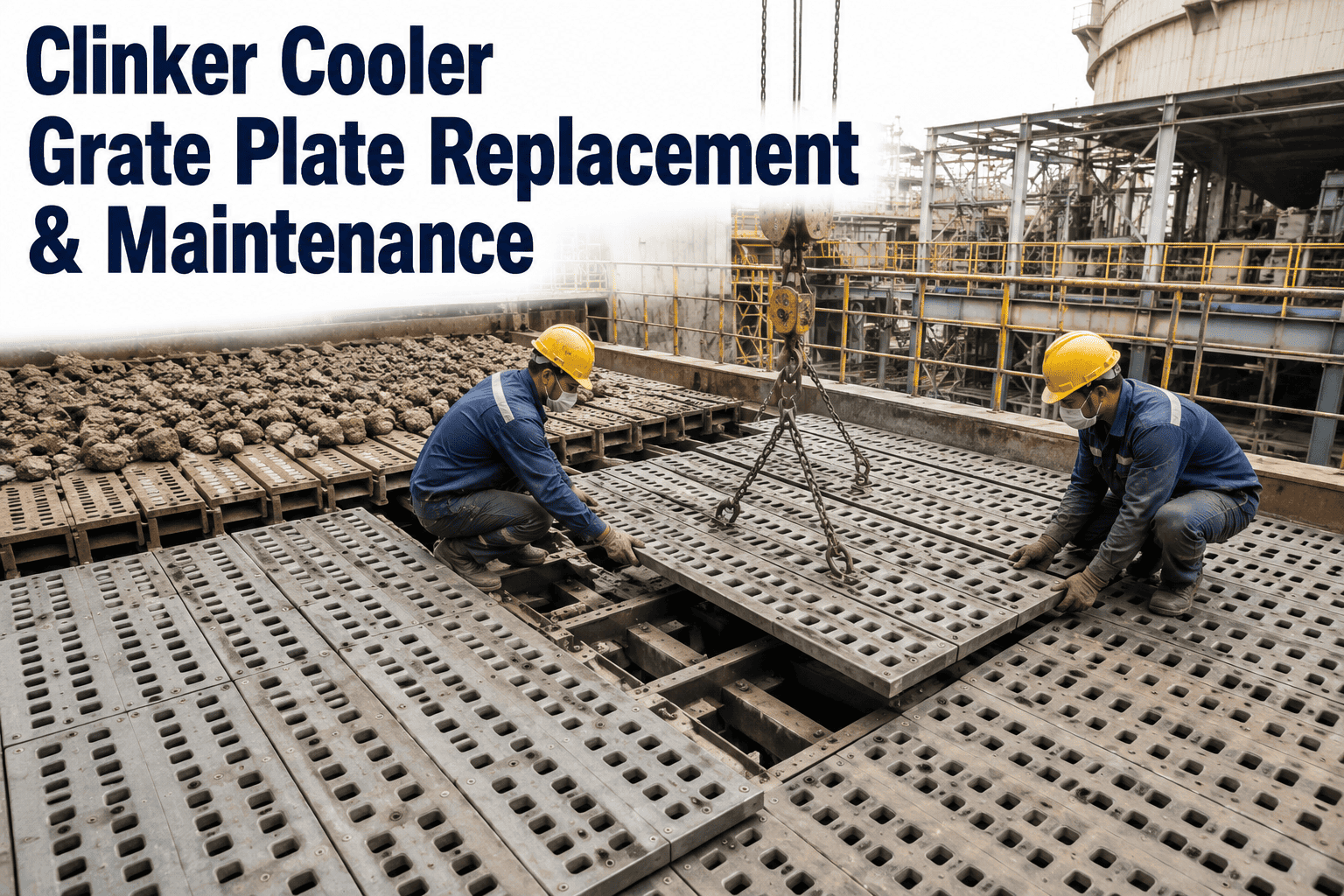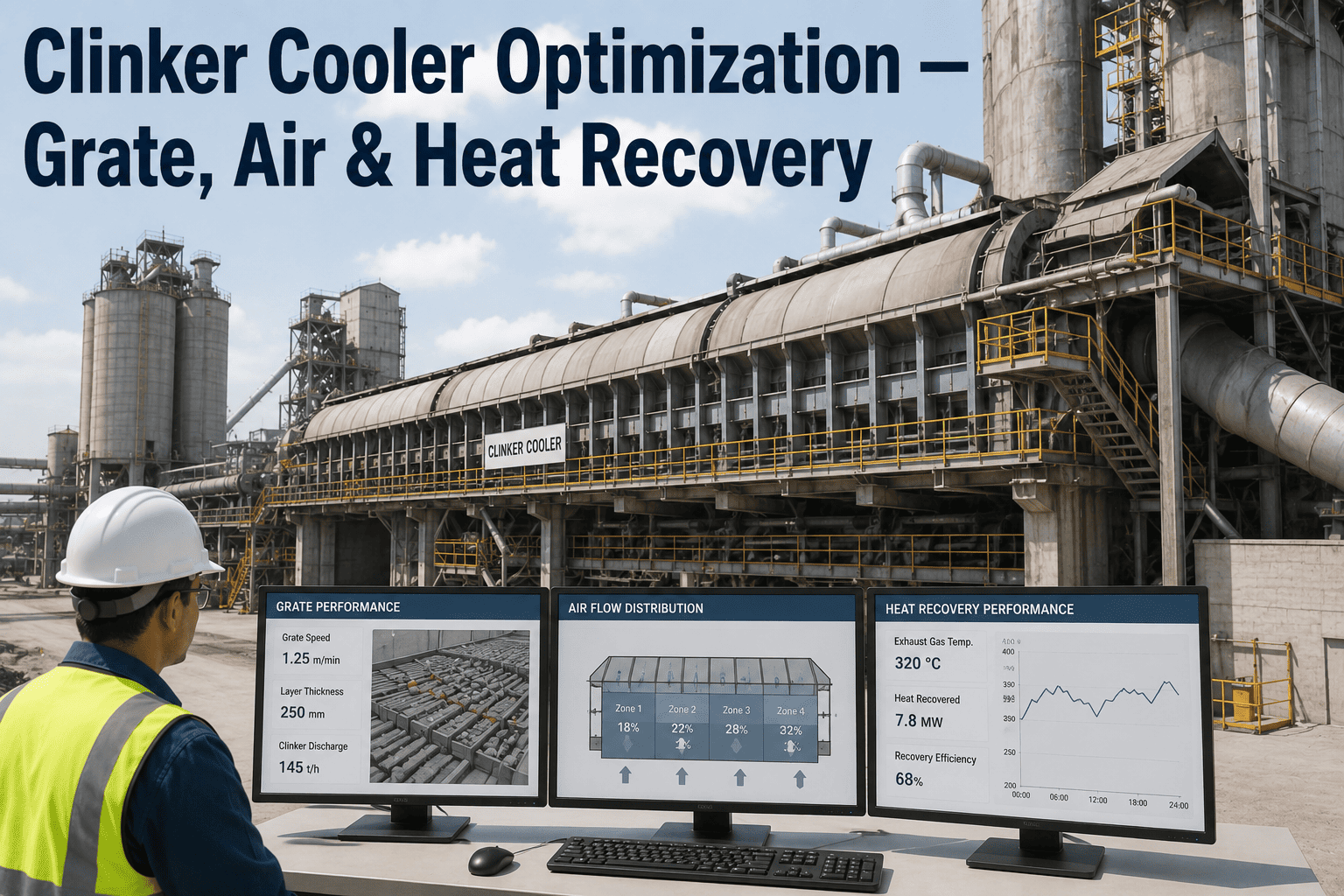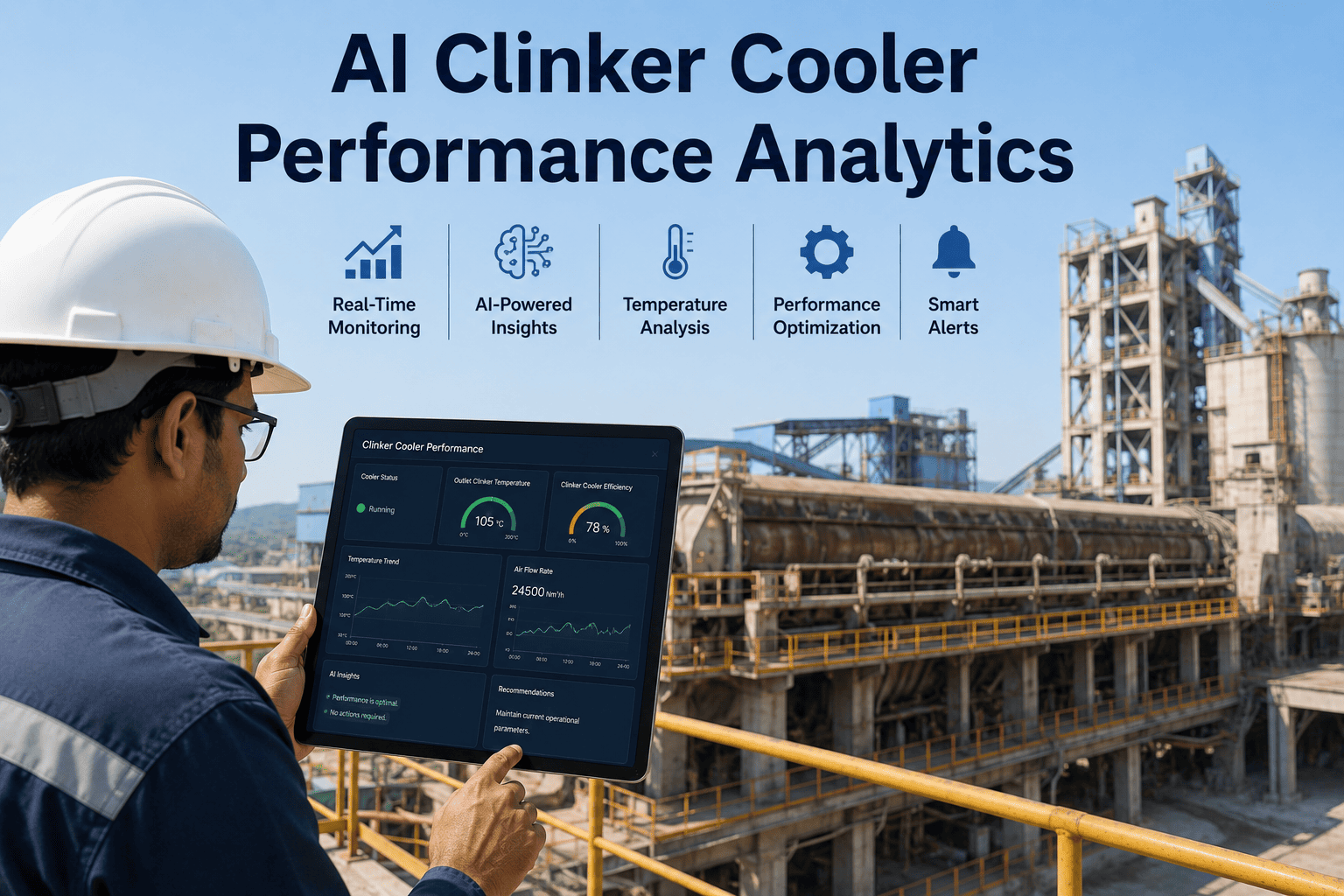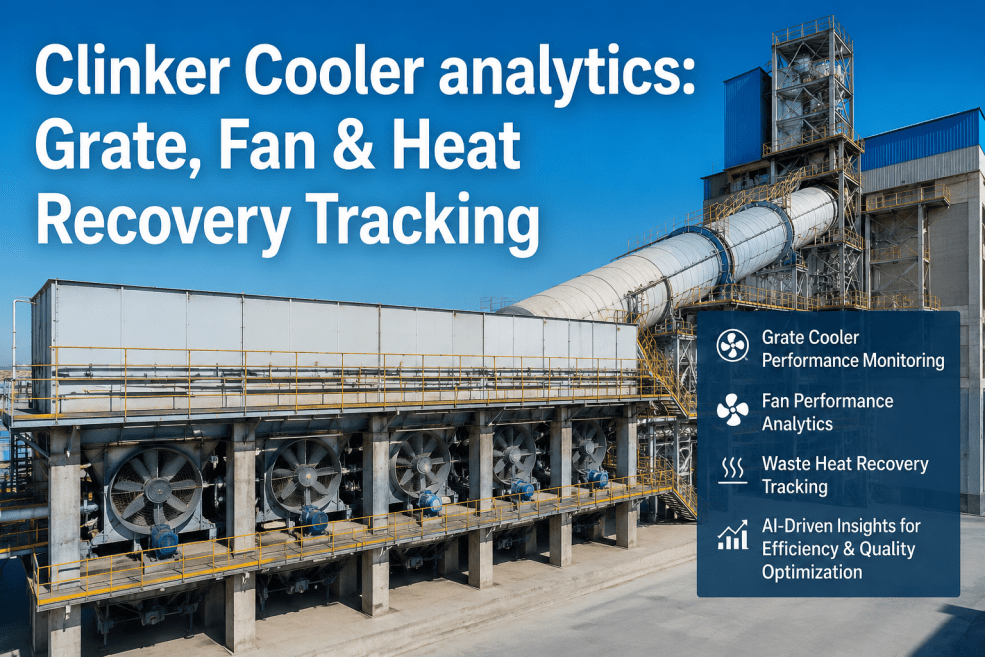
The clinker cooler is one of the most critical components in a cement plant's pyroprocessing line — responsible for rapidly quenching hot clinker from the kiln at 1,400-plus degrees Celsius to a temperature suitable for transport and storage, while recovering maximum thermal energy for the process. Grate plate condition, cooling fan performance, and waste heat recovery system efficiency directly determine cooler availability, clinker quality, and overall plant energy consumption. Traditional monitoring approaches relying on manual grate inspections, periodic fan performance testing, and spreadsheet-based heat balance calculations introduce visibility gaps that mask developing problems until they cause unplanned cooler stops, clinker quality deviations, or heat recovery losses that cost the plant tens of thousands of dollars per event. iFactory AI's cooler analytics platform provides continuous monitoring and AI-driven optimization of grate plates, cooling fans, and waste heat recovery systems — delivering real-time condition tracking, predictive maintenance alerts, and energy optimization recommendations from a single integrated platform. Book a Demo to see the platform configured for your cement plant's clinker cooler configuration.
AI-Driven Clinker Cooler Analytics for Grate, Fan and Heat Recovery Optimization
iFactory AI delivers real-time grate plate condition monitoring, cooling fan performance analytics, waste heat recovery optimization, and predictive maintenance for clinker coolers in cement plants.
The Operational Complexity of Clinker Cooler Management — Why Traditional Monitoring Falls Short
The clinker cooler operates at the intersection of kiln discharge, clinker transport, and thermal energy recovery — a position that makes its performance critical to both production throughput and plant energy efficiency. A typical grate cooler processes 3,000 to 10,000 metric tons of clinker per day, using 8 to 20 cooling fans totaling 2,000 to 5,000 horsepower, and recovers 25 to 35 percent of the kiln system's total heat input through waste heat recovery systems. The operational challenge spans three interconnected domains — mechanical condition of the grate plates and transport system, aerodynamic performance of the cooling fan array, and thermodynamic efficiency of the heat recovery system — each requiring continuous monitoring that manual inspection programs cannot provide at the frequency or resolution needed.
Grate Plate Condition Monitoring
Grate plates operate in the most demanding environment in the cement plant — sustained temperatures above 1,000 degrees Celsius, thermal cycling, abrasive clinker movement, and mechanical loading from the clinker bed. Plate wear, cracking, or blockage causes uneven air distribution, localized overheating, clinker quality variations, and eventual plate failure that requires a cooler stop. AI-driven vibration and temperature monitoring detects deterioration patterns weeks before conventional visual inspections identify them.
Cooling Fan Optimization
Each cooling fan in the grate cooler array must deliver the correct airflow at the correct pressure to maintain optimum clinker cooling while minimizing electrical energy consumption. Fan performance degrades over time due to blade wear, damper mechanism deterioration, belt slippage, and motor bearing degradation. AI analytics tracks individual fan efficiency against design curves and detects performance deviations that signal developing mechanical problems or suboptimal damper positioning.
Waste Heat Recovery Tracking
Waste heat recovery systems capture thermal energy from the cooler exhaust air stream for power generation, raw material drying, or process heating. Recovery efficiency depends on cooler operating conditions — clinker temperature, air flow distribution, grate speed — that shift continuously as kiln conditions change. AI models correlate recovery system performance with upstream cooler parameters and recommend adjustments to maximize energy capture without compromising clinker cooling quality.
How AI Optimizes Clinker Cooler Operations — Five Core Application Areas
Artificial intelligence applied to clinker cooler analytics is not a single monitoring tool — it is a portfolio of analytical capabilities that address distinct operational challenges across the cooler system. The five application areas below represent where AI delivers the most measurable operational impact in cooler performance, ranked by the combination of implementation maturity and return-on-investment evidence from active cement plant deployments.
AI-Driven Grate Plate Condition Monitoring
Grate plate failure is one of the leading causes of unplanned cooler stops, yet conventional inspection relies on visual examination during infrequent cooler shutdowns — leaving weeks of operating time between inspections when plate deterioration can accelerate unnoticed. AI-driven condition monitoring analyzes temperature profiles across the grate surface, vibration signatures from individual grate sections, and under-grate pressure distributions to detect early indicators of plate wear, cracking, or blockage.
- Thermal imaging and thermocouple array data analyzed continuously; abnormal temperature gradients flagged as potential plate damage
- Vibration monitoring detects the characteristic frequency shifts associated with cracked or loose grate plates
- Under-grate pressure distribution analysis identifies blocked grate openings before they affect clinker cooling uniformity
- iFactory AI generates plate condition heat maps with predicted remaining useful life for each grate section
Cooling Fan Performance Optimization
The cooling fan array represents the largest electrical load in the clinker cooler system, consuming 2 to 5 MW depending on cooler size and operating conditions. Fan efficiency degrades progressively through blade erosion, damper mechanism wear, and motor bearing deterioration — losses that manual performance testing catches only during periodic maintenance events. AI analytics continuously track each fan's performance against its design curve and against the historical performance of identical fans in the array.
- Individual fan efficiency calculated in real time from motor power, airflow, and differential pressure measurements
- Performance deviation from design curve detected at 2-3% efficiency loss; maintenance alert generated automatically
- Damper position optimization recommended to balance airflow distribution while minimizing total fan power consumption
- iFactory AI correlates fan performance trends with cooler exit temperature and clinker quality data for system-level optimization
Waste Heat Recovery Analytics
Waste heat recovery system performance is directly coupled to clinker cooler operating conditions — making it impossible to optimize recovery efficiency without real-time visibility into cooler parameters. AI models establish the relationship between cooler operating variables — clinker throughput, grate speed, cooling air distribution, and clinker exit temperature — and heat recovery system output, enabling operators to adjust cooler parameters to maximize energy capture.
- Recovery efficiency calculated continuously from temperature, flow, and steam parameter measurements across the WHR system
- AI models predict the impact of cooler parameter adjustments on recovery output before changes are implemented
- Optimal cooler operating envelope defined to balance clinker quality requirements with maximum heat recovery
- iFactory AI integrates cooler analytics with plant energy management for plant-wide thermal optimization
Clinker Quality and Cooler Performance Correlation
Clinker quality is fundamentally influenced by the cooling rate and uniformity achieved in the clinker cooler — parameters that depend on grate condition, fan performance, and cooler operating settings. AI analytics correlate cooler operating data with clinker quality measurements including free lime content, C3S/C2S phase composition, and mineralogy to identify the cooler conditions that produce optimal clinker quality.
- Cooler parameter-to-clinker quality correlation models trained on historical production and quality laboratory data
- Real-time clinker quality prediction from cooler operating conditions enables proactive adjustment before quality deviations
- Cooler parameter recommendations generated to maintain target clinker quality while maximizing throughput and energy recovery
- iFactory AI tracks cooler-driven quality variability and quantifies the impact of cooler performance on downstream cement grinding
Predictive Maintenance for Cooler Components
The clinker cooler contains dozens of rotating and static components whose failure can cause unplanned production stops: grate drive systems, hydraulic cylinders, fan motors and bearings, damper actuators, and air seals. Each component has distinct failure modes that traditional time-based maintenance cannot predict with precision. iFactory AI's Predictive Maintenance module monitors vibration, temperature, current draw, and position feedback from each component to detect failure precursors weeks before breakdown.
- Grate drive hydraulic system monitored for pressure decay, flow variation, and cylinder seal wear patterns
- Fan motor and bearing vibration analysis detects developing faults at the bearing race and lubrication degradation stage
- Damper actuator position feedback versus command deviation tracked; sticking or binding detected before control is affected
- iFactory AI generates condition-based work orders with specific component identification and recommended maintenance actions
iFactory AI Platform Architecture for Clinker Cooler Analytics — From Data Ingestion to Operational Decision
Deploying AI effectively for clinker cooler analytics requires an architecture that bridges the operational technology layer — PLCs, vibration sensors, thermocouple arrays, fan motor drives, and WHR system controls — and the information technology layer where AI models, digital twin simulations, and enterprise asset management functions run. iFactory AI is designed for this OT-IT integration challenge, with native connectivity to common cement plant control systems, historian databases, and edge computing environments.
Sensor and Control Data Ingestion
PLC, thermocouple array, vibration sensor, fan motor drive, and WHR system control data aggregated into iFactory's unified data ingestion layer. Native connectors for ABB, Siemens, Rockwell, and Schneider Electric control systems eliminate custom integration development. Edge processing nodes handle data buffering for high-frequency vibration and temperature signals.
AI Analytics Engine
Machine learning models trained on facility-specific operating history generate grate plate condition predictions, fan efficiency trends, heat recovery optimization recommendations, and component health indices. Models retrain automatically as new operating data accumulates; prediction accuracy tracked and reported to operations team monthly.
Digital Twin Simulation
iFactory's Digital Twin module maintains a continuously synchronized virtual model of the clinker cooler integrating grate thermal profile, cooling air distribution, fan performance curves, and heat recovery system thermodynamics. Scenario simulation runs against the digital twin before operational decisions are committed — testing grate speed adjustments, fan configuration changes, and target clinker exit temperature set points.
Operational Dashboard and Alerts
AI recommendations surface in iFactory's operations dashboard as real-time cooler performance metrics, component health scores, predictive maintenance alerts, and optimization recommendations. Operator override and approval workflows maintained throughout; AI augments operator judgment rather than replacing it. All decisions and overrides logged for analysis and continuous model improvement.
Reporting and Continuous Improvement
Cooler performance reports, energy consumption analytics, maintenance history, and compliance documentation generated automatically from operational data. Monthly performance reviews track KPI trends against baseline; model accuracy metrics reported and improvement targets set for the next operating period. Continuous learning ensures the platform becomes more accurate with each operating day.
- Grate plate inspection during quarterly cooler stops; deterioration goes undetected between inspections
- Fan maintenance on time-based intervals regardless of actual efficiency or condition
- Heat recovery performance evaluated from monthly heat balance calculations
- Operating decisions made without ability to simulate cooler parameter changes before execution
- Clinker quality issues investigated reactively after laboratory results identify deviations
- Maintenance work orders generated from fixed schedules rather than actual component condition
- Grate plate condition monitored continuously; deterioration detected 2-4 weeks before potential failure
- Fan efficiency tracked in real time; maintenance triggered by performance deviation, not calendar
- WHR efficiency calculated continuously; cooler parameters adjusted to maximize energy capture
- Digital Twin simulates cooler parameter changes before implementation; impact visible before commitment
- Clinker quality predicted from cooler operating conditions; proactive adjustment prevents deviations
- Predictive maintenance work orders generated from component health data; unplanned stops reduced 40%+
Measurable Outcomes from AI Deployment in Clinker Cooler Analytics — A Benchmark Framework
Measuring the business impact of AI implementation in clinker cooler analytics requires a set of KPIs that span equipment reliability, energy efficiency, and production quality. The benchmark table below provides the performance metrics iFactory tracks for each application area, with representative before-and-after ranges from cement plant deployments. These ranges reflect operational improvements; individual facility results depend on baseline operating maturity, cooler type, and the completeness of sensor integration at deployment.
| Application Area | KPI Tracked | Baseline (Pre-AI) | With iFactory AI | Primary Value Driver |
|---|---|---|---|---|
| Grate Plate Monitoring | Unplanned cooler stops due to plate failure | 2-4 events per year | 0-1 events per year | Failure detection 2-4 weeks ahead of breakdown |
| Fan Performance | Cooler fan energy consumption (kWh/t clinker) | Baseline varies by cooler design | 10-18% reduction | Optimal fan dispatch from performance analytics |
| Heat Recovery | WHR system thermal efficiency | 72-80% of design rating | 85-92% of design rating | Cooler parameter optimization for maximum recovery |
| Clinker Quality | Free lime variability (standard deviation) | Baseline varies by kiln operation | 20-30% reduction in variability | Cooler operating consistency from real-time analytics |
| Predictive Maintenance | Unplanned cooler component failures | 4-7 events per year | 1-3 events per year | Condition-based maintenance replaces fixed intervals |
| Overall Cooler Availability | Cooler operating time / total time | 92-95% availability | 97-99% availability | Reduced unplanned stops and shorter planned outages |
What Cement Plant Operations Leaders Say About AI-Driven Cooler Analytics
The production managers and maintenance engineers who have moved from manual cooler inspection programs to AI-augmented analytics share a consistent experience: the first year of AI deployment reveals grate plate deterioration patterns that were invisible in quarterly inspection cycles, the fan energy savings pay for the sensor integration costs within the first operating season, and the shift from reactive cooler maintenance to condition-based management fundamentally changes the operations team's confidence in production scheduling — especially during high-demand periods when an unplanned cooler stop creates cascading costs across the entire plant.
We operate a 6,000 metric ton per day clinker line with a reciprocating grate cooler that has 14 cooling fans and a waste heat recovery system supplying power to a 12 MW steam turbine. Before iFactory, our grate plate inspection program consisted of a visual walk-through during each quarterly maintenance shutdown. In 2023, we experienced two grate plate failures — one in March and one in October — each of which required an emergency cooler stop of 36 to 48 hours for plate replacement. The combined cost of those two events was approximately $280,000 in lost production, repair labor, and expedited parts, not including the downstream impact on cement grinding feed availability.
We deployed iFactory's Cooler Analytics platform in early 2024. In August of that year, the system detected an anomalous temperature gradient developing across grate section four — a pattern the AI associated with plate warpage based on the thermal history of similar plate failures across seven cement plants in the training data set. We scheduled a planned replacement during our October maintenance window, pulled the affected plates, and found warpage within 15 percent of the failure threshold. The planned replacement cost $8,400 in parts and scheduled labor. If we had not caught it, that section would have failed in November or December when we were running at full capacity to meet year-end production targets. The prevented failure alone covered the first-year cost of the analytics platform.
See How iFactory AI Transforms Clinker Cooler Operations from Manual Inspection to AI-Driven Optimization
From grate plate condition monitoring to fan performance optimization and waste heat recovery analytics — iFactory AI delivers the full operational intelligence stack for clinker coolers in one platform built for cement manufacturing reliability.
AI in Clinker Cooler Analytics Is Not a Future Investment — It Is a Present Operational Necessity
The case for AI deployment in clinker cooler analytics is no longer a theoretical cost-benefit exercise. The operational cost of grate plate failures detected too late, cooling fans operating below design efficiency, heat recovery systems leaving energy uncaptured, and clinker quality variability caused by inconsistent cooler operation are all measurable, recurring costs that AI-enabled platforms demonstrably reduce.
iFactory AI's Cooler Analytics platform delivers the integrated operational intelligence architecture that makes these outcomes achievable for cement plants without requiring a full data science organization to maintain the platform. The system connects to existing PLC and sensor infrastructure, trains on facility operating history, and begins delivering actionable intelligence within the first operating quarter of deployment. Book a Demo with iFactory's cement industry team to build a site-specific AI analytics deployment assessment for your clinker cooler.
Deploy AI-Powered Clinker Cooler Analytics with iFactory AI
iFactory monitors every grate plate, fan, and heat recovery parameter in real time, predicts component failures before they cause unplanned stops, optimizes fan energy consumption, and maximizes waste heat recovery — in one platform built for cement manufacturing reliability.
Clinker Cooler Analytics — Frequently Asked Questions
What is clinker cooler analytics and how does it improve cement plant operations?
Clinker cooler analytics is the application of AI-driven monitoring and optimization to the three critical domains of clinker cooler operation: grate plate condition, cooling fan performance, and waste heat recovery system efficiency. By continuously analyzing data from thermocouple arrays, vibration sensors, fan motor drives, and WHR system controls, the platform detects developing problems, optimizes operating parameters, and predicts component failures before they cause unplanned production stops. Cement plants using iFactory's Cooler Analytics platform typically reduce cooler-related unplanned stops by 40 percent or more while improving energy efficiency by 15 to 25 percent.
How does AI-driven grate plate condition monitoring detect failures before they cause cooler stops?
AI-driven grate plate monitoring analyzes three continuous data streams — temperature profiles across the grate surface, vibration signatures from individual grate sections, and under-grate pressure distributions — to detect early indicators of plate wear, cracking, warpage, or blockage. Machine learning models trained on historical plate failure data identify the characteristic patterns that precede failure, typically providing 2 to 4 weeks of advance warning compared to visual inspection during quarterly maintenance stops. This lead time enables operators to schedule plate replacement during planned outages rather than reacting to emergency failures during peak production periods.
How does AI optimize cooling fan performance in clinker coolers?
AI optimizes cooling fan performance by continuously tracking each fan's actual operating efficiency against its design curve and against the historical performance of identical fans in the cooler array. The analytics engine detects efficiency deviations as small as 2 to 3 percent that indicate blade wear, damper mechanism degradation, belt slippage, or motor bearing deterioration. It also recommends optimal damper positioning to balance airflow distribution across the grate while minimizing total fan electrical power consumption. The typical result is a 10 to 18 percent reduction in cooler fan energy consumption without compromising clinker cooling quality.
How does waste heat recovery analytics improve thermal efficiency in cement plants?
Waste heat recovery analytics continuously calculates WHR system efficiency from temperature, flow, and steam parameter measurements and correlates recovery performance with upstream cooler operating variables including clinker throughput, grate speed, cooling air distribution, and clinker exit temperature. AI models predict the impact of cooler parameter adjustments on recovery output before changes are implemented, enabling operators to tune cooler operation for maximum energy capture while maintaining clinker quality. The integrated approach typically improves WHR system efficiency by 5 to 12 percent compared to operating without real-time cooler-to-recovery correlation analytics.
What is the typical ROI of implementing an AI-driven clinker cooler analytics platform?
Cement plants deploying iFactory's Cooler Analytics platform typically achieve payback within 8 months, driven by three primary value sources: reduced unplanned cooler stops cutting production losses by $100,000 to $300,000 per avoided event, fan energy savings of 10 to 18 percent totaling $50,000 to $150,000 annually depending on cooler size and electricity cost, and increased waste heat recovery adding $30,000 to $80,000 per year in recovered energy value. The avoided grate plate failure alone often covers the first-year platform cost for plants with a history of cooler-related production interruptions.