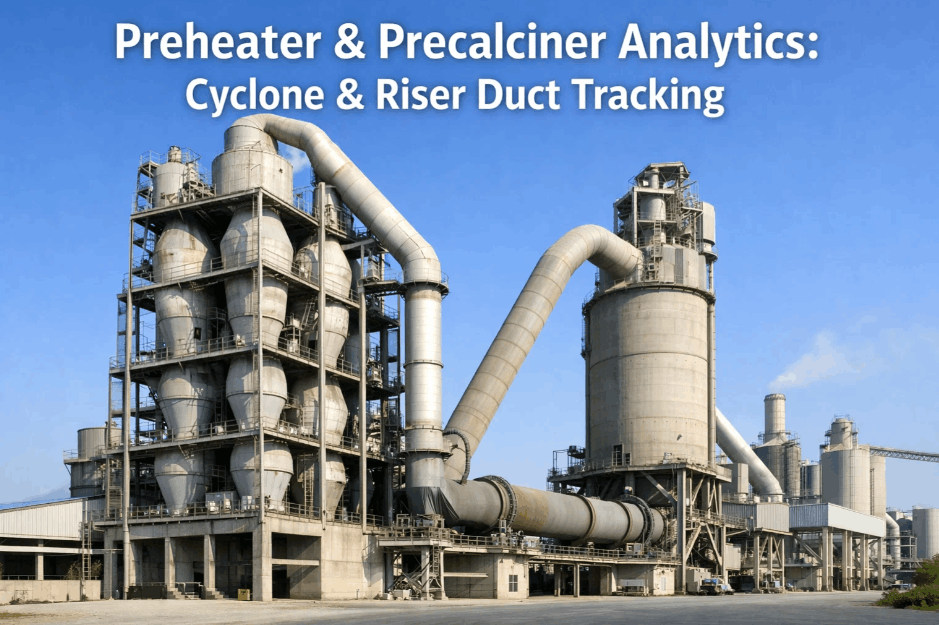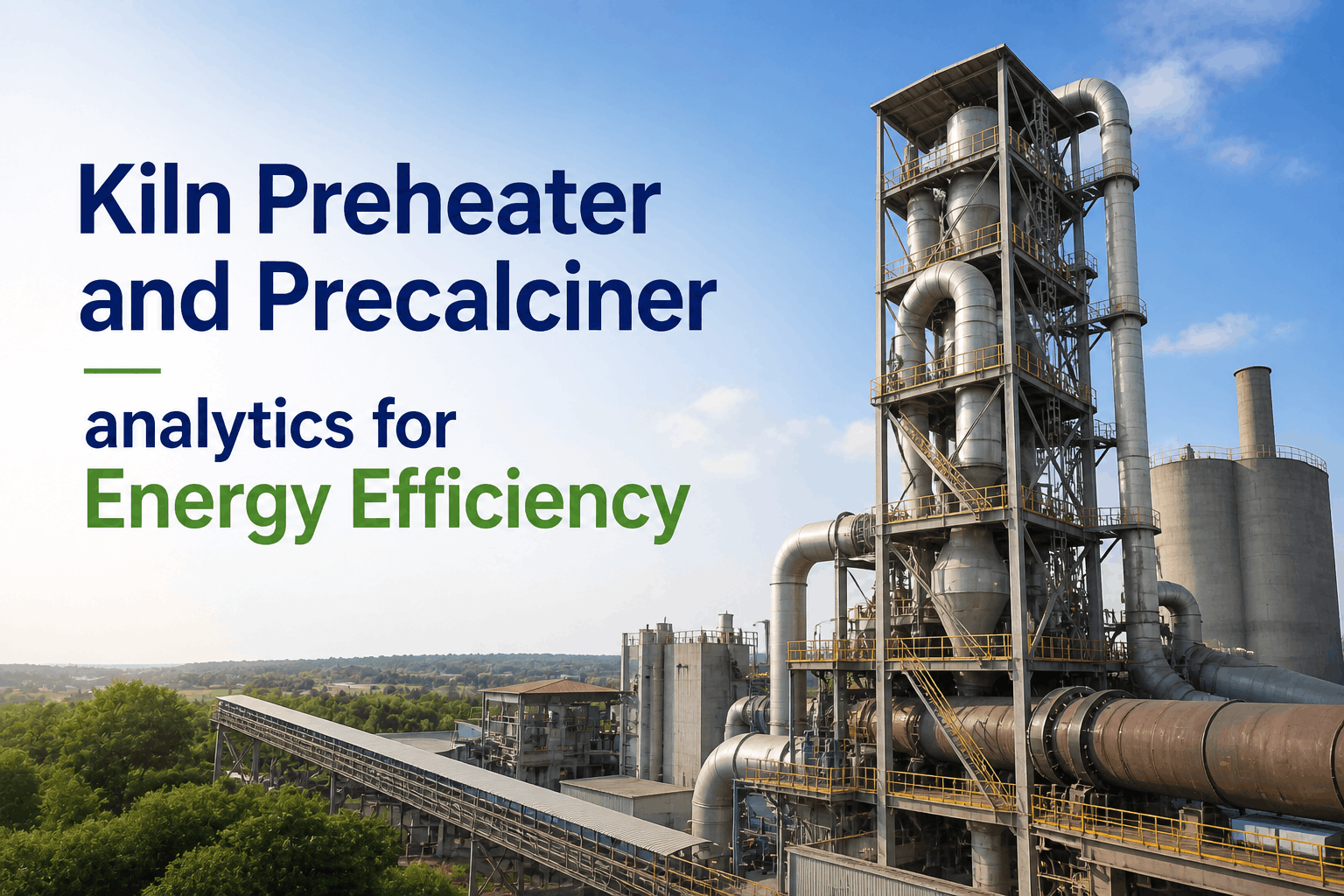
As thermal energy intensity standards transition from design baselines to mandatory carbon-compliance thresholds, cement producers are finding that "standard" preheater operation is no longer enough to guarantee margin stability. A kiln strategy based on static pressure readings now faces high alternative fuel (AFR) volatility and emission spikes that can force unplanned shutdowns in hours. In 2026, **Preheater and Precalciner Analytics** are no longer an optional "efficiency" task—they are the primary engine for thermal resilience and decarbonization. Achieving a 95%+ calcination degree demands a shift from generic monitoring to a dynamic, predictive **Thermal Optimization** model. This guide delivers a technical framework for mapping gas-flow and heat-transfer across your preheater string, leveraging AI-driven buildup detection to protect production before the next blockage occurs. Book a free demo to digitize your kiln roadmap.
Kiln Preheater & Precalciner Analytics: Strategic Thermal Optimization
A comprehensive technical roadmap for deploying AI-powered thermal analytics to optimize heat transfer, manage buildups, and maximize alternative fuel substitution.
Thermal Failures Cement Producers Cannot Afford to Ignore
Traditional preheaters were built for stable fossil fuels. Today, managers must defend against six primary thermal-driven failure modes that threaten kiln availability and corporate credit ratings. Schedule a consultation.
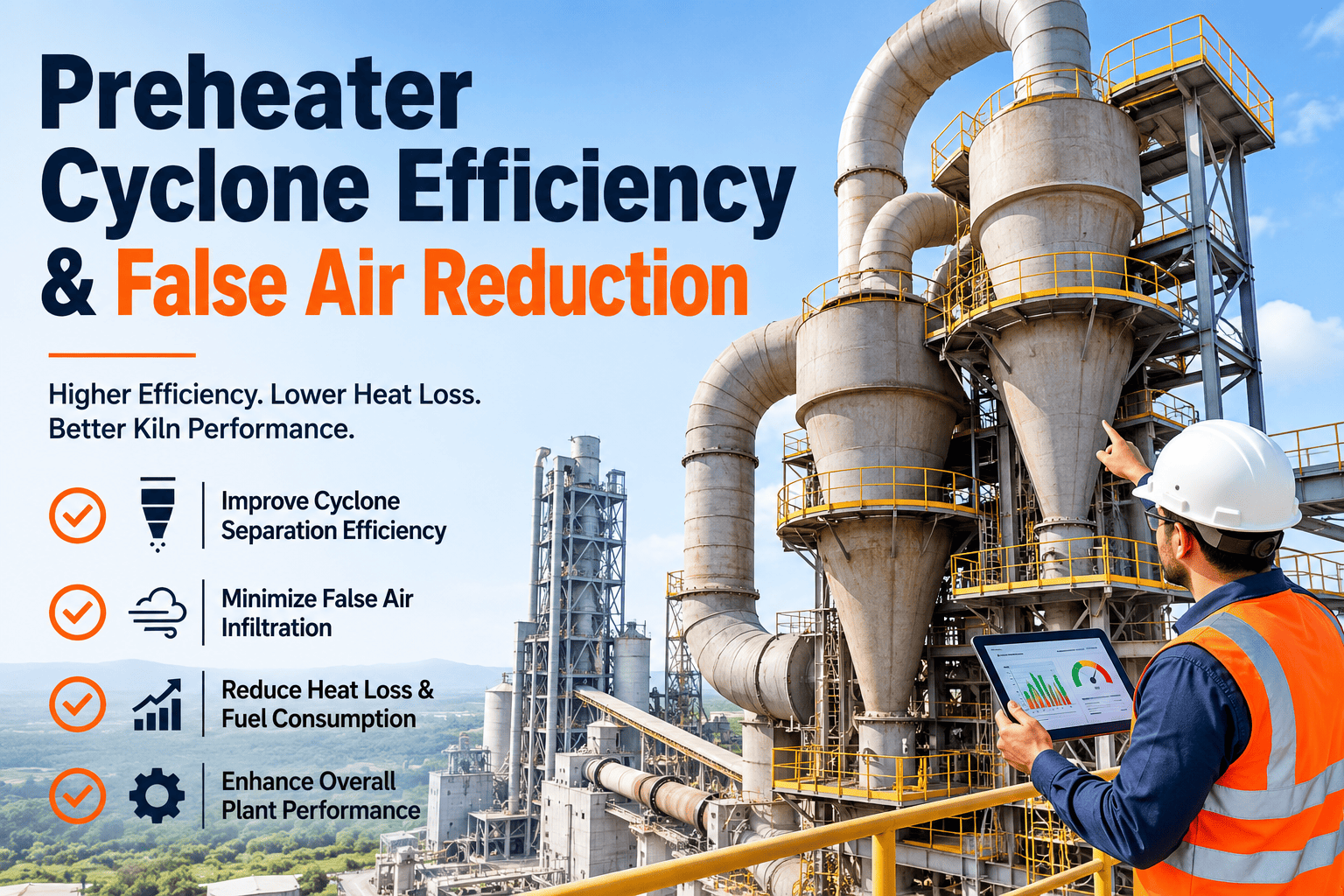
Excessive False Air Ingress
Seal leakage at the kiln inlet and PH hatches cools gas-flow, increasing fan power and fuel consumption. iFactory identifies "False Air Zones" instantly, saving up to 2% in specific heat consumption.
Cyclone Blockages (Coatings)
Sulfur and chlorine cycles cause rapid build-ups in cyclone riser ducts. Our predictive dashboards flag "Choke Points" 24 hours before a blockage occurs, allowing for proactive air-cannon firing.
Low Degree of Calcination
Inefficient calciner combustion forces raw meal to calcine in the kiln sintering zone. iFactory monitors PC oxygen and residence time to ensure 95%+ calcination, protecting your refractory lining.
High Exit Gas Temperatures
Poor heat transfer in upper cyclones wastes significant thermal energy. We benchmark your "Meal-to-Gas" ratio against theoretical maximums to recover energy before it reaches the ID fan.
Multi-String Thermal Imbalance
Non-uniform gas distribution in twin-string preheaters causes localized overheating and raw meal bypassing. iFactory synchronizes string pressures to maintain a perfectly balanced thermal profile.
AFR Emission Spikes (CO/NOx)
Alternative fuels can cause unstable calciner combustion, triggering CO trips. Our dashboards correlate fuel NCV with emission trends, preventing unplanned ID fan cut-offs. Book a demo.
Why Legacy "Visual Inspection" Creates Operational Risk
Traditional preheater management relies on looking through sight-glasses. A dynamic, data-driven approach is now required to maintain kiln service levels and margin stability.
Linear Extrapolation Failure
Old plans assume tomorrow's buildups will look like yesterday's. This misses the non-linear growth of alkali coatings, leading to catastrophic blockages that fail during high-TSR operation.
Static Infrastructure Silos
Fuel, Kiln, and Quality departments rarely share thermal risk data. iFactory breaks these silos, showing how fuel sulfur volatility cascades into a specific cyclone blockage, enabling "Holistic Hardening."
The "Reactive Funding" Trap
Plants lacking data-backed preheater analytics often miss out on federal decarbonization grants. Proactive thermal modeling is now a requirement for non-discretionary funding; without it, you are reliant on CapEx.
Manual Audit Delays
Relying on physical inspections of six stages post-trip takes hours. iFactory's digital twins provide "Instant Visibility," flagging compromised cyclones within minutes of a pressure excursion.
Secure Your Kiln's Future with iFactory PH/PC Analytics
iFactory provides the predictive analytics and real-time monitoring required to transform energy-intensive preheaters into climate-hardened thermal assets.
From calcination degree optimization to cyclone pressure-drop tracking, our platform integrates directly with your SCADA and emission data to deliver an actionable thermal roadmap. Automate your ISO 50001 and ESG compliance reporting while securing your plant's credit rating through verified risk reduction. Schedule a thermal audit.
Thermal Architecture: Four Deployment Models for PH/PC Analytics
Cement producers can deploy preheater technology across four distinct architectural tiers, from purely predictive modeling to fully autonomous adaptive systems.
Thermal Digital Twin
A 4D digital twin of the PH/PC string that simulates gas-flow scenarios (e.g., 80% TSR). It identifies exactly which cyclone will exceed its thermal capacity. Book a demo today.
Real-Time IoT Response Mesh
Deployment of high-frequency pressure and temp sensors across all stages. This "Live Nervous System" triggers automated air-cannon sequences before buildups reach critical thresholds.
AFR Combustion Modeling
Monitoring the combustion efficiency of waste fuels in the calciner. We correlate meal residence time with calcination degree to ensure maximum fossil fuel displacement.
Autonomous Adaptive Systems
Direct integration with SCADA to automatically adjust ID fan speed and tertiary air based on preheater exit O2. This "Self-Healing" model requires the high-fidelity data iFactory provides. Talk to our engineer.
Regulatory Frameworks Driving PH/PC Investment
2026 mandates from federal and international bodies now require verifiable thermal risk assessments for almost all infrastructure funding and insurance renewals.
The Evolution of Preheater Management
From simple gas monitoring to smart thermal twins: how the methodology of kiln protection has transformed in the 21st century.
The 4-Stage Static Era
Emphasis on massive masonry towers. No intelligent monitoring; these systems were often overwhelmed by unexpected "extreme" build-ups that exceeded their static design capacity.
Rise of 6-Stage Low-DP
Widespread realization that energy needed to be recovered through extra stages. Installation of low-pressure drop cyclones, but still lacking real-time data connectivity.
Real-Time Build-up Tracking
First major industrial IoT initiatives. Focus on cloud-based pressure storage, but difficulty in quantifying actual flood-reduction performance for regulatory audits.
High-TSR Calciner Retrofits
Decarbonization laws mandate alternative fuel substitution. Thermal stability becomes a data task; plants begin integrating chemistry and weather patterns to justify spending.
Autonomous Thermal Balancing
The current standard: iFactory AI manages predictive diverting, grid load-balancing, and sensor-based flood warning. 100% data transparency becomes the baseline.
Static Planning vs. AI-Powered Thermal Stability
A visual comparison of how plants respond to thermal excursions using traditional methods versus the iFactory adaptive model.
High-Loss Vulnerability
Kiln Continuity Guaranteed
How iFactory Delivers Thermal Continuity
iFactory isn't just a dashboard—it's a kiln-wide nervous system designed to withstand the stress of a volatile fuel market. Our platform integrates deep-learning chemical models with high-fidelity asset data to provide an objective, real-time view of your precalciner performance. Book a demo today.
From riser duct monitoring to calciner O2 reduction, iFactory provides the "Record of Resilience" that bond-rating agencies and federal grant reviewers demand. We ensure that every dollar spent on thermal hardening is measurable, verifiable, and optimized for maximum safety impact.
For multi-string preheater towers, iFactory supports a federated thermal model, allowing different string operators to maintain their specific workflows while sharing a unified thermal risk layer. This ensures that no "Siloed Failure" cascades through the kiln's essential services. Talk to our thermal engineer.
Quantifying the Thermal Advantage
Producers that have transitioned to AI-driven thermal planning show measurable improvements in post-storm recovery speed and long-term asset lifespan.
Ready to Build a Thermal-Hardened Smart Plant?
Speak with an iFactory thermal specialist today about deploying predictive analytics across your plant's critical asset network.
Whether you are planning nature-based "Sponge City" assets, hardening coastal utility vaults, or mitigating urban heat effects, iFactory provides the data infrastructure your citizens depend on. Secure your grants, protect your assets, and guarantee continuity for the next century. Book your thermal demo now.
PH/PC Analytics: Frequently Asked Questions
Q: How does iFactory thermal data help with industrial bond ratings?
Verified data on hazard reduction and asset hardening proves you are less vulnerable to climate-driven default risks. This result in lower borrowing costs and better ESG scores from rating agencies. Talk to our safety engineer.
Q: Can your thermal models integrate with our existing SCADA?
Yes, iFactory sits on top of your existing plant-wide data sets. We ingest SCADA layers and historical storm records to create a "Baseline Resilience Twin" for your preheater tower. Book a free demo.
Q: What is a "Degree of Calcination" and why does it matter?
Calcination is the chemical release of CO2 from limestone; 95% should happen in the PC. iFactory ensures this target is met to prevent "Shock Loads" on the kiln's sintering zone.
Q: How do sensors survive high-temp environments in the precalciner?
We specify industrial-grade, IP68-rated sensors and edge units designed for high-thermal stress. These devices use resilient protocols to remain functional even when the plant's main power fails.
Q: Is iFactory compliant with ISO 50001 thermal review requirements?
Yes, our data export formats are specifically tuned to the ISO 50001:2018 thermal review process. This ensures your technical documentation is "Audit-Ready" from day one for certification renewals.
Q: How do you detect "False Air" ingress without a manual audit?
By correlating ID fan torque with exit gas O2 and temperature, the platform identifies localized pressure leaks. This allows for targeted maintenance on seals and hatches during production.
Q: Can the platform predict "Snowman" formation in the calciner?
Our AI monitors the alkali-sulfur cycle and temperature trends to flag build-up risks. This provides an early-warning system to trigger air-cannons before the coating fuses into a blockage.
Q: Does the platform support multi-string preheater balancing?
Yes, for plants with twin-strings, iFactory provides a unified thermal risk layer. This ensures that gas-flow is perfectly distributed, preventing one string from overheating while the other stays cold.
Q: What is the ROI for a precalciner optimization project?
Most plants achieve an 8:1 ROI within the first 12 months through fuel savings and reduced shutdowns. Preventing just one major preheater blockage can pay for the entire platform implementation.
Q: How does the platform handle high alternative fuel (AFR) substitution?
iFactory monitors combustion stability and PC residence time to ensure clinker quality is maintained. This allows you to safely push TSR targets to 80% and beyond without risking kiln stability.