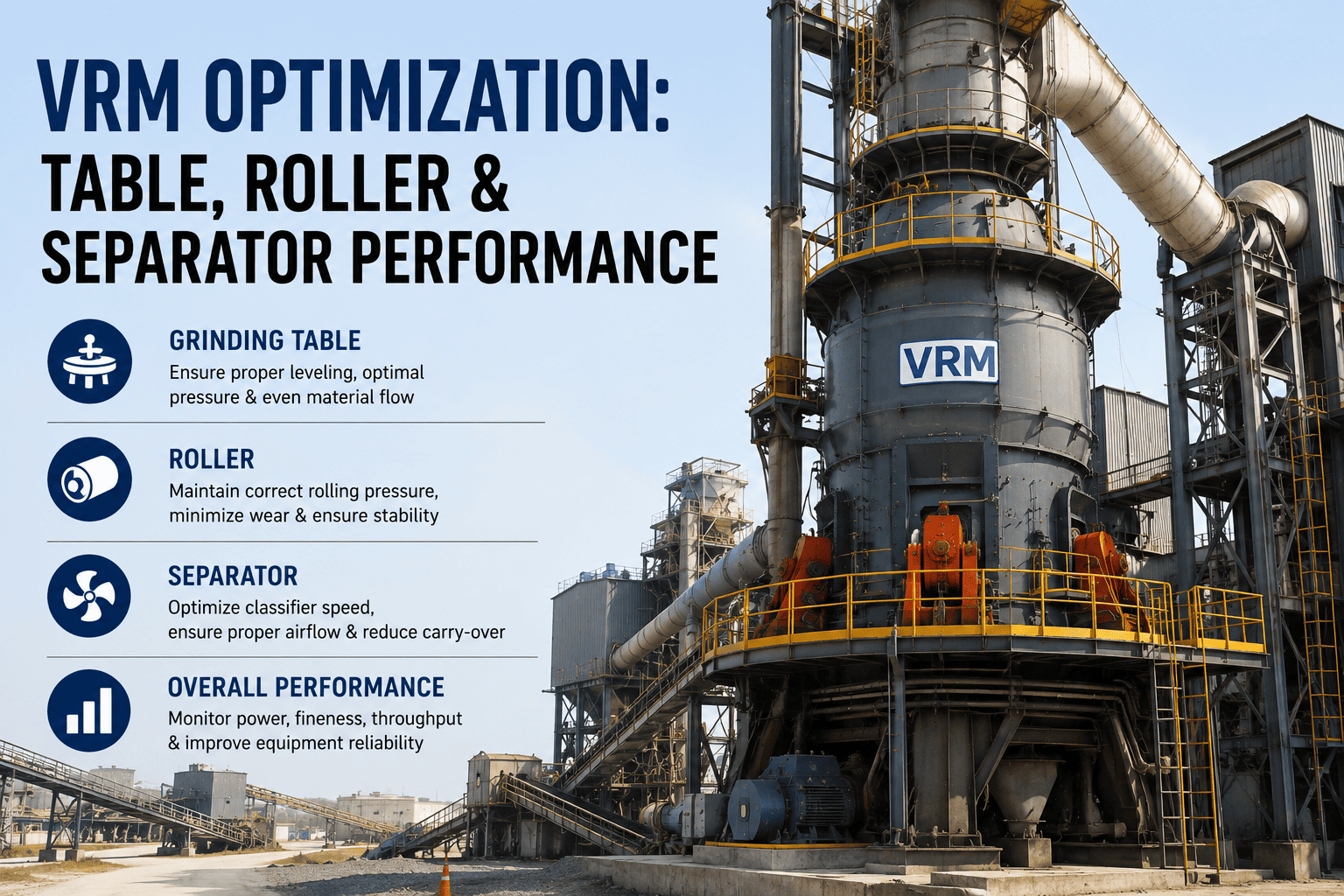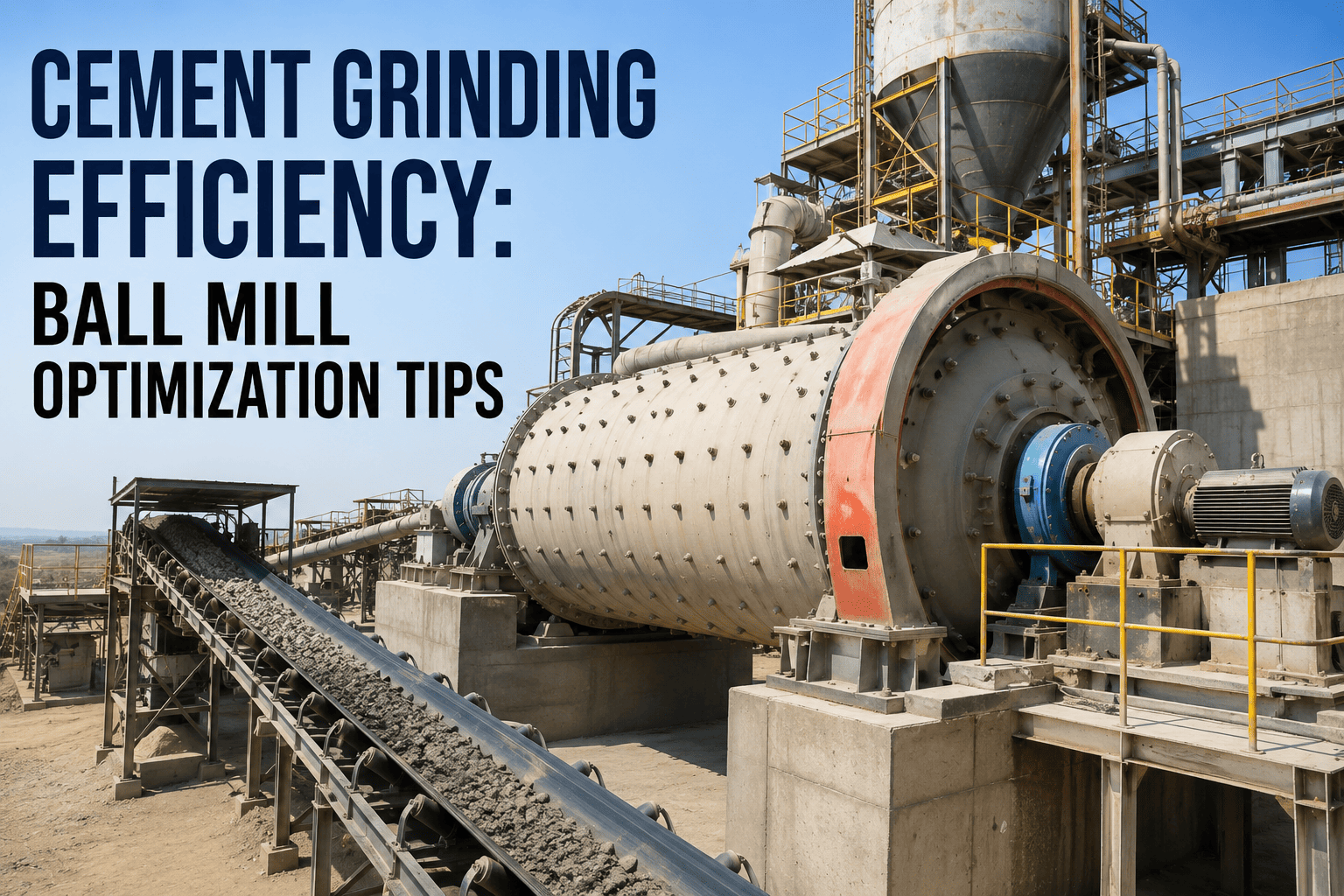
In cement manufacturing, **grinding energy efficiency** is the single largest variable in total electrical cost, often accounting for 60-70% of a plant's total power consumption. Every kilowatt-hour wasted in over-grinding or inefficient classification represents a direct hit to production margins and a failure to meet modern sustainability mandates. As global electricity prices fluctuate and decarbonization pressures intensify, the transition from "experience-based" mill operation to **AI-driven specific energy optimization** has become an operational necessity. Understanding the technical requirements of cement grinding efficiency — from separator Tromp curves to grinding media grading — is the foundation of a world-class production strategy. If you want to see how leading cement producers are reducing their specific energy consumption by 5-12%, you can book a demo of our energy optimization platform today.
What Is Cement Grinding Energy Efficiency?
Cement grinding efficiency is measured by **Specific Energy Consumption (SEC)** — the total electrical energy consumed (kWh) divided by the tonnage of cement produced (t) at a defined fineness (Blaine). In a typical cement plant, the grinding of clinker and additives (gypsum, slag, fly ash) is inherently energy-intensive. Efficiency is lost through two primary drivers: **Mechanical Inefficiency** (friction, heat loss, poor media grading) and **Process Inefficiency** (re-grinding of already-fine material, unstable mill load, and sub-optimal separator set-points).
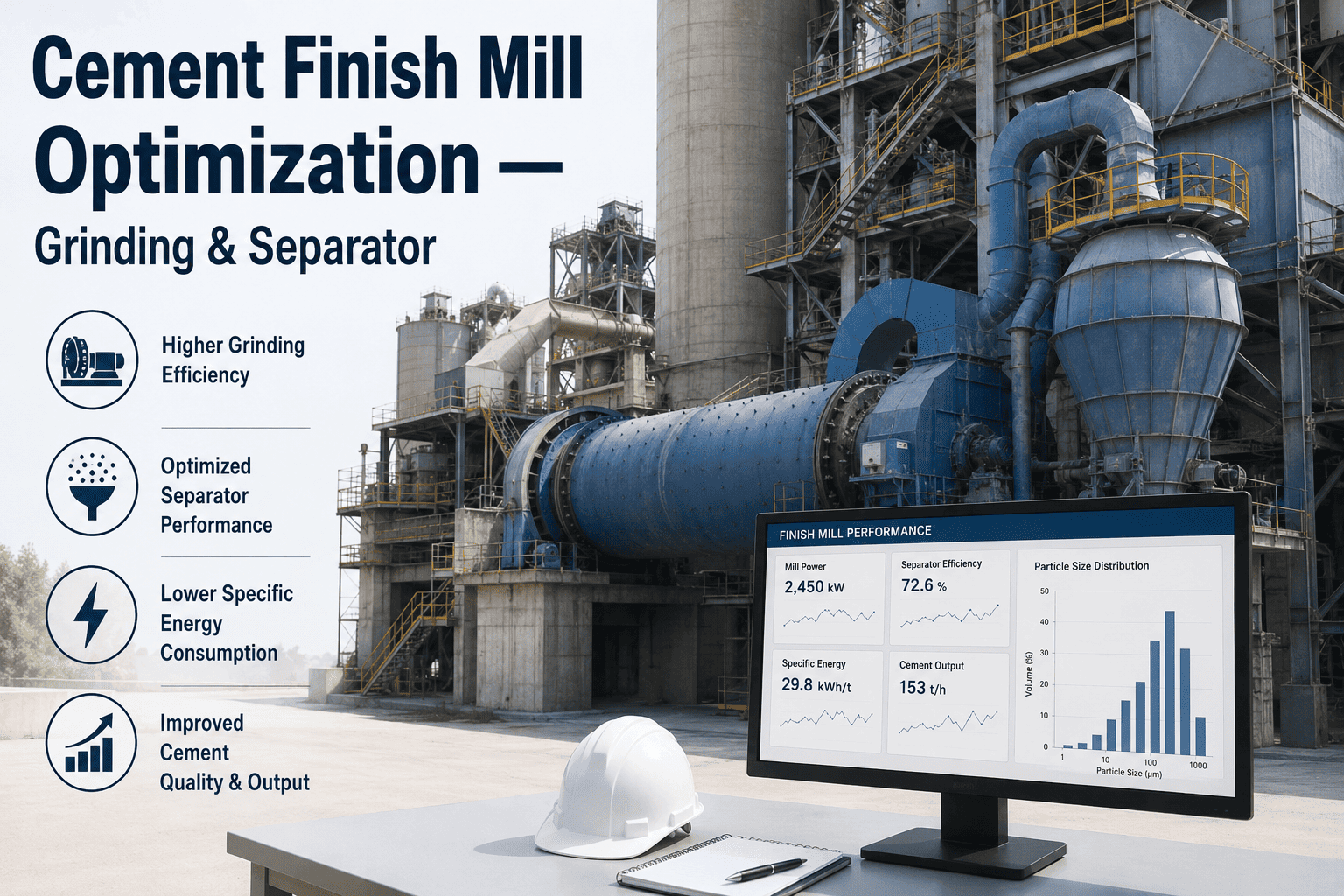
Modern grinding optimization focuses on the "Finish Mill" as a holistic system. This includes the main drive, the recirculating fans, and the high-efficiency separator. By implementing digital performance monitoring, plant operators can identify the exact "Efficiency Gap" between current operations and the mill's theoretical energy potential. Book a demo to see how we track and reduce SEC across vertical and ball mill systems.
The Grinding Efficiency Workflow: 5 Pillars of Mill Optimization
Achieving sustainable energy efficiency in a cement mill requires a structural shift in how process variables are managed. For both Vertical Roller Mills (VRM) and Ball Mills, the optimization workflow must address the physical grinding mechanics alongside the aerodynamic classification process.
Specific Energy Consumption (SEC) Baseline
The first step is real-time monitoring of power consumption for the main drive and all auxiliary equipment (fans, conveyors). iFactory calculates SEC per product type (OPC, PPC, Slag), providing a high-resolution view of energy intensity.
Separator "Tromp Curve" Optimization
Analyzing the separator efficiency through Tromp curves to identify "Bypass" (fines returning to the mill) and "Fish-hook" effects. Improving classification reduces the recirculating load and prevents energy-wasting "over-grinding."
Grinding Media & Pressure Management
For Ball Mills, optimizing the media charge grading; for VRMs, optimizing hydraulic grinding pressure. iFactory correlates these mechanical set-points with Blaine development to find the "Sweet Spot" of energy vs. fineness.
Mill Load Stabilization (AI Control)
Using AI to predict and stabilize the mill load. By minimizing throughput variance, the mill can operate closer to its maximum capacity without risking "plugging" or excessive vibration, driving down the SEC. Book a demo to see AI mill control.
Auxiliary Fan Power Optimization
Mill fans often consume 20-30% of system energy. Optimizing airflow through VFD control and duct-pressure management ensures that the pneumatic transport of cement is as efficient as the grinding itself.
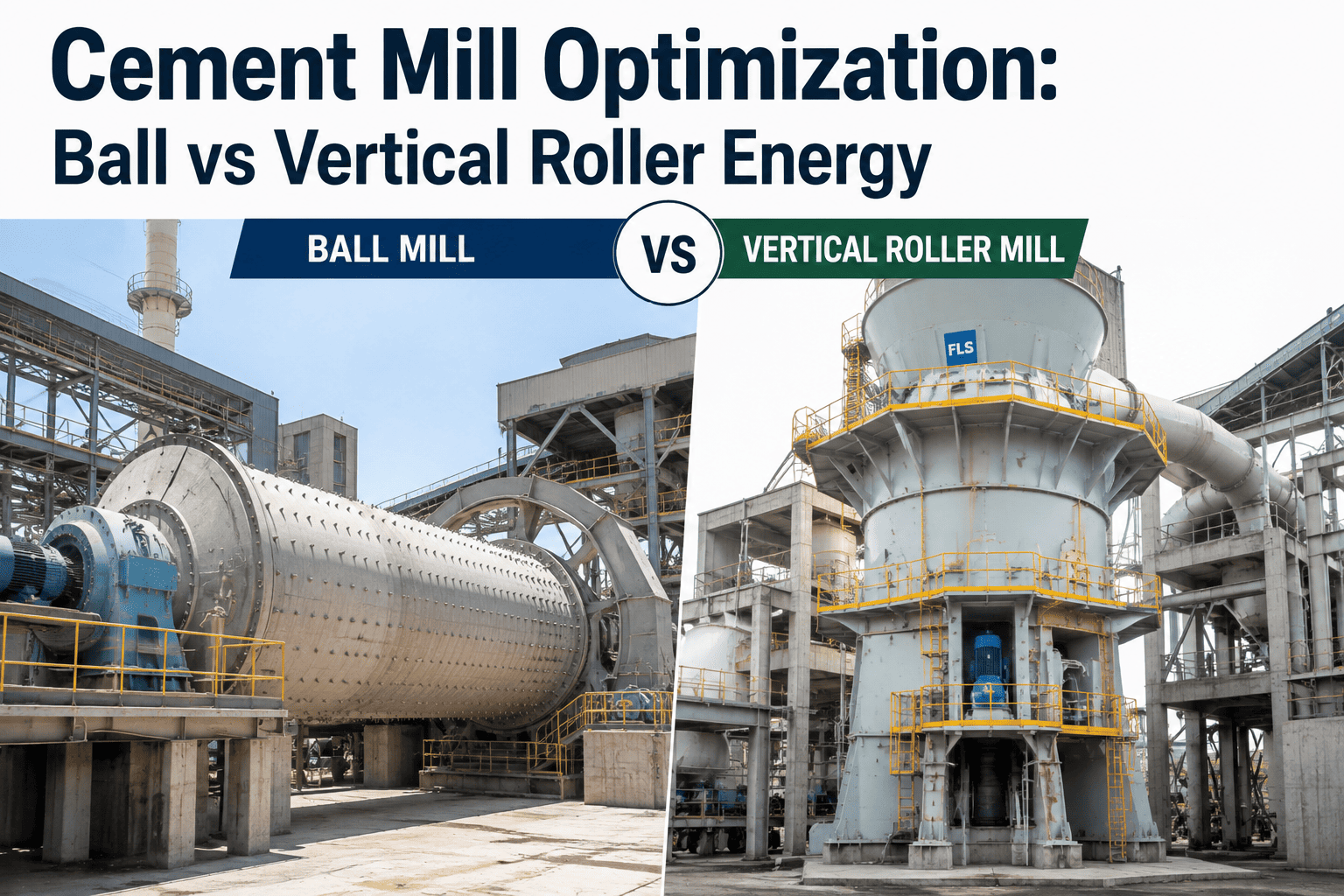
Comparing Mill Efficiency: VRM vs. Ball Mill Energy Requirements
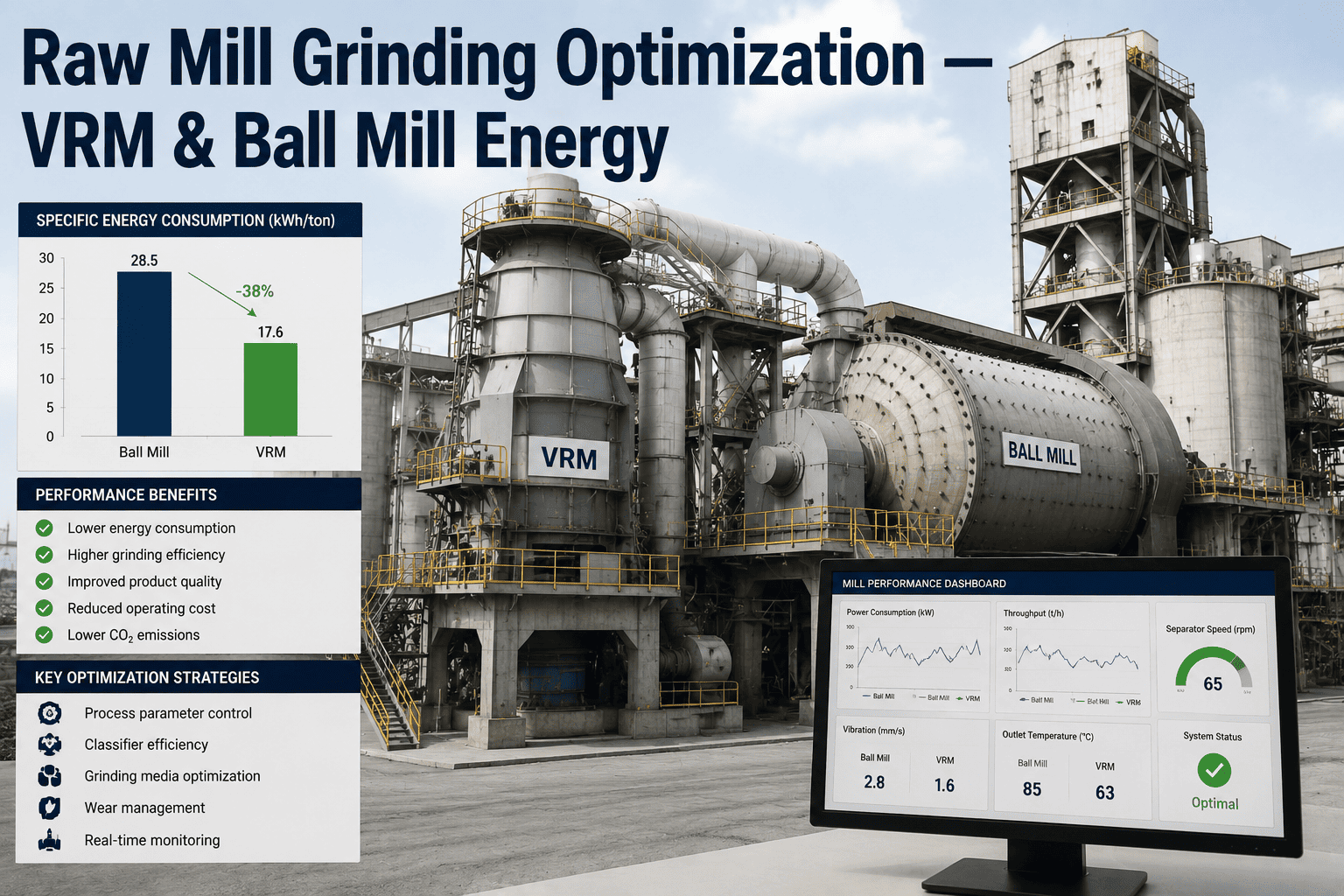
The choice of grinding technology — and how it is managed — defines the plant's long-term electrical cost structure. While Vertical Roller Mills (VRM) are inherently more efficient than traditional Ball Mills, both systems require precise digital management to maintain peak performance. The table below outlines the comparative energy benchmarks and optimization focus for both technologies. Book a demo to see how we optimize your specific mill configuration.
| Efficiency Metric | Vertical Roller Mill (VRM) | Ball Mill (Closed-Circuit) | Optimization ROI |
|---|---|---|---|
| Typical SEC (kWh/t) | 24 – 32 kWh/t | 32 – 44 kWh/t | Lower Energy Floor |
| Critical Variable | Hydraulic Grinding Pressure | Media Grading & Charge % | Mechanical Efficiency |
| Heat Loss Impact | Low — Efficient heat exchange | High — Significant radiation loss | Thermal Recovery |
| Load Sensitivity | High — Requires stable bed | Medium — High inertia system | AI Stabilization |
| Separator Type | Integrated High-Efficiency | External 3rd Gen Separator | Classification ROI |
| Main Loss Driver | Nozzle Ring Pressure Drop | Grinding Diaphragm Plugging | Maintenance ROI |
The "Fineness Trap": Balancing Blaine Value vs. Energy Consumption
One of the most common energy-efficiency pitfalls in cement grinding is the "Fineness Trap." Producing cement with a Blaine value (surface area) that is higher than the customer requirement exponentially increases energy consumption. For every 100 points increase in Blaine, the Specific Energy Consumption typically rises by 2-3 kWh/ton.
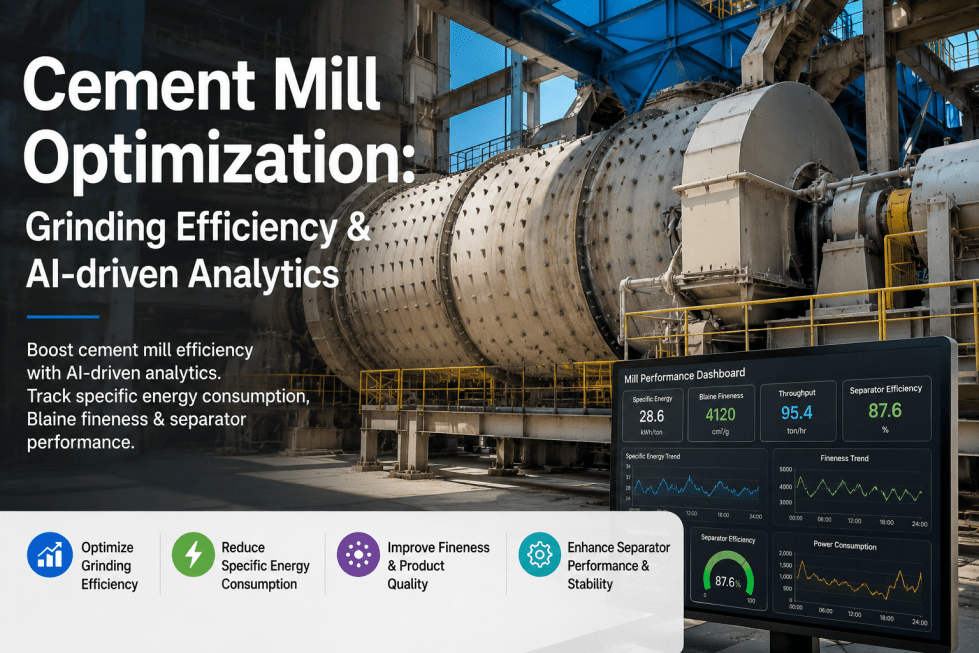
iFactory's digital twin platform correlates real-time Blaine results (from manual lab entry or online analyzers) with energy intensity. This allows Quality and Production managers to see the exact **Energy Cost of Fineness**. By stabilizing the Blaine variance and operating closer to the minimum spec limit, a plant can achieve massive energy savings without sacrificing product performance. Book a demo to see our Blaine-vs-Energy correlation dashboards.
The "Tromp Curve" is the definitive mathematical measure of separator efficiency. A "sharp" curve indicates that nearly all material of the desired fineness is being removed from the system. A "flat" or "shifted" curve indicates that fine material is being returned to the mill (Bypass), where it is over-ground into "Ultra-Fines." iFactory automates Tromp curve analysis, allowing operators to adjust separator speed and air-flows to achieve the sharpest possible classification, reducing the mill's recirculating load and energy waste.
AI-Driven Grinding Optimization: Technology for Decarbonized Operations
In the push for Net-Zero cement, grinding efficiency is the most accessible "quick win." By using technology to stabilize the mill and optimize the classification, plants can reduce their carbon footprint per ton produced. iFactory's AI engine acts as a "Virtual Operator," making sub-second adjustments to maintain peak efficiency. Book a demo to see the AI engine in a live mill environment.
Predictive SEC Benchmarking
AI analyzes current feed chemistry and product targets to set a "Predictive Energy Benchmark." This tells the operator exactly what the SEC *should* be, highlighting efficiency losses in real-time.
Automated Blaine Stabilization
The platform correlates mill load and separator speed to maintain a consistent Blaine value. By reducing variance, the plant can safely operate at the lower limit of the quality spec, saving significant power.
Separator "Closed-Loop" Control
Directly controlling separator RPM and fan airflow based on the mill's recirculating load. This prevents "Mill Surges" and ensures the recirculating load remains within the energy-efficient 150-250% range.
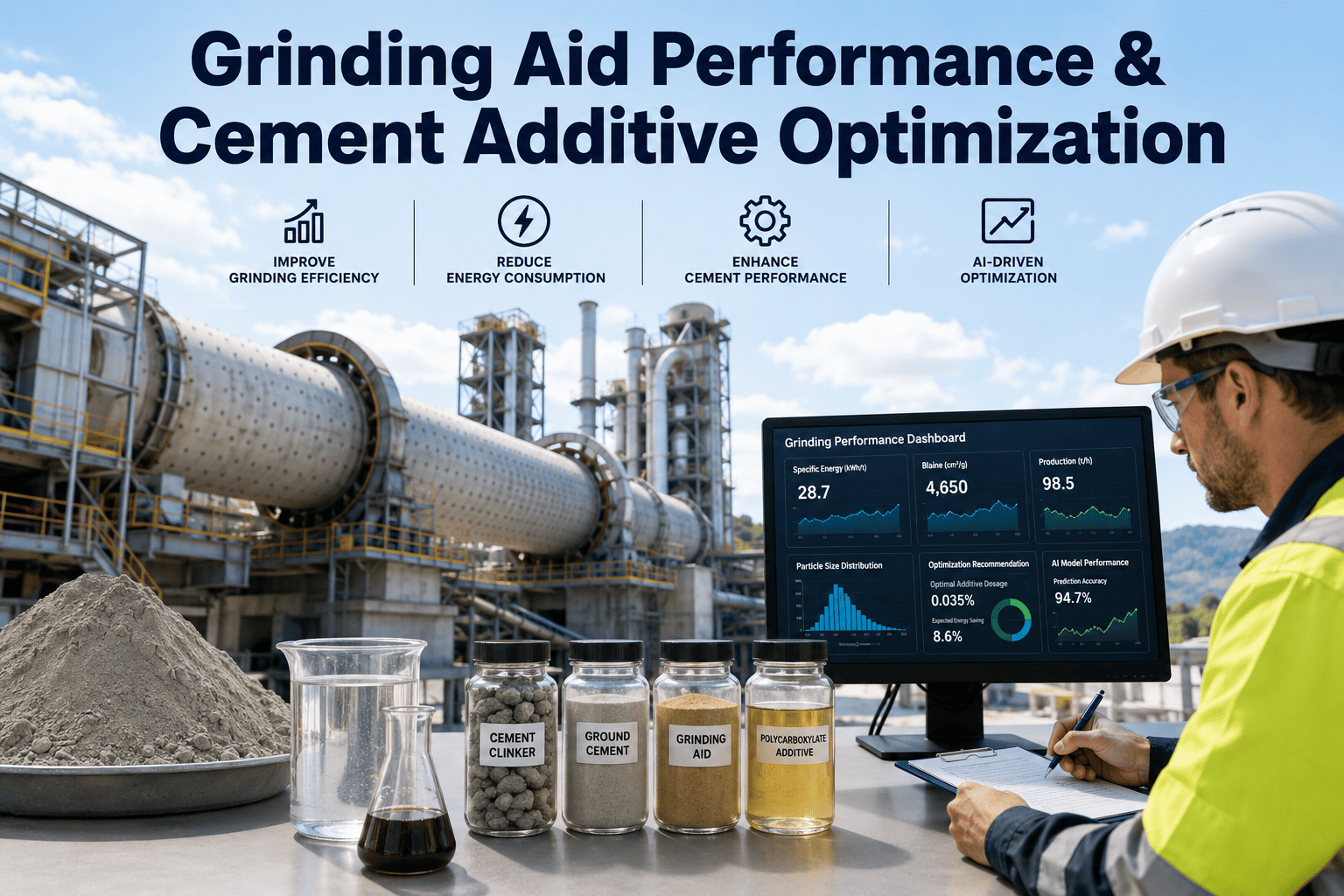
Grinding Aid ROI Tracking
Automatically tracking the impact of grinding aid chemicals on mill throughput and energy consumption. This ensures the plant is getting the maximum SEC reduction per dollar spent on additives.
Energy Waste Drivers: Where Cement Mills Lose Profitability
Based on energy audits of over 100 cement grinding systems, the following factors are the most significant drivers of specific energy waste.
The Grinding Efficiency Roadmap: A 5-Phase Improvement Plan
For Energy Managers and Production Directors, the path to world-class grinding efficiency follows five operational phases. Each phase builds the data integrity required for autonomous optimization.
Specific Energy Monitoring & Sub-Metering
Install real-time power metering for all major mill components (Drive, Fan, Separator). iFactory consolidates this into a single "Live SEC" dashboard per product type. Output: a transparent energy baseline.
Separator Performance Audit (Tromp Analysis)
Conduct a physical sampling audit to build accurate Tromp curves for your separator. Identify the current "Bypass" and "Fineness Recovery" efficiency. Output: optimized separator set-points.
Grinding Media Grading & Mechanical Audit
Audit the ball mill media grading or VRM table-wear profile. Ensure that the mechanical grinding mechanics are matched to the current clinker abrasive index. Output: a mechanically optimized grinding chamber.
Predictive Control (APC) Implementation
Deploy iFactory's AI-driven Advanced Process Control (APC) to stabilize mill load and Blaine variance. This allows the system to operate at the "Efficiency Frontier" automatically. Output: a 5-10% reduction in SEC.
Continuous Grinding Strategy Review
Use the analytics dashboard to conduct weekly efficiency reviews. Correlate changes in clinker chemistry with changes in SEC to continuously refine the APC set-points. Output: sustained world-class energy performance.
Customer Voice: Real-World ROI on Grinding Optimization
"Before implementing iFactory's grinding analytics, our specific energy consumption was a 'Black Box.' We were constantly over-grinding just to stay on the safe side of our Blaine spec. By stabilizing the mill load and using the Tromp curve analysis to fix our separator bypass, we've reduced our SEC by 4.2 kWh/ton across the facility. On a 1.2M ton plant, that's nearly $600k in annual power savings."
Frequently Asked Questions: Cement Grinding Energy Efficiency
What is "Specific Energy Consumption" (SEC) in cement grinding?
SEC is the total electrical energy consumed by the grinding system (kWh) per ton of cement produced. It includes the main mill drive, the separator, and all system fans. Reducing SEC is the primary goal of energy optimization.
How does a 3rd generation separator improve mill efficiency?
3rd generation separators use high-speed horizontal rotors and internal air circulation to achieve much sharper classification (a steeper Tromp curve). This significantly reduces the "Bypass" of fine material back to the mill, preventing energy-wasting over-grinding.
Why is Vertical Roller Mill (VRM) more efficient than a Ball Mill?
VRMs are more efficient because they combine grinding and classification in a single unit and utilize material-on-material compression rather than impact. This results in 30-40% lower specific energy consumption compared to traditional ball mills.
How does AI reduce cement mill energy consumption?
AI stabilizes the mill by making sub-second adjustments to the feed rate and separator speed. By minimizing throughput variance, the mill can operate closer to its maximum capacity and its lowest theoretical SEC point without risking process instability.
What is the "Recirculating Load" and why does it matter?
The recirculating load is the material that is returned from the separator to the mill for further grinding. If this load is too high (over 300%), it indicates poor separator efficiency and leads to excessive energy consumption and mill heating.
Can grinding aids really save energy?
Yes. Grinding aids reduce the "agglomeration" of particles inside the mill and separator. This improves the flowability of the material, allowing for a more efficient grinding process and typically reducing SEC by 2-5 kWh/ton.
How long does it take to implement a mill optimization project?
A digital optimization project (monitoring + AI control) typically takes 10-14 weeks. This includes establishing energy baselines, conducting separator audits, and calibrating the AI control loops for your specific product mix.
What is a "Tromp Curve" audit?
A Tromp curve audit involves sampling the mill feed, mill discharge, separator rejects, and finished product. This data is used to calculate the classification efficiency of the separator and identify where energy is being lost through fines bypass.