Why Quadruped Kiln Shell Scanning Delivers the Highest ROI in Cement Plant Thermal Inspection
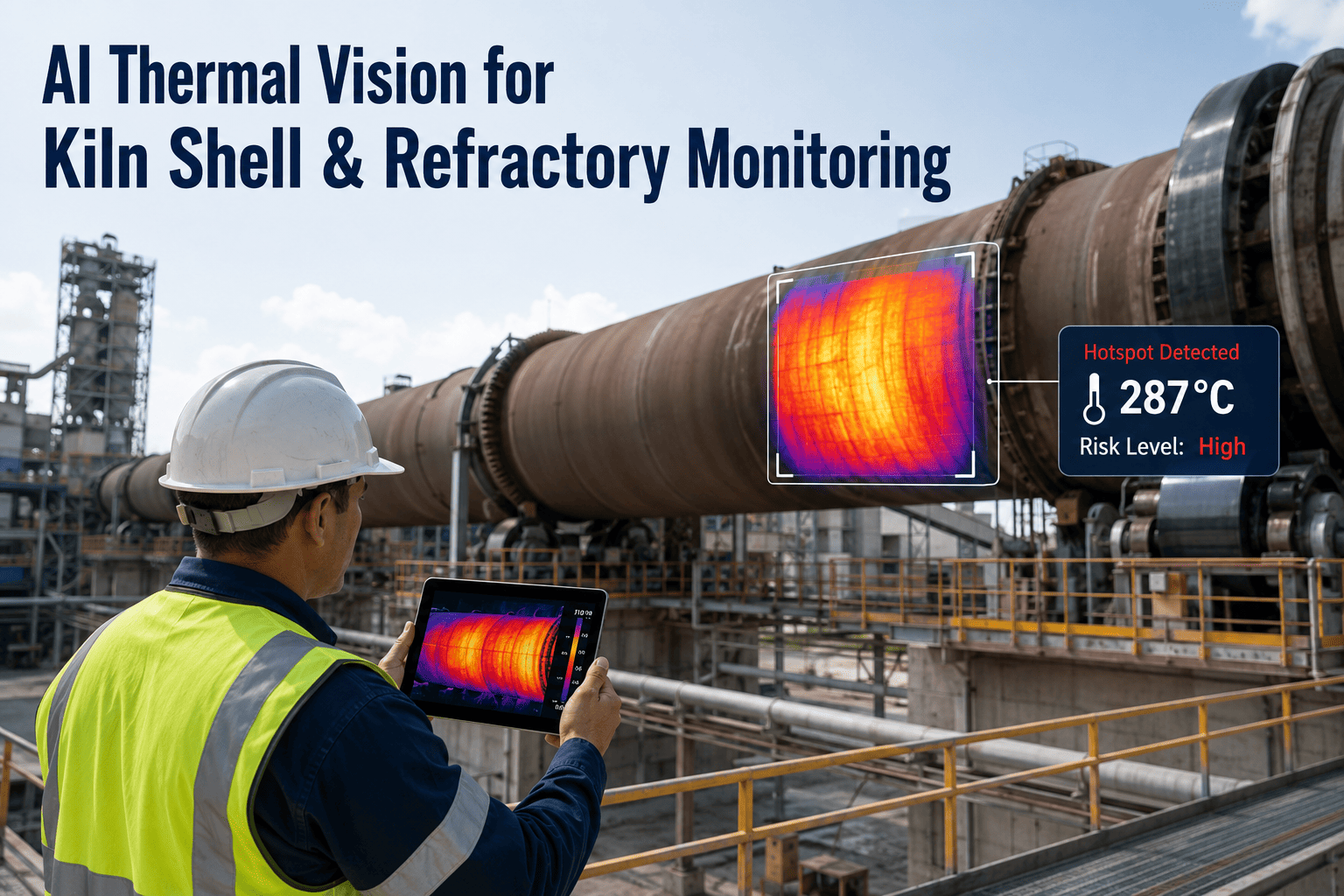
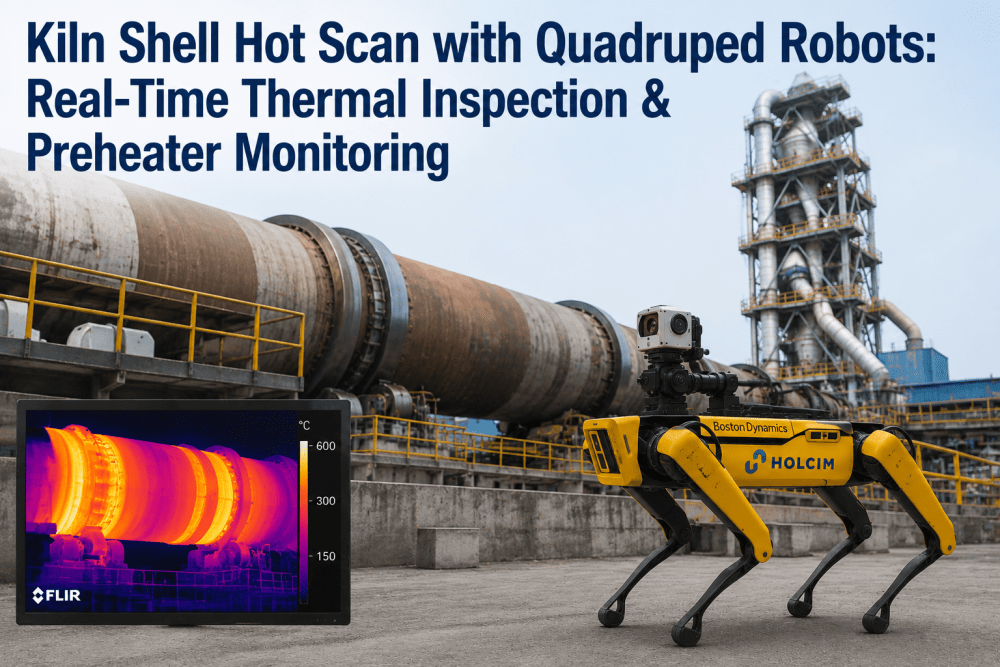
The rotary kiln is the most expensive single asset in any cement plant, representing 30–40% of the total equipment value and determining the plant's entire production capacity. Every hour of unplanned kiln downtime directly reduces clinker output that cannot be recovered — lost production that must be purchased from third parties at a premium or passed on to customers as delayed deliveries. The inspection gap between quarterly thermography campaigns creates a 90-day window where refractory degradation — caused by chemical attack from alkalis and chlorides, mechanical stress from shell deformation, or thermal cycling from kiln starts and stops — can progress from an incipient hot spot to a catastrophic breakout without detection. Fixed IR line scanners provide continuous monitoring only at their installation point, typically positioned at the tire zones where hot spots are least likely to form. The majority of shell failures originate between tire positions, in the burning zone and transition zone, where refractory wear is most aggressive. A quadruped robot carrying a radiometric thermal camera navigates to any position along the kiln shell — including between tires, under the nose ring, and at the kiln hood area — capturing a complete thermal map of the entire shell circumference at every patrol. When combined with AI-driven temperature trend analysis that compares each scan against the previous 20–40 patrols, the system detects hot spots 30–60 days before they would be visible to a human inspector — providing the lead time necessary to plan refractory repair during a scheduled maintenance outage rather than reacting to a catastrophic failure. Book a Demo to model the refractory failure prevention ROI for your kiln configuration and annual production capacity.
Quadruped Kiln Thermal Inspection Technology
iFactory's Quadruped Kiln Thermal Robot integrates three core technology domains — autonomous navigation across cement plant terrain, high-resolution radiometric thermal imaging, and AI-driven temperature analytics — into a single platform purpose-built for the cement kiln environment.
Quadruped Kiln Thermal Patrol — 4-Stage Scanning Workflow
Each autonomous kiln thermal patrol follows a structured four-stage workflow designed to maximize data quality, ensure complete shell coverage, and deliver actionable maintenance intelligence within hours of the patrol completion.
Key Kiln Zones Inspected by Quadruped Thermal Patrol
The quadruped thermal robot inspects four critical zones of the cement kiln system that together account for over 90% of unplanned kiln outages related to thermal and refractory issues. Select each tab to explore the inspection zone, common failure modes, and AI detection approach.
Rotary Kiln Shell — Full Circumference Thermal Mapping
The kiln shell is the primary inspection zone, covering the full length from the kiln hood (discharge end) through the burning zone, transition zone, and calcining zone to the tail end (feed end). The robot patrols along both sides of the kiln platform, capturing thermal images at 3-meter intervals that collectively cover the entire shell circumference through the kiln's rotation cycle. Hot spots are detected by comparing each shell location's temperature against the historical baseline established during the first 4–6 patrols. A temperature differential exceeding 100°C above the baseline at any shell location triggers a critical alert. The AI model tracks hot spot growth rate across patrols — a consistently expanding hot spot indicates refractory wear, while a fluctuating hot spot may indicate coating buildup and shedding. Ring formation inside the shell is detectable as a circumferential cool band with elevated temperature at the edges, caused by material accumulation that restricts the kiln internal diameter and reduces production throughput.
Preheater Tower Cyclones and Riser Ducts
The preheater tower presents the most challenging access environment in the cement plant — a multi-level steel structure housing 4–6 cyclone stages that preheat raw meal before it enters the kiln. Each cyclone stage operates at progressively higher temperatures, from approximately 350°C at the top stage to 900°C at the bottom stage where the riser duct connects to the kiln inlet. The quadruped robot navigates staircases and steel grating catwalks to reach each cyclone level, capturing thermal images of cyclone cone and barrel sections, connecting riser ducts, and expansion joints. Common thermal anomalies include cold spots on cyclone cones indicating coating buildup that restricts gas flow, hot spots on riser duct bends indicating refractory wear from abrasive raw meal particles, and asymmetric temperature profiles across cyclone pairs indicating unbalanced gas distribution between parallel cyclones. AI models correlate thermal data with DCS process variables — cyclone outlet temperature, differential pressure, and O2 concentration — to identify developing blockages and gas bypass conditions before they force a preheater clean-out shutdown.
Burner Pipe, Kiln Hood and Firing Zone
The kiln hood and burner pipe area experiences the highest thermal loads in the entire cement process, with flame temperatures reaching 2,000°C and hood refractory surfaces exposed to direct radiation from the clinkerization flame. The quadruped robot navigates to the kiln hood platform and burner pipe area to capture thermal images of the hood refractory lining, burner pipe cooling air distribution, and kiln front end seal. Critical thermal anomalies in this zone include hood refractory hot spots indicating lining degradation from thermal shock or chemical attack, burner pipe tip overheating from improper flame adjustment or cooling air blockage, and kiln nose ring section hot spots where the shell exits the hood and is exposed to ambient cooling that can cause thermal stress cracking. AI thermal analysis of the burner zone is correlated with the kiln operator's flame settings — primary air flow, coal feed rate, and secondary air temperature — to recommend burner adjustments that optimize flame shape and reduce localized refractory wear.
Clinker Cooler Grate and Cooling Zone
The clinker cooler receives red-hot clinker at 1,200–1,400°C from the kiln discharge and quenches it to 100°C above ambient temperature using forced air through a moving grate. The quadruped robot patrols the cooler side walls and access doors to capture thermal images of the cooler grate surface, cooler walls, and cooling air distribution plenums. Thermal anomalies in the cooler zone include uneven grate temperature distribution indicating air distribution problems or clogged grate openings, hot spots on cooler walls indicating refractory lining loss, and abnormal temperature profiles across the cooler length indicating clinker bed depth variation that affects cooling efficiency. AI models analyze cooler thermal data in conjunction with cooler drive amps, under-grate pressure, and clinker exit temperature to identify the root cause of cooling problems — whether mechanical (grate damage), process (clinker size distribution), or combustion (after-burning in the cooler). Early detection of cooler refractory loss and grate damage enables repair during a planned kiln maintenance outage rather than an emergency cooler shutdown that would force a kiln stoppage.
Kiln Thermal Inspection Approaches — Manual Thermography vs Fixed IR Scanner vs Quadruped Thermal Robot
The table below compares three approaches to kiln shell thermal inspection across the key performance parameters that determine detection effectiveness, coverage, and operational impact.
| Inspection Parameter | Manual Thermography Campaign | Fixed IR Line Scanner | iFactory Quadruped Thermal Robot |
|---|---|---|---|
| Shell coverage | Partial — limited to accessible areas from scaffolding positions | Single line at scanner mounting position — covers 5–10% of shell | Full shell length and circumference — 100% coverage at every patrol |
| Kiln operating state | Requires 48-hour cool-down to ambient temperature | Continuous operation — no interruption required | Full operating temperature — no cool-down, no production impact |
| Inspection frequency | Quarterly (every 90 days) due to shutdown requirements | Continuous at scanner location | Weekly or on-demand — autonomous patrol at any time |
| Hot spot detection | Single point-in-time measurement — no trend analysis | Continuous trend at fixed location — misses shell areas outside scanner view | AI trend analysis across 20–40 patrols — detects hot spot growth rate and migration patterns |
| Preheater inspection | Requires scaffolding and heat-stress-limited personnel access — monthly only | Not possible — fixed line scanner cannot access preheater levels | Multi-level autonomous patrol — stair navigation to all cyclone stages, weekly frequency |
| Burner hood area | Limited access due to elevated temperature and radiation | Not typically installed in hood area | Full hood thermal imaging from multiple vantage points |
| Data integration | PDF report delivered days after inspection | Analog signal to DCS — no image data | Digital twin integration with thermal maps, trend graphs, and CMMS work order automation |
Industry Expert Perspective: Why Quadruped Kiln Thermal Scanning Is Transforming Cement Kiln Reliability Programs
I spent 22 years as a reliability engineer at a 3.2 million ton per year cement plant with a 5-stage preheater and a 5.2 meter diameter kiln. Our kiln shell inspection program was dictated entirely by the quarterly thermography schedule — every 90 days we would cool the kiln down over 48 hours, bring in an external thermography contractor with a cherry picker, and spend 8 hours scanning the shell from the hood to the tail end. The contractor would deliver a PDF report with thermal images and temperature data three to five days later. Between those quarterly campaigns, we relied on two fixed IR line scanners mounted at the tire positions near the burning zone — which covered maybe 8% of the total shell surface. We lost the kiln shell in year 14 of operation because a hot spot developed in the transition zone between the two tire scanners, exactly where neither scanner could see. The hot spot progressed from an incipient refractory wear pattern to a shell-deforming breakout over approximately 60 days, but because it was not visible to the scanners and the next quarterly campaign was 45 days away, it went undetected until the shell cracked. The repair required a 19-day kiln outage and $1.4 million in shell replacement costs. When we deployed iFactory's quadruped thermal robot in 2025, the first weekly patrol detected six hot spots that had never appeared in any quarterly thermography report. Three of them were in the exact area where we had lost the previous shell. The robot had detected refractory wear that was already 60% through the lining thickness — and our existing inspection program had missed it completely. The robot has been running weekly patrols for 18 months without a single missed scan. We have not had a single unplanned kiln outage due to refractory failure since deployment. The cost of the robot and the first year of operation was less than half the cost of the single shell repair it prevented.
Three Business Outcomes from Quadruped Kiln Thermal Scanning Deployment
Quadruped Kiln Thermal Scanning — Frequently Asked Questions
The Decision That Determines Your Kiln Reliability Trajectory — Quarterly Shutdown-Based Thermography or Weekly Autonomous Thermal Patrol
The difference between cement plants that inspect their kiln shell every 90 days through a shutdown-dependent thermography campaign and plants that scan the entire shell every week while the kiln operates at full production temperature compounds with every patrol cycle. Every hot spot that goes undetected between quarterly campaigns is a refractory failure waiting to happen — a failure that will force an unplanned kiln outage, consume days of production, and cost more than the robot that would have detected it. Every preheater cyclone coating buildup or duct blockage missed between monthly walk-downs reduces gas flow, increases pressure drop, and degrades the plant's thermal efficiency before it forces a clean-out shutdown. Every year of shell life lost to undetected refractory wear shortens the kiln's operating campaign and accelerates the capital replacement cycle for the plant's most expensive asset. iFactory's Quadruped Kiln Thermal Robot eliminates these risks by putting a complete shell thermal map, AI-driven hot spot trend analysis, and preheater tower temperature profile on every kiln in the plant every week — delivering the continuous thermal awareness that transforms kiln reliability from a quarterly guessing game into a weekly certainty.