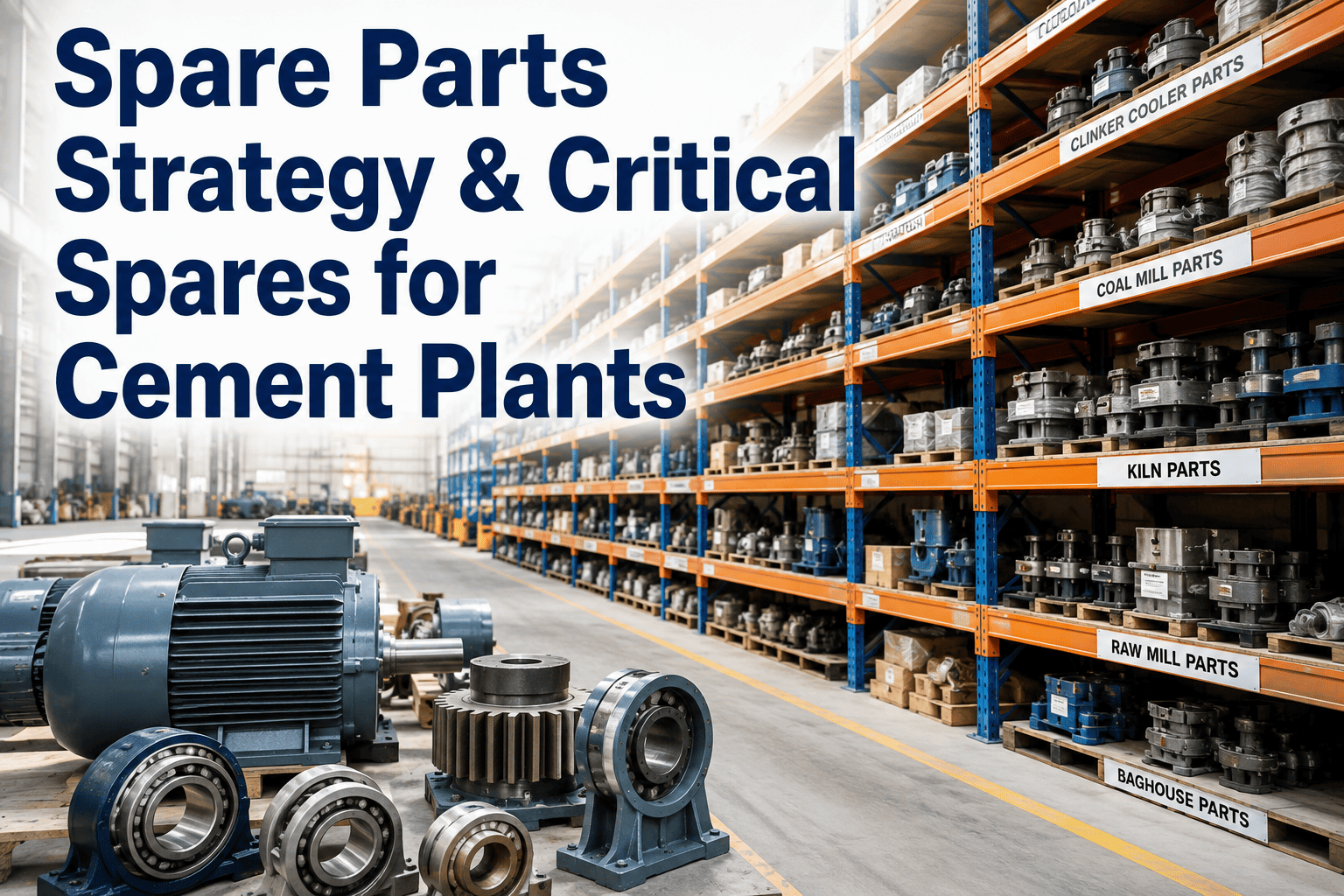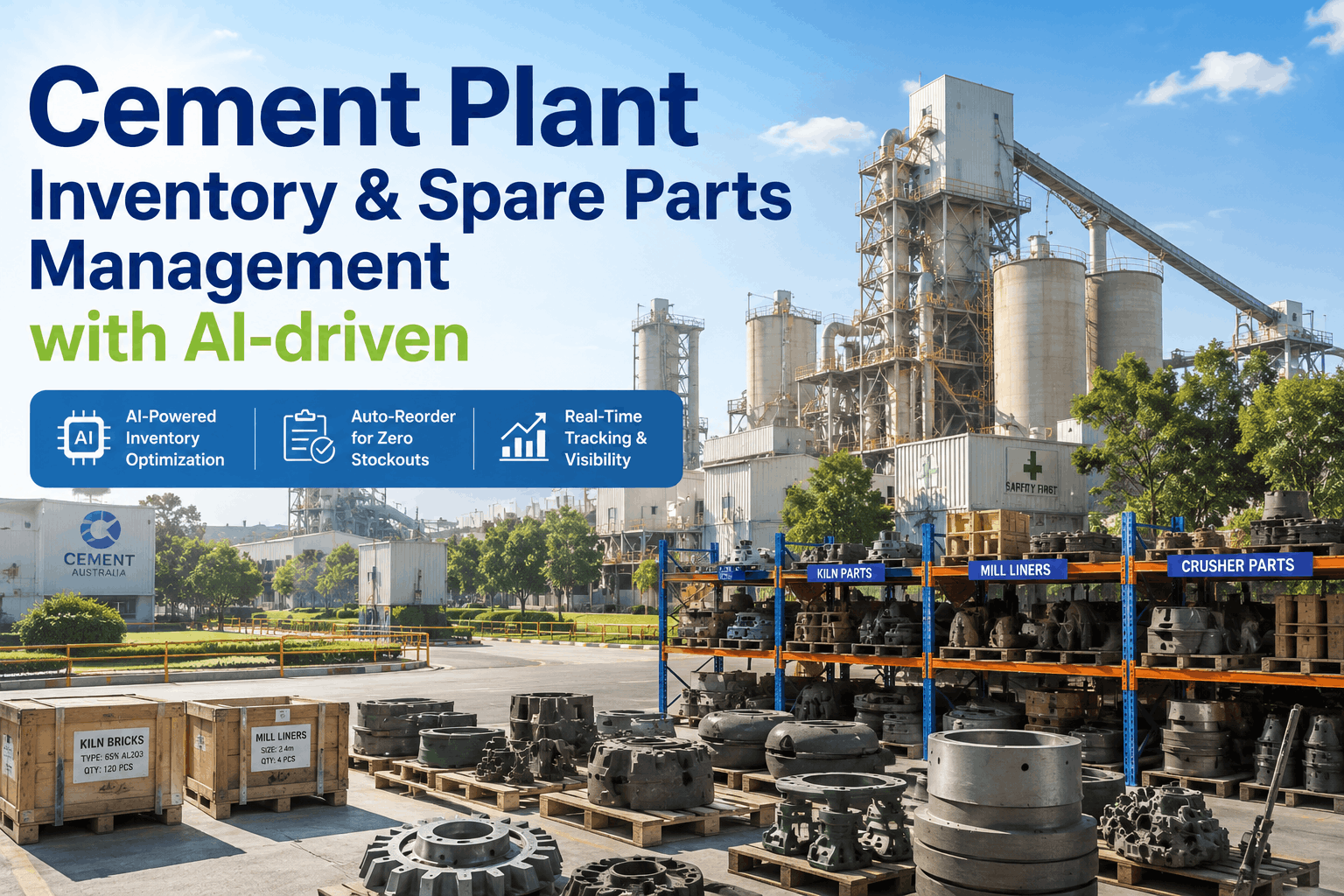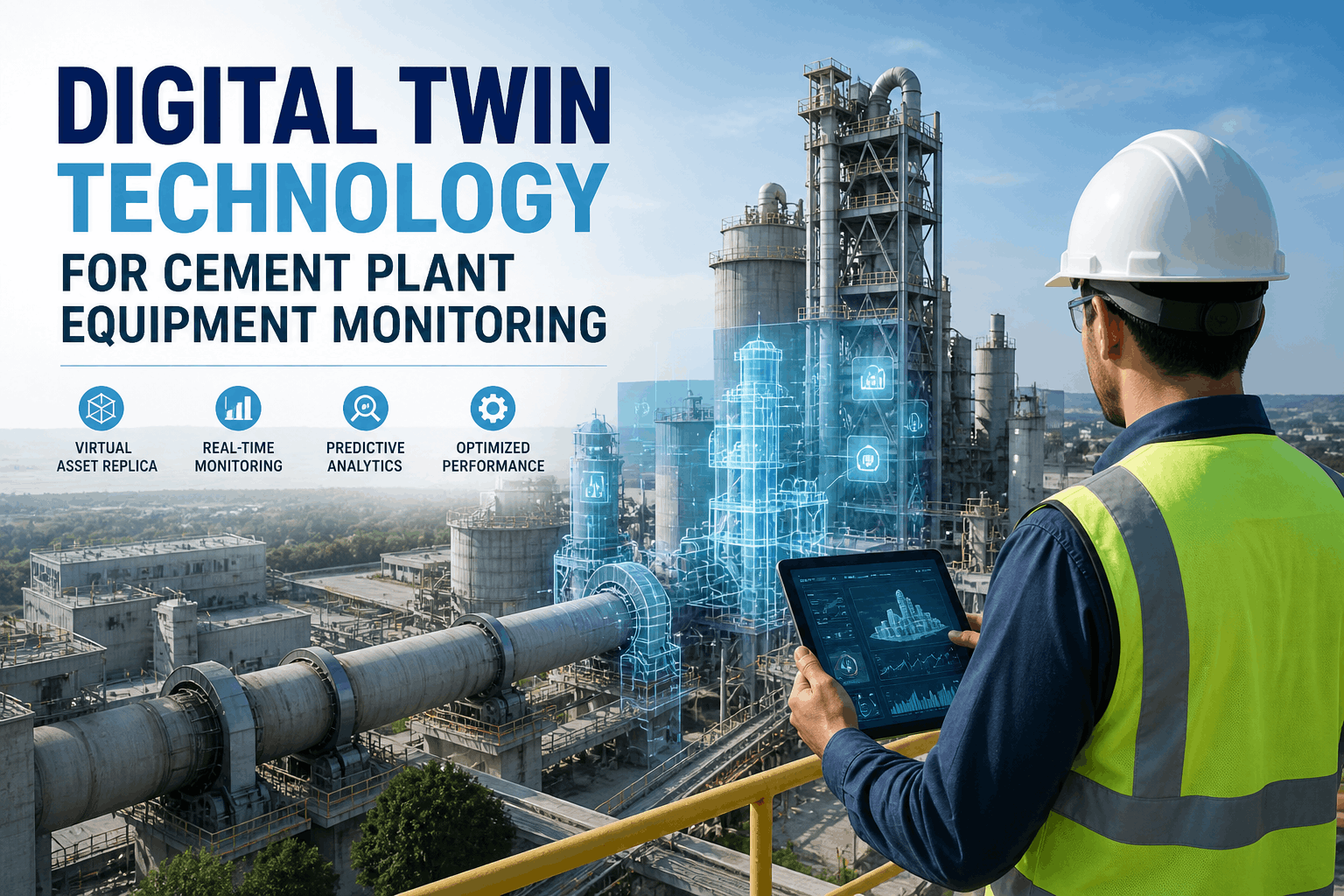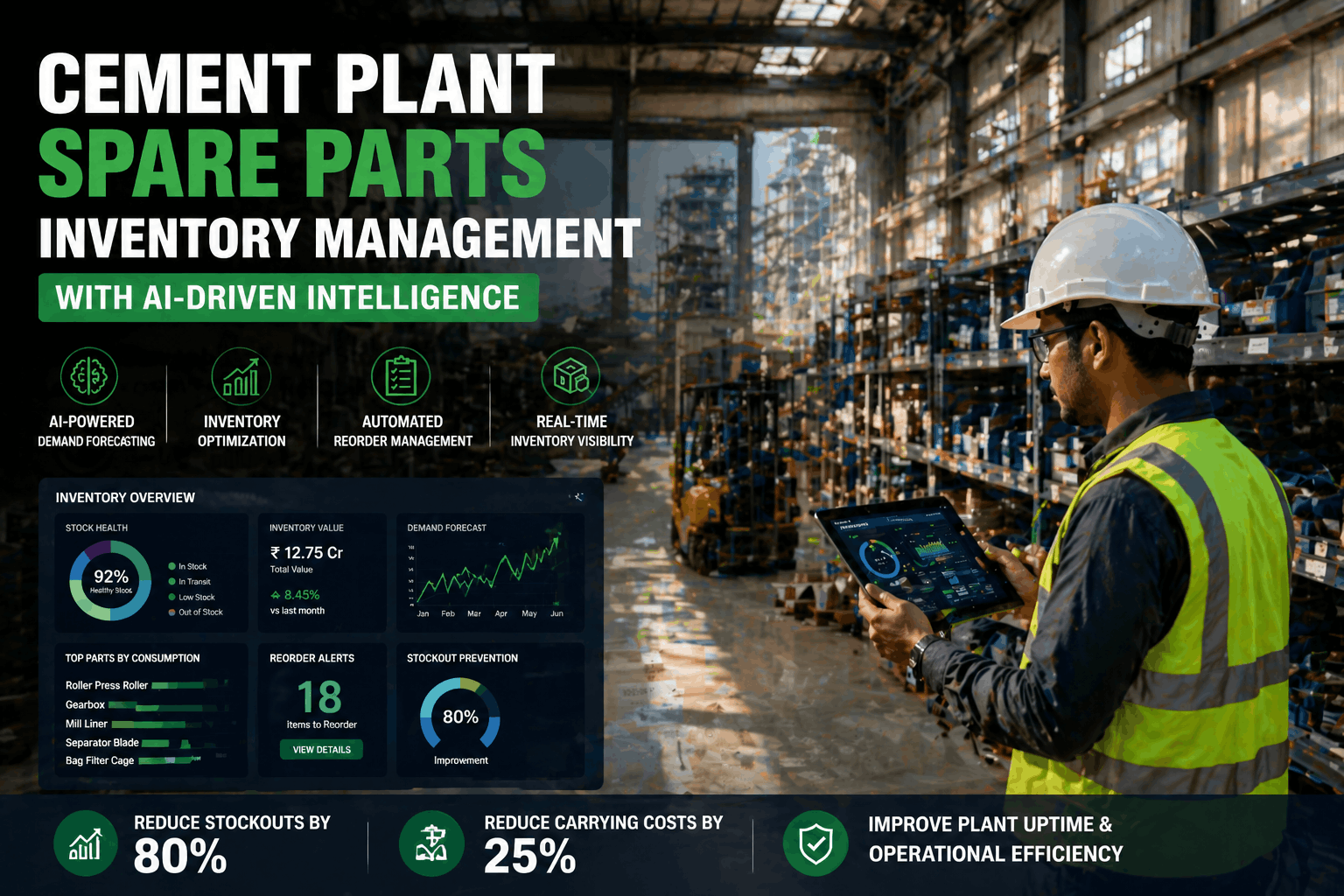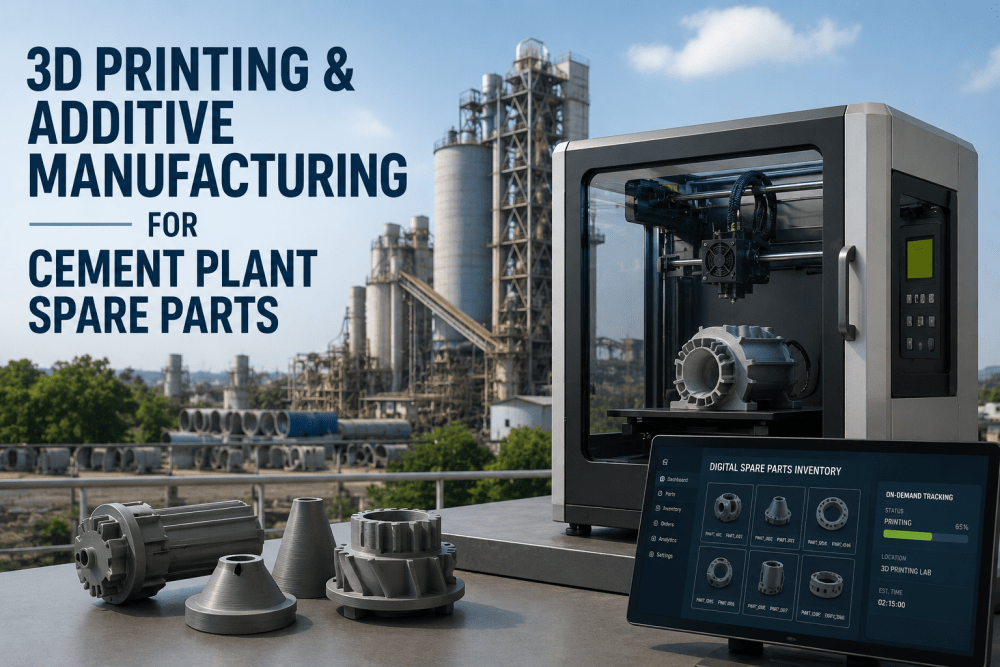
As cement plants accelerate their digital transformation, the convergence of additive manufacturing and AI-driven inventory management is redefining how critical spare parts are sourced, stored, and deployed. In an industry where a single failed kiln drive gear or vertical roller mill bearing housing can idle an entire production line for 8 to 12 weeks while waiting for a forged replacement, the gap between traditional cast-iron supply chains and on-demand 3D printing has become a primary driver of operational resilience. Maintenance directors and procurement teams who book a demo with iFactory are discovering that they can reduce spare parts lead times by up to 92% by shifting to a digital inventory model that prints components on demand and tracks every part's lifecycle through AI-driven condition monitoring.
Additive Spare Parts Intelligence: Eliminating Downtime Through Digital Inventory
A comprehensive technical framework for deploying 3D printing workflows, AI-driven spare parts tracking, and on-demand manufacturing to protect cement plant rotating equipment against prolonged unplanned downtime while reducing inventory carrying costs by 40%.
Why Cement Plants Can No Longer Afford Traditional Spare Parts Supply Chains
Cement manufacturing relies on heavy rotating equipment — kiln drives, vertical roller mills, separator rotors, and cooler grates — that experience predictable wear patterns. Yet most plants still manage spare parts using static inventory lists and reactive procurement, leaving them vulnerable to six critical failure modes that threaten production continuity and maintenance budgets. Maintenance teams exploring this shift often begin by scheduling a session to book a demo and assess how their current spares strategy maps against additive manufacturing capabilities.
Kiln Drive Gear Failure
Forged helical gears for kiln drives require 10-14 week lead times. iFactory's AI-driven 3D printing produces metal alloy replacements in 72 hours with certifiable hardness and fatigue resistance matching OEM specs.
VRM Separator Cone Wear
Cast steel separator cones erode from raw material abrasion. Additive manufacturing with ceramic-reinforced metal powders extends service life by 3x while reducing replacement cost by 55% compared to OEM castings.
Cooler Grate Segment Cracking
Thermal shock fractures in clinker cooler grate plates cause material spillage and cooling inefficiency. On-demand printing allows plants to replace individual segments rather than entire grate sets, cutting downtime by 70%.
Fan Impeller Blade Erosion
ID fan impellers lose balance from dust erosion, causing vibration trips. AI-optimized impeller designs printed with wear-resistant alloys restore OEM balance and extend blade life by 2.5x over standard replacements.
Hydraulic Pump Manifold Cracking
High-pressure hydraulic manifolds on roller presses develop stress cracks. Additive manufacturing enables complex internal channel geometries that reduce pressure drop and eliminate weld repair failures.
Bearing Housing Emergency
Fractured bearing housings on bucket elevators and conveyors idle material transport. 3D-printed ductile iron housings are produced in 24 hours, eliminating the 6-week lead time for OEM replacements.
Supply Chain Evolution: Traditional vs. Additive Benchmarks
Quantifying the impact of iFactory's additive manufacturing across the four most critical spare parts KPIs. Moving to on-demand production preserves capital and asset availability.
Strategic Architecture: Four Deployment Tiers for Digital Spare Parts
Cement plants can scale their additive manufacturing journey from simple polymer consumables to fully certified metal load-bearing parts using iFactory's phased framework. This ensures every printed component has a verified digital twin with full traceability. Maintenance and procurement leads often choose to book a demo to align their spares strategy with these implementation phases.
Polymer Consumables & Guards
Deployment of FDM and SLS printers for non-critical components: cable trays, bearing seals, belt wipers, and safety guards. Establishes the digital workflow for print-on-demand without regulatory certification requirements.
Metal Coating & Wear Parts
DED and binder jet printing for wear-resistant overlays on VRM table liners, kiln tire pads, and cooler grate segments. Combines additive cladding with CNC finishing for OEM-grade surface tolerances.
Critical Structural Components
Powder bed fusion for certified load-bearing parts: gear segments, coupling hubs, and bearing housings. Full material certification with AI-driven CT scan verification ensures zero-defect quality for rotating equipment.
Autonomous Digital Inventory
Full integration with iFactory's AI-driven CMMS. The platform predicts part failure 30 days in advance, auto-generates the 3D model, queues the print job, and schedules installation — closing the loop from prediction to production.
Material Certification & Quality Assurance Standards
By 2026, cement plant insurers and OEMs require verifiable material traceability for all load-bearing 3D-printed components. iFactory provides the auditable data required for four core quality standards.
| Standard | Data Requirement | iFactory AI Value |
|---|---|---|
| ASTM F3122 | Mechanical property verification per build | AI-driven CT scanning with tensile prediction models for every printed layer. |
| ISO 9001:2025 | Full batch traceability and non-conformance logs | Blockchain-based digital twin records for every part from powder lot to installation. |
| ASME BPVC | Pressure vessel and rotating equipment certification | Layer-by-layer porosity analysis with automatic print parameter adjustment to meet code. |
| OEM Warranty Compliance | Material chemistry and dimensional conformance | Real-time spectroscopy analysis ensuring powder chemistry matches OEM substrate specifications. |
"Before iFactory, we carried $2.4 million in spare parts inventory for our two cement lines — and still got caught without critical components when a kiln drive pinion fractured. Now we maintain a digital inventory of 140+ verified 3D models. When a part fails, we print it in 48 hours with full material certification. Our inventory carrying costs dropped 42% and we have not had a single extended outage due to parts availability in 18 months."
Additive Manufacturing for Cement Spares: Frequently Asked Questions
Q: Can 3D-printed metal parts match the strength of forged OEM components?
Yes. Modern powder bed fusion with hot isostatic pressing achieves 99.7% density with tensile and fatigue properties equivalent to wrought materials. iFactory's AI-driven print parameter optimization ensures every batch meets or exceeds OEM mechanical specifications.
Q: How does the platform handle reverse engineering of legacy parts?
iFactory uses handheld LiDAR scanners and structured light photogrammetry to capture sub-50 micron tolerances from worn parts. The AI reconstructs the original geometry by extrapolating wear patterns, delivering print-ready CAD models without original drawings.
Q: What is the cost comparison per part vs. traditional manufacturing?
For low-volume cement spares (1-50 units/year), additive manufacturing is 30-60% cheaper than traditional casting or forging when factoring in pattern costs, minimum order quantities, and expedited shipping. High-volume commodity parts still favor conventional methods.
Q: How does iFactory ensure print quality for critical rotating components?
Every load-bearing part undergoes AI-driven CT scan analysis that detects internal porosity, layer delamination, and dimensional deviations below 10 microns. Parts that fail automated inspection are flagged and reprinted before reaching the plant floor.
Q: What is the typical ROI timeline for an additive spares program?
Most cement plants see full ROI within 7-10 months. The combination of inventory carrying cost reduction, elimination of emergency freight charges, and prevention of a single extended kiln outage typically covers the entire program cost within the first year.
Build a Digital Spare Parts Library for Your Cement Plant
Speak with an iFactory additive manufacturing specialist today about deploying on-demand 3D printing workflows and AI-driven inventory tracking across your cement production lines.